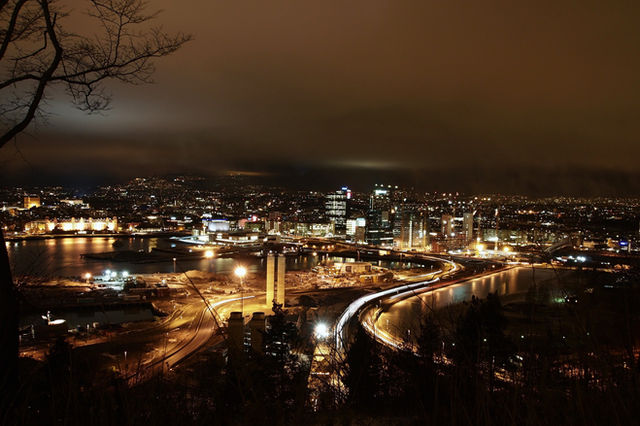
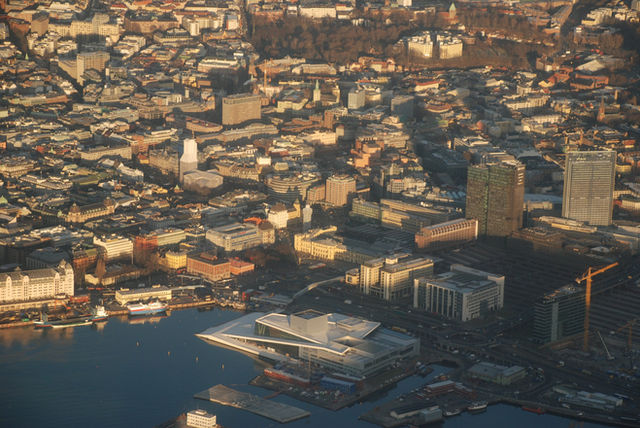
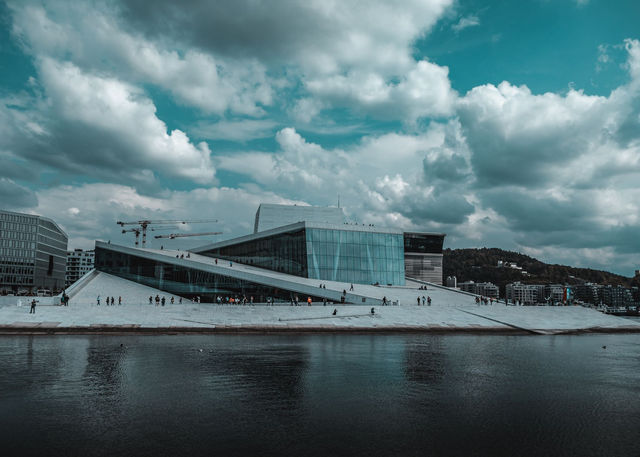
The Opera House and the Bjørvika waterfront — Start where new Oslo shows off. The Oslo Opera House rises straight out of the fjord as a single sheet of white Italian marble, and its great genius is that the roof is a public square — you simply walk up the sloping stone from the waterline to the ridge, free, at any hour, for a view back over the harbour and the Barcode towers. Below and around it the district keeps unfolding: the Munch museum's leaning tower, the striped Deichman Bjørvika library with its reading terraces, and a waterfront promenade that now runs almost unbroken along the fjord. Come at dusk, when the marble goes pink and the glass lights up.
Munch, the National Museum and the city's art — Oslo is Edvard Munch's city, and it does him properly. The new National Museum, opened in 2022, is the largest art museum in the Nordics and holds the country's masterpieces, including the version of Munch's *The Scream* that most people come to see, alongside the national romantics and a broad international collection. The dedicated Munch museum down on the Bjørvika waterfront then gives him a whole tower of his own — the fuller, darker sweep of his work over many floors. Between the two you get both the single icon and the man's entire arc, a short walk or tram apart.
Vigeland Sculpture Park — Out west in the green of Frognerparken, Gustav Vigeland spent decades filling a park with more than two hundred of his own figures in bronze, granite and iron — a naked, wrestling, embracing, squalling humanity arranged along a central axis that climbs to the great Monolith, a single stone pillar of intertwined bodies. It is free, open day and night, never ticketed, and quietly one of the strangest and most moving public spaces in Europe. Go early or late to have the avenue of bronzes and the fountain more or less to yourself.
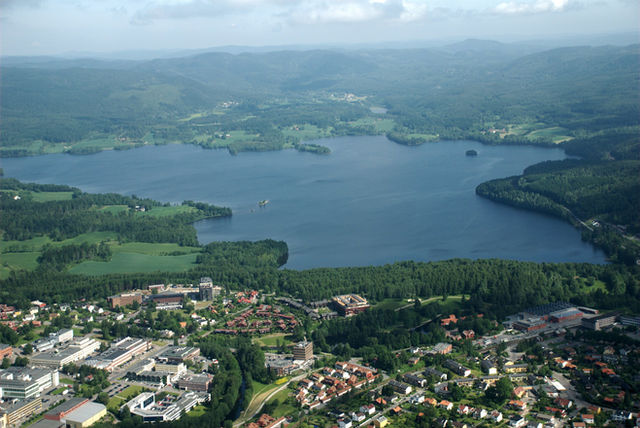
Up into the forest — Holmenkollen and the Nordmarka — Oslo's best trick is how close the wilderness is. Ride the T-bane metro up out of the city and in half an hour you're at Holmenkollen, where a vast modern ski jump curves against the sky with a museum in its base and a viewing platform at the top looking back down over the whole city and fjord. Beyond it spread the forests and lakes of the Nordmarka, threaded with trails — walking and cycling in summer, cross-country ski tracks in winter, all on the same transport ticket as the city centre. Few capitals let you swap a museum for a forest ridge this fast.
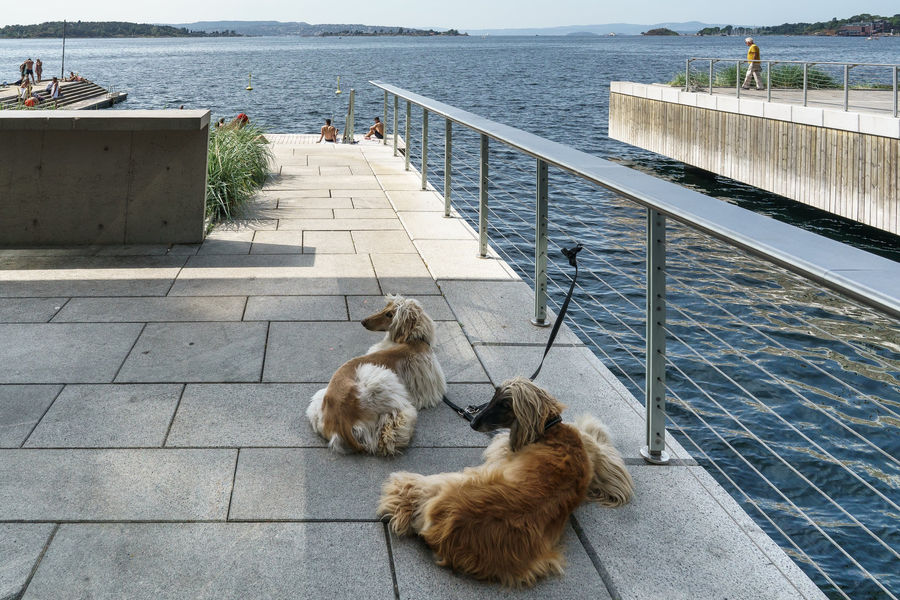
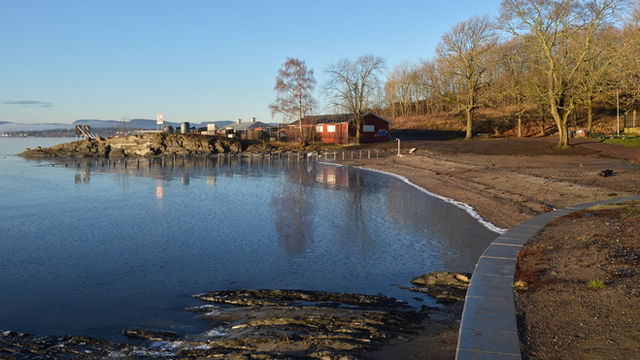
The fjord, the islands and the saunas — In summer the water is where Oslo goes to play. Public ferries run from the harbour out to the inner-fjord islands — Hovedøya with its monastery ruins and beaches, and others beyond — for walking, picnicking and swimming, all on the ordinary Ruter ticket. Back on the harbour, floating saunas have become a genuine local obsession: wood-fired boxes moored off the quays where you sweat, then drop straight into the cold fjord, year-round. Between the boardwalk bathing at Tjuvholmen, the island ferries and the saunas, the fjord turns the centre of the city into a summer lido.