One day
Start at Republic Square and walk down Knez Mihailova to Kalemegdan, spending the late afternoon on the ramparts and the Victor monument. Drop to Skadarlija for dinner in a traditional tavern.
Serbia's capital on the Sava and Danube: Kalemegdan fortress, river bars, Skadarlija, the Tesla Museum and a nightlife scene that runs late.
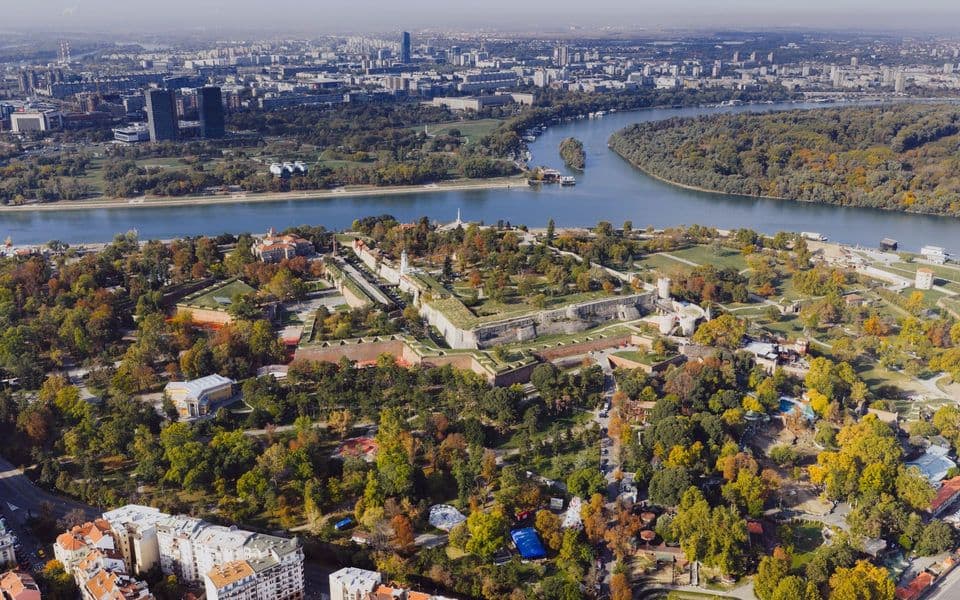
Late sun on the stone walls of Kalemegdan, the Sava and the Danube sliding together below, and a riverside bar already filling for the night.
Belgrade is Serbia's big, unpolished capital, built where the Sava meets the Danube and crowned by the Kalemegdan fortress. It is known for its river bars, café culture and late nights, and it is a lively, good-value alternative to a Budapest or Prague weekend. Novi Sad and Fruška Gora are an easy day trip, and you can see the main sights in three days.
Belgrade sits where the Sava flows into the Danube, a position that has made it a prize for Celts, Romans, Slavs, Hungarians, Ottomans and Austrians; the national tourist board says it has been razed and rebuilt as many as 38 times. It has been Serbia's capital since 1841. The Kalemegdan fortress and park, more than 60 hectares of walls, gates and lawns, still dominate the point of land above the rivers, and the old town runs away from it along Knez Mihailova towards Republic Square.
What makes Belgrade different from the neater capitals nearby is its energy. River barges and bars line the Sava and Danube banks, Savamala has street art, galleries and coffee houses with live music, and the city has a reputation for a nightlife that goes on until morning. It is also changing fast, with Belgrade Waterfront and the Belgrade Tower on the Sava. For the wider picture, see our Serbia guide.
Belgrade works for a city break because it is loose, lively and varied. You can walk from a medieval fortress to the Tesla Museum in a day, spend the evening in a riverside bar or a traditional kafana, and still feel you have barely started. The nightlife is a main reason people come, but the museums, the Church of Saint Sava and the parks matter just as much. It also makes a good base: Novi Sad and Fruška Gora are an easy day out. Swap it: Belgrade for Dubrovnik, if you want a Balkan city break with a working capital's pulse rather than a walled old town set up for cruise days; you give up the Adriatic swim.
Kalemegdan fortress at sunset The fortress and park above the Sava and Danube cover more than 60 hectares and attract about two million visitors a year. Walk the gates and ramparts, find the Victor monument and watch the light drop over New Belgrade.
Knez Mihailova to Skadarlija Belgrade's pedestrian main street leads from Republic Square towards the fortress, with cafés, shops and street performers. Skadarlija, a short walk away, is the old bohemian quarter of taverns and live music.
An evening on the rivers Many of Belgrade's restaurants and cafés sit on river barges, with views of the water and the city. Savamala's galleries and street art make a good start before dinner, and Dorćol on the Danube has a culture centre with year-round plays, workshops and concerts.
Nikola Tesla Museum In Vračar, the museum offers 45-minute guided tours that show working models of Tesla's machines and his personal items, with a film on his life. Tours run in English and Serbian.
Church of Saint Sava The great domed church in Vračar is one of the city's best-known buildings and a short ride from the Tesla Museum. It is an active place of worship, so dress modestly.
Belgrade Waterfront and the Belgrade Tower The newest part of the city, on the Sava. The tourist board says the 42-floor Belgrade Tower is the tallest building in Serbia and a fast lift takes you up in 25 seconds to an observation deck.
A day out to Novi Sad and Fruška Gora The Petrovaradin Fortress above the Danube and the forested ridge of Fruška Gora, Serbia's oldest national park, make an easy day trip north.
Belgrade neighbourhood by neighbourhood — the character of each and who it suits.
The historic core between Republic Square and the fortress, with the pedestrian Knez Mihailova street, cafés and the Kalemegdan park above the rivers.
The old tavern quarter near the centre, the city's traditional place for a long dinner with live music.
The Sava-bank district of galleries, street art, culture centres and coffee houses with live music, next to the new Belgrade Waterfront.
A residential quarter on the Danube bank with a culture centre, Dorćol Plac, that stages plays, workshops and concerts year round.
A leafy residential district south of the centre, home to the Nikola Tesla Museum on Krunska Street and the Church of Saint Sava.
A historic riverside town on the Danube that is now part of Belgrade, on the far side of the Sava from the old centre.
Belgrade eats in taverns, or kafana, which the national tourist board calls a serious cultural institution in the city; everything good, it says, began in a tavern. Expect grilled meat, salads and pies, and a glass of rakija, the fruit brandy, to start or finish. The tourist board also promotes Serbian wine and craft beer, and green markets are good for fruit, cheese and local produce. Skadarlija is the traditional place for a tavern evening with live music, while Savamala and the Waterfront have newer restaurants. Booking ahead for weekend dinners is wise.
Traditional Serbian food leans heavily on grilled meat, so vegetarians should ask carefully in kafanas. Pies, salads, cheese and vegetable sides are easy to find, and the newer cafés in Savamala and Dorćol are more used to vegetarian and vegan requests. Allergen labelling is less consistent than in the UK, so say clearly what you cannot eat. Halal and kosher options are limited, so plan ahead.
Choose by mood. The old town around Knez Mihailova and Skadarlija puts you on foot to the fortress, the cafés and the taverns, at the cost of evening noise. Savamala and the Waterfront suit river views, galleries and modern hotels. Dorćol, on the Danube, is calmer and more local. Vračar puts you near the Tesla Museum and the Church of Saint Sava, and Zemun is an old riverside town with a village feel, a bus ride from the centre. Hotels register you with the police for you.
Pan, zoom and compare live prices — every stay in one map.
We may earn a commission if you book through these links, at no extra cost to you. How we make money
The old town and fortress are best on foot, and Knez Mihailova is pedestrianised. The riverside quarters of Savamala and Dorćol are walkable from the centre, but distances to Vračar, New Belgrade and Zemun are long enough to want a bus, tram or taxi. The FCDO's advice for taxis is to use registered cabs with a municipal registration number alongside the cab number, or to call a radio taxi, and most operators speak English. Expect slow traffic at busy hours, and keep your belongings close on crowded public transport.
The city's Secretariat for Public Transport publishes bus, tram, trolleybus and night lines, plus the BG Voz suburban rail service, with timetables and notices of route changes on its website. Check there before you travel, since routes are sometimes diverted for works. The FCDO says pickpockets work on public transport, so keep bags closed. For fares and how to pay, check the operator's site on the day rather than relying on a printed guide.
Ready-made day plans for Belgrade — from a single day to a long weekend.
Start at Republic Square and walk down Knez Mihailova to Kalemegdan, spending the late afternoon on the ramparts and the Victor monument. Drop to Skadarlija for dinner in a traditional tavern.
Spend a morning at the Tesla Museum in Vračar and a visit to the Church of Saint Sava, then head to Savamala and the Waterfront for the afternoon. Finish with a riverside bar or a barge restaurant on the Sava or Danube.
Day three, take a day trip north to Novi Sad for the Petrovaradin Fortress and a stroll in the centre, or to Fruška Gora for a walk through the park. Return for a last kafana dinner.
Three days covers the fortress, the old town, the Tesla Museum and Church of Saint Sava and a riverside evening or two. Add a fourth for a day trip to Novi Sad or Fruška Gora.
No. The FCDO says UK passport holders can visit Serbia for up to 90 days within a 6-month period for tourism. Your passport must expire at least 90 days after you leave. Serbia is outside the Schengen area, so EES and ETIAS do not apply to entering Serbia.
Yes, within 24 hours of arrival. A hotel does this automatically; if you stay in a private rental, ask your host.
The Serbian dinar (RSD). The National Bank of Serbia's official rate on 28 October 2026 was about 140 dinars to the pound. Change money at banks or official exchange offices only.
The FCDO does not advise against travel to Serbia, but it warns about demonstrations, pickpockets in tourist areas and on public transport, and a general terrorism risk. Read its page before you go.
No. The NHSBSA's list of GHIC countries names Montenegro but not Serbia. A separate UK-Serbia reciprocal agreement covers hospital and some other treatment if you show your UK passport, with prescribed medicines charged (GOV.UK, updated 2 October 2026), and the FCDO lists extra papers. Take travel insurance either way.
If you want a livelier, looser city at likely lower day-to-day costs, yes. You give up the polished, compact historic centres of those two.
May to June and September to October for comfortable weather; July and August are hot at midday but lively
What to expect — Warming quickly: highs average about 17°C in April and 22°C in May, with terraces opening and the Belgrade Dance Festival in April.
What's best — The fortress and parks as they turn green, and comfortable walking days before the summer heat.
What to expect — Hot at midday: highs of about 27°C in June, 29.6°C in July and 29.2°C in August, so plan around mornings and evenings. Wildfire risk rises in the dry countryside.
What's best — River bars and barges, long evenings, and the liveliest nightlife of the year.
What to expect — Warm in September at about 24°C, easing to about 19°C by October, with moderate rain.
What's best — Comfortable sightseeing, terraces still open and fewer people than at the peak of summer.
What to expect — Cold and grey, with January highs of about 6°C and lows below freezing; trains can be slow.
What's best — Museums, the Tesla Museum, taverns and the cosy side of the café culture.
Skip a Budapest or Prague weekend if you want a looser, livelier and likely cheaper city → Belgrade gives you rivers, nightlife and fewer polished set-pieces, but you give up compact historic centres.
Skip Dubrovnik's walled old town if you want a working capital rather than a cruise stop → Belgrade has the fortress, river bars and a real city's pulse; you give up the Adriatic swim.
Skip hailing any cab → use a registered taxi with a municipal registration number, or call a radio taxi, as the FCDO advises.
UK passport holders can stay up to 90 days in any 6-month period without a visa.
Your passport must expire at least 90 days after you plan to leave.
Get your passport stamped on entry, and register with the police within 24 hours; hotels do this for you.
EES and ETIAS do not apply to entering Serbia, which is outside Schengen.
The currency is the dinar (RSD); the National Bank of Serbia's official rate on 28 October 2026 was about 140 dinars to the pound.
Change money only at banks or official exchange offices, not with street dealers.
British banks do not normally exchange dinars, and Scottish and Northern Irish notes cannot be exchanged.
The Tesla Museum takes cash in dinars only.
Demonstrations can form at short notice in Belgrade and may disrupt transport and mobile networks; stay away from them.
Tesla Museum tours can fill, so arrive at least 15 minutes before the hour.
Football derbies between Red Star and Partizan can bring disruption near the stadiums.
The GHIC does not apply in Serbia; the NHSBSA list names Montenegro but not Serbia.
A separate UK-Serbia agreement covers hospital and some other treatment on a UK passport, but prescribed medicines are charged, so take full travel insurance.
Dial 194 for an ambulance and 112 for emergencies.
Belgrade is generally cheaper day to day than a Budapest or Prague weekend, mainly for food, drink and local transport, though accommodation near the centre and on summer weekends costs more; we have no official price comparison to quote, so check current rates.
112 (general emergency); 194 (ambulance, per FCDO)
Most British visitors fly into Belgrade Nikola Tesla Airport (BEG). Air Serbia sells flights from London Heathrow and Wizz Air sells flights from London, and the airlines' own schedules show which London airport and which days apply, so check them before booking. Niš Constantine the Great Airport in the south is served by Wizz Air from London, which suits a trip focused on the south rather than the capital. From the airport, use registered taxis, which the FCDO recommends, or the city's public transport; check the airport's website for current options and times. By rail or road, Belgrade's Prokop station is the hub for domestic and international rail, and the FCDO says to enter Serbia only through recognised border crossings.
Flights, airport transfers and car hire to BEG — search and compare without leaving the page.