← South Africa
SOUTH AFRICA · CITY

Cape Town

A harbour city at the foot of Table Mountain, with Atlantic and False Bay beaches, Robben Island, the Bo-Kaap and the Winelands within a day trip.

  • City
  • February to April and November for warm, mostly dry days (average highs of about 23–26.5°C); December and January are the busy summer-holiday peak, and June to August is the wettest stretch
  • CPT
  • 4–6 days (longer with the Winelands)
  • Table Mountain
  • Two Oceans
  • Bo-Kaap Colour
  • Cape Winelands Gateway

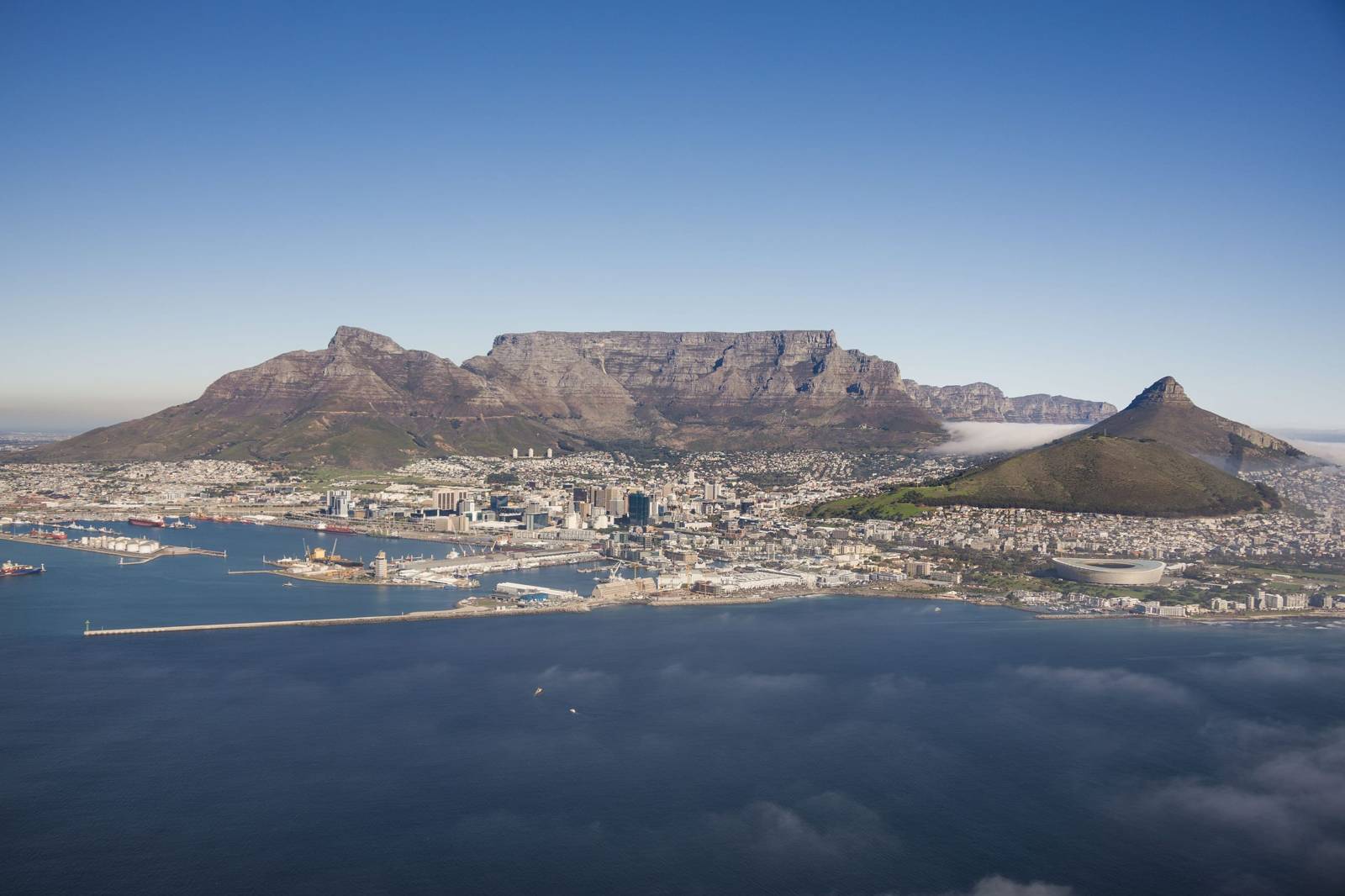
The cloud "tablecloth" pouring over the edge of Table Mountain, Lion's Head standing guard to one side, and the city spread out below it down to the cranes and quays of the V&A Waterfront.

Cape Town is a harbour city wrapped around the foot of Table Mountain, where a flat-topped massif, two coastlines and a working waterfront all sit within a short drive of each other. Come for the cableway and the beaches, stay for the food, the history on Robben Island and the light over the Atlantic in the evening.

Type
city
Ideal length
4–6 days (longer with the Winelands)
Getting around
ride-hailing and a hire car for most trips; MyCiTi buses in the centre and along the Atlantic seaboard (the airport route is suspended); walking within the City Bowl and the Waterfront
Neighbourhoods
8 areas
Best season / months
February to April and November; December and January are the busy peak
Language
English is used everywhere; Afrikaans and isiXhosa are widely spoken
Currency
South African rand (R / ZAR)
Budget level
from backpacker to luxury
Good for
  • First-timers
  • Families
  • Food & wine
  • Outdoors
  • Beaches
  • History
▸ Discover

About Cape Town

Cape Town fills the bowl and coastline around Table Mountain, near the south-western tip of Africa. The City Bowl — the old centre — sits directly under the mountain's north face, with the colourful lanes of the Bo-Kaap on its slopes and the V&A Waterfront on the harbour below. West of the mountain, the Atlantic seaboard runs past Sea Point, Clifton and Camps Bay beneath the Twelve Apostles ridge; to the east and south, the leafy southern suburbs lead to Kirstenbosch and the Constantia vineyards, and on to the warmer, surf-friendly False Bay shore at Muizenberg, Kalk Bay and Simon's Town. The peninsula ends at Cape Point, inside Table Mountain National Park. It is a spread-out city where the mountain is the compass: you are always either facing it or looking back at it.

Why go

Few cities put this much wild landscape this close to the centre. We can ride a cable car up Table Mountain, one of the official New7Wonders of Nature, watch African penguins from the boardwalks at Boulders and take the ferry to Robben Island, all in the same city. Add a serious food and wine scene a short drive from the centre, and a history (Cape Malay, colonial and apartheid-era) told plainly in its museums, and Cape Town earns its long-haul flight.

Don't miss

  • Table Mountain — the Aerial Cableway or a hike to the flat summit
  • Robben Island — the ferry from the Nelson Mandela Gateway
  • The V&A Waterfront — harbour, Zeitz MOCAA and the Two Oceans Aquarium
  • Boulders Beach — the African penguin colony near Simon's Town
  • Kirstenbosch National Botanical Garden — on the mountain's eastern flank

Signature experiences

Up Table Mountain — The Table Mountain Aerial Cableway runs from the lower station on Tafelberg Road to the summit in under five minutes, in cars whose floors rotate so everyone gets the full view. On top, short paths cross the flat plateau to lookouts over the city, Robben Island and the Atlantic. Fit walkers can hike up instead (Platteklip Gorge is the most direct route, steep and unshaded) and ride down. The cableway closes in bad weather, and tickets bought online are cheaper and valid for seven days, so we go on the first clear morning rather than saving it for the last day.

Robben Island and the city's history — Ferries leave the Nelson Mandela Gateway at the V&A Waterfront for Robben Island, where Nelson Mandela spent 18 of his 27 years in prison, a UNESCO World Heritage Site since 1999. The standard tour takes about three and a half hours including the crossings and runs weather permitting. Back on the mainland, the District Six Museum on Buitenkant Street tells the story of a neighbourhood declared white under the Group Areas Act in 1966, whose 60,000-plus residents were removed and their homes bulldozed. For us these are the most important hours of any visit.

The Waterfront and its museums — The V&A Waterfront packs a lot into a short walk. Zeitz MOCAA, in a converted grain silo in the Silo District, is a large museum of contemporary African art; the Two Oceans Aquarium, on Dock Road, has a kelp forest exhibit and a 1.6-million-litre ocean exhibit with rays and rescued turtles. The quays are still a working harbour.

Down the peninsula to the penguins — The classic day out: over Chapman's Peak Drive, a toll road cut into the cliffs above the Atlantic, then down to Cape Point and the Cape of Good Hope inside Table Mountain National Park, where the Flying Dutchman funicular climbs to the old lighthouse. We come back up the False Bay side via Boulders near Simon's Town, where SANParks boardwalks lead to the African penguin colony at Foxy Beach, and stop in Kalk Bay for fish and chips by the harbour. The baboons on the peninsula can be aggressive: SANParks asks that nobody feeds them.

Gardens and vineyards in the southern suburbs — Kirstenbosch National Botanical Garden sits on the eastern slopes of Table Mountain, planted with South African species and crossed by the raised Tree Canopy Walkway, the 'Boomslang'. A short drive further, Groot Constantia dates its wine-making to a land grant of 1685 and calls itself South Africa's oldest wine-producing farm: a wine tasting without leaving the city.

Into the Winelands — Stellenbosch and Franschhoek make easy day trips. Stellenbosch Wine Routes lists hop-on hop-off wine tours from the town, and the Franschhoek Wine Tram loops through the valley between estates (the valley's tourism association advises booking ahead).

Neighbourhoods

Cape Town neighbourhood by neighbourhood — the character of each and who it suits.

  • City Bowl

    The old centre under Table Mountain's north face, where colonial landmarks, street markets and office blocks share a compact grid.

    Why go
    For the city's history in one walk, from the oldest gardens to the museum of District Six's forced removals.
    Best for
    Historymuseumscafésfirst-day orientation
    Known for
    The Company's Garden, the District Six Museum on Buitenkant Street, Greenmarket Square, Long Street and the Castle of Good Hope.
  • Bo-Kaap

    A hillside quarter of brightly painted houses and steep lanes on the slopes of Signal Hill, settled by freed slaves after emancipation in 1834 and home to a long-established Cape Muslim community.

    Why go
    For the colour, the mosques and the food heritage of one of the city's oldest neighbourhoods: a living community, not a set.
    Best for
    WalkingphotographyCape Malay foodheritage
    Known for
    The painted houses of Wale Street and its side lanes, the Iziko Bo-Kaap Museum in one of the area's earliest homes, and the Auwal Mosque, the first at the Cape.
  • V&A Waterfront

    The working harbour turned into the city's busiest visitor district, with quays, shops, restaurants and the mountain as backdrop.

    Why go
    Several headline sights sit side by side here, and it is the departure point for Robben Island.
    Best for
    Familiesmuseumsthe aquariumharbour walks
    Known for
    The Two Oceans Aquarium, Zeitz MOCAA in the Silo District, the Clock Tower, the Watershed market hall and the Nelson Mandela Gateway ferry terminal.
  • Sea Point and Green Point

    A dense seafront strip of apartment blocks and restaurants facing the Atlantic, running west from the Waterfront through Green Point.

    Why go
    For the promenade, the city's favourite place to walk, run and watch the sunset, and an easy base between the centre and the beaches.
    Best for
    Sunset walkscasual eatingseafront runninggood-value stays
    Known for
    The Sea Point Promenade, its lawns and tidal pools, the Green Point Fan Walk where the Cape Town Carnival parades, and the view back to Lion's Head and Signal Hill.
  • Camps Bay and Clifton

    Beach suburbs under the Twelve Apostles ridge: Camps Bay palm-lined and busy, Clifton a run of small beaches between granite boulders.

    Why go
    For the classic Atlantic beach scene and the mountain wall behind the sand.
    Best for
    Beachessundownerspeople-watching
    Known for
    Camps Bay beach and its promenade strip, the Twelve Apostles above it, and Clifton's small beaches between the granite boulders.
  • Woodstock

    A former industrial district east of the centre, now full of street art, studios, design shops and weekend markets.

    Why go
    For a grittier, creative side of the city and its best-known Saturday food market.
    Best for
    Street artmarketsgalleriescoffee
    Known for
    Its large murals, the Old Biscuit Mill on Albert Road and its Saturday Neighbourgoods Market (MyCiTi route 261 stops outside).
  • Constantia

    Leafy southern suburbs of vineyards and old estates on the far side of Table Mountain, with Kirstenbosch just to the north.

    Why go
    For wine tastings and long lunches without leaving the city, and a quiet base with a car.
    Best for
    Winegardenscouplesa slower pace
    Known for
    Groot Constantia, which dates its wine-making to 1685, the other estates of the Constantia valley, and Kirstenbosch National Botanical Garden nearby.
  • Muizenberg, Kalk Bay and Simon's Town

    The False Bay shore: Muizenberg's surf beach and painted bathing huts, Kalk Bay's fishing harbour and shops, and Simon's Town further south.

    Why go
    For learning to surf, a slower seaside day and the penguins at Boulders, on the way to or from Cape Point.
    Best for
    Surfingfamiliesbeach walkspenguins
    Known for
    The striped beach huts at Muizenberg, Kalk Bay harbour and its fish and chips, and the African penguin colony at Boulders near Simon's Town.

Views & quieter corners

Best views

  • The summit of Table Mountain — the whole city, the harbour and Robben Island laid out below
  • Lion's Head — a popular, steep early-morning or sunset hike with a 360-degree view
  • Signal Hill — a road-accessible lookout over the City Bowl and Sea Point at sunset
  • Bloubergstrand — across Table Bay, the classic postcard view of the mountain over the water

Quieter corners

  • The tidal pools along the Sea Point Promenade — a cold Atlantic dip with locals at sunrise
  • The Kalk Bay harbour — fishing boats unloading and the seals that wait for scraps
  • The quieter upper lanes of the Bo-Kaap, away from the most-photographed corner
  • The Company's Garden — shaded paths in the centre, a calm break from the City Bowl traffic

Food & drink

Cape Town eats very well. The city's own cuisine comes from the Cape Malay kitchen (fragrant curries, bobotie and koesisters), best explored in and around the Bo-Kaap. Seafood is everywhere, from fish and chips at the Kalk Bay harbour to snoek on the braai. The Neighbourgoods Market at the Old Biscuit Mill in Woodstock on Saturdays and the Waterfront's food halls show the modern side, and the wine comes from the Constantia estates within the city and the Winelands just beyond it.

  • Bobotie — spiced minced meat baked under a savoury egg custard, a Cape Malay classic
  • Cape Malay curry — mild, fragrant and slightly sweet, often served with sambals
  • Gatsby — a huge, shareable sandwich roll stuffed with chips and fillings, a Cape Town original
  • Koesisters — spiced, syrup-coated Cape Malay doughnuts dusted with coconut
  • Snoek — a local fish, often grilled on the braai with an apricot glaze
  • Cape wine — Chenin Blanc and Pinotage from Constantia and the Winelands
Dietary notes

Vegetarian and vegan options are easy in the City Bowl, Woodstock and the Waterfront, where menus label them clearly. Halal food is widely available, especially in the Bo-Kaap with its Cape Malay heritage. Kosher choice is limited but exists around Sea Point; gluten-free is well understood in mid-range and higher restaurants.

▸ Where you'll stay

Where you'll stay in Cape Town

Most visitors split between the City Bowl, the Waterfront and the Atlantic seaboard. The City Bowl and its De Waterkant and Gardens edges are central, walkable and well placed for the cableway and the museums. The V&A Waterfront is the most polished and secure-feeling base, but also the priciest and the most touristy. Sea Point is the best-value seafront base, with the promenade on the doorstep and MyCiTi buses into town. Camps Bay and Clifton are for the beach, at a high price and with more reliance on taxis.

  • Budget
    Sea Point or the City Bowl around Long Street good value, lively, easy bus or ride-hailing links.
  • Mid-range
    Gardens or De Waterkant in the City Bowl walkable, close to the cableway, the Bo-Kaap and the Waterfront.
  • Luxury
    The V&A Waterfront or Camps Bay harbour or Atlantic views, the city's most polished address.
Stay

Hotels & rentals around Cape Town

Pan, zoom and compare live prices — every stay in one map.

We may earn a commission if you book through these links, at no extra cost to you. How we make money

▸ Getting around

Getting around Cape Town

There is no metro. Most visitors use ride-hailing apps for door-to-door trips, plus a hire car for the peninsula and the Winelands. MyCiTi buses run from Atlantis in the north to Hout Bay in the south and serve the City Bowl, the Waterfront and the Atlantic seaboard; each passenger needs their own myconnect card, loaded at station kiosks or participating shops. The FCDO counts MyCiTi in the centre and along the Atlantic Seaboard among the safer options, but advises against taking it into townships. The City Bowl, the Bo-Kaap and the Waterfront are walkable by day. We don't use Metrorail trains: the FCDO lists them among the services with a greater risk of theft, violence and unreliable service.

The City Bowl, the Bo-Kaap and the Waterfront are roughly 15–25 minutes apart on foot; MyCiTi and ride-hailing link them to Sea Point and Camps Bay. Woodstock is a short ride east of the centre; Kirstenbosch, Constantia and Muizenberg are roughly 20–40 minutes by car to the south.

▸ Plan your days

Suggested itineraries

Ready-made day plans for Cape Town — from a single day to a long weekend.

One day

Ride the Table Mountain Aerial Cableway at opening for a clear view, then come down to the City Bowl for the Company's Garden and the District Six Museum. Walk up the painted lanes of the Bo-Kaap for a Cape Malay lunch, then head down to the V&A Waterfront for the afternoon and an evening along the Sea Point Promenade at sunset.

Two days

Give day two to history and the harbour: the morning ferry from the Nelson Mandela Gateway to Robben Island, then Zeitz MOCAA or the Two Oceans Aquarium back at the V&A Waterfront. Finish with sundowners at Camps Bay or a quick drive up Signal Hill.

Three days

Drive the peninsula: over Chapman's Peak Drive to Cape Point, back via Boulders and its penguins, and fish and chips in Kalk Bay. If there is energy left, finish in Muizenberg, or make a separate morning of Kirstenbosch and a wine tasting in Constantia.

Four to six days

Add a Winelands day: a hop-on hop-off wine tour from Stellenbosch, or the Franschhoek Wine Tram through the valley (book ahead), with lunch on an estate. Keep a spare day for whatever the weather cancelled, whether the cableway or the Robben Island ferry, and a Saturday morning at the Neighbourgoods Market in Woodstock.

▸ What you'll do

Insider tips

  • Car guards in high-visibility vests watch parked cars on many streets; a small tip when you leave is the custom.
  • Chapman's Peak Drive is a toll road and closes from time to time for high winds, heavy rain, maintenance or clearing rocks from the catch fences — check its live road status before you plan the peninsula loop.
  • The Atlantic side is cold all year — the swimming is far warmer on the False Bay beaches at Muizenberg and near Simon's Town.

Frequently asked

Are there direct flights from the UK to Cape Town?

Yes, from London Heathrow. British Airways flies the route and says a third daily Heathrow–Cape Town flight starts in December 2026. Virgin Atlantic runs a seasonal daily service from Heathrow, from 15 October 2026 to 20 April 2027 this season, with a flight time of about 11 hours. We search fares on our Cape Town flights page.

Do British citizens need a visa for South Africa?

Not for a holiday of up to 90 days, according to the FCDO. The passport must be valid for at least 30 days after the day we leave South Africa and have at least two blank pages. Since 1 July 2026 every traveller entering or leaving South Africa must submit an online traveller declaration to the South African Revenue Service before travelling. There are extra requirements for children aged 17 and under, set by the Department of Home Affairs, so families should check them before booking.

How do we get from the airport into the city?

Cape Town International Airport lists Uber, Bolt, a small number of shuttle operators and its Authorised Airport Taxi Services as the authorised options, and warns against unsolicited offers of a ride. The MyCiTi airport bus is temporarily suspended. The FCDO reports an increase in targeted attacks on the routes to and from the airport and advises staying on the M3 and N2 rather than the R300, and not following GPS routes away from main roads.

Is it safe to hike Table Mountain?

Many people do, but the FCDO reports recent violent attacks and muggings on hikers in Table Mountain National Park and says rescuers get regular calls. We follow its advice and SANParks': hike in a group of four or more, stick to busy, marked trails, start early and finish before dark, tell someone our route, and save the park's emergency number (086 110 6417).

How do we book Robben Island?

Through the Robben Island Museum's official online ticketing. Tours leave from the Nelson Mandela Gateway at the V&A Waterfront and take about three and a half hours including the ferry crossings. They run weather and demand permitting, so we book early in a trip to leave room to rebook.

Where can we see the penguins?

At the Boulders section of Table Mountain National Park near Simon's Town. SANParks runs boardwalks to the colony from Foxy Beach, charges a conservation fee, and asks visitors not to touch or feed the birds.

Is load-shedding still a problem?

Much less than it was. In early October 2026 Eskom reported more than 500 consecutive days without load-shedding since 16 May 2025. Planned cuts can still return, and the FCDO notes they can still happen, so we check Eskom's status before travelling.

How many days do we need?

Four to six days covers the mountain, Robben Island, the Waterfront, the Bo-Kaap and a peninsula drive to Cape Point and Boulders. We add a day or two for the Winelands.

Can we do the Winelands as a day trip?

Yes. Stellenbosch Wine Routes lists hop-on hop-off wine tours from Stellenbosch town, and in Franschhoek the Wine Tram loops through the valley between wine estates; the valley's tourism association advises booking ahead. For a night in the valley, see Sterrekopje Farm in Franschhoek.

What's on

While you're there

Explore

Explore the area

© OpenFreeMap · OSM · terrain Mapterhorn
Plan

Trips in Cape Town

Day-by-day itineraries that take in Cape Town — routes, timings and what to book.

▸ Budget

What it costs in Cape Town

Backpacker
Hostel bed, markets and casual food, MyCiTi buses and free hikes keep daily costs low, with the big-ticket attractions as occasional treats.
Mid-range
comfortable without being extravagant.
Luxury
no real ceiling — the city's best hotels and restaurants price themselves accordingly.
Cash vs card
Cards and contactless work almost everywhere; carry small notes for tipping car guards, petrol attendants and market stalls.
Tipping
Expected — leave a tip for table service in restaurants (check first whether a service charge is already on the bill), plus small tips for car guards and petrol-station attendants.
▸ When you'll go

When to visit Cape Town

February to April and November for warm, mostly dry days (average highs of about 23–26.5°C); December and January are the busy summer-holiday peak, and June to August is the wettest stretch

Spring

What to expect — September to November warms from average highs of about 19°C to 23.5°C, and the rain falls away from about 40 mm to 14 mm a month. Changeable at first, settled by November, with the busy season starting in December.

What's best — Kirstenbosch in flower, quieter beaches, and southern right whales along the False Bay coast, which the City of Cape Town says visit from June to November.

Summer

What to expect — December to February is warm and dry, with average highs of about 25–26.5°C and 15–17 mm of rain a month. It is the busiest time, especially over Christmas, New Year and the school holidays, and strong south-easterly winds can blow for days.

What's best — Long beach days, the Summer Sunset Concerts at Kirstenbosch (late November to March) and the city at its liveliest. On windy days we swap the exposed Atlantic beaches for a more sheltered cove.

Autumn

What to expect — March to May cools from average highs of about 25°C to 20°C, with rain rising from about 20 mm to 69 mm a month by May. The summer crowds thin after Easter.

What's best — Our pick for a first visit, especially March and April: warm, mostly dry days for Table Mountain and the peninsula drive, the Cape Town Carnival in March, and harvest time in the Winelands.

Winter

What to expect — June to August is the wet season, with average highs of about 17.5–18°C, nights of about 7–8°C and 77–93 mm of rain a month, between bright, calm days. The cableway and Robben Island ferries are more often stopped by weather.

What's best — Green mountain slopes, fewer visitors, museums and wine tastings on rainy days, and the start of whale season along the False Bay coast.

▸ Know before you go

Know before you go

Honest swaps

Skip the mid-morning queue at the cableway in high summer → buy tickets online (cheaper, and valid for seven days) and go at opening, or book a Fast Track timeslot.

Skip the crowded Camps Bay strip on a windy day → try the smaller coves at Clifton, or Muizenberg on the False Bay side.

Skip a rushed half-day "peninsula highlights" coach → drive Chapman's Peak, Cape Point and Boulders at your own pace, with a stop in Kalk Bay.

Crowds & timing

December to mid-January is peak season: book Robben Island and cableway tickets well ahead, and arrive early at Boulders, where SANParks says parking is limited in the peak summer months.

Robben Island ferries and the cableway both depend on the weather, so we plan them early in a stay to leave room to rebook.

Power cuts (load-shedding) are now rare: Eskom reported more than 500 days without load-shedding in early October 2026, but they can return, so we check Eskom's status and pack a power bank.

Local rules & etiquette

Treat the mountain seriously: the FCDO and SANParks advise hiking in a group of four or more on busy, marked trails, starting early and finishing before dark. Take water and a windproof layer, tell someone your route, and save the park's emergency number, 086 110 6417.

Use ride-hailing or a car after dark rather than walking between neighbourhoods, and keep valuables out of sight in parked cars.

The Bo-Kaap is a residential neighbourhood with a long Cape Muslim history: dress modestly near the mosques and ask before photographing people at their homes.

Don't feed the baboons on the peninsula or touch the penguins at Boulders.

Money

South Africa uses the rand (R, ZAR), issued by the South African Reserve Bank in R10, R20, R50, R100 and R200 notes.

Cards and contactless work almost everywhere; carry small notes for car guards, petrol attendants and market stalls.

Cash above R25,000 per person (or foreign currency worth more than US$10,000) must be declared on arrival, according to the FCDO.

At ATMs, cover your PIN and turn down offers of help.

After dark

Long Street and Bree Street in the City Bowl are the main bar and late-dining strips.

The V&A Waterfront is the easy, family-friendly evening, busy until late.

Sea Point and Camps Bay are about sunset drinks and seafront dinners rather than late nights.

Safety

We read the FCDO's South Africa safety advice before every trip (checked 28 October 2026; the FCDO page was last updated on 8 July 2026). For Cape Town its main points are these. Most violent crime happens in townships, informal settlements and other high-density areas, and it advises visiting townships only with a reliable tour guide. It reports an increase in violent crime and targeted attacks on journeys to and from Cape Town airport, and advises staying on the M3 and N2 rather than the R300. Carjacking and robbery are common, especially after dark and at traffic lights and junctions.

On the mountain, the FCDO reports recent violent attacks and muggings on hikers and tourists in Table Mountain National Park. It advises hiking in groups of four or more on busy, marked trails, starting early, finishing before dark and checking SANParks for current guidance; Wilderness Search and Rescue is on 021 937 0300.

For getting around, it lists minibus taxis and Metrorail trains among the services with a greater risk of theft, violence and unreliable service, and MyCiTi buses in the city centre and on the Atlantic Seaboard and app-booked e-hailing among the safer options. At ATMs we cover the PIN and refuse help from strangers. On the beaches, many people drown every year in strong currents, so we swim only between the red and yellow flags. Rabies has been found in seals along the Cape Peninsula: we keep our distance and get medical help at once if bitten.

Culture & etiquette

Cape Town is a city of many languages and faiths, and its history under apartheid is recent and openly discussed. We go to the District Six Museum and Robben Island with time to listen, and we join township visits only with a reputable local guide, as the FCDO advises, rather than turning up on our own.

The Bo-Kaap is a lived-in neighbourhood with a long Cape Muslim history and the Auwal Mosque, the oldest at the Cape. We dress modestly near the mosques, keep noise down at prayer times and ask before photographing people or their front doors.

Tipping is part of daily life: a tip for table service (after checking whether service is already on the bill), small change for the car guards who watch parked cars, and a tip for petrol-station attendants, who fill the tank for you.

Daily budget

Cape Town suits most budgets. Backpackers keep costs low with hostels, markets and free hikes; mid-range travellers spend most on a central or seafront room, a hire car or ride-hailing, and the paid sights such as the cableway, Robben Island and Cape Point; at the top end, Waterfront and Camps Bay hotels and tasting menus have no real ceiling. Prices are in rand and change every year, so we check each attraction's own site before budgeting.

Emergency numbers

Police (SAPS): 10111 · Ambulance and fire: 10177 · Any emergency from a mobile: 112 · Table Mountain National Park emergencies: 086 110 6417 · Wilderness Search and Rescue: 021 937 0300 · NSRI sea rescue: 087 094 9774 · City of Cape Town fire and rescue: 021 480 7700

▸ Ready to book your trip?

Getting there

From the UK, Cape Town has direct flights from London Heathrow. British Airways flies the route and says a third daily Heathrow flight starts in December 2026; Virgin Atlantic flies daily from Heathrow in its season, 15 October 2026 to 20 April 2027 this year, with a flight time of about 11 hours. We compare fares on our Cape Town flights page.

Cape Town International Airport (CPT) lies east of the centre. Its authorised transfer options are Uber, Bolt, a few shuttle operators and the Authorised Airport Taxi Services, and the airport warns against unsolicited offers of a ride. The MyCiTi airport bus is temporarily suspended, so we check myciti.org.za before relying on it. The FCDO advises staying on the M3 and N2 rather than the R300 to and from the airport, and not following GPS routes away from main roads. Nine car hire firms operate at the airport. For the rest of the country, see our South Africa guide.

  • Cape Town International Airport (CPT)
Book

Ready to book your trip?

Flights, airport transfers and car hire to CPT — search and compare without leaving the page.