← Spain
SPAIN · CITY

Córdoba

Home of the incomparable Mezquita — a forest of arches recalling Andalusia's golden age of coexistence.

  • City
  • April, May and October — warm and bright, well clear of the ferocious summer heat
  • ~approx 1–2 days
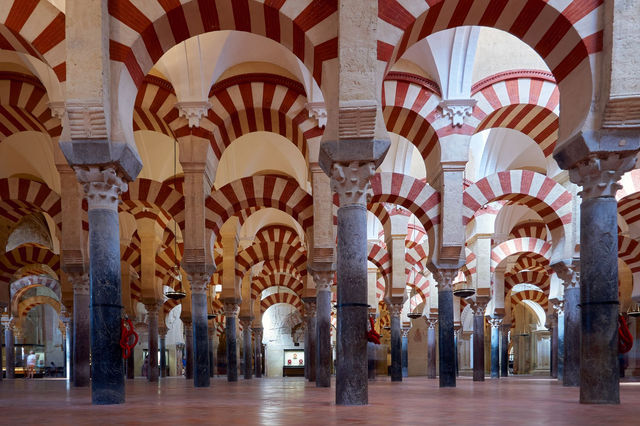
  • The Mezquita's Arches
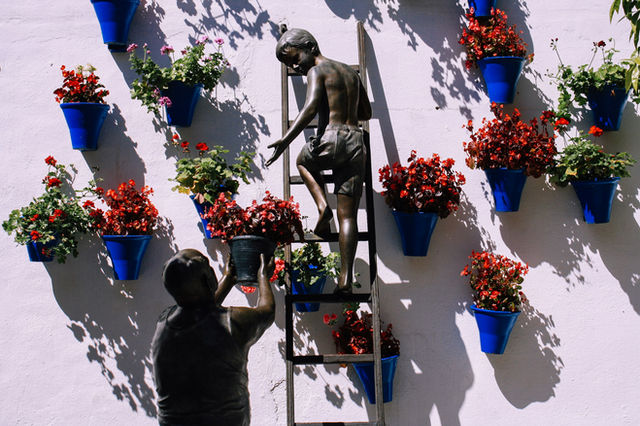
  • Flower-Filled Patios
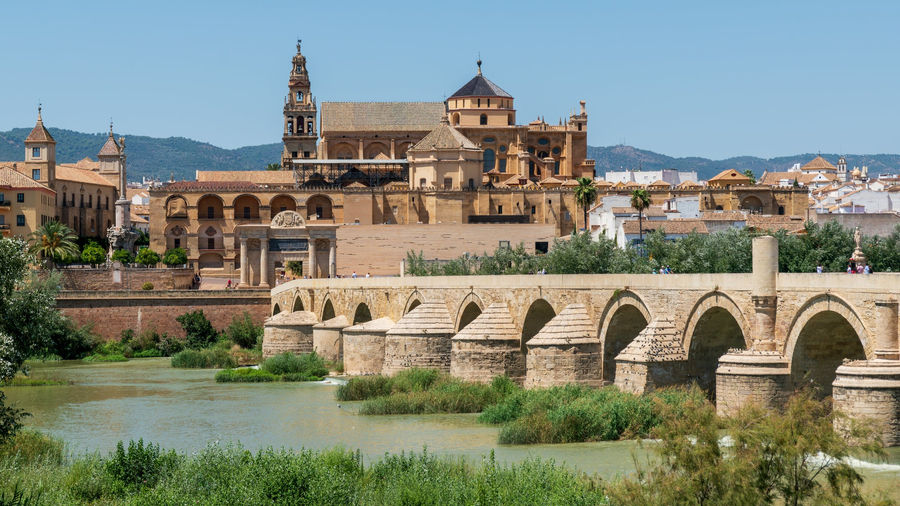
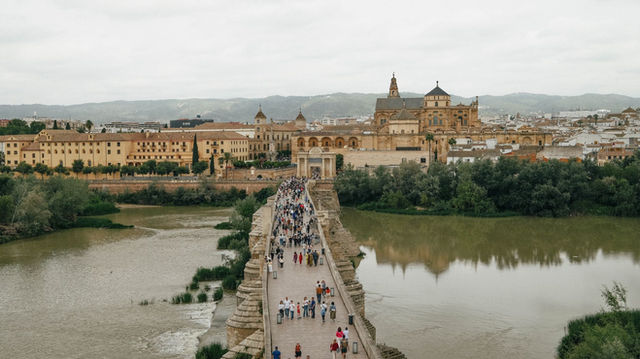
  • Roman Bridge
  • Moorish Legacy

Sunlight slanting through hundreds of red-and-white arches, geraniums spilling down a whitewashed lane, and the Guadalquivir sliding under a Roman bridge as the heat finally lifts.

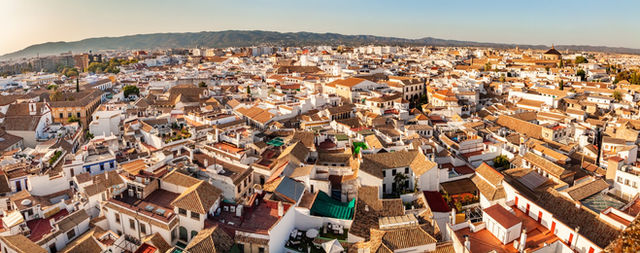
Córdoba was once the greatest city in Europe, the Moorish capital of a golden age, and its masterpiece survives — a mosque turned cathedral with a forest of striped arches. Around it lies a whitewashed old town of hidden flower-filled courtyards, best in the fierce Andalusian light.

Type
city
Ideal length
~approx 1–2 days
Getting around
a compact, flat, entirely walkable old town
Neighbourhoods
3 areas
Best season / months
April, May and October — warm and bright, well clear of the ferocious summer heat
Language
Spanish
Currency
euro (€)
Budget level
low to moderate — one of the cheaper Andalusian cities
Good for
  • History
  • Culture
  • First-timers
  • Architecture
▸ Discover

About Córdoba

Córdoba sits on the Guadalquivir river in the heart of Andalusia, southern Spain, its old town spread on the north bank behind the great Mosque-Cathedral. This was the capital of Moorish Spain at its tenth-century height, and the layers show — Roman bridge, Moorish mosque, Jewish quarter, Christian cathedral, all within a few walkable streets. The old town is a maze of whitewashed lanes and hidden patios; the modern city spreads north around its squares. It is compact, flat and made for walking, if punishingly hot in summer.

Córdoba is home to a UNESCO World Heritage Site — Historic Centre of Cordoba — inscribed in 1984.

Why go

The Mezquita alone is one of the most extraordinary buildings in the world — an eighth-century mosque with a cathedral grown up inside it, a single space where two faiths overlap. Beyond it, Córdoba keeps a Moorish and Jewish soul in its lanes, its patios and its food, and does it with a fraction of the crowds of Seville or Granada. Come in May for the famous flower-filled courtyards, and it is unforgettable.

Don't miss

  • The Mezquita-Catedral — the mosque-cathedral and its forest of arches
  • The Judería — the whitewashed old Jewish quarter
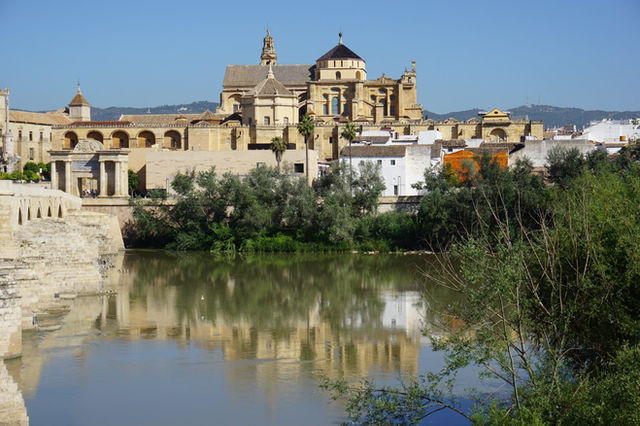
  • The Roman Bridge — over the Guadalquivir to the Calahorra tower
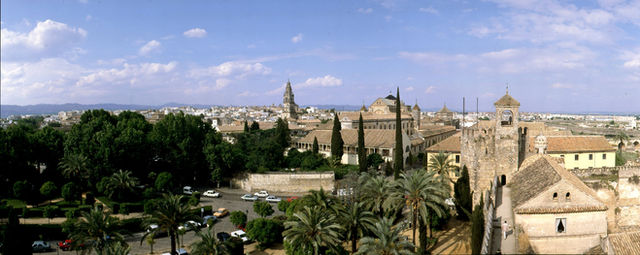
  • The Alcázar de los Reyes Cristianos — the fortress and its gardens
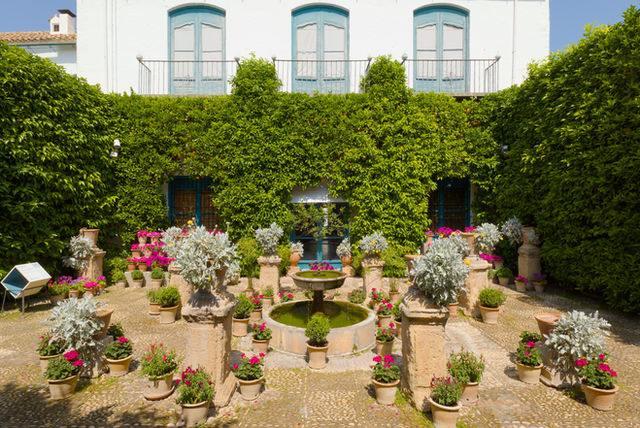
  • The patios — the flower-filled courtyards, at their peak in May

Signature experiences

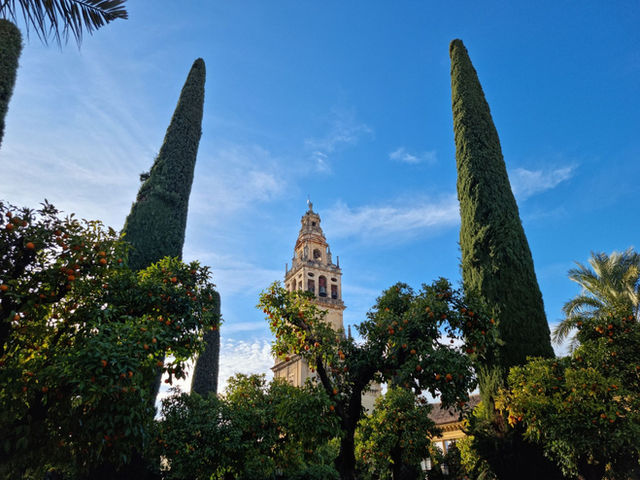
Inside the Mezquita — There is nothing else like it. Step from the orange-tree courtyard into a dim, endless hall of double-tiered arches in red and white stone, stretching away in every direction — an eighth-century mosque so vast the Christians built a whole cathedral inside it rather than knock it down. Wander slowly; the overlap of the two is the point, and the shifting light through the columns is hypnotic. **The patios and the flowers** — Córdoba's houses turn inward to cool, plant-filled courtyards, and the tradition is a genuine art here. In early May the city holds a festival where private patios open to visitors, their walls hung with hundreds of geraniums and carnations around a fountain. Even outside the festival, the San Basilio quarter keeps some open, and glimpsing them down the lanes is half the pleasure. **The river and the bridge** — The Roman Bridge strides across the Guadalquivir to the Calahorra tower, and crossing it at dusk — the Mezquita floodlit behind you, the water below — is the classic Córdoba moment. Along the bank sit the old mills and the Alcázar's gardens, best walked as the heat drops. **Moorish and Jewish Córdoba** — The city was a beacon of learning under the Moors, home to scholars of three faiths, and it lingers in the lanes — the old Synagogue, the Averroes and Maimonides connections, the Arab baths, and the sweet, spiced cooking. It is a place to read the history into the streets.

Neighbourhoods

Córdoba neighbourhood by neighbourhood — the character of each and who it suits.

  • The Judería

    The old Jewish quarter around the Mezquita — a tight maze of whitewashed lanes, hidden patios, craft workshops and the greatest concentration of the city's history.

    Why go
    The Mosque-Cathedral, the flower-lined alleys and the old synagogue.
    Best for
    First-time sightseeingpatiosthe Mezquita
    Known for
    The Mezquita-Catedral, the medieval Synagogue, the narrow Calleja de las Flores framing the cathedral tower, and the silversmiths and leather workshops in the lanes.
  • San Basilio and the Alcázar

    The old Alcázar Viejo quarter west of the mosque — low whitewashed houses famous for their patios, and the fortress-palace with its gardens at the river's edge.

    Why go
    The best of the courtyard tradition and the Alcázar gardens.
    Best for
    Patiosgardensa quieter wander
    Known for
    The patio houses of San Basilio, the Alcázar de los Reyes Cristianos and its terraced water gardens, and the old royal stables.
  • The Centro

    The flatter modern heart north of the old town — grand squares, market halls and the everyday city, where locals shop and eat away from the monuments.

    Why go
    The plazas, the tapas, and a break from the tourist lanes.
    Best for
    Tapassquareslocal life
    Known for
    The Plaza de las Tendillas, the arcaded Plaza de la Corredera, the Roman temple remains, and the busy tapas bars and markets.

Views & hidden gems

Best views

  • The Roman Bridge at dusk — the floodlit Mezquita across the river
  • The Calleja de las Flores — the flower-lined alley framing the cathedral tower
  • The Alcázar tower and gardens — over the terraced water gardens to the river
  • The Calahorra tower — the old town and the bridge from the south bank

Hidden gems

  • The Palacio de Viana — a mansion with a dozen distinct historic patios, quiet and gorgeous
  • The Hammam Al Ándalus — Arab-style baths in the old quarter
  • The medieval Synagogue — one of only a few surviving in Spain, small and moving
  • The Cristo de los Faroles — a lamplit crucifix in a hidden plaza, atmospheric at night
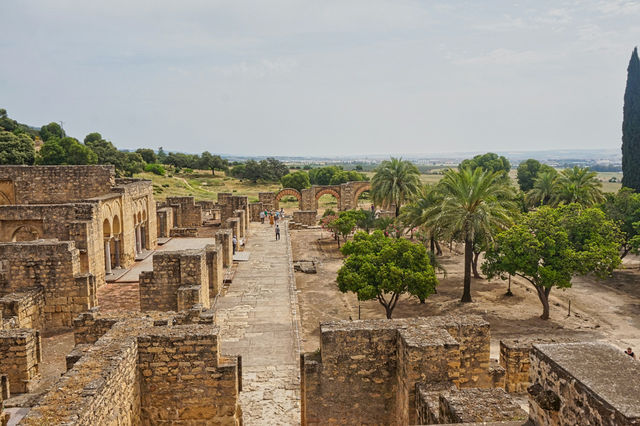
  • Medina Azahara — the ruined Moorish palace-city a short trip west of town

Food & drink

Córdoban food is Andalusian with a Moorish sweetness, built for the heat. The signature dish is salmorejo, a thick, cold tomato-and-bread cream topped with egg and ham — richer than gazpacho and born here. Slow-cooked oxtail (rabo de toro), rolled breaded pork (flamenquín) and fried aubergine drizzled with cane honey are the classics, washed down with the local Montilla-Moriles wine, a sherry-like white poured cold. Tapas culture is strong, and the old bodegas are the place to eat it.

  • Salmorejo — a thick, cold tomato-and-bread soup with egg and ham
  • Rabo de toro — slow-braised oxtail stew
  • Flamenquín — rolled pork loin wrapped in ham, breaded and fried
  • Berenjenas con miel — fried aubergine with cane honey
  • Montilla-Moriles — the local sherry-like white, served cold
  • Pastel cordobés — a flaky pastry filled with sweet pumpkin
Dietary notes

Vegetarians manage with salmorejo (ask without ham), fried aubergine, and the growing modern spots, though the classics lean to pork and offal. Vegan choices are thinner but present in the centre. Halal is reasonably easy given the Moorish-influenced eating and the diverse centre; kosher is limited. Gluten-free is understood in newer restaurants, less so in old bodegas.

Córdoba in photos

▸ Where you'll stay

Where you'll stay in Córdoba

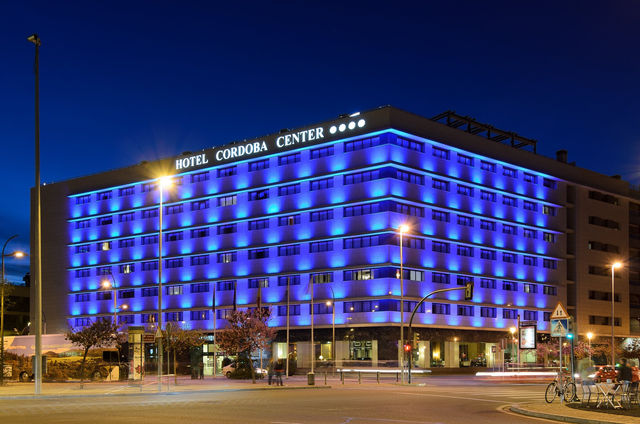
The Judería is the atmospheric, convenient choice — whitewashed lanes and patio houses steps from the Mezquita — though it's touristy and can be pricey. The San Basilio quarter offers the same patios with fewer crowds. The Centro is flatter, more local and better value, a short walk from the monuments and closer to the tapas squares. The whole old town is small enough that everywhere is walkable.

  • Budget
    The Centro / around Plaza de las Tendillas budget hotels and hostels, flat, local, walkable to the Mezquita.
  • Mid-range
    The Judería / San Basilio patio-house hotels in the whitewashed lanes, steps from the mosque.
  • Luxury
    By the Mezquita converted mansions and boutique hotels with courtyards, the most atmospheric address.
Stay

Hotels & rentals around Córdoba

Pan, zoom and compare live prices — every stay in one map.

▸ Getting around

Getting around Córdoba

The old town is small, flat and entirely walkable — you won't need transport within it. City buses and taxis link the station and the outer districts. A car is a liability in the narrow, largely pedestrianised old quarter; leave it outside. For Medina Azahara, take the dedicated shuttle bus or a taxi.

The Judería, San Basilio and the Centro are all a short walk apart (~approx 10–15 min on foot). The river, the bridge and the Alcázar are all at the old town's southern edge.

▸ Plan your days

Suggested itineraries

Ready-made day plans for Córdoba — from a single day to a long weekend.

One day

Start at the Mezquita-Catedral at opening for the arches in the morning light, then wander the Judería's lanes and the old Synagogue, framing the cathedral tower from the Calleja de las Flores. Cross the Roman Bridge to the Calahorra tower, see the Alcázar and its gardens, and end with salmorejo and Montilla wine in a Centro bodega.

Two days

Give day two to the patios and the wider city. Visit the Palacio de Viana's courtyards and the San Basilio quarter in the morning, browse the Plaza de la Corredera and the central market, and take a trip out to the ruined Moorish palace-city of Medina Azahara in the afternoon.

▸ What you'll do

Insider tips

  • Time a trip for early May if you can, for the Patios festival — but book far ahead, as the city fills.
  • Summer is genuinely dangerous-hot at midday — carry water, wear a hat, and follow the local siesta rhythm.
  • Córdoba is an easy high-speed-train stop between Madrid and Seville — even a few hours cover the Mezquita, though a night rewards you.
  • Buy the Mezquita ticket ahead in season, and check whether the early-morning free-entry hour still operates before relying on it.
What's on

While you're there

09
SEP
XXIV Bienal de Flamenco de Sevilla 2026 — Seville, September 2026
Calle Blanca De Los Ríos 2, 41004 Sevilla, Seville, Spain · festival
Build a trip around it →
19
SEP
La Mercè 2026
Carrer De La Canuda 30, 08002 Barcelona, Barcelona, Spain · festival
Build a trip around it →
15
MAR
Las Fallas 2027
Plaça De L'ajuntament 22, 46002 València, Valencia, Spain · festival
Build a trip around it →
18
APR
Seville Feria de Abril 2027
Pz España 1, 41013 Sevilla, Seville, Spain · festival
Build a trip around it →
Explore

Explore the area

© OpenFreeMap · OSM · terrain Mapterhorn
Do

Local attractions & tours

Skip-the-line tickets and small-group tours in Córdoba — compare across our partners.

We're still curating hand-picked tickets and tours for Córdoba. In the meantime, the map above and the nearby cities are a great place to start.

▸ Budget

What it costs in Córdoba

Backpacker
roughly €40–60 a day.
Mid-range
roughly €90–150 a day.
Luxury
€280 a day and up.
Cash vs card
Cards are widely taken; keep a little cash for small tapas bars and market stalls.
Tipping
Not expected — rounding up or leaving small change for good service in a sit-down restaurant is plenty.
▸ When you'll go

When to visit Córdoba

April, May and October — warm and bright, well clear of the ferocious summer heat

Spring

What to expect — Warm and bright, the best time of year, with the patios in bloom and the May festivals filling the streets. Comfortable days, cooler evenings.

What's best — The Patios festival in early May, flowers everywhere, the Cruces de Mayo, and the perfect warm-not-hot weather before the summer inferno.

Summer

What to expect — Brutal, dry heat — Córdoba is one of the hottest cities in Europe, and July and August afternoons are punishing. The old town empties into shade for the siesta.

What's best — Long, warm late evenings and a quieter Mezquita; do everything early or after dusk and rest through the afternoon. Better to come in spring or autumn if heat is a problem.

Autumn

What to expect — The fierce heat breaking into warm, pleasant weeks by October, the summer crowds gone and the light golden.

What's best — Comfortable sightseeing, warm days and mild evenings, the food at its most seasonal, and a near-empty old town.

Winter

What to expect — Cool, crisp and often bright, with cold nights but many blue-sky days. Low season and quiet, the shortest days of the year.

What's best — A near-empty Mezquita, cheap prices, crisp walking weather, and the courtyards and bodegas at their cosiest.

▸ Know before you go

Know before you go

Honest swaps

Skip the tourist-menu restaurants ringing the Mezquita → eat salmorejo and rabo de toro in an old bodega in the Centro instead.

Skip visiting only the famous Calleja de las Flores → wander San Basilio and the Palacio de Viana for real patios with fewer people.

Skip the midday summer Mezquita queue → go at opening, or in the early morning free-entry window if it still runs.

Skip judging the city by a rushed day trip → stay a night to see the Mezquita floodlit and the old town empty of coaches.

Crowds & timing

The Mezquita is busiest with coach groups late morning; go at opening for the calm and the light, and book ahead in season.

The Patios festival in May is glorious but packed — book accommodation well ahead and expect queues at the open courtyards.

Local rules & etiquette

The Mezquita is an active cathedral — dress to cover shoulders and knees, keep quiet, and mind photography rules.

Respect that the open patios are private homes lent to the public — don't touch the plants or overstay.

Adjust to the summer rhythm — shops and sights close through the hot afternoon and reopen in the evening.

Money

Cards work in most places; carry a little cash for small bars and markets.

Decline dynamic currency conversion and use bank ATMs over tourist machines.

After dark

The Centro's squares — Tendillas and the Corredera — are the main tapas-and-drinks scene, busy on warm nights.

The Judería is quieter and more atmospheric after the day-trippers leave.

In summer the riverside and the bridge draw an evening crowd escaping the day's heat.

▸ Ready to book your trip?

Getting there

Córdoba has no major airport of its own — most visitors arrive by the high-speed AVE train, which stops here on the fast Madrid–Seville line (a short ride from either), or via Málaga or Seville airports and a connecting train. Córdoba's station is a short walk or taxi north of the old town.

Book

Ready to book your trip?

Flights, airport transfers and car hire — search and compare without leaving the page.

▸ Trip extras
Book

More trip extras

Parking, holiday extras, and more — coming soon.

Coming soon

We're lining up parking, holiday extras and activities you'll be able to add to any trip from here.