Spain

Málaga and the Costa del Sol

Best time
Spring and autumn
Fly to
Málaga and the Costa del Sol (AGP)
Stay
7 days
Type
Region
  • Alcazaba and Gibralfaro
  • Picasso's Home City
  • Coast by Commuter Train
  • Caminito del Rey

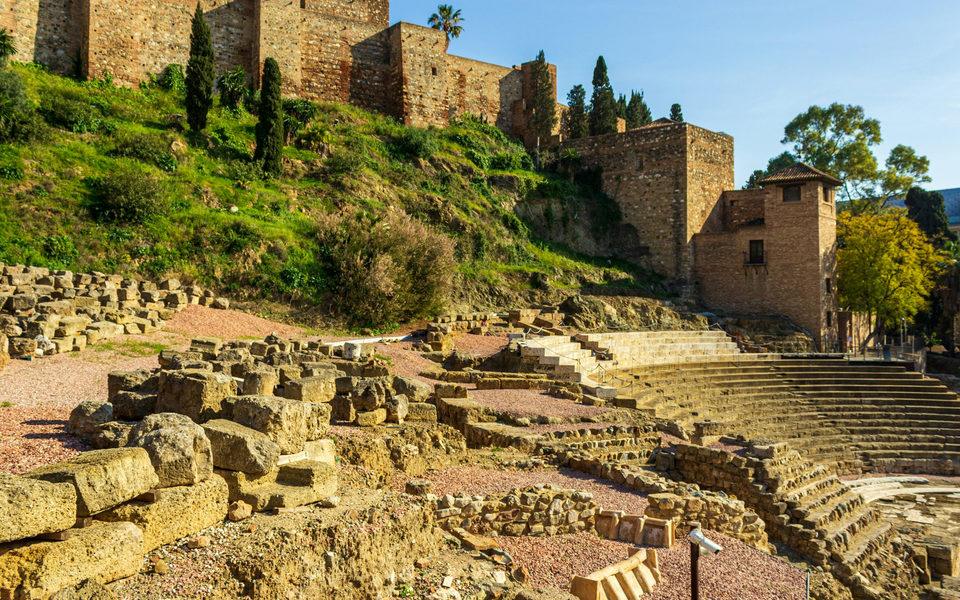
Late afternoon on the walls of the Alcazaba: the Roman theatre below you on Calle Alcazabilla, the cathedral above the old-town rooftops, and Muelle Uno and the port beyond.

Málaga is a port city with a hilltop fortress, a Roman theatre and a museum for Picasso. West of it, a commuter train runs along the Costa del Sol to Torremolinos, Benalmádena and Fuengirola, and buses carry on to Marbella and Estepona. Winters are mild, summers are hot, and the flight is about three hours.

Type
region
Ideal length
7 days
Getting around
C1 commuter train from the airport to Málaga, Torremolinos, Benalmádena and Fuengirola; Avanza and Alsa buses beyond; hire car for Ronda, the Caminito and Antequera
Bases
7 areas
Best season / months
April to June and September to October; July and August are hot; winter is mild but the wettest time
Language
Spanish
Currency
euro (EUR)
Budget level
moderate. Beaches, the Roman theatre and free museum hours cost nothing; the Alhambra, the Caminito and golf add up
Good for
  • City breaks
  • Families
  • Golfers
  • Beach
  • Couples
  • Walkers
Discover

About Málaga and the Costa del Sol

Málaga sits where the Guadalhorce valley meets the Mediterranean, with its airport at the river mouth. The old town packs a lot into a few streets: the cathedral, the Museo Picasso in the Palacio de Buenavista, a Roman theatre from the early 1st century AD, and the Alcazaba and Gibralfaro castle on the hill above. On the port's Muelle Uno, the Centre Pompidou fills a building called The Cube, and La Malagueta beach is a short walk east. West of the airport the Costa del Sol runs through Torremolinos, Benalmádena and Fuengirola, all on the C1 commuter train. Beyond them come Marbella, with its old town and Puerto Banús, and Estepona. East of the city is Nerja, with its clifftop Balcón de Europa and a show cave. Inland are Ronda, the Caminito del Rey gorge walk and the dolmens of Antequera.

Why go

Málaga gives you a real city and a beach on the same day, about three hours from the UK. The train from the airport reaches the city centre in about 12 minutes. At the airport the average high is 16.8°C in January and 30.8°C in August, and it gets around 2,900 hours of sunshine a year. You can spend the morning in the Museo Picasso, eat fried fish on the beach at lunch and be on a train to Fuengirola by evening. Golfers have Marbella, which has more courses than any other town in Spain. Walkers have the Caminito del Rey, and the Alhambra and Ronda are day trips away.

Don't miss

  • The Alcazaba and Gibralfaro — the fortress and castle on the hill above the old town, one ticket for both
  • Museo Picasso Málaga — in the Palacio de Buenavista, free for the last two hours on Sundays
  • The Caminito del Rey — an 8 km one-way walkway route through the gorge, for over-8s with a timed ticket
  • Nerja — the Balcón de Europa on its cliff and a show cave opened to visitors in 1960
  • Ronda's Puente Nuevo — a bridge about 98 metres high over the Guadalevín

Where to base yourself

The sub-zones of Málaga and the Costa del Sol — where each cluster sits and who it suits.

  • Málaga city centre (Centro Histórico and Soho)

    The old town around the cathedral and Plaza de la Constitución, with the Alcazaba and Gibralfaro on the hill above and Soho running down towards the port.

    Why go
    Museums, restaurants and the train to the airport and the coast, all within walking distance.
    Best for
    City breaksculturefoodfirst-timers without a car
    Known for
    Málaga Cathedral; Museo Picasso in the Palacio de Buenavista; the Roman theatre; the Alcazaba and Gibralfaro; the Centre Pompidou on Muelle Uno; C1 trains from Málaga Centro Alameda.
  • La Malagueta and Pedregalejo

    The city's beaches east of the port: La Malagueta, about 1.2 km of calm, Blue Flag water a short walk from the centre, and Pedregalejo further along the promenade.

    Why go
    A beach base without leaving the city, with the old town on foot.
    Best for
    Couplesfamiliescity-and-beach trips
    Known for
    Promenade restaurants; Muelle Uno; lifeguarded season from 15 June to 15 September.
  • Torremolinos and Benalmádena

    Two neighbouring resorts just west of the airport. Torremolinos still has the fishing streets of La Carihuela; Benalmádena splits into the old Pueblo, the Costa with its marina, and Arroyo de la Miel.

    Why go
    Long beaches, fried fish and the C1 train at the door.
    Best for
    Familiesfirst-timersbudget beach holidays
    Known for
    La Carihuela, El Bajondillo, Playamar and Los Álamos beaches; Puerto Marina; the cable car up Monte Calamorro; five C1 stops in Torremolinos.
  • Fuengirola

    A big, busy resort town at the western end of the C1 line, with Sohail Castle on a hill by the beach.

    Why go
    An easy beach base with a direct train to the airport and Málaga.
    Best for
    Familiesolder travellersbeach
    Known for
    Castle beach (800 m of calm water near Sohail Castle); the C1 terminus on Paseo Jesús Santos Rein.
  • Marbella (old town and Puerto Banús)

    A town of 27.9 km of coast and 24 beaches. Its old town grew around the Plaza de los Naranjos, opened in the 16th century; Puerto Banús and the Golden Mile came with tourism from the 1950s and 60s.

    Why go
    Golf, smarter hotels and a whitewashed old town to walk in the evening.
    Best for
    Golferscouplesluxury
    Known for
    Plaza de los Naranjos; Puerto Banús; the Golden Mile; more golf courses than any other Spanish municipality; Avanzabús from the airport, about 40 minutes by car.
  • Estepona

    The quieter western end of the coast, with an old town of more than 130 renovated, mostly pedestrian streets and squares.

    Why go
    A slower base with a real town centre and golf within reach.
    Best for
    Couplesolder travellersfamilies wanting calm
    Known for
    The mural route; the orchid house; La Rada and El Cristo beaches, with assisted bathing in summer; Avanzabús from the airport.
  • Nerja

    The main town east of Málaga, built on cliffs above small beaches, with the Balcón de Europa lookout where a 16th-century castle stood.

    Why go
    Cliffs and coves instead of a long resort strip, with the cave next door in Maro.
    Best for
    Couplesfamilieswalkers
    Known for
    Balcón de Europa; El Salón and Calahonda beaches; Cueva de Nerja; Alsa buses from the airport.

Views & quieter corners

Best views

  • Gibralfaro castle — the port, the old town and La Malagueta beach below you
  • Málaga Cathedral roof — about 200 steps up a spiral stair for the view over the old town
  • Balcón de Europa, Nerja — a clifftop promenade between El Salón and Calahonda beaches
  • Puente Nuevo, Ronda — about 98 metres above the Guadalevín

Quieter corners

  • The Roman theatre on Calle Alcazabilla — built in the early 1st century AD, free to visit, closed on Mondays
  • Antequera's dolmens — Menga and Viera, a UNESCO World Heritage Site since 2016, EUR 1.50 for UK visitors
  • Benalmádena Pueblo — narrow cobbled streets and whitewashed houses above the resort coast
  • La Carihuela, Torremolinos — the old fishermen's quarter, still the place for fried fish
  • Estepona old town — more than 130 renovated streets and squares, with a mural route and an orchid house

Food & drink

Start with pescaíto frito: anchovies, sardines, red mullet, squid and cuttlefish, fried and served in beach restaurants and old bars. Torremolinos calls itself its home, and the streets of La Carihuela still have their fishing-quarter feel. Then try an espeto, sardines on a skewer, grilled. On hot days order a cold soup: gazpacho, salmorejo or ajoblanco. Rice dishes and paella are everywhere, and Málaga's designation-of-origin wines go well with the fish. Torremolinos alone has more than 250 restaurants and bars, with a tapas route in spring and a 'grandma's tapas' route in autumn. In Marbella you'll also find Michelin-starred cooking.

  • Pescaíto frito — fried fish: anchovies, sardines, red mullet, squid and cuttlefish
  • Espetos — sardines threaded on a skewer and grilled
  • Ajoblanco — a cold soup, alongside gazpacho and salmorejo, for hot days
  • Paella and rice dishes — served in the beach restaurants along the coast
  • Málaga wine — the local designation-of-origin wines, ordered with the fish
Dietary notes

Cooking on this coast leans heavily on fish and seafood, so vegetarians should ask how dishes are made. The cold soups are a good starting point, and Málaga, Torremolinos and Marbella have plenty of international restaurants. For coeliac or other strict diets, contact restaurants before you go.

Photos

Málaga and the Costa del Sol in photos

Where you'll stay

Where you'll stay in Málaga and the Costa del Sol

Choose between city and beach first. Málaga's centre gives you the museums, the restaurants and trains to everywhere, and La Malagueta and Pedregalejo put a beach on your doorstep just east of it. For a resort with the train at the door, pick Torremolinos, Benalmádena or Fuengirola. Marbella and Estepona are further west, reached by bus or car, with more golf and calmer old towns. Nerja suits you if you'd rather have cliffs and small beaches than a long promenade.

  • Budget
    Torremolinos or Fuengirola beach hotels and apartments on the C1 line, with direct trains to the airport and Málaga.
  • Mid-range
    Málaga city centre or Benalmádena city hotels within walking distance of the sights, or resort hotels by Puerto Marina.
  • Luxury
    Marbella Golden Mile and Puerto Banús hotels, golf on the doorstep and Michelin-starred restaurants.
Stay

Hotels & rentals around Málaga and the Costa del Sol

Pan, zoom and compare live prices — every stay in one map.

We may earn a commission if you book through these links, at no extra cost to you. How we make money

Getting around

Getting around Málaga and the Costa del Sol

The C1 commuter train is the backbone of the coast. It links Málaga Centro Alameda, María Zambrano, the airport, five stops in Torremolinos (including La Nogalera in the centre), Benalmádena and Fuengirola. Trains run from about 5.20am to 11.30pm, and you can pay at the turnstiles with a contactless card or phone. Past Fuengirola there's no train: Marbella, Puerto Banús and Estepona are on Avanzabús, Nerja is on Alsa, and the Consorcio de Transporte Metropolitano runs the buses around Málaga. A hire car makes most sense for Ronda, the Caminito del Rey and Antequera. Your UK photocard licence is valid, a provisional one isn't, and Spain's drink-drive penalties are strict. Torremolinos taxis run around the clock and are metered.

For the Caminito del Rey, take a Renfe train from Málaga to El Chorro-Caminito del Rey station, where the walk ends. A shuttle bus takes you up to the north access near El Kiosko restaurant in 15 to 20 minutes, and you can ride it as often as you need that day. Check that your train times fit your slot. From the north access it's a 1.5 km or 2.7 km walk to the start. By car, the north access is about 59 km from Málaga on the A-357. For Nerja and its cave, Alsa buses leave from the airport, as do Alsa buses to Granada for the Alhambra. Avanzabús runs from the airport to Marbella's bus station and to Estepona. In Málaga itself, the old town, the port and La Malagueta are all within walking distance.

Plan your days

Suggested itineraries

Ready-made day plans for Málaga and the Costa del Sol — from a single day to a long weekend.

One day

Start at the Roman theatre on Calle Alcazabilla, then climb through the Alcazaba to Gibralfaro castle for the view over the port (one ticket covers both). Come down for the Museo Picasso in the Palacio de Buenavista and the cathedral. Finish with a walk along Muelle Uno to the Centre Pompidou and on to La Malagueta beach.

Two days

Take the train from Málaga to El Chorro-Caminito del Rey and the shuttle bus to the north access for your booked slot on the Caminito del Rey. Next day, take the Alsa bus east to Nerja: the cave in Maro in the morning, the Balcón de Europa and the beaches below it in the afternoon.

Three days

Hire a car for the hill country. Drive to Ronda to cross the Puente Nuevo and visit its interpretation centre on Plaza de España. Or go north to Antequera for the Menga and Viera dolmens, a UNESCO site, then on to Granada if you've booked an Alhambra slot.

What you'll do

Insider tips

  • Book the Caminito del Rey on the official site and be at the access area 30 minutes before your slot. Bring ID for every child: under-8s can't go in.
  • The Caminito shuttle bus takes cash only on board, so carry coins or buy it online with your ticket.
  • The Museo Picasso is free for the last two hours on Sundays, and the Centre Pompidou from 4pm. The Roman theatre is always free but closed on Mondays.
  • Cercanías turnstiles take contactless cards and phones, so you don't need to queue for a ticket.
  • Málaga's lifeguarded season runs from 15 June to 15 September. Check the flag before you swim.
  • In an emergency, call 112.
Explore

Explore the area

© OpenFreeMap · OSM · terrain Mapterhorn
Do

Local attractions & tours

Skip-the-line tickets and small-group tours in Málaga and the Costa del Sol — compare across our partners.

Plan

Trips in Málaga and the Costa del Sol

Day-by-day itineraries that take in Málaga and the Costa del Sol — routes, timings and what to book.

Budget

What it costs in Málaga and the Costa del Sol

Backpacker
Base yourself in Málaga or Torremolinos, use the C1 train, and fill your days with free things: the beaches, the Roman theatre, and the Museo Picasso and Centre Pompidou in their free Sunday hours.
Mid-range
A hotel by the beach or in the old town plus paid days out: the Alcazaba and Gibralfaro (EUR 10 for both), the Museo Picasso (EUR 13), the Caminito del Rey (EUR 10 plus EUR 2.50 shuttle) and the Cueva de Nerja (from EUR 16 online for an adult), all when we checked.
Luxury
A Marbella hotel, a hire car for Ronda and the hill towns, rounds on Marbella's courses, a guided Caminito del Rey visit (EUR 18 when we checked) and a day at the Alhambra.
Cash, card and tips
The currency is the euro. Cercanías turnstiles take contactless cards and phones, and the airport Express bus takes cards or cash. Carry some cash for the Caminito shuttle, which doesn't take cards on board.
When you'll go

When to visit Málaga and the Costa del Sol

Spring and autumn

Units

Spring

What to expect — Warm and settling: average highs at Málaga airport go from 20°C in March to 24°C in May, with three to four rain days a month. Holy Week brings processions to Málaga's streets.

What's best — City sightseeing, the Caminito del Rey and Ronda before the heat.

Summer

What to expect — Hot and dry. Average highs are 31°C in July and 31°C in August, and it barely rains. When the terral blows down the Guadalhorce valley it pushes the temperature up further, with strong gusts. Wildfires are a summer risk in Spain.

What's best — Beaches (lifeguarded from 15 June to 15 September), evenings out and the August fair.

Autumn

What to expect — September is still hot (28°C average high) and October warm (24°C). The rain returns: 57 mm in October and 100 mm in November.

What's best — Beach days in September, walking and day trips in October.

Winter

What to expect — Mild rather than warm: average highs of 16.8 to 18°C and lows around 7 to 9°C. December is the wettest month, with about six or seven rain days.

What's best — Museums, the Alhambra and the dolmens without crowds, and the Festival de Málaga in late winter.

Know before you go

Know before you go

Entry rules

Follow the FCDO's entry rules for Spain. Your passport must have been issued less than 10 years before you arrive and be valid for at least 3 months after you leave the Schengen area.

You can stay up to 90 days in any 180.

The EU Entry/Exit System is in use: expect to give fingerprints and a photo at the border, and to wait longer.

ETIAS is not running yet and isn't taking applications. Ignore any site selling one.

Border staff may ask for your return ticket, travel insurance, accommodation and proof you have enough money.

Caminito del Rey: plan ahead

Tickets are for a time slot, sold on the official site or at the north-access ticket office. Arrive at least 30 minutes before your slot.

Children under 8 aren't allowed in, and over-8s need ID to prove their age.

The route runs one way, north to south, and takes 3 to 4 hours with the access paths. You're given a helmet. There are no toilets on the way.

It can close for safety, and it isn't for anyone with vertigo.

Book these in advance

The Alhambra: the Nasrid Palaces can only be entered at the time printed on your ticket.

Cueva de Nerja: online tickets are cheaper than at the ticket office.

Málaga Cathedral's roof: about 200 steps up a narrow spiral stair, so skip it if you have vertigo or claustrophobia.

Sea, heat and health

A red flag means you must not go in the water.

Summer heat can be extreme. Check AEMET warnings.

Drinking in the street is banned in some areas of Spain, with on-the-spot fines, and falls from hotel balconies have killed British visitors.

Bring a GHIC or EHIC for state healthcare, and travel insurance as well.

Emergency number: 112.

Ready to book your trip?

Getting there

You fly into Málaga-Costa del Sol airport (AGP), at the mouth of the Guadalhorce on the edge of the city. Ryanair flies from Birmingham in about 2 hours 50, from Manchester and Leeds Bradford in about 3 hours and from Newcastle in about 3 hours 10. TUI flies from Gatwick in about 2 hours 45. The C1 train leaves from the station at the airport: about 12 minutes to Málaga centre, stopping at María Zambrano for high-speed trains, or about 34 minutes the other way to Fuengirola via Torremolinos and Benalmádena. EMT's Express bus runs from floor 0 of arrivals to the city centre for EUR 4 when we checked, with luggage carried free. From the same floor, Avanzabús goes to Marbella and Estepona and Alsa to Nerja and Granada. At the border the EU Entry/Exit System takes fingerprints and a photo, so allow extra time.

  • AGP
Book

Ready to book your trip?

Flights, airport transfers and car hire to AGP — search and compare without leaving the page.