← Spain
SPAIN · CITY

Salamanca

A golden-sandstone university city — home to Spain's oldest university and one of its grandest plazas.

  • City
  • April to June and September to October — mild; hot summers, cold winters
  • ~approx 2 days
  • Golden Sandstone City
  • Spain's Oldest University
  • Grand Plaza Mayor
  • Student Nightlife

The Plaza Mayor turning amber as the floodlights come up, students spilling from a Renaissance doorway, and a crowd craning at the cathedral façade to find the little carved astronaut some 20th-century restorer slipped among the saints.

Salamanca is Spain's golden city — a Castilian university town built almost entirely of honey-coloured sandstone that glows at sunset, home to the country's oldest university, its most beautiful main square, and a student energy that keeps its ancient streets young.

Type
city
Ideal length
~approx 2 days
Getting around
on foot — the centre is compact and walkable
Neighbourhoods
3 areas
Best season / months
April to June and September to October — mild; hot summers, cold winters
Language
Spanish (widely learned by visiting students; some English)
Currency
euro (€)
Budget level
moderate — affordable by Spanish standards
Good for
  • History
  • Architecture
  • Students
  • Nightlife
  • First-timers to inland Spain
▸ Discover

About Salamanca

Salamanca stands on a low rise above the Tormes river in the plains of Castilla y León, west of Madrid. Its compact historic centre is a golden ensemble — the arcaded Plaza Mayor at its heart, the twin cathedrals and the ornate university buildings a few streets south, all in the same warm Villamayor stone. A Roman bridge crosses the Tormes below, and the university keeps the whole city buzzing with students, many of them foreigners learning Spanish. It's flat, walkable, remarkably harmonious and one of Spain's great small cities.

Why go

Salamanca packs an extraordinary amount into a walkable golden centre — a UNESCO old town with Spain's finest Plaza Mayor, its oldest and most storied university, two cathedrals in one, and a wealth of Plateresque and Baroque façades carved like jewellery. It's also a lively, affordable student city with a deserved reputation for nightlife and for learning Spanish. Grand yet human-scaled, warm-stoned and youthful, it rewards a slow day or two.

Don't miss

  • The Plaza Mayor — Spain's grandest main square
  • The University of Salamanca — the carved Plateresque façade
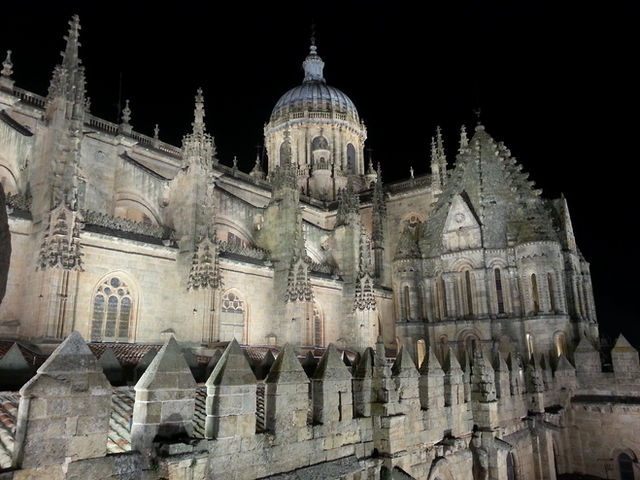
  • The two cathedrals — the joined Old and New
  • Casa de las Conchas — the shell-studded mansion
  • The golden stone at sunset — the whole city glowing

Signature experiences

The golden centre and the Plaza Mayor — Salamanca's magic is its material — nearly the whole old town is built from Villamayor sandstone, which turns from cream to deep gold as the sun drops, and nowhere shows it better than the Plaza Mayor, a perfectly proportioned 18th-century Baroque square ringed by arcades and medallions of Spanish kings. Take a café table, watch the light change, and come back after dark when the whole square is floodlit. It's the city's living room and its finest set-piece. **The university and the cathedrals** — A few streets south stands the University of Salamanca, founded in the 13th century and Spain's oldest, its entrance a masterpiece of Plateresque carving — join the crowd hunting for the tiny frog perched on a skull, said to bring luck (or exam success). Next door, the two cathedrals interlock: the Romanesque Old Cathedral and the soaring Gothic-Baroque New one, with a tower climb (Ieronimus) along the roofs. Look for the astronaut and the ice-cream-cone gargoyle a restorer cheekily added to a portal. **Carved façades and hidden courtyards** — Salamanca is a city to read at eye level and above. The Casa de las Conchas is studded with hundreds of carved scallop shells; the Convento de San Esteban has a façade like a stone altarpiece; and college courtyards, cloisters and palace patios hide down quiet streets. Wander with your eyes up, ducking into doorways — the detail is inexhaustible, and much of it is free to admire from the street. **Student city, night and day** — With one of Europe's oldest universities and thousands of Spanish-language students from around the world, Salamanca is genuinely young, and its nightlife is legendary for a city this size — tapas bars, cheap wine and clubs that run very late around the Gran Vía and the centre. By day that same energy fills the café terraces and the plazas. It's affordable, sociable and easy to fall into, whatever your age.

Neighbourhoods

Salamanca neighbourhood by neighbourhood — the character of each and who it suits.

  • The Plaza Mayor and Centre

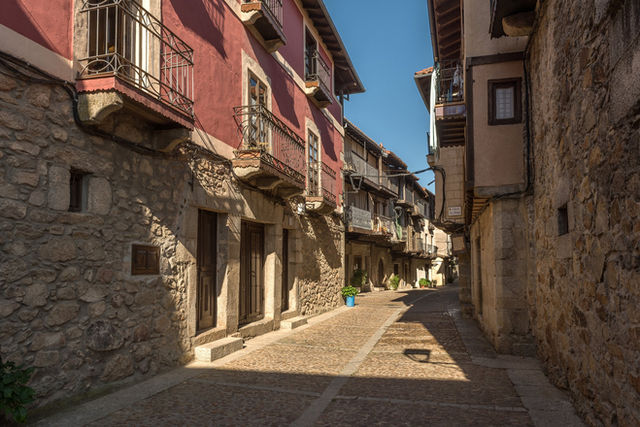
    The golden heart around the great arcaded square — cafés, shops, the market and the tangle of medieval streets radiating out. The lively, walkable core.

    Why go
    The Plaza Mayor, the cafés and the shopping streets.
    Best for
    Café-sittingpeople-watchingshoppingnightlife
    Known for
    The Baroque Plaza Mayor and its arcades, the Casa de las Conchas with its carved shells, the Mercado Central, the Rúa Mayor, and the tower-topped La Clerecía church.
  • The University Quarter

    The monumental south of the centre — the ancient university, its colleges and the two cathedrals, all Plateresque carving and echoing courtyards. The city's scholarly, showpiece heart.

    Why go
    The university, the cathedrals and the great carved façades.
    Best for
    Historyarchitecturemuseumsthe frog hunt
    Known for
    The University of Salamanca's carved façade (and its hidden frog), the joined Old and New Cathedrals and the Ieronimus tower climb, the Escuelas Menores, and the Convento de San Esteban nearby.
  • The Riverside and Roman Bridge

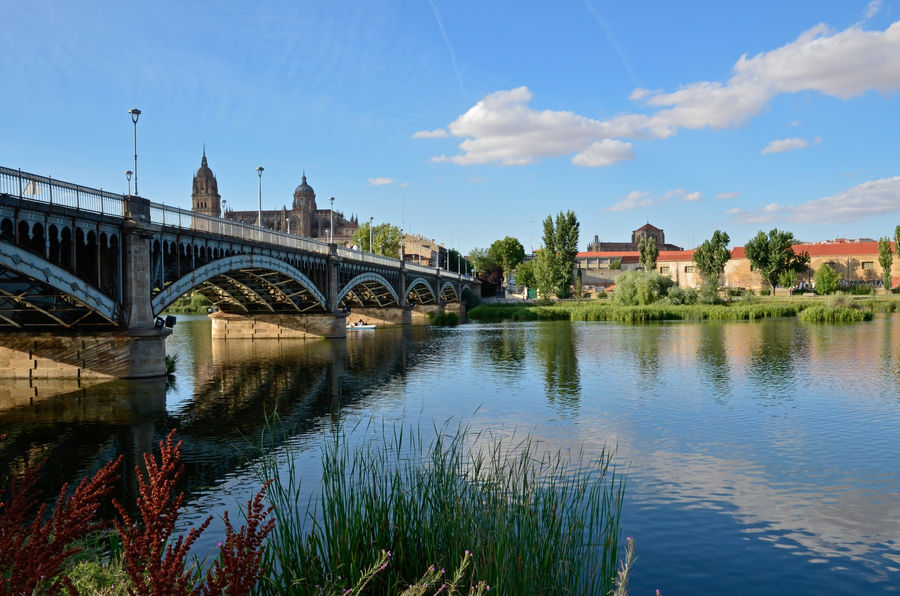
    The southern edge down to the Tormes, where the Roman bridge crosses to the far bank — gardens, riverside paths and the classic view back up to the floodlit cathedrals. The city's quiet, green frame.

    Why go
    The Roman bridge, the riverside walk and the postcard skyline view.
    Best for
    Viewswalkssunsetphotography
    Known for
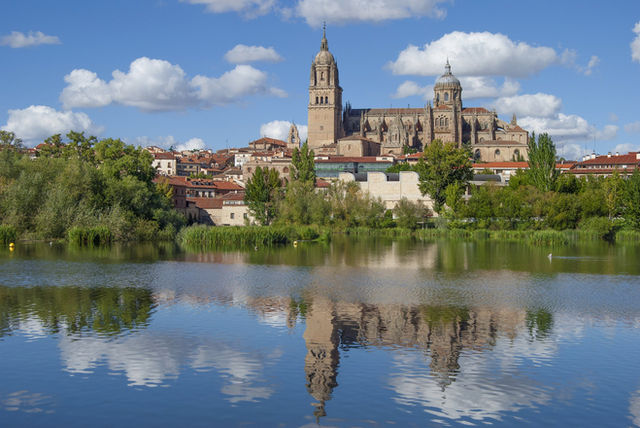
    The Roman bridge over the Tormes, the riverside gardens and paths, the view of the golden cathedrals from the far bank, and the Huerto de Calixto y Melibea garden above.

Views & hidden gems

Best views

  • The cathedrals from the far bank of the Tormes — the golden skyline
  • The Plaza Mayor floodlit at night — the arcades in amber
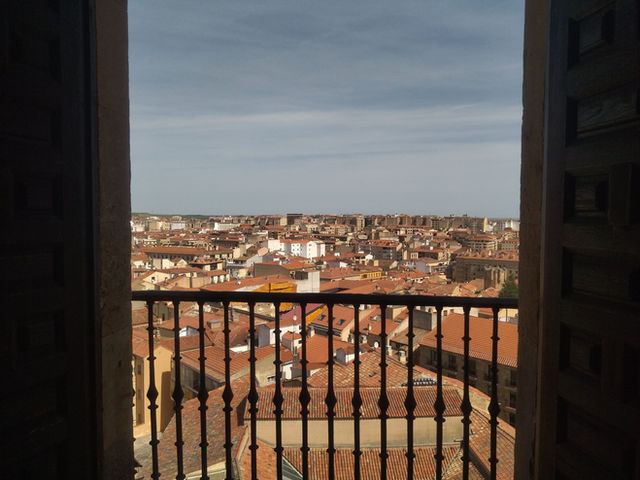
  • The Ieronimus tower and cathedral roofs — over the old town
  • The Roman bridge at sunset — the classic city view

Hidden gems

  • The frog on the university façade — find it for luck
  • The astronaut carved on the New Cathedral's Ramos portal — a modern restorer's joke
  • The Huerto de Calixto y Melibea — a romantic terraced garden with cathedral views
  • The Cielo de Salamanca — a medieval painted ceiling of the zodiac, tucked in the Escuelas Menores
  • The Casa Lis Art Nouveau museum — stained glass over the river

Food & drink

Salamanca eats hearty Castilian, built on the famous cured pork of the surrounding dehesa. The province's Guijuelo is a top producer of jamón ibérico, and the local table runs to roast suckling pig (tostón), the spiced sausage farinato, the offal-and-bread chanfaina, and hornazo — a dense meat-and-egg pie eaten especially around Easter. Tapas culture is strong and cheap in the student bars, often served free with a drink. Wash it down with wines from the nearby Arribes and Sierra de Francia.

  • Jamón ibérico — cured ham from the province's Guijuelo
  • Hornazo — a dense pork-and-egg pie, a Salamanca speciality
  • Tostón — roast suckling pig, the Castilian classic
  • Farinato — a spiced pork-and-bread sausage, often fried with egg
  • Chanfaina — a rice, offal and sausage stew
  • Local wines — reds and whites from Arribes and the Sierra de Francia
Dietary notes

This is pork-and-roast country, so committed vegetarians work a little harder, though the student bars mean more veggie and vegan options than in a smaller Castilian town, and tortilla, salads, patatas and pisto fill the gaps. Vegan is doable in the centre's newer spots. Halal and kosher are limited. Gluten-free is increasingly understood in the university-town cafés, but the breads, hornazo and many tapas are wheat — confirm.

Salamanca in photos

▸ Where you'll stay

Where you'll stay in Salamanca

Stay in the historic centre, in or near the Plaza Mayor, to walk to everything — the square, the university and the cathedrals are all minutes apart, and this is where the cafés and nightlife are (which can mean noise). Quieter streets sit toward the cathedrals and the river. Salamanca is small and affordable, so a central base is easy. Book ahead for university events and long weekends.

  • Budget
    Around the centre / near the university hostels and budget hotels, cheap and central.
  • Mid-range
    Near the Plaza Mayor comfortable hotels in the golden centre, walkable to all the sights.
  • Luxury
    The best central hotels / near the cathedrals high-end stays in historic buildings, some with views.
Stay

Hotels & rentals around Salamanca

Pan, zoom and compare live prices — every stay in one map.

▸ Getting around

Getting around Salamanca

The historic centre is compact and entirely walkable — the square, the university, the cathedrals and the river are all within a few minutes' stroll. City buses serve the outskirts; a car is a liability in the centre and best parked outside. Nothing here needs more than your feet.

The Plaza Mayor, the university quarter and the riverside are all a short walk apart (~approx) — the whole old town is a gentle 15-minute cross at most.

▸ Plan your days

Suggested itineraries

Ready-made day plans for Salamanca — from a single day to a long weekend.

One day

Start in the Plaza Mayor with a coffee under the arcades, then walk to the Casa de las Conchas and the towered La Clerecía. Spend the late morning at the University — hunting the frog on the façade — and the two cathedrals, climbing the Ieronimus tower for the roofs. Lunch on tapas in a student bar, wander the carved streets and San Esteban in the afternoon, then cross the Roman bridge for the golden-skyline sunset and a late tapas crawl.

Two days

Give day two to the detail and the calm. Visit the painted Cielo de Salamanca ceiling and the Art Nouveau Casa Lis over the river, wander the college courtyards and the Huerto de Calixto y Melibea garden, and browse the market and shops. Round off with the Plaza Mayor floodlit after dark, or an evening trip toward the Sierra de Francia hill villages.

▸ What you'll do

Insider tips

  • See the centre at both sunset and floodlit night, when the golden stone is at its most beautiful.
  • Climb the Ieronimus tower for the cathedral roof-walk and the best views over the old town.
  • Eat and drink in the student bars for cheap tapas, often free with a caña.
  • Cross the Roman bridge to the far bank of the Tormes for the postcard skyline shot.
What's on

While you're there

09
SEP
XXIV Bienal de Flamenco de Sevilla 2026 — Seville, September 2026
Calle Blanca De Los Ríos 2, 41004 Sevilla, Seville, Spain · festival
Build a trip around it →
19
SEP
La Mercè 2026
Carrer De La Canuda 30, 08002 Barcelona, Barcelona, Spain · festival
Build a trip around it →
15
MAR
Las Fallas 2027
Plaça De L'ajuntament 22, 46002 València, Valencia, Spain · festival
Build a trip around it →
18
APR
Seville Feria de Abril 2027
Pz España 1, 41013 Sevilla, Seville, Spain · festival
Build a trip around it →
Explore

Explore the area

© OpenFreeMap · OSM · terrain Mapterhorn
Do

Local attractions & tours

Skip-the-line tickets and small-group tours in Salamanca — compare across our partners.

We're still curating hand-picked tickets and tours for Salamanca. In the meantime, the map above and the nearby cities are a great place to start.

▸ Budget

What it costs in Salamanca

Backpacker
roughly €45–70 a day.
Mid-range
roughly €90–150 a day.
Luxury
€220 a day and up.
Cash vs card
Cards and contactless work almost everywhere, but carry a little cash for the smallest tapas bars and markets.
Tipping
Tipping is modest and optional in Spain — round up or leave small change for good service; no obligation.
▸ When you'll go

When to visit Salamanca

April to June and September to October — mild; hot summers, cold winters

Spring

What to expect — Mild and pleasant, warming through the season, with the odd shower and the student city in full swing. Comfortable and lively.

What's best — Fine walking weather for the golden streets, Holy Week processions, hornazo season around Easter, and long café-terrace evenings.

Summer

What to expect — Hot and dry on the Castilian meseta, with warm evenings that pull everyone outdoors; the students thin out but tourists and language schools fill in. Baking by midday.

What's best — Warm nights on the Plaza Mayor, festivals and open-air life, and the golden stone at its most luminous — sightsee early and late, and rest in the heat of the day.

Autumn

What to expect — Warm easing to crisp, the meseta cooling and clearing, and the students back to fill the bars — one of the best times. Comfortable and atmospheric.

What's best — Ideal walking weather, golden light on the golden stone, the university term's buzz, and thinner tourist crowds — a rewarding, lively season.

Winter

What to expect — Cold, sometimes bitterly so on the high plain, with frost, grey spells and bright icy days. Short daylight, but the city keeps its student warmth indoors.

What's best — Atmospheric low light on the floodlit stone, cosy tapas bars and cheap wine, festive lights, and few tourists — pack warm layers for the meseta cold.

▸ Know before you go

Know before you go

Honest swaps

Skip a pricey sit-down lunch on the Plaza Mayor → eat tapas (often free with a drink) in the student bars off the square.

Skip only the New Cathedral → the joined Old Cathedral and the Ieronimus tower roof-walk are the better half.

Skip photographing the university façade without looking → hunt for the lucky frog, and the astronaut on the cathedral.

Skip an early night in a student city → the late tapas-and-bar crawl is part of Salamanca.

Crowds & timing

The Plaza Mayor and the university are busiest midday; the light and the calm are best early morning and at floodlit night.

Easter (Holy Week) and university graduation events fill the city — book ahead.

Local rules & etiquette

Spanish mealtimes run late — lunch from 2pm, dinner from 9pm; many kitchens close in between.

Dress respectfully inside the cathedrals and churches, which are working places of worship.

Tapas etiquette varies: some bars give a free snack with each drink, others charge — watch what locals do.

Money

Cards work almost everywhere; carry a little cash for the smallest bars and the market.

Use bank ATMs and avoid the standalone tourist machines with poor rates.

After dark

The Gran Vía and the streets off the Plaza Mayor hold the bars and clubs — the student nightlife runs very late.

The Plaza Mayor itself is the place for a floodlit late drink and people-watching.

The riverside and cathedral quarter are quieter for an evening stroll.

▸ Ready to book your trip?

Getting there

Salamanca has a small airport (SLM); most visitors arrive by train or bus from Madrid (~approx 1.5–2.5 hours) into the central stations, a short walk or taxi from the old town. Madrid-Barajas (MAD) is the main international gateway.

Book

Ready to book your trip?

Flights, airport transfers and car hire — search and compare without leaving the page.

▸ Trip extras
Book

More trip extras

Parking, holiday extras, and more — coming soon.

Coming soon

We're lining up parking, holiday extras and activities you'll be able to add to any trip from here.