Spain

Tenerife

Best time
Oct to May
Fly to
Tenerife (TFS)
Stay
7 days
Type
Island
  • Teide by Cable Car
  • Sunny South, Green North
  • La Laguna's Old Streets
  • Black-Sand Beaches

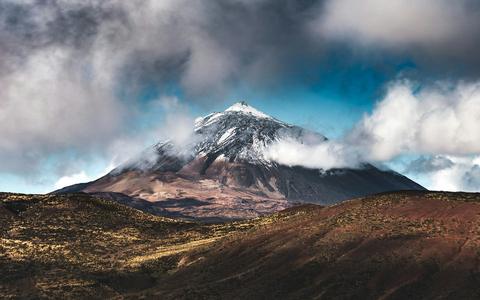
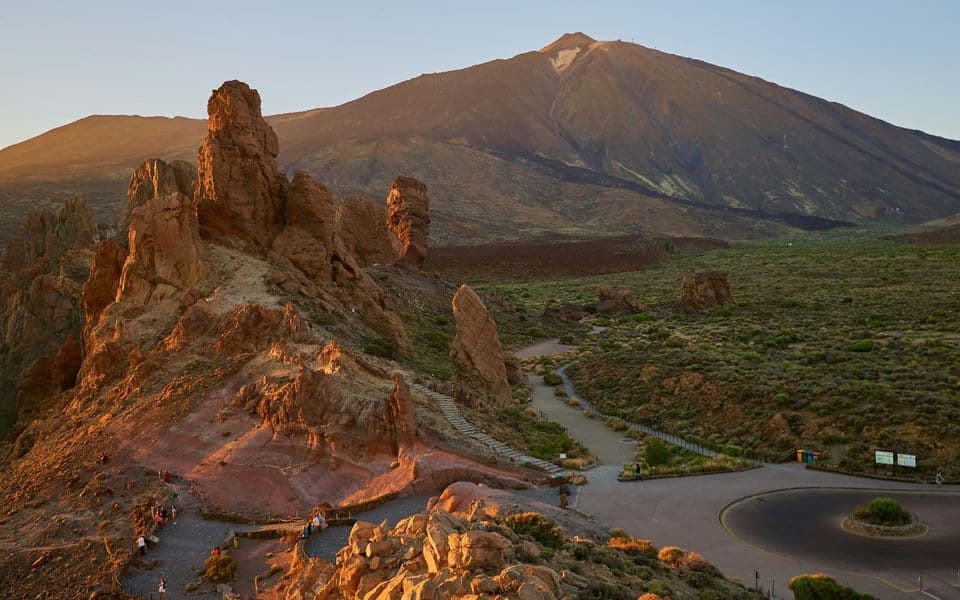
Morning at the Teide cable car base station, 2,356 metres up: the summit above you, the lava fields of Las Cañadas around you, and the 342 bus from Costa Adeje pulling in behind.

Tenerife is the largest of the Canary Islands: a dry, sunny south lined with resorts, a greener and cloudier north with the island's old towns, and Spain's highest mountain in the middle. In winter it's warm rather than hot, about four and a half hours from the UK. The best of it is away from the sunbeds.

Type
island
Ideal length
7 days
Getting around
hire car for flexibility; TITSA buses reach the resorts, towns, airports and Teide, with a tram between Santa Cruz and La Laguna; tourist cards cover both
Bases
6 areas
Best season / months
October to May for winter sun in the south; summer for the warmest sea days
Language
Spanish
Currency
euro (EUR)
Budget level
moderate. Buses and beaches are good value; the Teide cable car, Masca and the theme parks add up
Good for
  • Families
  • Winter sun
  • Couples
  • Walkers
  • First-timers
  • Beach
Discover

About Tenerife

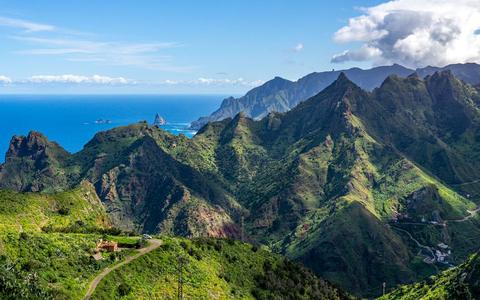
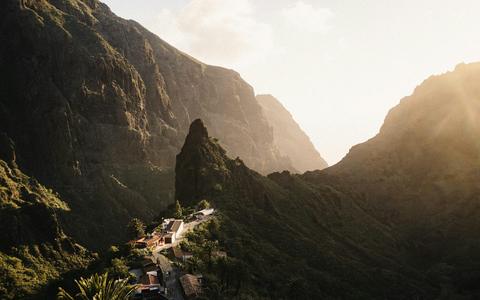
Tenerife is the biggest of the Canary Islands, with Mount Teide in the middle. At 3,718 metres it's the highest peak in Spain, and the national park around it has been a UNESCO World Heritage Site since 2007. The mountain splits the weather. The north side faces the trade winds and gets more cloud, rain and green hills. That's where you'll find La Laguna, a UNESCO-listed old town, Puerto de la Cruz, La Orotava and Garachico. The south gets more sunshine and less rain, and most of the resort hotels are there: Costa Adeje, Playa de las Américas and Los Cristianos, near Tenerife South airport. Santa Cruz, the capital, is on the east coast with the Anaga mountains behind it. In the west, the Los Gigantes cliffs drop into the sea below the Teno massif and the Masca gorge.

Why go

For winter sun close to home, Tenerife is hard to beat. The flight is about four and a half hours, the clocks are the same as the UK's, and at Tenerife South the average high is about 22°C in January. The island also has far more to it than a beach strip. In one day you can ride a cable car to 3,555 metres on a volcano, and the next you can walk the laurel forest of Anaga or the old streets of La Laguna. In between there's a black-sand cove, a lava rock pool or a bowl of wrinkled potatoes and mojo. Buses and a tourist card cover most of it.

Don't miss

  • Teide cable car — up to La Rambleta at 3,555 metres, with free trails to two lookouts
  • San Cristóbal de La Laguna — a UNESCO-listed old town whose street plan was copied in the Americas
  • Anaga Rural Park — laurel forest and black-sand coves in a UNESCO Biosphere Reserve
  • Los Gigantes cliffs — up to 600 metres high, best seen from a boat
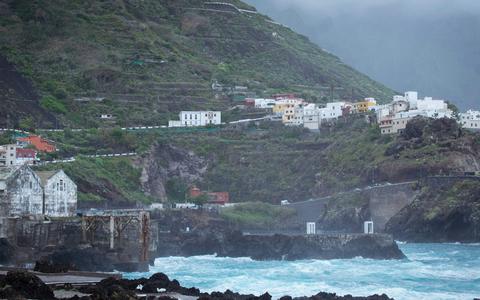
  • Garachico — a town rebuilt after the 1706 eruption, with lava rock pools to swim in

Neighbourhoods

Tenerife neighbourhood by neighbourhood — the character of each and who it suits.

  • Costa Adeje and Playa de las Américas

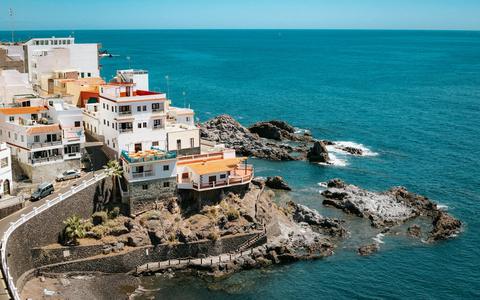
    The big resort coast of the south-west, much of it developed in recent years: hotels, beaches and promenades in Adeje's Costa Adeje, running into Playa de las Américas. The old town of Adeje sits up the hill.

    Why go
    For guaranteed-feeling sun, easy beaches and the most hotel choice on the island.
    Best for
    Familiesfirst-timerswinter sun
    Known for
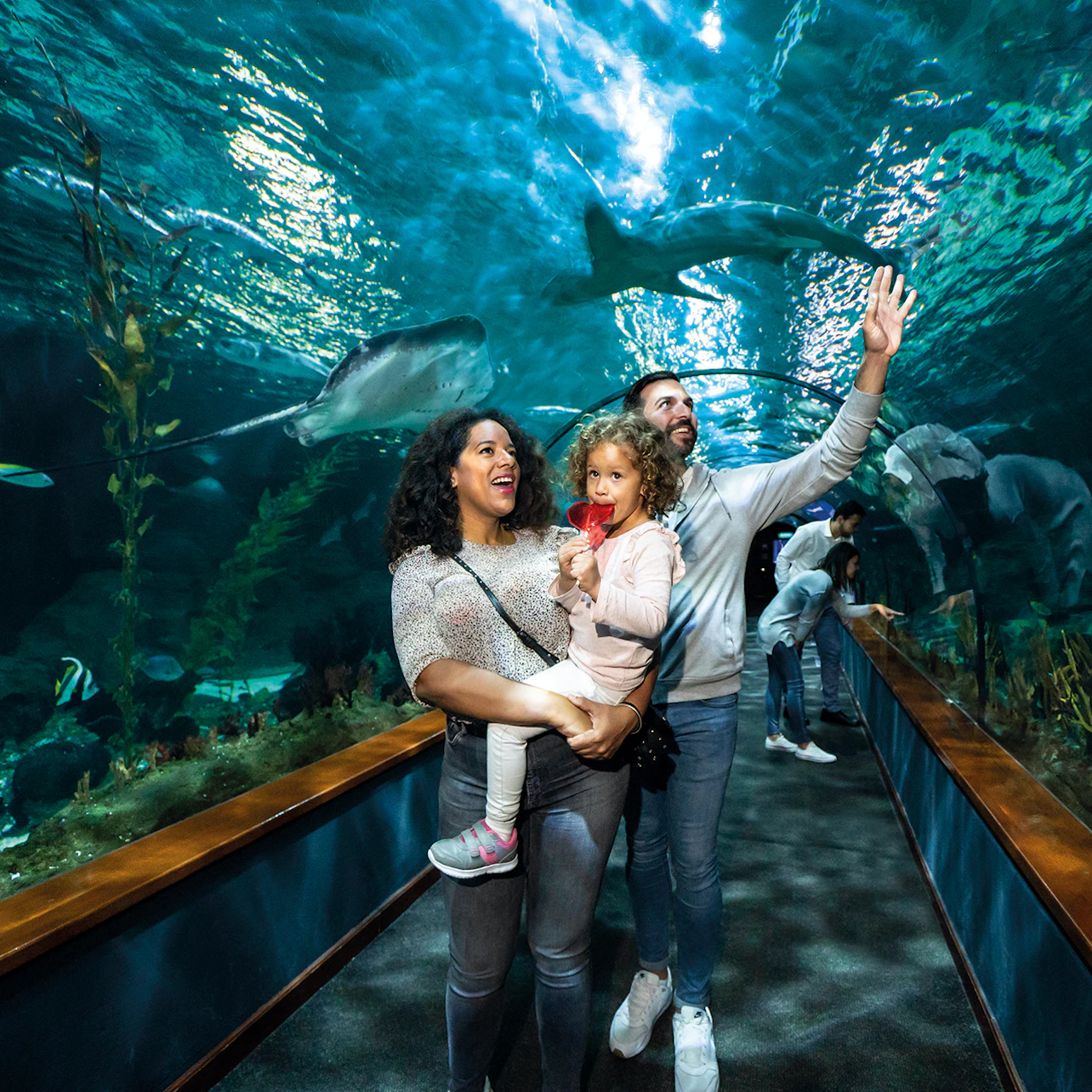
    Siam Park; 14 beaches in Adeje; the Barranco del Infierno trail above the old town; boats from Puerto Colón; TITSA 110/111 to Santa Cruz and 342 to Teide.
  • Los Cristianos

    A fishing town turned resort next to Playa de las Américas, with a busy port that still has its seaside character.

    Why go
    A slightly more town-like base in the south, with the port and boat trips on the doorstep.
    Best for
    Couplesolder travellersboat trips
    Known for
    The port; Las Vistas beach; whale and dolphin trips; bus 40 to Tenerife South airport and 342 to Teide.
  • Puerto de la Cruz

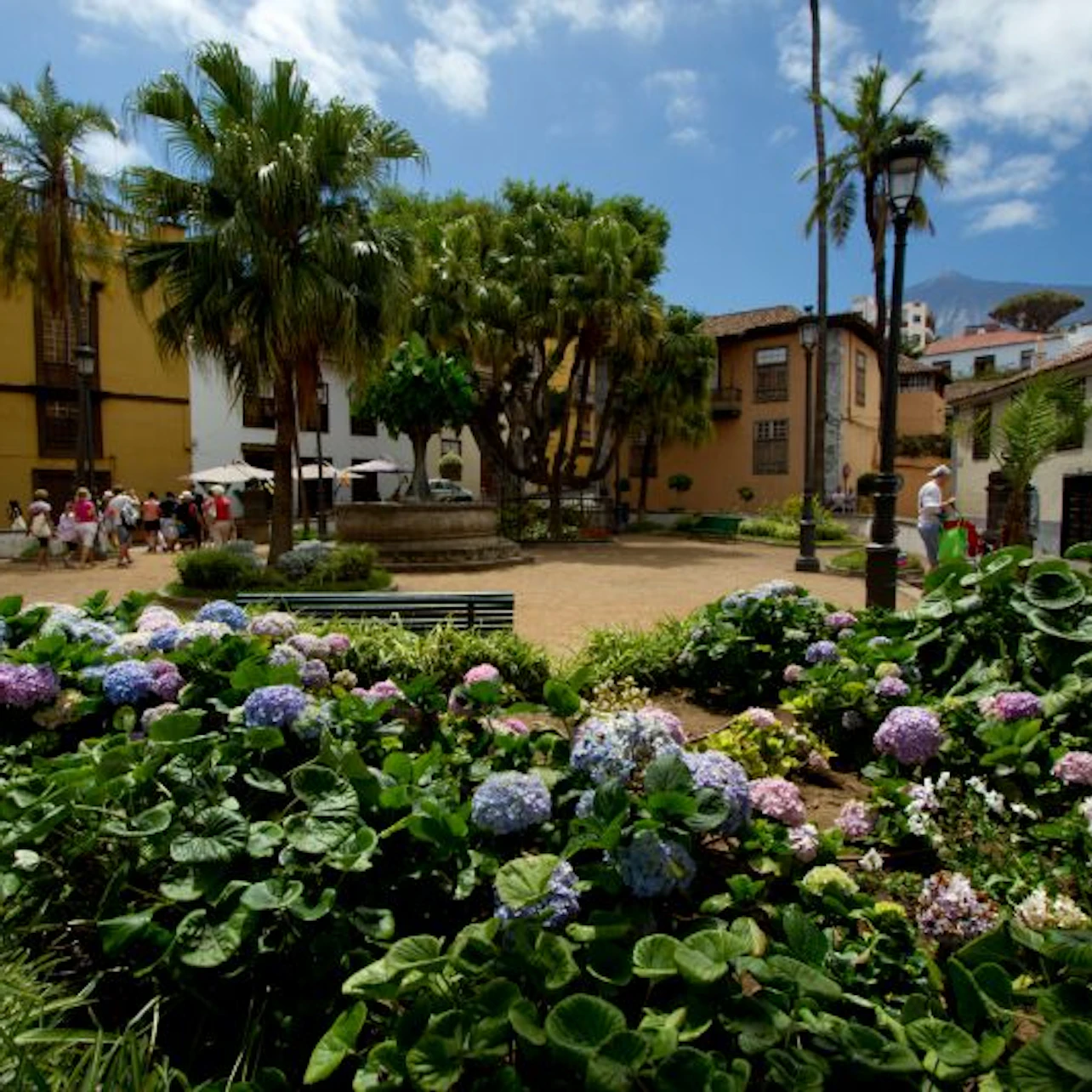
    The island's original resort on the north coast, where tourism began in the 19th century. It keeps a fishing-town feel and a protected old quarter.

    Why go
    For a real town with greener surroundings, if you can live with more cloud than the south.
    Best for
    Couplesfamilies with younger childrenwalkers
    Known for
    Loro Parque; Lago Martiánez; Playa Jardín's black sand; the 1788 Botanical Garden; bus 348 to Teide and 343 to both airports.
  • San Cristóbal de La Laguna

    The old university city in the hills above Santa Cruz, a UNESCO World Heritage Site since 1999. Its grid of streets was copied across colonial cities in the Americas.

    Why go
    Pedestrianised old streets, the cathedral and the university, with Anaga close by.
    Best for
    Culturefoodwalkers heading to Anaga
    Known for
    The cathedral; the University of La Laguna; Tenerife North airport (buses 20 and 343); tram Line 1 to Santa Cruz; buses into Anaga.
  • Santa Cruz de Tenerife

    The capital since 1833 and a working port city, more for living than for lying on a sunbed.

    Why go
    Museums, a big food market, carnival and the city's beach at Las Teresitas.
    Best for
    City breakscarnivalfood
    Known for
    The Auditorio by Santiago Calatrava; Mercado Nuestra Señora de África; MUNA; TEA; García Sanabria park; bus 910 to Las Teresitas; bus 10 to Tenerife South.
  • Los Gigantes and Puerto de Santiago

    Two small seaside towns on the west coast under the Los Gigantes cliffs, which rise up to 600 metres from the sea.

    Why go
    A quieter west-coast base with sunsets, the marina and Masca within reach.
    Best for
    Couplesboat tripswalkers
    Known for
    The cliffs; the marina's year-round boat trips; Playa de La Arena; buses 477 and 473 to Costa Adeje.

Views & quieter corners

Best views

  • Pico Viejo lookout from La Rambleta — an 800-metre-wide crater at your feet and the other islands beyond
  • La Fortaleza lookout — the north of the island from the top of the cable car
  • Los Gigantes from the sea — cliffs up to 600 metres, seen from a boat out of the marina
  • El Caletón, Garachico — lava pools with the rock rising out of the sea in front

Quieter corners

  • Cruz del Carmen — the Anaga visitor centre and trailheads into the laurel forest, by bus from La Laguna
  • The Botanical Garden in Puerto de la Cruz — founded by royal order in 1788, EUR 3 to get in
  • La Casa de los Balcones, La Orotava — a 1632 mansion of carved wooden balconies and Canarian crafts
  • Barranco del Infierno — a 6.5 km gorge walk above Adeje; booking is compulsory, so plan ahead
  • Taganana and Almáciga — Anaga villages at the end of the 946 bus from Santa Cruz

Food & drink

Start with papas arrugadas: small potatoes boiled in salt until the skins wrinkle, served with red mojo picón or green coriander mojo. Then try conejo en salmorejo (rabbit), a puchero stew, and gofio, the toasted-grain flour that goes back to the Guanches. Tenerife has five of the Canaries' ten wine designations of origin, and the volcanic whites are worth ordering. In the northern hills look for a guachinche, a simple dining room set up on a patio or in a garage, with folding chairs, paper tablecloths, home cooking and the owner's own wine. For fresh produce in the capital, go to the Mercado Nuestra Señora de África in Santa Cruz. The resort strips of the south serve every cuisine you can name, and some very ordinary ones too.

  • Papas arrugadas con mojo — small potatoes boiled in salt until the skins wrinkle, with spicy red mojo picón or green coriander mojo
  • Conejo en salmorejo — rabbit in a marinade sauce, one of the best-known Canarian dishes
  • Gofio — flour from toasted grain, a staple since the Guanches, stirred into broths or eaten with potatoes
  • Puchero canario — a stew of vegetables and several meats, a whole meal in one pot
  • Bienmesabe — an almond and cinnamon custard for pudding
Dietary notes

Canarian cooking leans on fish, pork, rabbit and goat, so vegetarians will find more choice in the resort restaurants of the south and in Santa Cruz and La Laguna than in a country guachinche. Papas arrugadas with mojo are a reliable meat-free order, but ask how other dishes are made. For coeliac or other strict diets, contact restaurants before you go.

Photos

Tenerife in photos

Where you'll stay

Where you'll stay in Tenerife

Pick the weather first, then the base. The south and south-west (Costa Adeje, Playa de las Américas, Los Cristianos) get the most sun and the most hotels, but parts of the strip are busy and built up. Los Gigantes is quieter, on the west coast. Puerto de la Cruz in the north is a real town with a fishing-port feel, but expect more cloud. If you want culture and food over beaches, La Laguna and Santa Cruz are linked by tram.

  • Budget
    Puerto de la Cruz or Los Cristianos hotels and apartments in real towns, with bus links to the airports and Teide.
  • Mid-range
    Costa Adeje, Playa de las Américas or Los Gigantes resort hotels and apartments near the beach in the sunnier south and west.
  • Luxury
    Costa Adeje upscale beach hotels and golf on the south-west coast.
Stay

Hotels & rentals around Tenerife

Pan, zoom and compare live prices — every stay in one map.

We may earn a commission if you book through these links, at no extra cost to you. How we make money

Getting around

Getting around Tenerife

A hire car gives you the most freedom for Teide, Masca and the north-west, and your UK photocard licence is valid. Spain's drink-drive laws are strict, and holding your phone while driving is illegal. Without a car, TITSA's buses (guaguas) reach the resorts, the towns, both airports and Teide. Single tickets are sold on the bus and priced by distance. For more than a couple of trips, a tourist card on a ten+ card or the ten+ móvil app gives unlimited buses and tram: EUR 10 for 24 hours or EUR 50 for 7 days. Under-5s ride free. The tram has two lines: Line 1 links Santa Cruz and La Laguna, and Line 2 runs between La Cuesta and Tíncer. It runs from 6am to midnight on weekdays, around the clock at weekends. Taxis are white and metered.

For Teide, take the 342 from Costa Adeje and Los Cristianos or the 348 from Puerto de la Cruz to Las Cañadas and El Portillo. Line 343 links the two airports non-stop in 50 minutes and continues to Puerto de la Cruz and the south coast. Between Santa Cruz and Costa Adeje, use the 110 or 111. Santa Cruz to Puerto de la Cruz is the 100 (direct) or 102. For Loro Parque, the 381 runs to Punta Brava in Puerto de la Cruz. For Los Gigantes, the 477 runs direct from Costa Adeje bus station and the 473 comes from Los Cristianos. Masca village is on the 355 (Santiago del Teide to Buenavista) and the 365, but walking the gorge means the official shuttle. From Santa Cruz, the 910 goes to Las Teresitas and the 946 to Taganana and Almáciga in Anaga.

Plan your days

Suggested itineraries

Ready-made day plans for Tenerife — from a single day to a long weekend.

One day

Take the 342 bus from Costa Adeje or Los Cristianos (or the 348 from Puerto de la Cruz) up to the Teide National Park. Ride the cable car to La Rambleta at 3,555 metres and walk the short trails to the La Fortaleza and Pico Viejo lookouts. Stop at the El Portillo visitor centre on the way back. Book cable car tickets online and check the status page first.

Two days

Spend a day in the north-east. Take the tram from Santa Cruz to La Laguna for the cathedral and the old streets, then the 273 bus up to Cruz del Carmen in Anaga for a walk in the laurel forest. Next day, eat breakfast at the Mercado Nuestra Señora de África and take the 910 to Las Teresitas, or the 946 out to Taganana and Almáciga.

Three days

Go west. Book the Masca trail for a Friday, Saturday or Sunday and catch the shuttle from Santiago del Teide. Or take a boat from Los Gigantes marina to see the cliffs from the sea. Finish in Garachico, swimming in the El Caletón lava pools by the 1575 castle.

What you'll do

Insider tips

  • Book the Teide summit permit before you book anything else around it: it's tied to one day and one time slot, and the cable car ticket doesn't include it.
  • On the morning you go up, check the Volcano Teide status page: the cable car can close at short notice.
  • A 7-day tourist card (EUR 50) gives unlimited buses and tram. The card itself costs EUR 2, or use the ten+ móvil app.
  • Masca is open to walkers only on Fridays to Sundays, by shuttle from Santiago del Teide.
  • Your UK plugs need an adapter for Tenerife's two-round-pin sockets (220 V).
  • In an emergency, call 112.
Best beaches
By the sea

Best beaches in Tenerife

The 7 shores actually worth the trip on Tenerife — ranked, with the vibe of each and where to stay nearby. Tap a card to fly the map to it.

Places to explore
Explore

Places & points of interest in Tenerife

The landmarks, museums, viewpoints and shores worth your time on Tenerife — filter by what you're into. Tap a card to fly the map to it.

Points of interest
Explore

Explore the area

Tenerife · Around the island · 1 island · 7 beaches · 12 attractions

© OpenFreeMap · OSM · terrain Mapterhorn
Do

Local attractions & tours

Skip-the-line tickets and small-group tours in Tenerife — compare across our partners.

Budget

What it costs in Tenerife

Backpacker
Base yourself in Puerto de la Cruz, La Laguna or Santa Cruz, travel on a 7-day tourist bus and tram card (EUR 50, checked 2 November 2026) and spend your days on free beaches and trails.
Mid-range
A south-coast hotel plus a few paid days out: the Teide cable car (return from EUR 43 for a non-resident adult), Masca (EUR 28 plus EUR 10 shuttle) or a water park.
Luxury
Costa Adeje's top hotels, a hire car or private transfers, guided Teide summit trips and boat charters from Puerto Colón or Los Gigantes.
Cash, card and tips
The currency is the euro, and ATMs are easy to find in towns and resorts. Tipping is voluntary and not added to the bill. Buses take payment on board, but a ten+ card or the ten+ móvil app makes repeated trips simpler.
When you'll go

When to visit Tenerife

October to May

Units

Spring

What to expect — March to May is mild and settling. At Tenerife South airport average highs are 23 to 24°C and rain is rare by May. The north still has showers in March and April, and the Teide uplands can have snow into March.

What's best — Walking in Anaga and Teno, and Teide before the summer crowds.

Summer

What to expect — The warmest months. Average highs reach 28°C at Tenerife South and 29°C in Santa Cruz in August, with almost no rain. Wildfires are a summer risk in Spain, islands included.

What's best — Sea and pools, long evenings, and Siam Park at full tilt.

Autumn

What to expect — September and October are still warm (27°C average high at the south airport in October) and the first rain returns to the north. November averages 25°C in the south.

What's best — Warm-weather half-terms without the August heat.

Winter

What to expect — Warm, not hot: average highs of about 21 to 23°C on the south coast, with around two to four rain days a month there. The north is cooler and wetter (16°C at Tenerife North airport in January). Above 2,000 metres it can be below freezing.

What's best — Winter sun in the south, carnival in Santa Cruz, and snow on Teide seen from a beach.

Know before you go

Know before you go

Entry rules

Follow the FCDO's entry rules for Spain. Your passport must have been issued less than 10 years before you arrive and be valid for at least 3 months after you leave the Schengen area.

You can stay up to 90 days in any 180.

The EU Entry/Exit System is now in use: expect to give fingerprints and a photo at the border, and to wait longer.

ETIAS is not running yet and isn't taking applications. Ignore any site selling one.

Border staff may ask for your return ticket, accommodation and proof you have enough money.

Teide: plan ahead

The cable car ticket does not include the summit. The last stretch to the crater (Telesforo Bravo trail) needs a permit booked through the Cabildo's Tenerife ON service, for a set day and time slot. Non-residents pay; the price depends on the time, your residence and age.

The cable car can be closed on the day. Check the status page before you drive up.

At the summit it can be below zero even in summer, and altitude sickness is a real risk. Under-3s shouldn't go up.

Book these in advance

Masca gorge: tickets only on the official site, with a compulsory shuttle from Santiago del Teide on Fridays to Sundays.

Barranco del Infierno: compulsory online booking, no under-5s, helmets on.

Whale and dolphin trips: pick a boat flying the Blue Boat flag.

Sea and health

A red flag means you must not go in the water. Beaches around the Spanish islands can have strong undercurrents.

Bring a GHIC or EHIC for state healthcare, and travel insurance as well: hotel-arranged private clinics won't accept the card.

Emergency number: 112.

Ready to book your trip?

Getting there

Flights from the UK go mainly to Tenerife South (TFS) in Granadilla de Abona, the island's main international airport. TUI flies from Gatwick in about 4 hours 20 minutes and from Manchester and Glasgow in about 4 hours 40. Ryanair flies from Glasgow Prestwick in 4 hours 40. Tenerife North (TFN) near La Laguna mostly handles flights to the other islands. From TFS, the bus stop is on floor 0 at arrivals: line 40 runs to Los Cristianos and Costa Adeje, line 10 to Santa Cruz, and line 343 to Puerto de la Cruz by way of Tenerife North. Night line 711 covers Santa Cruz, Los Cristianos and Costa Adeje. Taxis go from the signed rank. At the border, the EU Entry/Exit System now takes fingerprints and a photo, so allow extra time.

  • TFS
  • TFN
Book

Ready to book your trip?

Flights, airport transfers and car hire to TFS — search and compare without leaving the page.