Sri Lanka — hero

Asia

Sri Lanka

A whole world on one teardrop island: tea-terraced hills, ancient cities, elephant-dotted parks and golden beaches, all within a few hours' drive.

Currency
Sri Lankan Rupee (LKR)
Language
Sinhala, Tamil
Best time
December – March (west and south coasts; east coast: May – September)
Visa
ETA required (free; up to 30 days)

The FCDO has no advisory against travel to Sri Lanka.

Still current at: 13 November 2026 Updated: 21 September 2026

Source: UK Foreign, Commonwealth & Development Office — the definitive source. Check it close to your travel dates.

Flight cancelled or delayed because of this? Your rights under UK261 / EU261 →

Why visit

Why Sri Lanka

Ancient capitals, a hill-country railway through tea estates, and two coasts with opposite seasons, all on one island.

  • Sigiriya rock fortress
  • Kandy tooth temple
  • Hill-country tea train
  • Yala leopard safari
Read more

Sri Lanka fits a great deal into one island. Within a few days you can move from the ruined royal cities of the dry north-central plains to cool tea country, then down to a coast lined with forts, fishing harbours and long beaches.

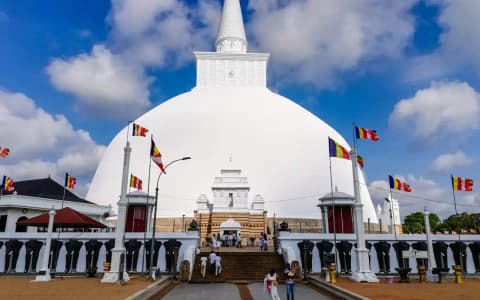
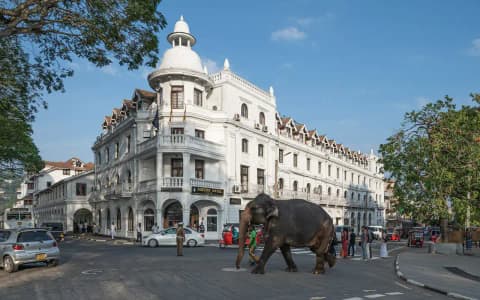
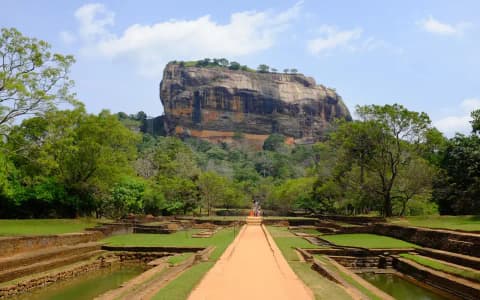
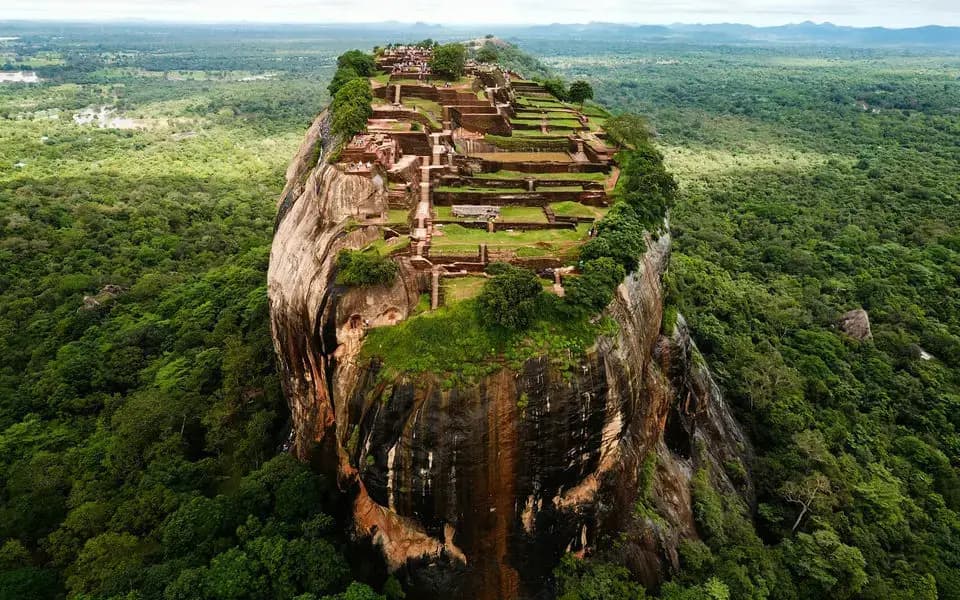
The Cultural Triangle holds the island's oldest history: Anuradhapura, capital for well over a thousand years; Polonnaruwa, with its rock-cut Buddha images; and Sigiriya, a 5th-century fortress and water garden. Kandy, the last Sri Lankan kingdom, is home to the Temple of the Sacred Tooth Relic, one of Buddhism's most sacred sites.

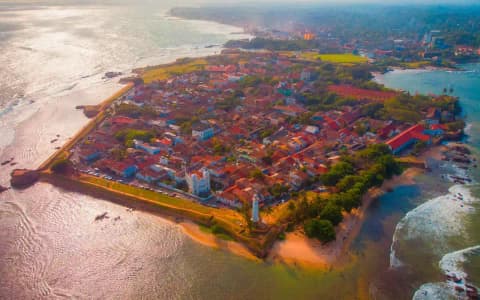
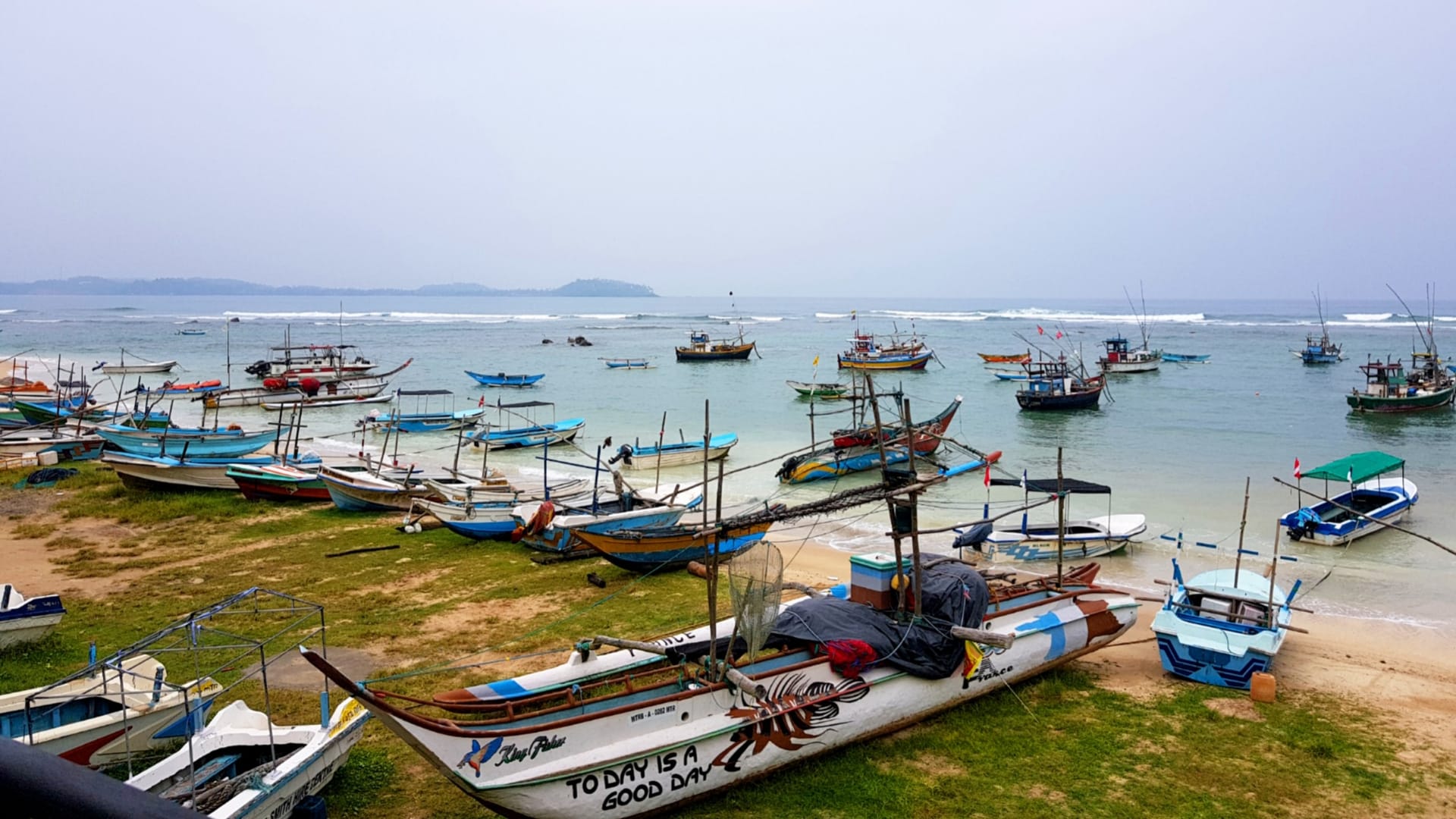
Further south, the hill-country railway runs through tea estates to Ella and on to Badulla. On the south-west coast, Galle Fort is a UNESCO-listed walled town where European architecture meets South Asian traditions. The east coast, from Trincomalee down to Arugam Bay, comes into its own when the south-west is wet.

Two monsoons shape the island: the south-west monsoon (May to September) and the north-east monsoon (December to February). As a result, one coast is usually drier than the other at any time of year. Many visitors are drawn by the wildlife too, from Yala's leopards and elephants to the blue whales seen off Mirissa.

Where to go

The regions of Sri Lanka

The Cultural Triangle

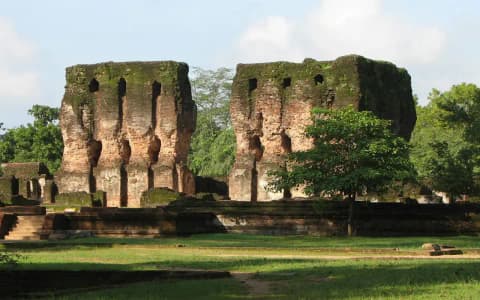
The north-central plains hold Sri Lanka's ancient capitals. Anuradhapura was the island's third and longest-serving capital, from the 4th century BC to around the turn of the 11th century, and it remains sacred to Buddhists. Polonnaruwa, the second ancient kingdom, still feeds its farms from old irrigation works. Sigiriya is a 5th-century fortress and water garden with some of the oldest recorded murals in the country.

Nearby, the Dambulla Cave Temple dates from the 1st century BCE and is a UNESCO World Heritage Site. To the south, Kandy was the last Sri Lankan kingdom and was inscribed by UNESCO in 1988 for the Temple of the Sacred Tooth Relic.

The hill country

The central highlands are noticeably cooler than the coast. Official figures put the mean annual temperature at about 15.8°C in Nuwara Eliya, where ground frost occasionally forms in January and February, against about 27.5°C in the lowlands.

Ella sits among tea estates and cloud-forest hills. The Ella Gap looks out over the southern plains, and the town is a few stops from Badulla at the end of the hill-country line. Adam's Peak (Sri Pada), at 2,243 metres, has a summit rock formation revered by Buddhists, Hindus and Muslims. Its pilgrim season runs from the Duruthu full moon (December or January) to the Wesak full moon (April or May).

The south coast

The tourism board names Bentota, Beruwala, Unawatuna, Mirissa and Tangalla among the best southern beaches. Galle Fort, about 113 km from Colombo, is a UNESCO World Heritage Site and still has a strong Dutch character. Mirissa is the tourism board's pick for whale watching, including blue whales. Yala, the second-largest national park, lies further east along the coast.

This coast is at its sunniest and calmest from about November to March, when the north-east winds blow. The south-west monsoon brings heavy rain from May to September.

The east coast

The east coast has the opposite season to the south-west. During the south-west monsoon (May to September), its waters are generally calm and sunny. Nilaveli lies about 20 km north-west of the port city of Trincomalee, and Pasikudah is about 35 km north-west of Batticaloa. Arugam Bay, on the south-east coast about 320 km from Colombo, is known for surfing.

The FCDO notes that demining continues in parts of the east, and some former military and police sites are still marked as minefields. Keep to roads and cleared footpaths.

Jaffna and the north

Trains run from Colombo Fort to Jaffna. One of Sri Lanka's oldest traditions, the Pada Yatra foot pilgrimage, sets out from the north and follows the east coast to Kataragama.

The FCDO does not advise against travel here, but it notes a visible military presence and ongoing mine clearance on the Jaffna Peninsula, especially near Elephant Pass. Movement is unrestricted outside the High Security Zones. Accommodation and infrastructure remain limited in Kilinochchi, Mullaitivu, Mannar and Vavuniya. Take landmine warning signs seriously.

Colombo

Colombo is the commercial and financial capital; the administrative capital is neighbouring Sri Jayawardenepura Kotte. Most visitors pass through Colombo, since Bandaranaike International Airport (CMB) is at Katunayake to the north. Colombo Fort station is the hub for trains to Kandy, Badulla, Jaffna, Trincomalee, Batticaloa and the south coast.

Roads near government and military sites in the city are often closed. Don't photograph them.

A pillar, not a footnote

Eat your way through Sri Lanka

The single reason many travellers come back — the food culture worth reshaping a trip around, and the dishes to seek out region by region.

Sri Lanka

An island of rice and curry, coconut in everything, and a spice heat all its own.

The everyday feast is 'rice and curry', and it is never just one thing: a mound of red rice ringed by half a dozen small curries — lentil dhal, young jackfruit, a fish curry, and a fierce, coral-red pol sambol of grated coconut and chilli — eaten with the fingers of the right hand, everything mixed a little as you go. Sri Lanka shares deep roots with southern India, but the island spices to its own tune: hotter, coconut-rich, and built on the cinnamon and cardamom that first drew the world's traders to these shores.

Breakfast means hoppers — bowl-shaped fermented rice pancakes, lacy and crisp at the rim, an egg often cracked into the hollow — or string hoppers, little steamed nests of rice noodles. The street's headline act is kottu: roti shredded and tossed on a hot griddle with vegetables and meat, the metal blades beating out a clatter you hear from streets away. Coconut runs through all of it, right down to the thambili, an orange king coconut lopped open and drunk on the spot. Chase the heat with a cold Lion lager or a nip of local arrack.

Dishes to seek out
  • rice & curry
  • hoppers (appa
  • bowl pancakes)
  • kottu (chopped stir-fried roti)
  • string hoppers (steamed noodle nests)
  • pol sambol (coconut-chilli relish)
  • lamprais (Dutch-Burgher rice parcel)
  • watalappan (spiced coconut custard)
Places to go

Cities and regions worth your time

5 destinations in Sri Lanka — pick a base or link them into a route.

Browse by type

Tap a type to filter the list and the map — tap it again or “All” to see everything.

© OpenFreeMap · OSM · terrain Mapterhorn
Things to do

Nature, culture and the outdoors

  1. The Temple of the Sacred Tooth Relic

    Kandy

    One of Buddhism's most sacred sites, with daily rituals at 4.30am, 10.30am and 6.30pm. Shorts are not permitted and shoes come off at the entrance. The Kandy Esala Perahera procession is held each year in July or August.

  2. Climb Sigiriya

    Sigiriya

    A 5th-century rock fortress and water garden, one of the oldest landscaped gardens in Asia, with some of the oldest recorded murals in the country.

  3. The sacred city of Anuradhapura

    Anuradhapura

    Capital for well over a thousand years, with stupas, temples and the Sri Maha Bodhi tree. Mihintale, about 11 km away, is regarded as the cradle of Buddhism in Sri Lanka.

  4. Gal Vihara at Polonnaruwa

    Polonnaruwa

    Three large Buddha images cut into the rock in the 12th century under King Parakramabahu the Great.

  5. Dambulla Cave Temple

    Dambulla

    Five cave shrines at the foot of a 150-metre rock, with around 150 Buddha statues and painted ceilings. The temple is a UNESCO World Heritage Site. The granite steps are long, so the tourism board suggests going in the morning or evening.

  6. Walk the ramparts of Galle Fort

    Galle

    A UNESCO-listed walled town. Inside are the lighthouse and clock tower, the Groote Kerk, the National Maritime Museum and the Old Dutch Hospital.

  7. The hill-country train to Ella

    Kandy to Badulla

    The line climbs through tea country to Ella and Badulla. Reserved seats can be booked on the Sri Lanka Railways portal, and on the Kandy–Badulla slow train the only reservable class is the observation saloon.

  8. Leopards and elephants in Yala

    South-east coast

    The second-largest national park in Sri Lanka, home to Asian elephants, leopards and endemic birds. Follow your guide's instructions around wildlife.

  9. Whale watching off Mirissa

    South coast

    The tourism board's recommended spot for seeing blue whales and other species. Sri Lanka's waters hold 26 cetacean species.

Plan your own trip to Sri Lanka
Guides

All our Sri Lanka guides

Where to stay

Hand-checked places in Sri Lanka

Browse all Sri Lanka stays →
Plan

Getting there, getting around and where to stay

Getting there from the UK

SriLankan Airlines flies direct from London Heathrow (LHR) to Colombo's Bandaranaike International Airport (CMB) at Katunayake, north of the city. Other airlines connect via Middle Eastern hubs.

The FCDO warns that the situation in the Middle East may cause delays, cancellations or re-routing, including some Colombo–UK flights via Middle Eastern hubs. Check with your airline and insurer before you travel.

Flights to Colombo (CMB) →

Getting around

Trains

Sri Lanka Railways runs services from Colombo Fort to Kandy, Badulla, Jaffna, Trincomalee, Batticaloa and Beliatta on the south coast. The best-known stretch is the hill-country line from Kandy through Ella to Badulla.

  • Booking: reserved seats on Intercity, Express and Night Mail trains can be booked on the official portal, seatreservation.railway.gov.lk. You need a registered account, and Visa and Mastercard are accepted.
  • Kandy–Badulla slow train: the only reservable class is the observation saloon.
  • Leaving Ella: the tourism board says seats are usually easy to get when leaving Ella, but trains can be crowded on the way up.
  • Safety: the FCDO says to stay inside the carriage while the train is moving, because people have died leaning out of doors and windows. Watch your belongings.

Drivers and self-drive

To drive yourself, you need a 1949 International Driving Permit, bought in the UK before you go, plus a Sri Lankan recognition permit. Hire companies usually arrange the permit through the Automobile Association of Ceylon in Colombo.

The FCDO advises renting only from firms registered with the Sri Lanka Tourist Board that hold a "Safe & Secure" certificate. It describes driving as erratic, with frequent accidents at night. Given that, we'd book a car with a driver from a registered firm rather than drive ourselves.

There are security checkpoints on main roads; always stop when told to. The government is also limiting fuel purchases with a weekly quota per vehicle. Tour operators and hotels have their own arrangements, but check before you rely on a hire car.

Buses, taxis and tuk-tuks

  • Public buses are fast but often poorly maintained; tourist buses are generally safer.
  • Taxi apps work in cities, but taxis are scarce outside tourist areas.
  • For a tuk-tuk, agree the fare before you set off or choose one with a working meter.

Where to stay

Colombo

Colombo is handy for a first or last night, given Bandaranaike International Airport at Katunayake. It also has the main rail hub at Colombo Fort, and the tourism board highlights its hotels and restaurants.

Kandy

Kandy sits between the Cultural Triangle and the hill country and is the usual starting point for the train to Ella. It is cooler than the coast, with a mean annual temperature of about 24.5°C. Book well ahead if your dates fall during the Esala Perahera in July or August.

Sigiriya and Dambulla

A base near Sigiriya or Dambulla puts the rock fortress, the cave temple and day trips to Polonnaruwa within reach. It also means you can climb early, before the heat builds.

Ella and the hill country

Ella is a small town with a bank with an ATM, a post office and a few restaurants. The tourism board sees it as a relaxing base for exploring the hills rather than a place with much to do in town. Pack a light jacket for the evenings.

Galle and the south coast

Staying inside Galle Fort puts you among the ramparts and old Dutch streets. Beach bases such as Unawatuna and Mirissa are further along the coast, and our curated pick on this stretch is Cape Weligama. The coast is at its best from December to March.

Trincomalee and Arugam Bay

The east coast is the place to be from May to September. Nilaveli, north of Trincomalee, and Pasikudah suit a beach break, while Arugam Bay is the surf base.

When to go

Weather & timing in Sri Lanka Right now RIGHT NOW 24°C cloudy

Best Jan–Mar · Shoulder Apr, Jul, Dec

Units

Next 7 days

Forecast · Met Office · Powered by Met Office data

Typical · climate data

Best time to visit

December – March (west and south coasts; east coast: May – September)

Best for
  • Tea Country
  • Safari
  • Beaches
  • Ancient Cities
At a glance
Sunshine 9.4 hr/day
Rainfall 245 mm/mo
Wettest May · 425.3mm
Driest February · 43mm
Part of South Asia →
By season

Units

Spring (Mar–May)

What to expect — Daytime highs average about 31°C with overnight lows near 25°C, with plenty of rain.

What's best — Dry season, then Wet season, then Monsoon. Mar is among the best months here (dry season, some showers).

Summer (Jun–Aug)

What to expect — Daytime highs average about 29°C with overnight lows near 25°C, with plenty of rain.

What's best — Monsoon, then Wet season.

Autumn (Sep–Nov)

What to expect — Daytime highs average about 29°C with overnight lows near 24°C — the wettest stretch of the year.

What's best — Monsoon.

Winter (Dec–Feb)

What to expect — Daytime highs average about 30°C with overnight lows near 23°C, with plenty of rain.

What's best — Wet season, then Dry season. Jan and Feb are among the best months here (dry season, some showers).

Live forecast map · Windy.com · temperature with wind, °C and km/h

Heat, rain and the best months, region by region

Sri Lanka has four rainfall seasons:

  • South-west monsoon (May to September). Rain falls mostly on the south-west of the island and the hill country, with heavy rain in the hills from June to August.
  • Inter-monsoon (October to November). Rain is spread across most of the island.
  • North-east monsoon (December to February). Rain falls mainly on the eastern half of the island.
  • Inter-monsoon (March to April).

In practice, this means:

  • West and south coasts, and the hill country: December to March is the most reliable window. The tourism board says the south-west coast is sunny from November, but our Colombo-area figures show November is still one of the wettest months (about 410 mm).
  • East coast (Trincomalee, Pasikudah, Arugam Bay): May to September, when the south-west monsoon leaves the eastern waters calm.
  • Cultural Triangle: can be visited in either window.

Near Colombo, May is the wettest month (about 425 mm). Every month from April to December averages more than 150 mm of rain, and April is warm and humid. In the hills, Ella can be very rainy in December, and nights are cool enough for a light jacket.

Average daily high (°C) by month. Measured 2020–2024.
AreaJFMAMJJASOND
Sri Jayawardenepura Kotte 303131313029292928282929

Colours as on the month tiles above. Bold: hot, 32°C or more (go early or late in the day). Outlined: very hot, 35°C or more. Wet: 150 mm of rain or more.

A little context

A little history

To read what you're looking at — the empires and eras that shaped Sri Lanka's food, art and streets.

A 2,000-year Sinhalese Buddhist civilisation raised the ruined cities of Anuradhapura and Polonnaruwa and the rock fortress of Sigiriya
the spice trade in cinnamon and cardamom drew Arab, then Portuguese, Dutch and British traders and rulers in turn
British planters carpeted the highlands with the tea estates that still define them
independence in 1948 as Ceylon, then a long civil war that ended in 2009, now behind a country trading on its beaches and hills
Culture

Culture and etiquette

  • Dress at temples: cover your legs and shoulders, and remove your shoes and hat before entering a Buddhist temple. Shorts are not permitted at the Temple of the Sacred Tooth Relic in Kandy.
  • Buddha images: don't pose for photographs in front of a Buddha statue. Disrespecting Buddhist images, or making offensive remarks about religion, is a serious offence that can lead to arrest.
  • Tattoos: the FCDO warns that visible Buddha tattoos can lead to refusal of entry or deportation. Keep any such tattoo covered.
  • A shared faith landscape: Buddhist, Hindu, Muslim and Christian communities all have sacred places here. Adam's Peak is revered by Buddhists, Hindus and Muslims alike, and Kataragama draws Hindu, Buddhist, Muslim and indigenous Vedda pilgrims.
  • Religious holidays: alcohol is generally not sold on religious holidays, and drinking in public on those days may be seen as insensitive. Police can fine you for ignoring alcohol bans in some public areas.
  • Photography and drones: many sites charge a photography fee. Don't photograph military bases, government buildings or VIP vehicles, or fly drones near them. Drones must be registered with the Civil Aviation Authority of Sri Lanka.
  • Beaches: nude and topless sunbathing are banned.
  • Laws: same-sex sexual activity is illegal, though the FCDO is not aware of any prosecutions. Penalties for drug offences are severe, and they apply to transit passengers too. Carry your passport; a copy is usually accepted.
Practical

Entry, money and health

Entry and visas (British passport holders)

British citizens need an Electronic Travel Authorisation (ETA), applied for online before travel on the official site, eta.gov.lk.

  • Cost and length: since 25 May 2026, the UK has been on Sri Lanka's free-visa list. The ETA is free, valid for 30 days and allows double entry within those 30 days.
  • Longer stays: apply for an extension through the Department of Immigration and Emigration; a fee applies. Overstaying can lead to detention, a fine, deportation and a travel ban.
  • Transit: no visa is needed if your connecting flight leaves within 24 hours.
  • Passport: must be valid for at least six months from your arrival date.
  • Yellow fever: a certificate is required only if you arrive from a country with a risk of yellow fever transmission.

Check the GOV.UK entry requirements before you book.

Money

The currency is the Sri Lankan rupee (Rs).

  • ATMs: mostly in major towns, and not all accept international cards. The FCDO says bank card fraud is common, so use ATMs inside banks or hotels.
  • Foreign currency: you can bring in any amount of legitimately acquired foreign currency, but must declare it to Customs if the total exceeds USD 15,000 or equivalent. You must also declare foreign currency notes over USD 10,000 when you leave.
  • Rupees: under the Central Bank's foreign exchange order, up to Rs 20,000 in Sri Lankan currency may be taken in or out.
  • Gems: imported gemstones must be declared. Exports must go through the National Gem and Jewellery Authority.

Health

TravelHealthPro says there is no risk of malaria in Sri Lanka, but several other mosquito-borne diseases are present:

  • Dengue: 92,011 cases and 68 deaths reported in 2026 as of 15 August. Use repellent, especially during the day.
  • Chikungunya and Zika: also present.
  • Japanese encephalitis: present year-round, peaking around the monsoons.
  • Rabies: present, so avoid contact with animals.

Check vaccine advice at least eight weeks before travel. Altitude sickness is a risk in parts of the hill country.

Emergency treatment is not readily available outside the main cities, and serious cases may need transfer to Colombo. Make sure your insurance covers medical evacuation. The ambulance number is 1990.

UK government travel advice

The FCDO does not advise against travel to any part of Sri Lanka. Its travel advice was last updated on 21 September 2026 and was still current on 28 October 2026. It currently highlights:

  • Weather: heavy rain, flooding and landslides during the inter-monsoon season.
  • Flights: possible disruption linked to the Middle East.
  • Fuel: rationing, with a weekly quota per vehicle.
  • Terrorism: attacks cannot be ruled out.
  • Mines: landmine risk in parts of the north and east; stay on roads and cleared paths.
  • The sea: many beaches have dangerous surf or rip tides at certain times of year, so ask locally before swimming.

Sri Lanka Tourism runs a 24-hour hotline on 1912.

Sources · last checked 28 October 2026

We write this guide from official sources only: GOV.UK, national immigration portals, tourism boards, airports and operators, central banks and met services. Rules change, so check the linked pages before you book.

Before you book

Know before you go

The practical back-matter — safety, tsunamis, drones and the essentials, in one place.

Safety

No FCDO advisory against travel FCDO advice →

Official UK Foreign, Commonwealth & Development Office guidance is the definitive source — check it close to your travel dates.

Tsunamis

Sri Lanka's coast was hit by the 2004 Indian Ocean tsunami, and the Disaster Management Centre now runs tsunami warning towers and inundation maps for much of the coastline.

Near the coast

  • If you are near the coast and feel shaking that makes it hard to stand, or a rolling quake that lasts a minute or more, move to high ground or as far inland as you can as soon as the shaking stops.
  • Do the same if the sea suddenly pulls back or rises, or you hear a loud, unusual roar from the water.
  • Don't wait for an official warning. Walk or cycle if you can, and stay away until the authorities give the all-clear.

On arrival When you check in, look at your hotel's evacuation map and note the nearest high ground or evacuation route.

Coasts most exposed to tsunami Most of the coastline; DMC inundation maps cover the south (Galle, Matara, Hambantota), east (Batticaloa, Trincomalee) and west (Colombo, Negombo)

Official sources to follow
General guidance, not a live alert · Sources checked Nov 2026 FCDO advice for Sri Lanka →

Drone rules (sub-250g)

  • Sri Lanka
    A camera drone of any weight needs CAASL registration and flight approval arranged in advance (online, roughly US$50, three to four weeks ahead) plus import clearance from the Ministry of Defence — and an unregistered drone can be seized at the airport on arrival. ⚠ National parks ban drones, and the Cultural Triangle sites (Sigiriya, Anuradhapura, Polonnaruwa) and major temples need separate archaeological or site permission; airports and military zones are off-limits — arrange every permit before you travel. Rules checked: Jul 2026

National parks, protected sites and religious/heritage venues often have their own rules and permits — always check the specific site before you fly.

The essentials

Plug & voltage Type D/G/M · 230V
Daily budget Budget-friendly
Region Southern Asia