← Sweden
SWEDEN · CITY

Visby

A ring-walled medieval town on Sweden's Gotland island — church ruins, rose-covered cottages and Baltic light.

  • City
  • June to August — the warm, light, lively Baltic summer
  • ~approx 1–2 days
  • Medieval Ring Wall
  • Church Ruins & Roses
  • Hanseatic Gotland
  • Baltic Island Town

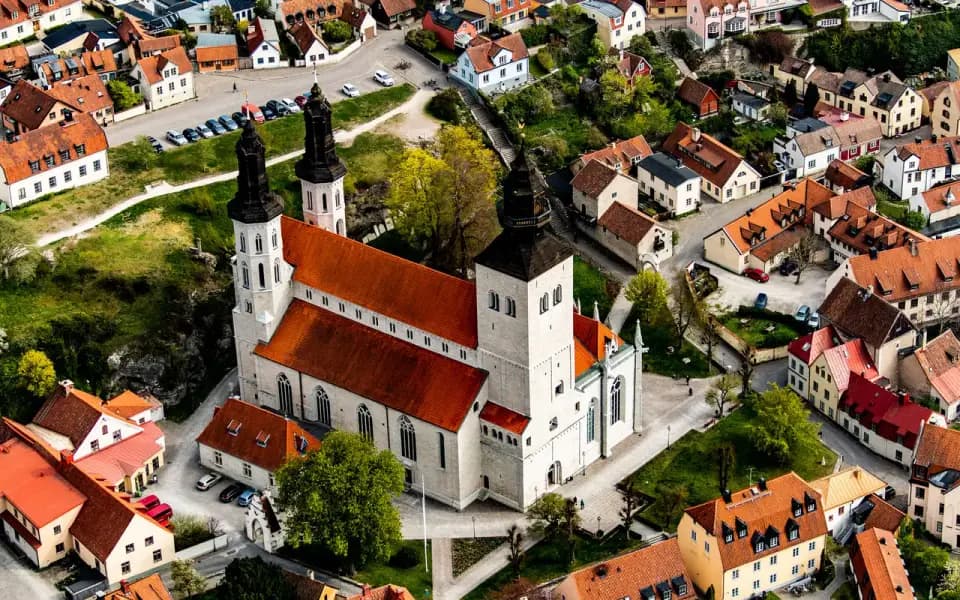
A grey limestone wall studded with towers wrapping a maze of cobbled lanes, the roofless Gothic shells of medieval churches rising above the rooftops, and pink roses tumbling over the doorways of little wooden cottages down to the Baltic.

Visby is a medieval walled town on a Baltic island — the "town of roses and ruins," its complete ring wall, its skyline of ruined Gothic churches and its rose-draped cottages the best-preserved Hanseatic townscape in Northern Europe, on the Swedish island of Gotland.

Type
town
Ideal length
~approx 1–2 days
Getting around
on foot — compact and cobbled; a bike or car for the island
Neighbourhoods
3 areas
Best season / months
June to August — the warm, light, lively Baltic summer
Language
Swedish (English widely spoken)
Currency
Swedish krona (kr)
Budget level
high — Swedish prices, higher in peak summer
Good for
  • History
  • Medieval atmosphere
  • Island and beaches
  • Summer travel
  • Couples
▸ Discover

About Visby

Visby sits on the west coast of Gotland, the large Swedish island in the middle of the Baltic Sea. A wealthy Hanseatic trading town in the Middle Ages, it built itself churches and a great defensive ring wall — and when its fortunes faded, the town was left frozen, so its medieval fabric survives to an extraordinary degree: some 3.4 kilometres of intact ring wall with dozens of towers, the ruins of a dozen or more Gothic churches, cobbled lanes, merchant houses and the one still-standing medieval church, the cathedral. Rose bushes drape the cottages, giving Visby its "roses and ruins" nickname. A UNESCO site and a beloved Swedish summer escape, it's a magical, atmospheric town.

Why go

Visby is the best-preserved medieval commercial town in Northern Europe — a UNESCO gem whose complete ring wall, dramatic church ruins and cobbled, rose-draped lanes make it uniquely atmospheric, especially in the long light of a Baltic summer. It's the gateway to the island of Gotland, with its beaches, sea stacks (rauks) and Bergman-haunted landscapes, and it hosts the famous Medieval Week festival. Reached by ferry or a short flight, it's a slower, island-paced Sweden of history, nature and summer charm — quieter out of season, magical within it.

Don't miss

  • The ring wall — the complete medieval town wall and towers
  • The church ruins — the roofless Gothic shells
  • St Mary's Cathedral — the one intact medieval church
  • The rose-draped cottages and cobbled lanes — the old town
  • The Gotland coast — beaches, rauks and Fårö nearby

Signature experiences

The ring wall and the ruins — Visby's two great sights define its skyline — the ring wall, a near-complete medieval town wall over three kilometres long, studded with dozens of towers, that you can walk beside and along in stretches; and the church ruins, the roofless Gothic shells of a dozen or more medieval churches that failed when the town's fortunes did, now standing dramatically among the lanes. Between them rises St Mary's Cathedral, the one that survived intact. Walking the wall and the ruins, tracing the medieval town, is the essential Visby experience.

Roses, ruins and cobbled lanes — Visby's nickname, the "town of roses and ruins," captures it — a maze of steep cobbled lanes and small squares, lined with merchant houses and little wooden cottages draped, in summer, with climbing roses, sloping down toward the sea. There's no single sight so much as the whole atmospheric town to wander; get lost in the lanes, find the ruins and the flower-hung doorways, and take a fika (coffee and cake) in a courtyard café. It's at its most magical in the long summer light of the Baltic evenings.

Gotland: beaches, rauks and Fårö — Visby is the gateway to Gotland, and the island rewards exploring — long beaches and coves for swimming in summer, the striking limestone sea stacks (rauks) that rise from the shore, medieval countryside churches, and, to the north, the wild, spare island of Fårö, with its rauk fields and its associations with the filmmaker Ingmar Bergman, who lived and is buried there. Hire a bike or a car and get out of town for a day of the island's nature and quiet. It's a different, elemental side of the visit.

Summer, festivals and Swedish flavours — Visby comes alive in the Baltic summer, when Swedes flock over for the sun, the sea and the atmosphere, and the Medieval Week festival (August) fills the town with costumes, markets and tournaments. The food is Swedish with a Gotland accent — Gotland lamb, the saffron pancake (saffranspannkaka) with berries and cream, fresh Baltic fish, and local truffle and asparagus in season, with a growing scene of island producers. Eat in the old-town restaurants and the harbour, and lean into the long, light summer evenings.
Neighbourhoods

Visby neighbourhood by neighbourhood — the character of each and who it suits.

  • The Walled Old Town

    The medieval heart within the ring wall — a maze of cobbled lanes, church ruins, merchant houses and rose-covered cottages, sloping down to the sea. The magical core.

    Why go
    The ring wall, the church ruins, the cathedral and the lanes.
    Best for
    Sightseeingwanderingcafésphotography
    Known for
    The complete ring wall and its towers, the ruins of a dozen medieval churches (St Nicolai, St Karin and more), St Mary's Cathedral (the one intact church), the Stora Torget square, the cobbled lanes and rose-draped cottages, and the Gotland Museum.
  • The Harbour and Almedalen

    The waterfront below the old town — the harbour and marina, the Almedalen park, and the ferry terminal, where the town meets the Baltic. The lively, watery edge.

    Why go
    The harbour, the park, the waterfront cafés and the ferry.
    Best for
    Waterfront strollscaféssunsetsarrivals
    Known for
    The harbour and marina, the Almedalen park (host of Sweden's big political-and-society week), the seafront restaurants, the swimming spots, and the ferry terminal.
  • The Gotland Countryside and Coast

    The island beyond the town walls — beaches, the dramatic limestone sea stacks (rauks), fishing villages, and the wild landscapes of Fårö to the north. The natural, island zone.

    Why go
    The beaches, the rauks, and the island's landscapes and Fårö.
    Best for
    Beachescyclingnaturethe sea stacksFårö
    Known for
    The Gotland beaches and coves, the limestone rauks (sea stacks), the island's medieval countryside churches, and the island of Fårö with its rauk fields and Bergman connections.

Views & quieter corners

Best views

  • The ring wall and its towers from outside
  • The church ruins rising among the rooftops
  • The rose-draped cottages and cobbled lanes in summer
  • The harbour and the old town from the sea at sunset

Quieter corners

  • The interiors of the roofless church ruins (some host events)
  • The Gotland Museum's Viking and medieval treasures
  • The rauk sea stacks along the Gotland coast
  • The island of Fårö and its rauk fields
  • Saffron pancake with dewberry jam at an old-town café

Food & drink

Visby eats Swedish with a Gotland accent, and the island has become a real food destination. Look for Gotland lamb, fresh Baltic fish, local asparagus and truffle in season, and the island's growing crop of small producers — cheeses, breweries and distilleries. The sweet signature is saffranspannkaka, a baked saffron pancake served with dewberry (saltåkra) jam and cream. Fika — coffee and a cinnamon bun or cake — is a ritual. Eat in the old-town and harbour restaurants, and try the lamb and the saffron pancake.

  • Saffranspannkaka — a baked saffron pancake with dewberry jam and cream
  • Gotland lamb — the island's prized lamb
  • Fresh Baltic fish — herring, flounder and more
  • Gotland asparagus and truffle — in season
  • Local cheeses and craft beer — from the island producers
  • Fika — coffee and a cinnamon bun or cake, the Swedish ritual
Dietary notes

Vegetarians do reasonably well in Sweden — salads, vegetable dishes, cheese and the island's produce, plus the vegetarian saffron pancake, though lamb and fish are the specialities — ask. Vegan options are growing, especially in summer. Halal and kosher are limited. Gluten-free is increasingly catered for in Swedish cafés and restaurants, but pancakes, buns and breads are wheat — confirm.

▸ Photos

Visby in photos

▸ Where you'll stay

Where you'll stay in Visby

Stay in the walled old town to be among the lanes, ruins and roses, and to enjoy the town in the long summer evenings — Visby has boutique hotels and guesthouses in the medieval houses, atmospheric and (in summer) pricey. The harbour area is handy for the ferry and waterfront. Gotland is a hugely popular Swedish summer destination, so book far ahead for July–August and Medieval Week; out of season it's quiet and cheaper.

  • Budget
    Outside the walls / near the harbour guesthouses, hostels and budget hotels a short walk from the old town.
  • Mid-range
    The walled old town boutique guesthouses and small hotels in medieval houses.
  • Luxury
    The best old-town boutiques high-end restored houses, the top of a Swedish-priced range.
Stay

Hotels & rentals around Visby

Pan, zoom and compare live prices — every stay in one map.

We may earn a commission if you book through these links, at no extra cost to you. How we make money

▸ Getting around

Getting around Visby

The walled old town is compact and entirely walkable — the wall, ruins, cathedral and lanes are all on foot (steep and cobbled). Bikes and cars (and island buses) reach the Gotland beaches, rauks and Fårö; a car or bike is useful for the island but not needed in town.

The old town and the harbour/Almedalen are a short walk apart (~approx); the Gotland countryside and Fårö are a bike, bus or drive out — plan the island as a day trip.

▸ Plan your days

Suggested itineraries

Ready-made day plans for Visby — from a single day to a long weekend.

One day

Spend the day in the walled old town — walk stretches of the ring wall and its towers, explore the dramatic church ruins and St Mary's Cathedral, and wander the cobbled, rose-draped lanes and the Stora Torget square, with a fika in a courtyard café. Visit the Gotland Museum for the island's Viking and medieval treasures, have a Gotland-lamb or saffron-pancake meal, and end with the harbour and the old town in the long evening light.

Two days

With an overnight, add the island. Hire a bike or car and explore Gotland beyond the walls — the beaches and coves for a swim, the striking rauk sea stacks, the medieval countryside churches, and, with time, the wild island of Fårö to the north. Return to Visby for the ruins and lanes in the summer twilight and a last island-produce dinner.

▸ What you'll do

Insider tips

  • Stay overnight in summer — the rose-lined lanes and ruins are magical in the long light evenings.
  • Walk the ring wall and among the church ruins to grasp the medieval town.
  • Hire a bike or car to see Gotland's beaches, rauks and the island of Fårö.
  • Book far ahead and budget for high Swedish (and peak-summer) prices; the ferry too.
Explore

Explore the area

© OpenFreeMap · OSM · terrain Mapterhorn
▸ Budget

What it costs in Visby

Backpacker
roughly €60–100 a day.
Mid-range
roughly €130–230 a day.
Luxury
€320 a day and up.
Cash vs card
Sweden is almost entirely cashless — cards and contactless (and mobile pay) work everywhere; you rarely need cash at all.
Tipping
Tipping is modest and optional in Sweden — round up for good service; no obligation.
▸ When you'll go

When to visit Visby

June to August — the warm, light, lively Baltic summer

Spring

What to expect — Cool and fresh, greening and warming slowly, the town quiet before summer, with long lengthening days. A calm, pretty time.

What's best — The old town quiet and the roses coming, lengthening Baltic light, and lower prices before the summer rush — a peaceful window; the sea's still cold.

Summer

What to expect — Mild to warm with long, luminous days (near-endless light around midsummer), the town at its busiest and most alive, and Gotland's beaches in full swing. Peak season.

What's best — The town at its magical best — roses in bloom, warm evenings, swimming, the Medieval Week festival, and the long Baltic light — but it's crowded and pricey, so book far ahead.

Autumn

What to expect — Cool and increasingly blustery, the summer crowds gone and the light golden and low; some places wind down. Atmospheric and quiet.

What's best — The old town and ruins atmospheric under big autumn skies, thinner crowds, golden light, and the harvest season — a moody, rewarding window; pack warm layers.

Winter

What to expect — Cold, dark and windy, with short northern days and much of the tourist scene closed; the town very quiet. The deep off-season.

What's best — The medieval town and ruins stark and near-deserted, the possibility of snow on the wall and cottages, and cosy cafés — pack seriously warm layers; many places are closed and the ferry schedule thins.

▸ Know before you go

Know before you go

Honest swaps

Skip a rushed day-trip → stay overnight to have the ruins and rose-lined lanes in the long, magical summer evenings.

Skip the walls from the street only → walk stretches of the ring wall and among the church ruins.

Skip a town-only visit → hire a bike or car and see the Gotland beaches, rauks and Fårö.

Skip peak-summer sticker shock unprepared → budget for Swedish (and high-season) prices, and book far ahead.

Crowds & timing

Gotland is one of Sweden's most popular summer destinations — July–August and Medieval Week are packed and pricey; book far ahead.

The old town is loveliest in the early morning and the long light evenings; out of season it's peaceful.

Local rules & etiquette

The old town is steep and cobbled — wear sensible shoes.

Respect the fragile church ruins and the town wall, and the residents in the lived-in lanes.

Swedish summer runs on the ferry and the calendar — plan crossings and beds ahead in peak season.

Money

Sweden is effectively cashless — cards and mobile pay work everywhere; you rarely need cash.

Note that prices are high, especially in peak summer; budget accordingly.

After dark

In summer, the old-town and harbour restaurants and bars are lively in the long light evenings.

Visby has a summer buzz (and a big night scene during festivals and Almedalen week) but is quiet out of season.

The magic after dark in summer is the roses, ruins and cobbles in the lingering Baltic twilight.

▸ Ready to book your trip?

Getting there

Visby is reached by ferry from mainland Sweden (Nynäshamn, near Stockholm, or Oskarshamn) or by a short flight to Visby Airport (VBY); the ferry terminal and airport are close to the old town.

Book

Ready to book your trip?

Flights, airport transfers and car hire — search and compare without leaving the page.