Vietnam — hero

Asia

Vietnam

From the limestone islands of Ha Long Bay to lantern-lit Hoi An and the river life of the Mekong Delta, in one long, narrow country.

Currency
Vietnamese Dong (VND)
Language
Vietnamese
Best time
November – April (central coast: February – May)
Visa
Visa-free (up to 45 days)

The FCDO has no advisory against travel to Vietnam.

Still current at: 13 November 2026 Updated: 21 September 2026

Source: UK Foreign, Commonwealth & Development Office — the definitive source. Check it close to your travel dates.

Flight cancelled or delayed because of this? Your rights under UK261 / EU261 →

Why visit

Why Vietnam

From the limestone islands of Ha Long Bay to the lanterns of Hoi An and the canals of the Mekong Delta, Vietnam packs three climates and very different regions into one long, narrow country.

  • Halong Bay cruise
  • Hoi An lantern town
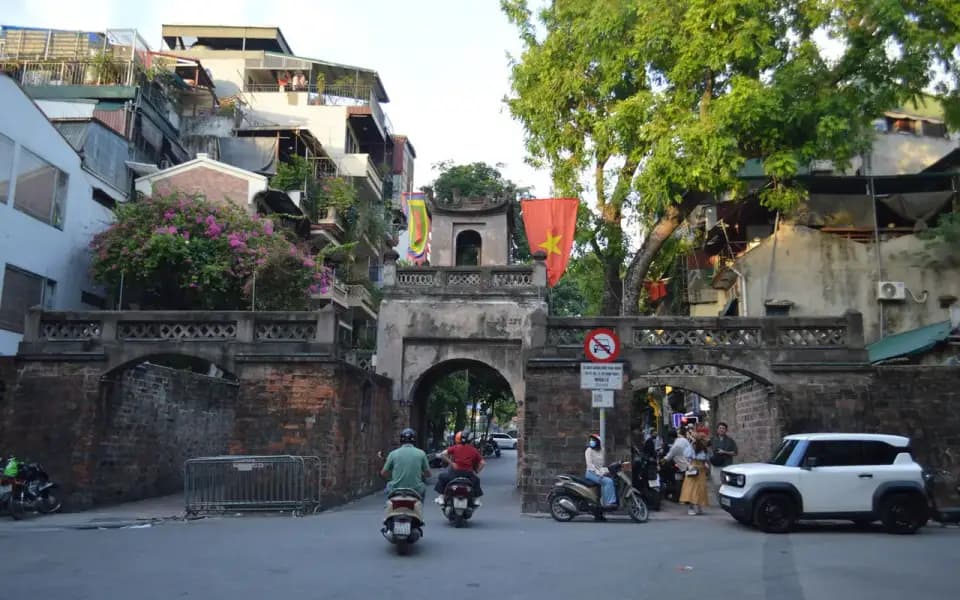
  • Hanoi Old Quarter
  • Mekong Delta boats
Read more

Vietnam is a long, narrow country running down the eastern edge of mainland South-East Asia, and its length is the key to planning a trip. The north is built around Hanoi, a thousand-year-old capital with an Old Quarter of 36 historic streets, plus the limestone islands of Ha Long Bay and the rice terraces of Sa Pa and the Ha Giang highlands. The centre holds the old imperial capital of Hue, the lantern-lit Ancient Town of Hoi An and the beaches of Da Nang. The south is faster and hotter: Ho Chi Minh City, then the canals, orchards and floating markets of the Mekong Delta, with Phu Quoc island offshore.

There is no single best month for the whole country, because the north, the centre and the south each have their own climate. Hanoi has a genuinely cool winter, the central coast takes the heaviest rain and flooding from around October to December, and the south is hot and dry from December to April. We set out the months region by region below, including the hot ones.

Getting there from the UK is simple: Vietnam Airlines flies non-stop from Heathrow to Hanoi and Ho Chi Minh City. British passport holders can currently visit for up to 45 days without a visa. Inside the country, domestic flights, the long north–south railway and sleeper buses link the main stops, so it makes sense to travel one way along the coast rather than double back.

Where to go

The regions of Vietnam

The north: Hanoi, Ha Long Bay, Sa Pa and Ha Giang

Hanoi is the capital and the usual starting point. Its Old Quarter is a maze of 36 historic streets, each traditionally tied to a craft or trade, around Hoan Kiem Lake and the red Huc Bridge to Ngoc Son Temple. The Temple of Literature, built in 1070, was Vietnam's first national university.

Ha Long Bay, a UNESCO-listed bay of thousands of limestone islands and islets, is about two and a half hours from Hanoi by expressway; cruises leave from Tuan Chau and Bai Chay.

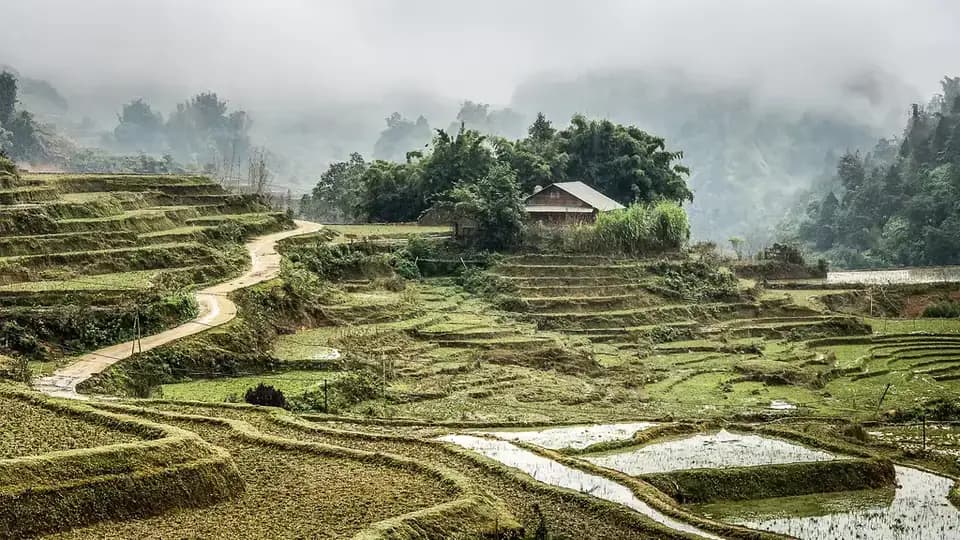
In the mountains, Sa Pa overlooks a valley of centuries-old rice terraces, with Fansipan (3,143m) above it. Further north-east, the Ha Giang highlands (since 2025 part of Tuyen Quang province, an official frontier area) take in the Dong Van Karst Plateau Geopark and the Ma Pi Leng road above the Nho Que River, about six to seven hours from Hanoi by road.

The centre: Hue, Hoi An and Da Nang

Hue was the seat of the Nguyen emperors for 143 years. Its Citadel holds palaces, pavilions and theatres, the tombs of the emperors Tu Duc, Minh Mang and Khai Dinh lie outside the city, and the seven-tiered tower of Thien Mu Pagoda stands over the Perfume River.

Hoi An is a former trading port whose Ancient Town (30 hectares of it preserved as a UNESCO cultural heritage site) is lit by lanterns after dark and known for its tailors. Da Nang has the long sands of My Khe Beach, the Marble Mountains with their caves and pagodas, and the forested Son Tra Peninsula; the Hai Van Pass road climbs above the sea between Da Nang and Hue.

This coast takes the heaviest rain in Vietnam, roughly October to December, and flooding is common in October and November.

The south: Ho Chi Minh City and the Mekong Delta

Ho Chi Minh City, formerly Saigon, is the economic heart of the country. In District 1, Dong Khoi street leads past Notre Dame Cathedral, the Central Post Office and the Opera House, and Ben Thanh Market is a local favourite; Binh Tay Market anchors the Chinese quarter of Cho Lon. The street food (banh mi, banh xeo, com tam) is a reason to come in itself.

South and west, the Mekong Delta is a landscape of canals, tropical fruit orchards and floating markets, with Can Tho and Chau Doc as the main bases.

The islands: Phu Quoc

Phu Quoc, off the Mekong Delta coast, is Vietnam's best-known beach island. Sao Beach has white sand and calm, clear water; Phu Quoc National Park in the north has forest trails to streams and quiet beaches. The island is famous for its fish sauce and black pepper, and the night market near Duong Dong sells grilled seafood. The dry season, November to April, brings the calmest seas; May to October is rainier and rougher. There is an international airport, and ferries run from Rach Gia and Ha Tien.

The Central Highlands: Da Lat

Inland from the south-central coast, the Central Highlands are cool plateaus and coffee country. Da Lat, at about 1,500m, was a French summer retreat and keeps its churches, art deco hotels and old railway station. It has spring-like weather all year with chilly nights, pine-lined hills, Xuan Huong Lake and a flower-filled central market. Lang Biang mountain can be walked independently; Bidoup Nui Ba National Park is visited with local guides. Rain falls from May to October; December to March is the driest time.

A pillar, not a footnote

Eat your way through Vietnam

The single reason many travellers come back — the food culture worth reshaping a trip around, and the dishes to seek out region by region.

Vietnam

Herbs by the fistful, broth simmered overnight, and a country that eats best on a plastic kerbside stool.

Dawn in Hanoi and the phở stall is already busy — a vat of beef broth that has simmered all night, ladled over rice noodles, brightened with a fistful of herbs, a wedge of lime and a slick of chilli you tear and add yourself. You eat it hunched on a plastic stool barely off the pavement, and it may be the best thing you eat all trip.

Vietnamese food runs on balance — salty fish sauce, sour lime, sweet, hot, and the green freshness of herbs, all held in tension on every plate. Travel the length of the country and it shifts under you: fierce, imperial cooking in Huế; the sweeter, coconut-rich south; and everywhere the legacy of France reworked into something better, the bánh mì — a crackling baguette packed with pâté, pickles and coriander. Grab a stool, point at whatever smells good, and let the kerb feed you.

Dishes to seek out
  • phở (beef noodle soup)
  • bánh mì (filled baguette)
  • bún chả (grilled pork & noodles)
  • gỏi cuốn (fresh spring rolls)
  • bún bò Huế (spicy beef noodles)
  • cà phê sữa đá (iced coffee)
Things to do

Nature, culture and the outdoors

  1. Walk Hanoi's Old Quarter and Hoan Kiem Lake

    Hanoi

    Lose an afternoon in the 36 streets of the Old Quarter, cross the red Huc Bridge to Ngoc Son Temple, then visit the Temple of Literature. In the evening, try pho and bun cha, and catch a show at the Thang Long Water Puppet Theatre.

  2. Cruise and kayak Ha Long Bay

    Ha Long Bay

    Boats leave Tuan Chau and Bai Chay for the limestone islands, with kayaking into quiet lagoons and walks through caves. The FCDO warns that overcrowding and poor safety standards have caused accidents on overnight boats: check the boat's safety record, and insist on a safety briefing and a life jacket.

  3. Trek the rice terraces around Sa Pa

    Sa Pa

    Overnight treks pass terraces and waterfalls, and Cat Cat and Ta Phin can be visited without a guide. A cable car of about 6km climbs Fansipan (3,143m) in roughly 15 minutes. Sa Pa is reached by night train or expressway from Hanoi to Lao Cai.

  4. Ride the Ha Giang highlands

    Ha Giang

    The loop through the Dong Van Karst Plateau Geopark and over the Ma Pi Leng road is the north's great road trip, usually done over several days. To drive a motorbike you need a 1968 international driving permit and your UK licence; the FCDO advises against hiring one if you are inexperienced, and roads are wet and slippery from May to August.

  5. Explore Hue's Citadel and royal tombs

    Hue

    Walk the palaces of the Nguyen emperors, then head out to the tombs of Tu Duc, Minh Mang and Khai Dinh and the tower of Thien Mu Pagoda on the Perfume River. Hue's refined cooking, including banh khoai and banh beo, is reason enough to stay a night.

  6. See Hoi An's Ancient Town by lantern light

    Hoi An

    After dark, thousands of lanterns light the old streets. A ticket covers historic stops such as the Japanese Bridge, Tan Ky House and the Phuc Kien Assembly Hall. By day, hire a bike for the countryside around Cam Thanh, or head 7km to An Bang beach.

  7. Take the train down the coast

    Hanoi to Ho Chi Minh City

    The north–south line stops at Hue, Da Nang, Nha Trang and Phan Thiet, and the whole run takes around a day and a half. You can break the journey, for example at Hue, rather than ride the full length. Choose from hard or soft seats and hard or soft sleepers.

  8. Drift through the Mekong Delta

    Can Tho and Chau Doc

    Cruise the canals, visit the floating markets and stop at tropical fruit orchards, using Can Tho or Chau Doc as a base.

  9. Slow down on Phu Quoc

    Phu Quoc

    Swim at Sao Beach (go early on a weekday), walk the forest trails of Phu Quoc National Park, tour a fish sauce barrel house and a pepper garden, and pick your dinner at the night market near Duong Dong.

Plan your trip

Curated Vietnam itineraries

Browse all Vietnam trips →
Guides

All our Vietnam guides

Where to stay

Hand-checked places in Vietnam

Browse all Vietnam stays →
Plan

Getting there, getting around and where to stay

Getting there from the UK

Vietnam Airlines flies non-stop from London Heathrow (LHR) to Hanoi's Noi Bai International Airport (HAN) and to Ho Chi Minh City's Tan Son Nhat International Airport (SGN). The flight takes about 12 to 13 hours, using wide-body aircraft such as the Boeing 787 or Airbus A350. Frequencies change by season, so check the airline's timetable.

At Noi Bai, international flights use Terminal 2 and domestic flights use Terminal 1. Tan Son Nhat is about 7km from the centre of Ho Chi Minh City. For the central coast, Da Nang International Airport (DAD) handles international flights at Terminal 2 and domestic flights at Terminal 1, a covered five-minute walk apart. There is no non-stop flight from the UK to Da Nang.

If you change from an international to a domestic flight in Hanoi or Ho Chi Minh City, you have to pass through immigration first, so allow time.

Flights to Hanoi (HAN) →Flights to Ho Chi Minh City (SGN) →

Getting around

Flying is the quickest way to cover the length of the country, with daily flights to all the main destinations. Vietnam Airlines, the national carrier, has the most flights; Vietjet and Bamboo Airways are lower-cost options.

By train, the north–south line between Hanoi and Ho Chi Minh City stops at Hue, Da Nang, Nha Trang and Phan Thiet, and the full journey takes around a day and a half. There are four classes: hard seat, soft seat, hard sleeper and soft sleeper. Tickets are sold at stations and on Vietnam Railways' official booking site, dsvn.vn. For Sa Pa, night trains run from Hanoi to Lao Cai. Book early around holidays, especially Tết.

Open-tour buses, mostly sleepers, are the budget option; book a day or two ahead, or at least two weeks ahead over Vietnamese holidays. The FCDO notes that bus and coach crashes are more likely at night.

In cities, metered taxis from the larger firms are generally reliable and Grab is a useful option (FCDO). Phu Quoc has its own international airport, and ferries run to the island from Rach Gia and Ha Tien.

Driving a car or motorbike requires a 1968 international driving permit and your UK licence, and driving without third-party insurance is illegal. Helmets are compulsory for riders and passengers. The FCDO advises against hiring a motorbike if you are inexperienced.

Where to stay

Hanoi: the Old Quarter and Hoan Kiem Lake

Staying in or near the Old Quarter puts Hoan Kiem Lake, the street-food lanes and the water puppet theatre within walking distance.

Hoi An: the Ancient Town or An Bang beach

Stay near the Ancient Town to see the lanterns at night without a taxi ride, or 7km out at An Bang beach for beachfront restaurants and a slower pace. Bikes make it easy to move between the two.

Da Nang: My Khe Beach

Da Nang suits travellers who want a beach base with a city behind it. My Khe Beach is the place for sunrise swims and seafood dinners, with the Marble Mountains and Son Tra Peninsula close by and Hoi An within easy reach.

Ho Chi Minh City: District 1

District 1 is the most practical base for a first visit, close to Dong Khoi street, Notre Dame Cathedral, the Central Post Office and Ben Thanh Market, and about 7km from the airport.

Phu Quoc

Choose a base for the beach you want: near Duong Dong for the night market and restaurants, or closer to Sao Beach or the national park in the north for a quieter stay. Come between November and April for the calmest seas.

The quiet central coast: Song Cau

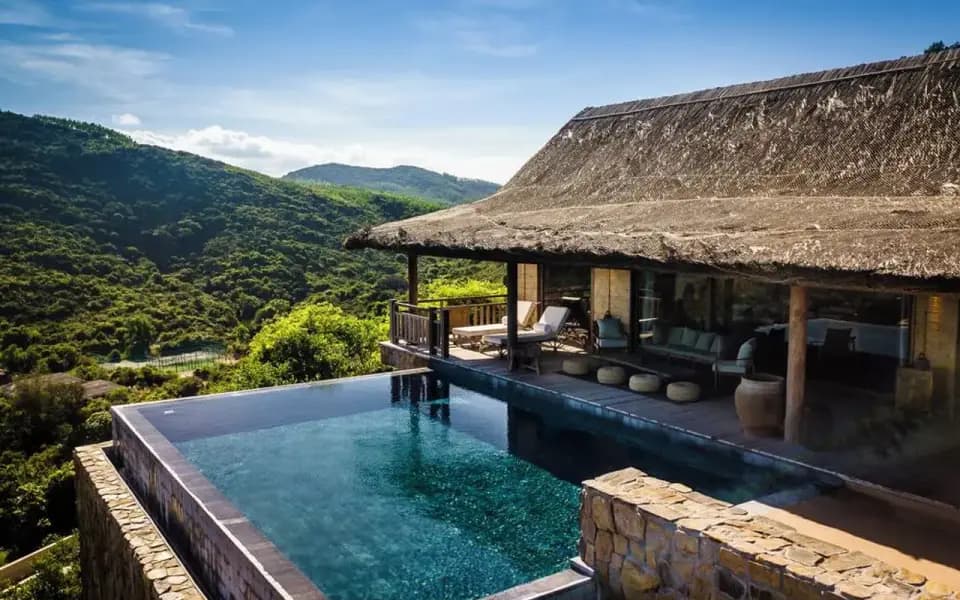
For something remote, Zannier Hotels Bai San Ho sits between rice paddies and a coral bay near Song Cau, in Dak Lak province on the south-central coast.

When to go

Weather & timing in Vietnam Right now RIGHT NOW 22°C partly cloudy

Best Jan–Mar · Shoulder Apr, Nov–Dec

Units

Monthly figures are for North (Hanoi); other regions of Vietnam vary. See every region, month by month →

Next 7 days · North

Forecast · Met Office · Powered by Met Office data

Typical · climate data

Best time to visit

November – April (central coast: February – May)

Best for
  • Halong Bay
  • Street Food
  • Old Quarters
  • Mekong
At a glance
Sunshine 6.7 hr/day
Rainfall 181 mm/mo
Wettest September · 441.3mm
Driest December · 15.3mm
Part of Southeast Asia →
By season

Units

Spring (Mar–May)

What to expect — Daytime highs average about 29°C with overnight lows near 22°C, with plenty of rain.

What's best — Warm, then Wet.

Summer (Jun–Aug)

What to expect — Daytime highs average about 33°C with overnight lows near 26°C — the wettest stretch of the year.

What's best — Hot, then Wet.

Autumn (Sep–Nov)

What to expect — Daytime highs average about 29°C with overnight lows near 22°C, with plenty of rain.

What's best — Wet, then Shoulder season, then Warm. Nov is among the best months here (warm, sunny).

Winter (Dec–Feb)

What to expect — Daytime highs average about 22°C with overnight lows near 15°C.

What's best — Warm, then Shoulder season. Dec is among the best months here (warm, sun and cloud).

Live forecast map · Windy.com · temperature with wind, °C and km/h

When to go, region by region

Vietnam has 3 climate regions

Each month our cards and map show the region with the best weather that month: Jan South · Feb–Mar Central · Apr North · May Central · Jun South · Jul Central · Aug South · Sep–Nov North · Dec South.

Region JFMAMJJASOND
NorthHanoi · best Nov–Dec January: good February: good March: good April: good, shown on the cards May: not ideal June: not ideal July: not ideal August: not ideal September: good, shown on the cards October: good, shown on the cards November: great, shown on the cards December: great
CentralDa Nang · best Feb–Mar, May January: good February: great, shown on the cards March: great, shown on the cards April: good May: great, shown on the cards June: not ideal July: not ideal, shown on the cards August: not ideal September: not ideal October: not ideal November: not ideal December: not ideal
SouthHo Chi Minh City · best Dec–Jan January: great, shown on the cards February: good March: not ideal April: good May: not ideal June: not ideal, shown on the cards July: not ideal August: not ideal, shown on the cards September: not ideal October: not ideal November: good December: great, shown on the cards

Great Good Not ideal Shown on our cards that month

Heat, rain and the best months, region by region

Vietnam has three climates, so the best time depends on where you are going. The figures below are average daily highs from 2020 to 2024.

The north (Hanoi, Ha Long Bay, the mountains)

Winters are cool: Hanoi's average highs are only about 21–23°C from December to February, with lows around 14°C, and the mountains around Sa Pa and Ha Giang are cold, with occasional frost near Fansipan. The summer is hot, wet and muggy: June and July average 33°C, and May to October is the rainy stretch, wettest in August and September (around 390–440mm a month). For the mountains, the tourism board recommends September to November (golden rice terraces, and buckwheat flowers in Ha Giang) or March to May. Spring (March–April) and late autumn (November) suit Hanoi best.

The centre (Hue, Hoi An, Da Nang)

The central coast is driest from February to May. The summer is hot: June (34°C), July (33°C) and August (34°C). From September the rains arrive, peaking in October (Da Nang averages over 600mm that month) and staying heavy into December. The FCDO says central Vietnam's rainy season runs from October to December and that flooding is common in October and November.

The south (Ho Chi Minh City, the Mekong Delta, Phu Quoc)

The south is hot all year. The dry season, December to April, is the best time for Ho Chi Minh City and for Phu Quoc's beaches (November to April), but it is also the hottest stretch: January (33°C), February (34°C), March (35°C, very hot), April (34°C) and May (33°C). Rain sets in from May and is heavy from June to October; flooding is common in the Mekong Delta in October and November.

Storms

The FCDO says the tropical storm season normally runs from May to November along the east coast, though storms can occur at other times, and can cause serious disruption. Check the forecasts from Vietnam's National Centre for Hydro-Meteorological Forecasting before and during your trip.

Tết (Lunar New Year)

Tết follows the lunar calendar and falls in late January or early February. In 2027, the first day of Tết is Saturday 6 February, and the official public-sector holiday runs from 4 to 10 February. Many businesses and restaurants close for at least the first few days, and buses, trains, flights and hotels fill up as people travel home, so book well ahead or avoid travelling around those dates.

Average daily high (°C) by month. Measured 2020–2024.
AreaJFMAMJJASOND
North (Hanoi) 212326293233333231282722
Central (Da Nang) 242527303234333431282724
South (Ho Chi Minh City) 333435343332313131303131

Colours as on the month tiles above. Bold: hot, 32°C or more (go early or late in the day). Outlined: very hot, 35°C or more. Wet: 150 mm of rain or more.

Heat: Every month from January to May averages 33–35°C in Ho Chi Minh City (March is very hot, at 35°C), and June to August reaches 33–34°C in both Hanoi (June–July) and Da Nang (June–August). Sightsee early and late in the day, and drink plenty of water.

A little context

A little history

To read what you're looking at — the empires and eras that shaped Vietnam's food, art and streets.

A thousand years resisting and absorbing China left the chopsticks, the noodle soups and a Confucian streak
a century of French Indochina gave the baguettes, the coffee and the faded colonial towns
the imperial citadel at Huế and the lantern-lit port of Hội An preserve the old order
the war and 1975 reunification are recent memory, now overtaken by fast, open growth
Culture

Culture and etiquette

  • Dress modestly at religious and cultural sites. The FCDO advises covering your shoulders and knees at pagodas, temples and other cultural sites.
  • Tết is a family festival. Don't visit a Vietnamese home over Tết without an invitation: the first guests of the year are believed to bring luck to the household, and being invited is an honour. A smile and Chúc Mừng Năm Mới (Happy New Year) are always welcome.
  • Many historic sites need a ticket. In Hoi An, for example, the Japanese Bridge, Tan Ky House and the Phuc Kien Assembly Hall are visited with an Ancient Town ticket.
  • Respect photography limits. Don't take photos near military bases; some border areas also need a travel permit.
  • Stay out of politics. The FCDO advises avoiding political activity, criticism of the government and protests.
  • Drug laws are severe. Penalties include long prison terms and, in some cases, the death penalty, whatever the amount, and they apply in transit too. Vapes are banned.
  • LGBT+ travellers: the FCDO describes Vietnam as generally tolerant. Same-sex relationships are legal, but same-sex marriage is not legally recognised.
Practical

Entry, money and health

Entry and visas (British passport holders)

On the date we checked, the FCDO says British citizens can visit Vietnam visa-free for up to 45 days for tourism or business. Your passport is stamped with the date you must leave by; check it shows 45 days from arrival before you leave the airport or land border, as it won't be changed afterwards.

For a longer trip, an e-visa allows a stay of up to 90 days, with single or multiple entry. Apply only on the Vietnam Immigration Department's official portal, evisa.gov.vn. The e-visa ties you to the entry and exit points you choose when applying, and if you get one while already in Vietnam, you must leave and re-enter to start it.

Your passport must be valid for at least 6 months from your arrival date, with at least 2 blank pages, and be undamaged. You must enter and leave on the same passport. A digital arrival card is encouraged (not mandatory) for arrivals at Tan Son Nhat (SGN) from 15 April 2026. Check the FCDO entry requirements before you book.

Money

The currency is the Vietnamese dong (VND, ₫), issued by the State Bank of Vietnam. Change money only at official counters. You must declare cash over 15 million dong or US$5,000 (or the equivalent) when you arrive; to leave with more, you need confirmation from an authorised credit institution or written approval from the State Bank of Vietnam.

Health

Check TravelHealthPro's Vietnam page at least 8 weeks before you travel. It recommends hepatitis A and typhoid for most travellers, with tetanus up to date; other vaccines, including Japanese encephalitis and rabies, depend on your trip.

Dengue is present across the country, and mosquitoes that carry it bite mainly by day. Japanese encephalitis risk peaks from May to October, especially in the north. There is no malaria risk in the big cities (including Hanoi and Ho Chi Minh City), the Red River delta, the coast north of Nha Trang and Phu Quoc, but there is a low risk in rural areas, including Lam Dong, Dak Lak, Gia Lai and Kon Tum in the Central Highlands. Altitude illness is possible above 2,500m, for example on Fansipan, and the FCDO lists air pollution as a health risk.

Vietnam restricts medicines it classes as addictive or psychotropic: you may bring no more than 7 days' supply unless you need more, and you should carry your prescription and a doctor's letter in English. The emergency ambulance number is 115.

UK government travel advice

The FCDO's travel advice for Vietnam (last updated 21 September 2026, still current on 28 October 2026) does not advise against travel to any part of the country. It highlights the tropical storm season (normally May to November), seasonal flooding, bag-snatching by thieves on motorbikes, unexploded ordnance in former battlefields (especially central Vietnam and along the Laos border), and safety standards on overnight boats in Ha Long Bay. Read the full advice on GOV.UK and sign up for email alerts before you travel.

Sources · last checked 28 October 2026

We write this guide from official sources only: GOV.UK, national immigration portals, tourism boards, airports and operators, central banks and met services. Rules change, so check the linked pages before you book.

Before you book

Know before you go

The practical back-matter — safety, drones and the essentials, in one place.

Safety

No FCDO advisory against travel FCDO advice →

Official UK Foreign, Commonwealth & Development Office guidance is the definitive source — check it close to your travel dates.

Drone rules (sub-250g)

  • Vietnam
    Effectively unflyable for casual visitors. Vietnam treats a camera drone as a surveillance device under Ministry of Defence control: flying one needs an MoD permit applied for around 14 days ahead through a Vietnamese sponsor (roughly US$350–700 a day), the sub-250g exemption covers only camera-free flight, and drones must be declared at customs and may be impounded on arrival. ⚠ Military zones, government buildings, airports and border regions are off-limits, and the density of Hanoi, Ho Chi Minh City and Ha Long Bay puts them out of bounds without a specific permit. Rules checked: Jul 2026

National parks, protected sites and religious/heritage venues often have their own rules and permits — always check the specific site before you fly.

The essentials

Plug & voltage Type A/C/D · 220V
Daily budget Budget-friendly
Region South-Eastern Asia