One day
Start at Skanderbeg Square, see the Et'hem Bey Mosque and clock tower, and visit the National Historical Museum. Walk to Bunk'Art 2 for the underground exhibition, then have lunch in the New Bazaar. End in the park by the Artificial Lake.
Albania's capital: walkable squares, bunker museums, the New Bazaar, a mountain with a cable car on the edge of town, and the Adriatic 30 km away.
Coffee in a square named for the national hero, a cable car lifting out of the city towards cooler pine forest, and a Cold War bunker where the tour starts underground.
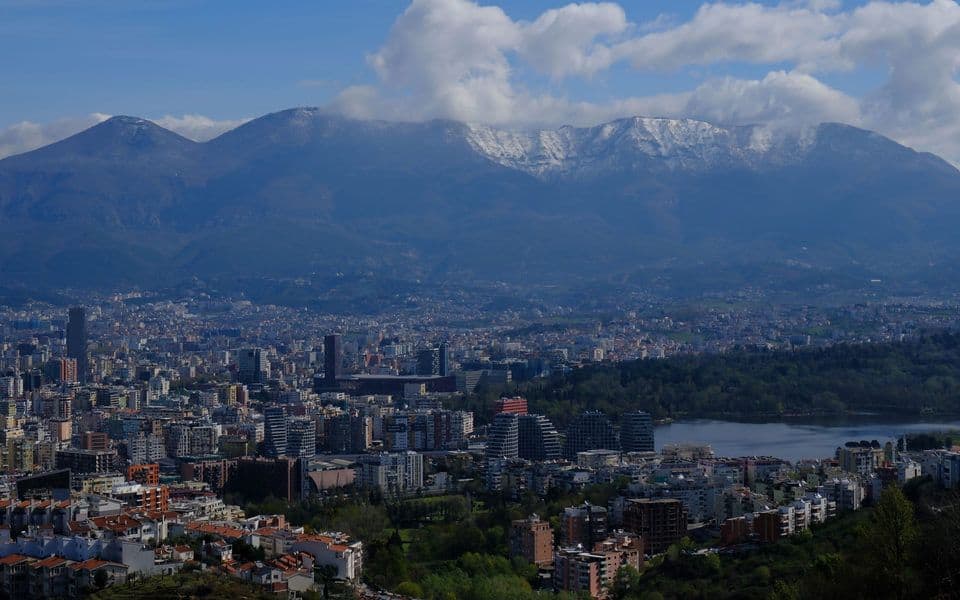
Tirana is Albania's capital and the easiest place to start: a walkable centre of squares, museums and the New Bazaar, with the Dajti mountain and cable car on the edge of town and the Adriatic about 30 km away. It has been the capital since 1920, and works as a short city break or a base for Berat, the coast and the north.
Tirana sits in central Albania beside Mount Dajti, only about 30 km from the Adriatic coast, and has been the capital since 1920. The centre is compact: Skanderbeg Square anchors it, with the Et'hem Bey Mosque, an Ottoman clock tower from the early nineteenth century and the museums of national history, archaeology and art within a short walk. The New Bazaar (Pazari i Ri) adds markets, craft shops, bars and restaurants, and the Artificial Lake sits inside the city's main park.
What sets it apart is how much it layers into a small city. Bunk'Art 1 and Bunk'Art 2 are cold-war bunkers turned into museums, the Dajti cable car reaches a national park about 26 km from the centre, and day trips run to Petrela Castle, Lake Bovilla and the Pëllumbas cave. For the wider picture, see our Albania guide.
Tirana suits people who want a capital with less polish and fewer queues than the usual Adriatic city breaks. In one trip you can walk a historic square, read the dictatorship era in a bunker, eat byrek and tavë kosi in a taverna and be on a mountain by lunch. It is also the practical gateway: the main airport is close, and Berat, the coast and the Albanian Alps are all reachable from it. It will not feel like Prague or Venice, and that is partly the appeal. We would plan on two or three days and treat it as the start of a longer Albanian trip.
Skanderbeg Square and the Et'hem Bey Mosque The city's main square is the place to start: the mosque, the early nineteenth-century clock tower and the National Historical Museum all stand within a few minutes' walk. Come in the morning, when it is quiet and cool.
Bunk'Art 1 and Bunk'Art 2 Two Cold War bunkers turned into museums, one near the Dajti cable car and one in the centre. Bunk'Art 2 covers the state security and surveillance system under the communist regime; Bunk'Art 1 covers the political and military story from 1939 to the end of communism.
The New Bazaar (Pazari i Ri) A rebuilt market quarter with produce stalls, craft shops, bars and restaurants. It suits an unhurried lunch or evening.
The Dajti Ekspres cable car The cable car lifts you over forest and valleys, with views over Tirana, into Dajti National Park, about 26 km from the centre, where there are walks and picnic spots.
Lake Bovilla and Petrela Castle The tourism agency lists both among day trips from the capital, together with the Pëllumbas cave and the Shëngjergj waterfall.
Tirana neighbourhood by neighbourhood — the character of each and who it suits.
The civic heart of Tirana: a large square with the Et'hem Bey Mosque, the early nineteenth-century clock tower and the National Historical Museum close by.
A rebuilt market quarter where produce stalls, craft shops, bars and restaurants sit together.
The city's green space, with the Artificial Lake inside the main park.
The eastern edge of the city, where Bunk'Art 1 stands behind the cable car station and Dajti National Park begins, about 26 km from the centre.
Tirana's food draws on Ottoman and Mediterranean traditions. The tourism agency names fërgesa tiranase (peppers and tomato baked with cheese), tavë kosi (lamb baked with yoghurt), jufka with chicken, and sweet baklava and kadaif as typical dishes of the capital. Byrek, the filled pastry, makes a cheap breakfast or snack. The New Bazaar has produce, bars and restaurants, and Albanian raki is the traditional spirit; coffee is part of daily life. Drink bottled water, as the FCDO advises. Prices at neighbourhood tavernas tend to be lower than in tourist-heavy Adriatic towns, though we have not checked menus.
Albanian cooking is built around vegetables, dairy and pastries, so vegetarians can usually eat well on fërgesë, byrek with spinach or cheese, and grilled vegetables. Vegans and people with strict allergies should ask in advance, as many dishes use cheese, yoghurt or butter. We could not read an official source on dietary labelling, so we suggest carrying a short note in Albanian. Meat dishes, including lamb, are widespread; if you eat halal, ask each place.
Choose by what you want to do. Around Skanderbeg Square you are close to the museums, the mosque, the clock tower and the park, which suits a first visit and a short stay. The New Bazaar area adds restaurants and bars, so it is livelier in the evening. By the Artificial Lake the park is on your doorstep. The slopes below Dajti are better for hikers and cable car trips but need a taxi into the centre.
Pan, zoom and compare live prices — every stay in one map.
We may earn a commission if you book through these links, at no extra cost to you. How we make money
The central sights are close together and the main streets are flat, so most visitors walk between Skanderbeg Square, the New Bazaar, the museums and the park. Bunk'Art 1 and the Dajti cable car are on the eastern edge of the city, where a taxi is simplest. Taxis are common; we would agree the fare first or use a booking app. For other towns, the national eTransport platform lists the official bus lines, stations and timetables. We would not hire a car for a city-only stay, given the FCDO's warnings about aggressive driving.
The most useful public service for visitors is the airport line run by LU-NA SHPK, which runs every hour all day and night in each direction and takes 30 to 40 minutes. The Albanian national eTransport website gathers official bus lines, stations and timetables, including intercity services. Tirana also has a city bus network, but we could not read an official timetable or fares this session, so check locally on arrival. The state railway, Hekurudha Shqiptare, sells tickets online for some routes from Tirana.
Ready-made day plans for Tirana — from a single day to a long weekend.
Start at Skanderbeg Square, see the Et'hem Bey Mosque and clock tower, and visit the National Historical Museum. Walk to Bunk'Art 2 for the underground exhibition, then have lunch in the New Bazaar. End in the park by the Artificial Lake.
Spend day two on Dajti: Bunk'Art 1 in the morning, then the Dajti Ekspres cable car and a walk in the national park. Return for dinner in the city and try fërgesë or tavë kosi.
Take a day trip to Petrela Castle, Lake Bovilla or the Pëllumbas cave, as listed by the Albanian tourism agency. Check transport before you go, or join a tour, and leave time for a late afternoon in the bazaar.
We think it is worth two or three days. The centre is walkable, the bunker museums are distinctive, and Dajti gives a mountain outing without leaving the city area.
The FCDO says British passport holders can visit for up to 90 days in a 180-day period without a visa, for tourism or business. Your passport must be valid for at least three months after the day you leave Albania. Albania is outside Schengen, so the EU Entry/Exit System and ETIAS do not apply.
A public bus runs 24 hours a day, hourly in each direction, taking about 30 to 40 minutes. Licensed airport taxis take 20 to 25 minutes and cost about 2,200 lek one way, according to the airport (2026).
May, June, September or early October. July and August average above 32 °C, so we would call them hot, and winter is wetter.
The FCDO advises against drinking tap water in Albania and says to drink bottled water and use pasteurised or UHT milk.
No. Albania is not on the NHS Business Services Authority list of places where the GHIC works, so take travel insurance that covers medical treatment and repatriation. The FCDO describes medical facilities as very poor outside Tirana. Ambulance is 127, fire 128 and police 112.
May, June, September and early October; July and August are hot (highs above 32 °C)
What to expect — Mild and increasingly green, with highs rising from about 15 °C in March to about 24 °C in May; April and March are among the wetter months.
What's best — Walking in the city and park, and May for the best balance of warmth and fewer crowds.
What to expect — Hot and dry, with highs of about 28 °C in June and above 32 °C in July and August; nights stay warm.
What's best — Early starts, cable car and Dajti for cooler air, and evenings in the New Bazaar.
What to expect — Warm in September at about 27 °C, then cooler and wetter in October and November, when rain is heavy.
What's best — Mid-September to early October for the best mix of warmth and quieter streets.
What to expect — Mild but wet, with highs of about 12 to 14 °C and nights near freezing in January.
What's best — Museums, bunkers and cafés, with fewer visitors.
Skip a peak-August city break in a crowded Adriatic old town → try Tirana in May or September for a compact capital with space to move, and in our understanding lower costs.
Skip the midday heat in July and August (highs above 32 °C) → sightsee early, then take the Dajti cable car for cooler air in the afternoon.
Skip an unlicensed airport taxi → use the official yellow airport taxis or the 24-hour bus.
Skip a hire car for a city stay → walk the centre and hire only for the coast or Berat, after reading the FCDO driving advice.
What you give up: Tirana is not a picture-postcard old town, and the polish and transport links of the better-known capitals.
British passport holders can visit for up to 90 days in a 180-day period without a visa, with a passport valid for three months after departure (FCDO). Albania is outside Schengen, so EES and ETIAS do not apply. The currency is the lek, about 108 to the pound on 28 October 2026 (Bank of Albania). The UK GHIC does not apply, so buy travel insurance.
The FCDO updated its advice on 15 October 2026 about demonstrations in central Tirana, with some violence and property damage. Check local media, avoid protests and large gatherings, and expect traffic diversions.
Do not drink tap water; use bottled water and pasteurised or UHT milk (FCDO). Medical facilities are very poor outside Tirana, so insurance should cover evacuation and repatriation. Ambulance 127, fire 128, police 112.
Tirana is generally cheaper than most Adriatic capitals and resorts for meals, taxis and museums, but we have not priced current hotels or meals, so treat it as a lower-cost city break rather than a fixed figure.
Ambulance 127, fire 128, police 112 (Albania)
Fly to Tirana International Airport Nënë Tereza (TIA). When we checked on 28 October, the airport's own flight board listed Ryanair UK services from Edinburgh, Manchester and Birmingham; it showed no London flights that day, so check the airline schedules for London and other airports, as routes change by season. A public bus runs between the airport and the city 24 hours a day, hourly in both directions, in about 30 to 40 minutes, from a stop behind the Opera and Ballet theatre. A licensed airport taxi takes 20 to 25 minutes and the airport quotes about 2,200 lek one way (2026), which is roughly £20 at the current rate.
Flights, airport transfers and car hire to TIA — search and compare without leaving the page.