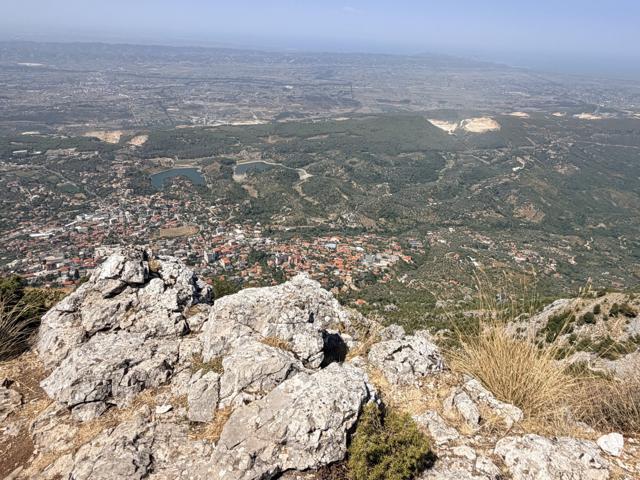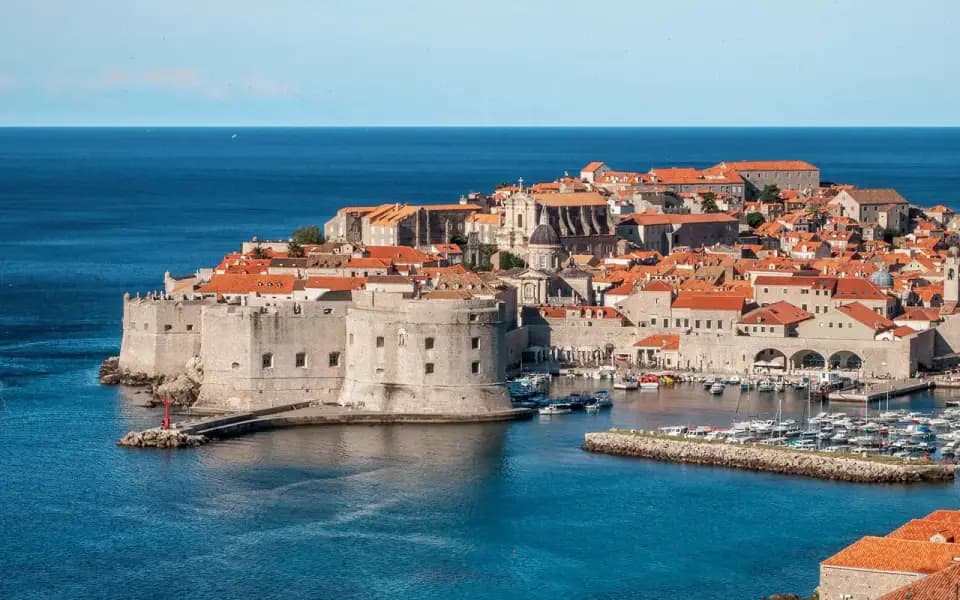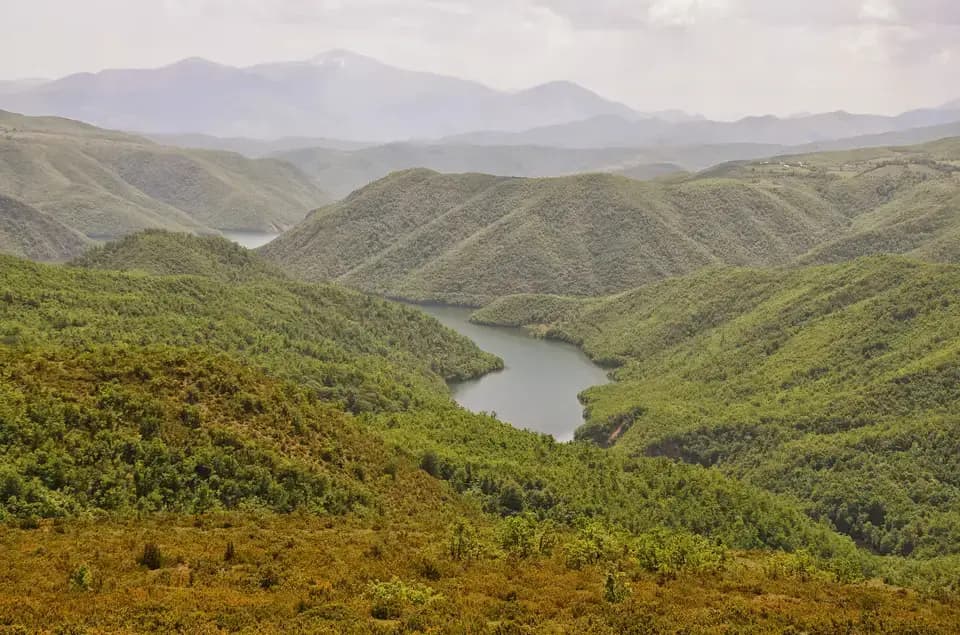
Albania — hero

Europe

Albania

Europe's last wild frontier: where the Accursed Mountains plunge into the turquoise Ionian, and 'Besa' hospitality makes soft adventure feel refreshingly uncrowded.

Currency
Albanian Lek (ALL)
Language
Albanian
Best time
May, June and September for the coast and towns; July and August are hot (average highs above 32 °C)
Visa
UK passport holders can visit for up to 90 days in any 180 without a visa; your passport must be valid for at least three months after you leave. Albania is outside Schengen, so EES and ETIAS do not apply.

The FCDO has no advisory against travel to Albania.

Still current at: 13 November 2026 Updated: 15 October 2026

Source: UK Foreign, Commonwealth & Development Office — the definitive source. Check it close to your travel dates.

Flight cancelled or delayed because of this? Your rights under UK261 / EU261 →

Why visit

Why Albania

Europe's last wild frontier: where the Accursed Mountains plunge into the turquoise Ionian, and 'Besa' hospitality makes soft adventure feel refreshingly uncrowded.

  • Berat, city of a thousand windows
  • Gjirokastër stone town and castle
  • Butrint ruins by the lagoon
  • Albanian Riviera coves at Dhërmi and Ksamil
  • Theth and Valbona in the Albanian Alps
  • Bunk'Art cold-war bunkers in Tirana
  • Llogara Pass coastal views
  • Byrek, fërgesë and tavë kosi
Read more

Albania is the Balkan country to look at if you like the idea of the Adriatic and Ionian coast but would rather not queue for it. It has a long southern coastline of pebble coves and clear water, two UNESCO-listed stone towns, Greek and Roman ruins beside a lagoon, and some of the best mountain walking in south-eastern Europe. It is also outside the Schengen area, so the EU's new border systems do not apply to it. We think it suits travellers who are happy with a little rough edge in return for space and good value.

Plan it: browse events, compare stays and check flights, then start with our Tirana guide and the Berat guide.

Where to go

The regions of Albania

Regions and cities

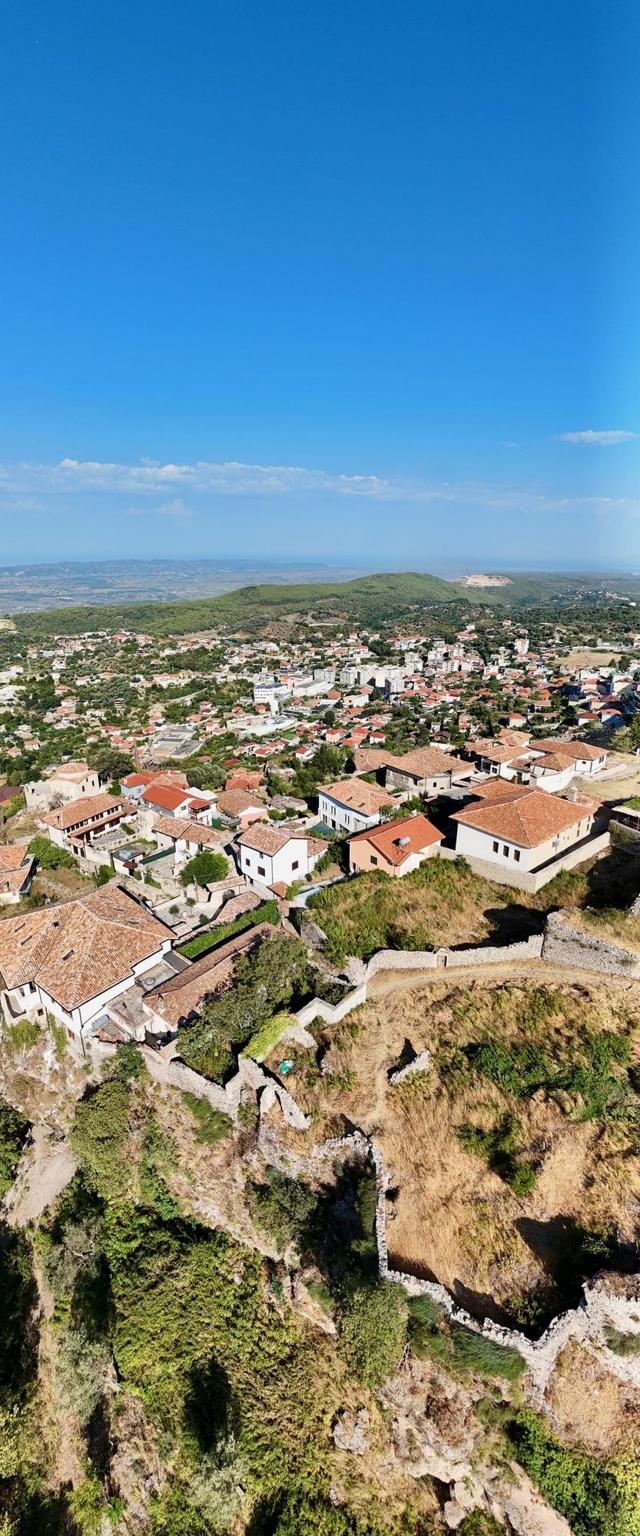
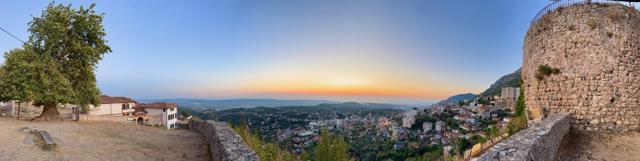
Tirana, the capital, sits about 30 km from the Adriatic and works well as a first stop; we have a full Tirana guide. South of it, Berat and Gjirokastër are the two heritage towns, Berat known as the city of a thousand windows and Gjirokastër as the stone city of Ottoman tower houses. The Albanian Riviera runs down the Ionian coast from the Llogara pass through Dhërmi and Himarë to Sarandë, Ksamil and the ruins at Butrint, with Corfu in view across the water. In the far north, Theth, Valbona and Vermosh make up the Albanian Alps National Park.
A pillar, not a footnote

Eat your way through Albania

The single reason many travellers come back — the food culture worth reshaping a trip around, and the dishes to seek out region by region.

Albania

Ottoman, Italian and mountain flavours on a coast that hasn't yet put its prices up.

Pull up a chair at a taverna on the Riviera, where the Ionian is almost too blue to be real, and lunch arrives in slow, generous waves: warm byrek, its pastry shattering over a spinach-and-cheese filling; a dish of fërgesë, peppers and tomato baked with soft white cheese; a carafe of house wine nobody will let you pay much for. Albania has sat at a crossroads forever, and you taste every era of it.

There's the Ottoman inheritance — grilled qofte, slow-cooked lamb, syrup-soaked sweets — laid over an Adriatic love of olive oil, herbs and just-landed fish, with an Italian accent drifting across the water in the pasta and the espresso. The national dish, tavë kosi, says it best: lamb and rice baked under a blanket of yoghurt and egg until it sets like a savoury custard. Finish with a slab of milk-soaked trileçe and a shot of homemade raki, and you'll wonder how the secret held this long.

Dishes to seek out
  • tavë kosi (national)
  • fërgesë
  • byrek
  • koran trout
  • trileçe
Things to do

Nature, culture and the outdoors

Plan your trip

Curated Albania itineraries

Browse all Albania trips →
Guides

All our Albania guides

Plan

Getting there, getting around and where to stay

Getting there from the UK

Fly into Tirana. On 28 October Tirana airport's own flight board listed Ryanair UK services from Edinburgh, Manchester and Birmingham, but schedules change by season, so check the airlines for London and other airports. A 24-hour public bus runs between the airport and the city centre in 30 to 40 minutes, and an official taxi takes 20 to 25 minutes. Because Sarandë faces Corfu, some people combine a Greek island trip with a few days in southern Albania; check the ferry operators' timetables, and remember that Greece is in Schengen.

Getting around

Buses link the main towns, and the national eTransport platform gathers official lines and timetables in one place. We could not confirm current rail timetables; the state operator Hekurudha Shqiptare sells tickets online. For the coast and mountains, many visitors hire a car, but read the FCDO advice first: it calls driving very hazardous, with poor rural road surfaces and no street lighting outside towns. The FCDO suggests a 1968 International Driving Permit may be useful alongside your UK licence, and says you need a green card to drive your own car there; ask a rental firm what it requires. We would limit night driving and allow longer than the map suggests.

Where to stay

By area

Base yourself near Skanderbeg Square in Tirana for walking and museums. In Berat, the old quarters of Mangalem and Gorica put you among the white stone houses; in Gjirokastër, stay near the old bazaar below the castle. On the coast, Sarandë and Ksamil are the busiest and best equipped, while Dhërmi and Himarë feel calmer. In the Albanian Alps, expect family-run guesthouses and agritourism farms in village settings, so book ahead for summer and ask how you will get there.

When to go

Weather & timing in Albania Right now RIGHT NOW 18°C cloudy

Best May–Jul · Shoulder April, early June and mid-September to October

Units

Next 7 days

Forecast · Met Office · Powered by Met Office data

Typical · climate data

Best time to visit

May, June and September for the coast and towns; July and August are hot (average highs above 32 °C)

Best for
  • Culture
  • Cuisine
  • Landscape
  • History
At a glance
Sunshine 10.0 hr/day
Rainfall 118 mm/mo
Wettest November · 199.4mm
Driest July · 18.7mm
Part of Mediterranean Europe →
By season

Units

Spring (Mar–May)

What to expect — Daytime highs average about 19°C with overnight lows near 9°C, with plenty of rain.

What's best — Wet, then Shoulder season, then Warm. May is among the best months here (warm, sun and cloud).

Summer (Jun–Aug)

What to expect — Daytime highs average about 31°C with overnight lows near 20°C.

What's best — Warm, then Shoulder season. Jun is among the best months here (warm, sunny).

Autumn (Sep–Nov)

What to expect — Daytime highs average about 22°C with overnight lows near 13°C — the wettest stretch of the year.

What's best — Warm, then Shoulder season, then Wet. Sep is among the best months here (warm, rain likely).

Winter (Dec–Feb)

What to expect — Daytime highs average about 13°C with overnight lows near 4°C, with plenty of rain.

What's best — Cool & crisp.

Live forecast map · Windy.com · temperature with wind, °C and km/h

Heat, rain and the best months, region by region

Our climate figures put average highs at about 33 °C in July and 32 °C in August, so we would flag both as hot: plan beach time for the morning and evening, and keep sightseeing in towns like Berat and Gjirokastër for the cooler end of the day. May (about 24 °C) and June (about 28 °C) are warm without the worst of it, and September (about 27 °C) still suits the coast. October is mild at about 22 °C but wetter. November to March is the wet season, with monthly rainfall well over 100 mm, and many coastal places wind down.

Swap it: the Albanian Riviera in June or September for Dalmatia or a Greek island in August. You get quieter beaches and, in our understanding, lower prices; you give up the polish, the ferry network and the shorter drives between sights.

Average daily high (°C) by month. Measured 2020–2024.
AreaJFMAMJJASOND
Tirana 121415182428333227231714

Colours as on the month tiles above. Bold: hot, 32°C or more (go early or late in the day). Outlined: very hot, 35°C or more. Wet: 150 mm of rain or more.

Heat: Our climate figures put average highs at about 33 °C in July and 32 °C in August, so we would flag both as hot: plan beach time for the morning and evening, and keep sightseeing in towns like Berat and Gjirokastër for the cooler end of the day.

A little context

A little history

To read what you're looking at — the empires and eras that shaped Albania's food, art and streets.

Skanderbeg's 15th-century revolt against the Ottomans made him the national hero on every square and flag
four Ottoman centuries left mosques, bazaars and a table of grilled meat, yoghurt and byrek
Enver Hoxha's paranoid communist dictatorship (1944–91) studded the country with concrete bunkers still dotting the hills
one of Europe's last-opened countries, only tourist-ready since the 1990s
Culture

Culture and etiquette

Hospitality is central, usually expressed through the idea of besa, a code of honour and trust, and you may find yourself fed generously. The FCDO describes relations between Albania's Muslim majority and other groups as generally good, and Berat shows it clearly, with mosques, churches and a Sufi lodge in the same old town. The communist era left bunkers across the countryside and museums such as Bunk'Art in Tirana; they are worth the time to understand the country. Dress modestly in mosques and monasteries.

Food and drink

Expect byrek (flaky pastry pies), fërgesë (peppers and tomato baked with cheese) and tavë kosi, baked lamb under a yoghurt crust that many call the national dish. Tirana adds jufka with chicken and sweets such as baklava and kadaif; Gjirokastër has its own raki tradition, and Berat is known for kabuni, a rice dish with raisins. Seafood is best on the coast. Drink bottled water: the FCDO advises against tap water and recommends pasteurised or UHT milk.

Practical

Entry, money and health

Entry and visas (British passport holders)

The FCDO says British passport holders can visit without a visa for up to 90 days in any 180, and your passport must be valid for at least three months after the day you leave Albania. Albania is not in the Schengen area, so neither the EU Entry/Exit System nor ETIAS applies to a stay there; the Schengen rules only matter if you also pass through Greece or another member state. The currency is the lek; on 28 October the Bank of Albania's rate was about 108 lek to the pound, and we would carry some cash for small guesthouses and rural cafés. Sockets are type C and F at 230 V. In our understanding prices run lower than in Croatia, though we have not priced a trip for you.

Health

The UK GHIC is not valid in Albania, and the FCDO says medical facilities are very poor outside Tirana, so take travel insurance that covers evacuation and repatriation. Call 127 for an ambulance, 128 for fire and 112 for police.

UK government travel advice

At our last check on 28 October 2026, the FCDO's Albania advice was updated on 15 October 2026 with new information about demonstrations in central Tirana, some with violence and property damage; avoid them and follow local media. It says reports of crime targeting foreigners are rare, advises care with pickpockets on buses and at transport hubs, notes that terrorist attacks cannot be ruled out, and warns of unexploded landmines in remote border areas near Kosovo: stay on marked paths. Penalties for drugs are severe, and it advises using licensed water-sports operators. Read the full advice before you book.

Sources · last checked 28 October 2026

We write this guide from official sources only: GOV.UK, national immigration portals, tourism boards, airports and operators, central banks and met services. Rules change, so check the linked pages before you book.

  • gov.uk: FCDO Albania advice last updated (checked 2026-10-28)
  • gov.uk: EES / ETIAS not applicable to Albania (checked 2026-10-28)
  • nhsbsa.nhs.uk: GHIC not valid in Albania (checked 2026-10-28)
  • bankofalbania.org: Currency is the lek (checked 2026-10-28)
  • bankofalbania.org: GBP rate (checked 2026-10-28)
  • tirana-airport.com: TIA airport name and code (checked 2026-10-28)
  • tirana-airport.com: Airport bus (checked 2026-10-28)
  • tirana-airport.com: Airport taxi (checked 2026-10-28)
  • akt.gov.al: Tirana is the capital since 1920, ~30 km from Adriatic, museums, Et'hem Bey Mosq (checked 2026-10-28)
  • akt.gov.al: Dajti National Park about 26 km from centre, cable car (checked 2026-10-28)
  • akt.gov.al: Bunk'Art 2 content and location (checked 2026-10-28)
  • akt.gov.al: Bunk'Art 1 content (checked 2026-10-28)
  • bunkart.al: Bunk'Art opening hours (checked 2026-10-28)
  • akt.gov.al: Berat (checked 2026-10-28)
Before you book

Know before you go

The practical back-matter — safety, drones and the essentials, in one place.

Safety

No FCDO advisory against travel FCDO advice →

Official UK Foreign, Commonwealth & Development Office guidance is the definitive source — check it close to your travel dates.

Drone rules (sub-250g)

  • Albania
    Easiest — essentially unregulated. Lake Ohrid shore is the one good place. ⚠ Give military installations, airports (5 km around Tirana, 2 km elsewhere) and border areas a wide berth — those rules are enforced even where drone law is absent; a few tourist guides describe an AAC permit process, so ask locally if unsure. Rules checked: Jul 2026

National parks, protected sites and religious/heritage venues often have their own rules and permits — always check the specific site before you fly.

The essentials

Plug & voltage Type C/F · 230V
Daily budget Budget-friendly
Region Southern Europe