Landmarks
Preacher's Cave
The cathedral-like cave in north Eleuthera where the shipwrecked Eleutheran Adventurers sheltered and worshipped in 1648 — the birthplace of the settlement.
Best for History
A long, thin sliver of the out-island Bahamas paired with tiny, celebrity-loved Harbour Island and its three miles of famous pink sand.
Trish Hartmann from Tampa, Florida, USA / Wikimedia Commons (CC BY 2.0)
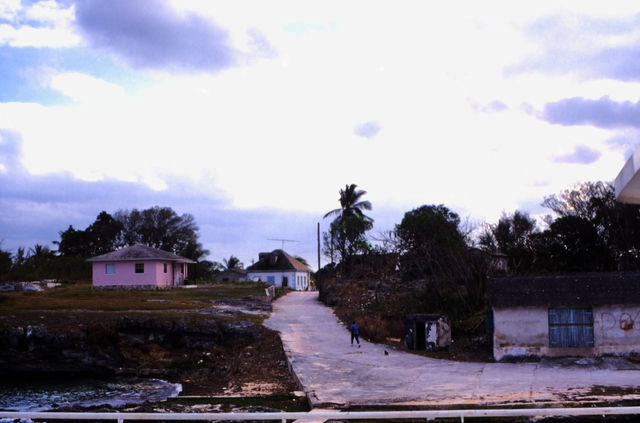
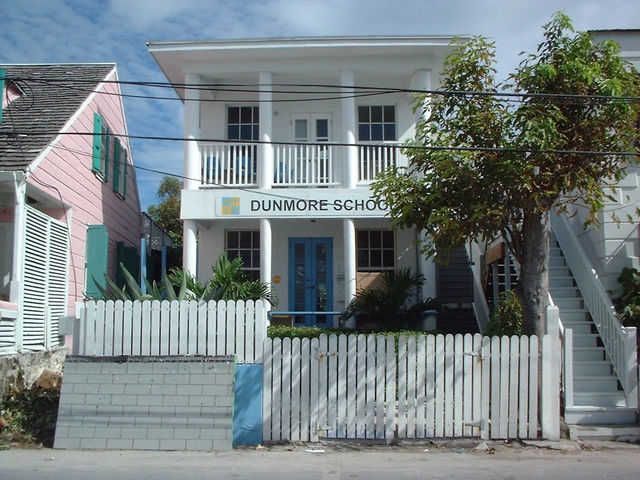
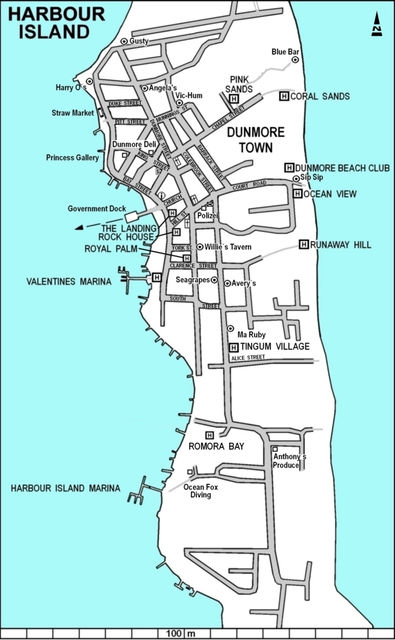
Eleuthera is one of the Bahamas' out islands (the locally preferred term for the Family Islands): a long, absurdly thin sliver of limestone about 110 miles from tip to tip and, in places, barely a few hundred metres wide, lying roughly 50 miles east of Nassau. It has a permanent population of around 11,000 spread thinly across small settlements — Gregory Town, Governor's Harbour, Palmetto Point, Tarpum Bay, Rock Sound — linked by a single spine road, the Queen's Highway. The character is rural, unhurried and low-rise: pineapple fields, casuarina-lined coves, roadside conch shacks, churches, and a coastline that flips between the wild dark Atlantic on the east and the calm turquoise Bight of Eleuthera on the west, often within a two-minute walk. Off Eleuthera's northern tip lies its glamorous opposite: Harbour Island, known to locals as Briland, a 3.5-mile speck reached only by water taxi. Here the whitewashed, pastel clapboard houses of Dunmore Town, the three-mile pink-sand beach and a scattering of boutique hotels have drawn a moneyed, fashion-and-celebrity crowd for decades — it is routinely ranked among the finest beach destinations in the Caribbean. Together the two make an unusual pairing: Eleuthera for spread-out, self-drive exploration and genuine quiet; Harbour Island for concentrated, expensive, barefoot-luxe indulgence. Neither is a resort island in the Cancún sense — this is for travellers who want beaches, boats and space rather than nightlife or big hotels.
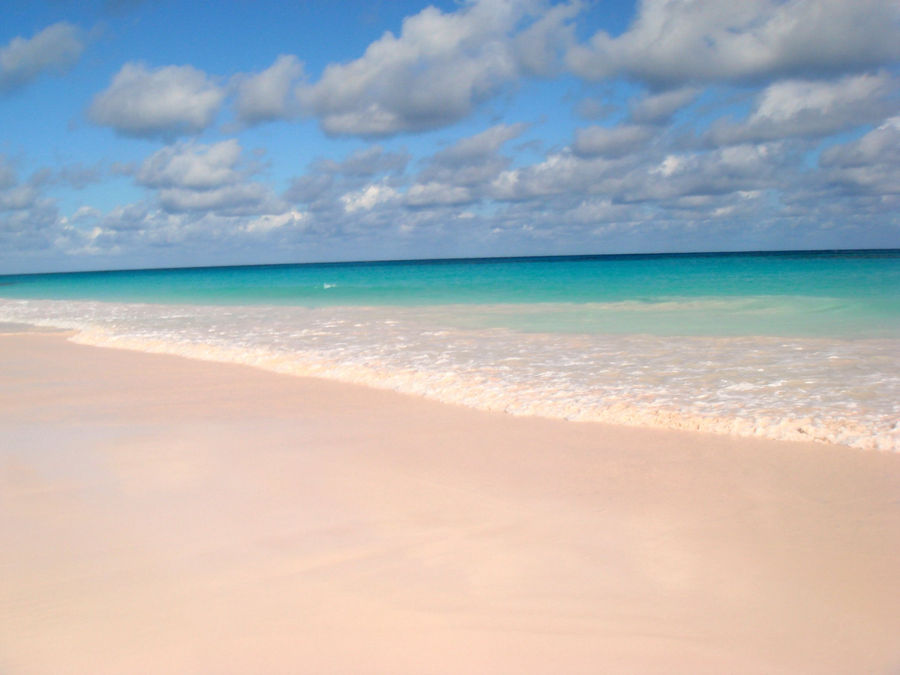
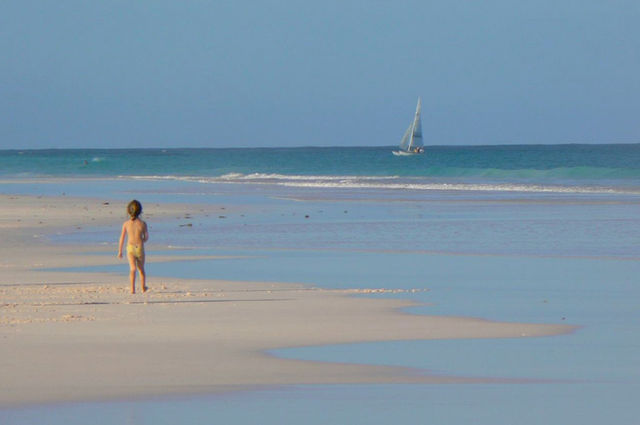
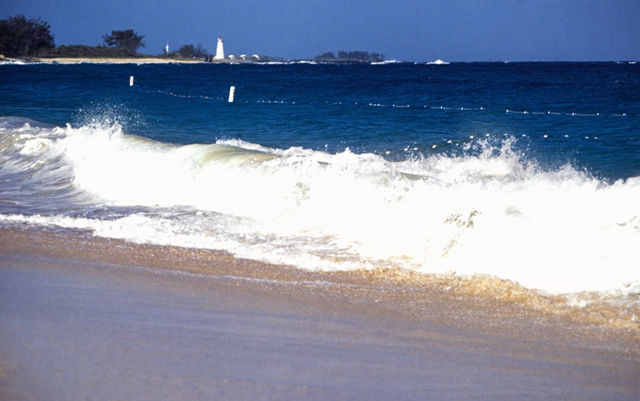
The draw is scenery and space rather than sights ticked off a list. Harbour Island's Pink Sands Beach — three-plus miles of genuinely rose-tinted sand, coloured by the crushed shells of red foraminifera washed in from offshore reefs — is the headline, and one of the few beaches that lives up to its reputation. On Eleuthera itself the landscape does the work: the Glass Window Bridge, where the island narrows to a strip barely 30 feet across with the near-black Atlantic slamming one side and the pale turquoise Bight lying flat on the other; the Queen's Bath tidal pools; the caves at Hatchet Bay and the Bronze-Age-quiet of Preacher's Cave, where the shipwrecked Eleutheran Adventurers sheltered in 1648. Add near-deserted beaches (Lighthouse Beach at the wild southern tip, French Leave in the centre), excellent bonefishing and diving on the Devil's Backbone reef, and some of the best conch and rock lobster in the Bahamas. It pairs naturally with Nassau (a 25-minute hop away, useful for connections) or with a second, quieter out island such as the Exumas if you want more of the same emptiness. Come for the combination of wild and refined; do not come expecting resorts, shopping or a lively bar scene.
The food here is Bahamian and built around the sea. Conch is everywhere and in every form: cracked (pounded, battered and fried), in conch salad (diced raw and "cooked" in lime and citrus, made to order at roadside shacks), in fritters and in chowder. Queen Conch — the local name applies to both the species and the dish — is a Harbour Island staple, and the conch shacks along the waterfront are as much a part of a visit as the beach. Rock (spiny) lobster is the other headline, in season roughly August to March, grilled or in a creamy "lobster" sauce. Fresh grouper and snapper turn up grilled or as the ubiquitous "fish and grits" breakfast; peas 'n' rice, johnnycake and fried plantain are the standard sides. Gregory Town is pineapple country — the small, intensely sweet Eleuthera pineapple appears in tarts, rum and the settlement's annual Pineapple Fest — and roadside stalls sell it fresh. To drink, the national beer is Kalik (and the stronger Sands), and rum is the spirit of choice. Governor's Harbour's Friday-night fish fry is the best-value, most sociable eating on the mainland; Harbour Island has the island's most polished (and priciest) restaurants, several attached to its boutique hotels.

Live map of hotels and villas around Eleuthera & Harbour Island — powered by Stay22. Pan, zoom and compare live prices to pick your base.
Pan, zoom and compare live prices — every stay in one map.
The two islands could not be more different to get around. Eleuthera is long (about 110 miles) and thin, strung along the single Queen's Highway, and a hire car is essential — there is no meaningful public transport and settlements, beaches and sights are spread far apart. Distances add up: driving the full length takes a couple of hours, and side tracks to beaches such as Lighthouse Beach turn rough and unpaved at the end (a higher-clearance vehicle helps). Driving is on the left, Bahamian style, and traffic is light. Taxis exist but are best treated as airport transfers rather than a way to tour. Harbour Island is the opposite: only about 3.5 miles long, walkable end to end, and famously navigated by golf cart. Carts are widely hired by the day and are the default local transport; taxis (also carts) meet the water taxi at Government Dock. You do not need — and cannot easily use — a car on Harbour Island. Boats fill in the rest: the water taxi to and from North Eleuthera, plus charter and dive boats for the reefs and offshore cays.
Do not plan around public transport — there is effectively none in the sense a European visitor would expect. Eleuthera has no scheduled bus network; getting around means a hire car or, for short hops, a taxi. Taxis are unmetered and fares are set by informal local rates, so agree the price before you set off; airport-to-hotel transfers are the common use. On Harbour Island the "public transport" is the golf-cart taxi rank at Government Dock and the water taxi across to North Eleuthera (a few US dollars per person, running through the day without a timetable). Golf-cart hire (roughly the price of a modest car-hire day) is the practical way to move around the island. For anything involving the reefs or neighbouring Spanish Wells, you charter a boat.
You do not have to pay Harbour Island's room rates to enjoy it — base on the mainland near North Eleuthera and day-trip across on the water taxi for a pink-sand beach day and lunch in Dunmore Town. Time Queen's Bath for a calm morning at low tide; check a tide table before you go and skip it entirely if the Atlantic is up — the pools are only worthwhile (and only safe) when the sea is settled. Lighthouse Beach at the southern tip is the mainland's finest beach and usually near-empty, but the last stretch of track is rough — take a sturdier vehicle, water and a picnic, as there are no facilities. Stop at a roadside conch-salad shack and watch it made to order rather than eating conch at a restaurant; it is fresher and a fraction of the price. The Leon Levy Native Plant Preserve near Governor's Harbour is an easy, shaded morning and a good rainy-day option. Buy petrol and cash up in the larger settlements — both thin out towards the ends of the island. And build the water-taxi crossing into your flight timings; a late arrival into ELH plus the transfer can turn into a longer evening than expected.
The landmarks, museums, viewpoints and shores worth your time on Eleuthera & Harbour Island — filter by what you're into. Tap a card to fly the map to it.
The cathedral-like cave in north Eleuthera where the shipwrecked Eleutheran Adventurers sheltered and worshipped in 1648 — the birthplace of the settlement.
Best for History
Eleuthera's narrowest point, where a slim road bridge divides the deep navy Atlantic from the pale turquoise Bight of Eleuthera side by side.
Best for Scenery
No places match those filters — turn a chip back on.
Eleuthera & Harbour Island · Around the island · 1 island · 1 hotels nearby
Skip-the-line tickets and small-group tours in Eleuthera & Harbour Island — compare across our partners.
We're still curating hand-picked tickets and tours for Eleuthera & Harbour Island. In the meantime, the map above and the nearby cities are a great place to start.
Day-by-day itineraries that take in Eleuthera & Harbour Island — routes, timings and what to book.
 6 Nights
 A tightly curated six-night luxury escape for two — a night in Nassau to arrive, three on Harbour Island for the pink-sand beach and Dunmore Town's colour, and two in the Exumas for a private boat day among the sandbars — with a premium stay leading every stop.
Price on enquiry
View tripDecember – April (dry season)
The climate is subtropical and pleasant for much of the year, but the seasons matter. The dry high season runs roughly December to April, with warm, sunny days of about 24–28°C, low humidity, little rain and cooling trade winds — this is the settled, reliable window and the busiest, most expensive one. Late spring and early summer (May–June) are warmer and quieter, often a good-value sweet spot. Hurricane season officially runs from June to November, peaking August to October: this brings higher heat and humidity (frequently 30°C-plus), the greatest rainfall and the real, if intermittent, risk of tropical storms and hurricanes — Eleuthera has taken direct hits in the past, so travel insurance and a flexible itinerary are sensible if you go then. The sea stays swimmable year-round, warmest in late summer. The Atlantic (east) coast is windier and rougher than the sheltered Bight (west) side, which is worth remembering when the trades are up.
Eleuthera and Harbour Island are among the safer, low-crime corners of the Bahamas, and most trouble is environmental rather than criminal. The Atlantic coast is the main hazard: the Queen's Bath tidal pools are only safe at low to medium tide in calm conditions — people have been swept off the rocks and drowned at high tide or in swell, so check the tide, watch the sea and stay well back if it is rough. The same applies to any rocky Atlantic shoreline, including near the Glass Window Bridge, where rogue waves periodically wash over the road. Surf at Surfer's Beach and elsewhere carries rip currents. On the roads, driving is on the left, unlit at night, and the rough final tracks to beaches such as Lighthouse Beach can strand a low car. Golf carts on Harbour Island are easy but people do misjudge sandy corners. Standard tropical-sun precautions apply — the UV is strong. Petty theft is uncommon but do not leave valuables in an open cart or on the beach. Emergency medical care is basic on-island; serious cases are flown to Nassau.
These are small, church-going Bahamian communities and the pace and manners are unhurried and courteous. A greeting — "good morning", "good afternoon" — before getting to the point is expected and appreciated; brusqueness reads as rude. Sunday is genuinely a day of rest, with many shops and some restaurants closed and church central to community life; dress modestly if you attend a service. Beachwear is for the beach — cover up in towns, shops and restaurants, and Dunmore Town in particular, for all its fashion-set gloss, is a residential settlement, not a resort. The Bahamas is broadly conservative socially. Tipping follows the US pattern (around 15%, and check whether a service charge is already added). English is the language. Bring cash for the smaller settlements and shacks; not everywhere takes cards.
£140/day mid-range (budget £70; Harbour Island luxury £400+, by far the priciest base)
911 or 919 (police, fire, ambulance); BASRA marine rescue on VHF Ch 16 / +1 242-322-3877
There is no direct flight from the UK; you connect through the US or Nassau. The primary gateway is North Eleuthera Airport (ELH) at the island's northern tip, which is also the airport for Harbour Island and Spanish Wells. American Airlines and Delta run seasonal nonstops to ELH from Miami and other US hubs, and from Nassau (NAS) a cluster of regional carriers — Bahamasair, Pineapple Air, Southern Air and Western Air — fly the 20–25-minute hop several times a day. Eleuthera has two other airports worth knowing: Governor's Harbour (GHB) for the central island and Rock Sound (RSD), an official port of entry, for the south. From London the usual routing is a flight to Miami or Nassau, then a connection onward. Harbour Island has no airport of its own. You fly to North Eleuthera (ELH), take a four-minute land taxi to Three Island Dock just west of the airport, then a short water-taxi crossing (roughly two miles, about five minutes; a few US dollars per person) — the passenger boats run through the day without a fixed timetable. Factor the water-taxi step into arrival timing, especially with late flights.
Flights, airport transfers and car hire to ELH — search and compare without leaving the page.
Parking, holiday extras, and more — coming soon.
We're lining up parking, holiday extras and activities you'll be able to add to any trip from here.