← Romania
ROMANIA · CITY

Bucharest

Romania's capital: grand boulevards, the Athenaeum, a vast Palace of Parliament and a lively Old Town, with trains to Brașov and Transylvania.

  • City
  • May to June and September to October; July and August are very hot at times
  • OTP
  • ~approx 2–3 days
  • Capital of Romania
  • Boulevards and Old Town
  • Athenaeum Concerts
  • Gateway to Transylvania

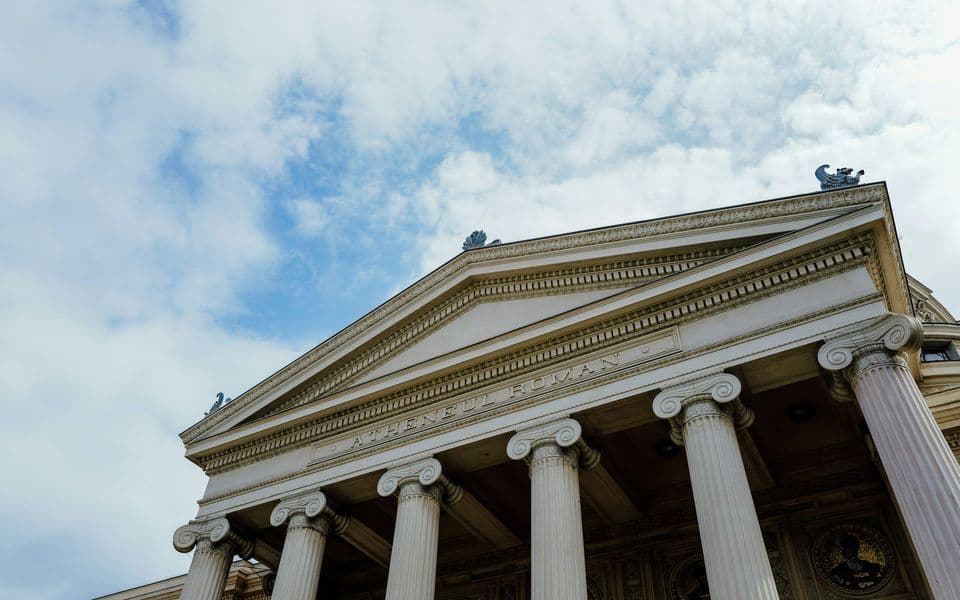
Neoclassical columns on the Athenaeum catching the afternoon light, a plate of sarmale steaming in the Old Town, and the colossal bulk of the Palace of Parliament at the end of a very long boulevard.

Bucharest is Romania's capital, a big, layered city where grand 19th-century boulevards meet communist-era scale and a lively Old Town. It is the usual arrival point for UK visitors and a very good short break in its own right, with the Athenaeum, the Palace of Parliament and an open-air village museum, before a train north to Transylvania.

Type
city
Ideal length
~approx 2–3 days
Getting around
walkable centre plus metro, buses, trams and ride-hailing apps
Neighbourhoods
6 areas
Best season / months
May to June and September to October; July and August are very hot at times
Language
Romanian (English widely spoken in the centre)
Currency
Romanian leu (RON), not the euro
Budget level
low to medium — usually cheaper than Prague or Vienna
Good for
  • City-breakers
  • Architecture fans
  • Music lovers
  • Budget travellers
  • History buffs
▸ Discover

About Bucharest

Bucharest is Romania's capital and largest city, set on a flat plain in the south of the country. It does not look like a postcard, and that is part of the appeal: broad 19th-century boulevards and neoclassical facades sit beside communist-era blocks, and the Palace of Parliament, a very large building, dominates the centre. The Old Town is a tight grid of lanes with bars and restaurants, Calea Victoriei runs north from it past the main sights, and the leafy parks around Cișmigiu and Herăstrău give the city room to breathe.

Most British visitors arrive here, and many treat it as a stopover. We think it deserves two or three days: a concert at the Romanian Athenaeum, a tour of the Parliament, the open-air village museum and an evening in the Old Town. It is also the practical start for Transylvania by train. For the wider picture, see our Romania guide.

Why go

Bucharest is a city break that costs less than most western European capitals on a typical day, and it is less polished than Prague, Vienna or Budapest as a result, and in our view a quieter option. You get big-scale architecture, a serious concert tradition, good food and a lively evening scene, with an open-air museum of village houses to balance the city. It is also the easiest base for Transylvania, with Brașov, Bran Castle and Sighișoara reachable by train or car. What you give up is the tidy, walk-everywhere feel of the classic Central European capitals: pavements can be uneven, traffic is heavy and some areas look worn.

Don't miss

  • The Romanian Athenaeum — book a concert or visit the domed hall
  • The Palace of Parliament — a guided tour with original ID
  • The Old Town — Curtea Veche, lanes and an evening meal
  • The Dimitrie Gusti National Village Museum — village houses in a city park
  • A day trip to Brașov and Bran Castle — by train or road

Signature experiences

A concert at the Romanian Athenaeum The domed concert hall on Benjamin Franklin Street is the home of the George Enescu Philharmonic and the most elegant room in the city. Book a symphonic or chamber concert through the Filarmonica's site, and arrive early to see the interior.

The Palace of Parliament A tour takes you through part of a very large building, with big halls and a real sense of scale. Tours run daily and need advance booking and original ID. The Palace stands at the end of a very long boulevard.

Calea Victoriei on foot Walk north from the Old Town along Calea Victoriei, passing Piața Revoluției and the Athenaeum. It is a good way to see how the city's 19th-century and communist-era layers meet.

The Old Town in the evening The lanes around Curtea Veche and the Lipscani area fill with bars and restaurants after dark. Pick a terrace, order a plate of sarmale or mici and a glass of țuică or local wine.

Dimitrie Gusti National Village Museum An open-air museum on the shores of Herăstrău park with village houses and churches from different regions of Romania. It is a good way to see regional building styles before you travel on.

Herăstrău and Cișmigiu Escape the traffic in the city's big parks, with boating and cafés, particularly pleasant in May, June and September.

Day trips to Brașov and Bran Trains and roads run north to Brașov and on to Bran Castle and the Saxon villages. See our Romania guide and Sighișoara.

Neighbourhoods

Bucharest neighbourhood by neighbourhood — the character of each and who it suits.

  • The Old Town

    A compact grid of narrow lanes around Curtea Veche and Lipscani, with bars, restaurants and cafés, busy at night.

    Why go
    For evenings out and the densest choice of places to eat.
    Best for
    Nightlifefoodfirst-time visitors
    Known for
    Curtea Veche, the Lipscani lanes, restaurants and bars.
  • Calea Victoriei

    A long central avenue of 19th-century buildings, museums and cafés running north from the Old Town.

    Why go
    For walking the city's grand architecture in one go.
    Best for
    Architecturemuseumswalking
    Known for
    Piața Revoluției, the Athenaeum nearby and neoclassical facades.
  • Piața Romană and Amzei

    A leafy, central district around the Athenaeum with restaurants and quieter streets.

    Why go
    For a calmer base within walking distance of the main sights.
    Best for
    Music loverscouplesrestaurants
    Known for
    The Romanian Athenaeum on Benjamin Franklin Street.
  • Cișmigiu and Izvor

    A green central park and the district beside the Palace of Parliament.

    Why go
    For parkland in the centre and the Parliament tour.
    Best for
    ParksfamiliesParliament visits
    Known for
    Cișmigiu park and the Palace of Parliament on Strada Izvor.
  • Herăstrău and Kiseleff

    A large lakeside park and a leafy boulevard to the north of the centre.

    Why go
    For green space and the open-air village museum.
    Best for
    Familieswalkersmuseums
    Known for
    Herăstrău park and the Dimitrie Gusti National Village Museum.
  • Gara de Nord

    The main railway station area, busy and practical, with trains to Brașov and the airport.

    Why go
    For early trains and the airport link.
    Best for
    Short staysrail travellers
    Known for
    Bucharest Nord station and the airport train.

Views & quieter corners

Best views

  • The Palace of Parliament at the end of the boulevard — the scale is easiest to see from a distance
  • Calea Victoriei at dusk — neoclassical facades and lit cafés
  • Cișmigiu park in autumn — leaves and quiet paths
  • Herăstrău lakeside — water and trees on the north side of the city

Quieter corners

  • Dimitrie Gusti National Village Museum — an open-air museum of village houses and churches from across Romania
  • The Athenaeum interior — the concert hall's painted dome is best seen with a ticket
  • Cișmigiu park — a calm green space a few minutes from the busiest streets
  • Curtea Veche — the oldest part of the Old Town, away from the busiest terraces
  • Herăstrău park — a lakeside escape on the north side of the city

Food & drink

Bucharest is the place to try Romania's classics. Sarmale are cabbage rolls, mămăligă is cornmeal polenta, ciorbă is a sour soup, and mici are grilled minced-meat rolls. Papanași, fried cheese doughnuts with sour cream and jam, are the usual dessert. Țuică, a strong plum brandy, is the traditional drink, with Romanian wine and craft beer around the Old Town. The capital also has international restaurants, bakeries and coffee shops, and you can eat well for less than in most western European capitals. We would go for a traditional restaurant at least once, then explore the Old Town's mix of styles.

  • Sarmale — cabbage rolls with pork and rice, served with polenta and sour cream
  • Mămăligă — cornmeal polenta that stands in for bread
  • Ciorbă — sour soup, in several versions
  • Mici — grilled minced-meat rolls, usually with mustard
  • Papanași — fried cheese doughnuts with sour cream and jam
  • Țuică — strong plum brandy served as an aperitif
Dietary notes

Romanian menus are meat-heavy, but vegetarians can usually put together a meal from salads, cheese, vegetable dishes and soups, and the capital has vegetarian and vegan places. Check ingredients for pork and lard, which are common, and ask about allergens, as English-language menus are widespread in central Bucharest but not guaranteed elsewhere.

▸ Where you'll stay

Where you'll stay in Bucharest

Choose by mood. The Old Town puts you in the middle of the bars and restaurants, with noise at weekends. Calea Victoriei and Piața Revoluției are central and walkable to the Athenaeum and the main sights. The area around Piața Romană is calmer, with leafy streets and good restaurants. Cișmigiu and Izvor put you near the park and the Palace of Parliament. Herăstrău is quieter and greener, further from the centre. Gara de Nord is convenient for trains but busier and worth a closer look at the street before you book.

  • Budget
    Around Gara de Nord / the Old Town edges hostels and simple hotels near the station and on the edges of the centre; check reviews and the street before booking.
  • Mid-range
    Calea Victoriei and Piața Romană central hotels and apartments within walking distance of the Athenaeum and the Old Town.
  • Luxury
    Calea Victoriei and the Old Town grand and boutique hotels in historic buildings in the centre.
Stay

Hotels & rentals around Bucharest

Pan, zoom and compare live prices — every stay in one map.

We may earn a commission if you book through these links, at no extra cost to you. How we make money

▸ Getting around

Getting around Bucharest

The Old Town, Calea Victoriei and Piața Revoluției are walkable together, though the Palace of Parliament and Herăstrău park are further out. The city has a metro, plus buses, trams and trolleybuses run by STB. Taxis are an option, but the FCDO says drivers sometimes overcharge foreign visitors, while apps such as Uber and Bolt are generally reliable. Traffic is heavy at peak times, so for longer hops we would take the metro. A car is more trouble than it is worth in the centre; keep it for day trips.

STB's tariff page lists a surface single (bus, tram, trolleybus) at 3 lei, and a combined surface and metro single, valid for 120 minutes, at 7 lei, with 24-hour passes at 8 lei for surface only and 18 lei for surface plus metro. Check the STB and Metrorex sites for the current figures, as the pages do not show a start date. The airport train from Henri Coandă to Bucharest Nord is run by CFR Călători, not STB.

▸ Plan your days

Suggested itineraries

Ready-made day plans for Bucharest — from a single day to a long weekend.

One day

Start on Calea Victoriei and pass Piața Revoluției and the Athenaeum, then take the metro or a short ride to the Palace of Parliament for a booked tour. Spend the late afternoon in Cișmigiu park and finish with dinner and a drink in the Old Town.

Two days

Spend the morning at the Dimitrie Gusti National Village Museum, then walk or take the metro to Herăstrău park. In the evening book a concert at the Athenaeum, or return to the Old Town for a plate of sarmale.

Three days

Take a train north to Brașov and Bran Castle for a day out, or push on to Sighișoara if you are continuing through Transylvania. See our Romania guide for more on the wider region.

▸ What you'll do

Insider tips

  • Book the Palace of Parliament tour with your original passport or ID: the official page says tickets are sold on site only, original ID is required, and groups of one to nine reserve by phone 24 hours ahead.
  • Take the airport train rather than a hailed taxi: it runs to Bucharest Nord in about 20 to 25 minutes, and the FCDO notes taxi overcharging.
  • Use Uber or Bolt for taxis; the FCDO describes them as generally reliable.
  • Keep valuables close on the metro, at Bucharest Nord and on public transport to the airport, where the FCDO warns of petty theft.
  • The Dimitrie Gusti National Village Museum has a 50 per cent discount on Mondays and Tuesdays, according to its ticket page.
  • If you are going to an Athenaeum concert, check the Filarmonica George Enescu site for dates, as the season runs on its own calendar.
  • Carry a copy of your passport and use the hotel safe, as the FCDO advises.

Frequently asked

How do I get from Bucharest airport to the centre?

A CFR Călători train runs from Henri Coandă to Bucharest Nord station in about 20 to 25 minutes, and a single is 6.50 lei (2026). Uber and Bolt are generally reliable taxi alternatives, according to the FCDO.

How many days do we need in Bucharest?

Two to three days covers the Athenaeum, the Palace of Parliament, the Old Town and the village museum. Add a day if you want Brașov and Bran Castle.

Do UK citizens need a visa?

No for up to 90 days in any 180. Romania is a full Schengen member since 1 January 2025, so passports must be issued within 10 years and valid for 3 months after you leave. The Entry/Exit System has been fully operational since 10 April 2026, and ETIAS is not yet in operation.

Does Romania use the euro?

No, it uses the leu (RON). Romania is not in the euro area.

Can we visit the Palace of Parliament without booking?

The official page says tickets are bought on site and an original ID document is required, with phone reservations 24 hours ahead for groups of one to nine. The adult ticket is 85 lei (2026).

Is Bucharest cheaper than Prague, Vienna or Budapest?

In our planning it usually is, particularly for food and accommodation, but check current prices and book early for summer weekends and events.

Is Bucharest safe for tourists?

The FCDO does not advise against travel to Romania but warns of petty theft in large towns, especially Bucharest, and drink spiking. Sensible precautions are usually enough.

Explore

Explore the area

© OpenFreeMap · OSM · terrain Mapterhorn
▸ Budget

What it costs in Bucharest

Backpacker
hostel beds, cheap local meals, free parks and walking, and the metro or buses; one of the cheapest ways to see a European capital.
Mid-range
a central hotel, restaurant dinners, the Parliament tour and an Athenaeum concert; typically well below Vienna or Prague.
Luxury
a grand hotel on Calea Victoriei, fine dining, private guides and taxis; still usually cheaper than a comparable western capital.
▸ When you'll go

When to visit Bucharest

May to June and September to October; July and August are very hot at times

Spring

What to expect — Cool at first, then warm: average highs are about 12 °C in March, 17 °C in April and 22 °C in May, with the parks coming into leaf.

What's best — Walking the city in May, concerts at the Athenaeum and easy day trips north.

Summer

What to expect — Hot: June is about 27 °C, and July and August average about 31 °C, very hot at times, with warm nights.

What's best — Early starts, long evenings on Old Town terraces and day trips to cooler mountain towns.

Autumn

What to expect — Warm and comfortable in September at about 25 °C, then cooler in October at about 19 °C and greyer into November.

What's best — Sightseeing without the heat, the concert season and quieter museums.

Winter

What to expect — Cold, with a January average high of about 6 °C and lows below freezing, and short days.

What's best — Concerts at the Athenaeum, museums and indoor cafés.

▸ Know before you go

Know before you go

Honest swaps

Skip the hailed street taxi → book Uber or Bolt, which the FCDO describes as generally reliable, or take the airport train.

Skip a Prague, Vienna or Budapest weekend if you want lower bills and fewer visitors → try Bucharest for the Athenaeum, the Parliament tour and the Old Town; you give up the polish and easy walking.

Skip squeezing Bucharest into a transfer day → give it two or three days, then take the train north to Brașov.

Crowds & timing

Bran Castle and summer weekends are the busiest times in the region; aim for weekdays and opening time.

The Palace of Parliament needs advance booking for groups and original ID for everyone.

Summer afternoons are very hot at times, so keep indoor plans for the middle of the day.

Local rules & etiquette

Romania uses the leu (RON), not the euro.

Carry your passport and ID; the Palace of Parliament requires original ID.

Churches and monasteries are working places of worship: dress modestly.

Most airports and military bases ban photography; ask if unsure.

Money

Cards are widely accepted in the capital, but we would carry some cash for small purchases and taxis.

The FCDO says cards have been copied in some bars and restaurants; check your statement.

After dark

The Old Town is the centre of nightlife, busy at weekends.

The FCDO warns of drink spiking in bars and clubs; do not leave drinks unattended.

After late events, book a taxi through an app.

Safety
Bucharest is a busy capital, and the FCDO's Romania advice, last updated on 18 September 2026, does not advise against travel. It says to be alert to petty theft in large towns, especially Bucharest, where thieves use distraction techniques and sometimes work in groups. Take care near money exchanges and hotels, on public transport (especially to the airport), in main railway stations and inside airport terminals. Cards have been copied in some bars and restaurants, so use a hotel safe and carry a copy of your passport. There is also a risk of drink spiking in bars and clubs. The FCDO says taxi drivers sometimes overcharge foreigners, and that Uber and Bolt are generally reliable. Romania is seismically active, though the last major earthquake was in 1977, and the FCDO notes that drones have crossed into Romanian airspace from the war in Ukraine; follow the RO-Alert mobile alerts and local authorities.
Culture & etiquette
Bucharest is a cosmopolitan, fast-moving capital, with a younger crowd in the Old Town and a more formal feel around the Athenaeum and Calea Victoriei. Romanian is a Latin language, and a few words such as mulțumesc (thank you) and bună ziua (good day) are well received, though many younger people speak English. The Orthodox church is central to Romanian life, and churches and monasteries are working places of worship. We would dress modestly, cover shoulders, and keep voices low inside. The FCDO notes that most airports and military bases ban photography, so ask if you are unsure. Same-sex relationships are legal, and there are active LGBT+ communities, though the FCDO says the majority of LGBT+ people are not open.
Daily budget

Bucharest is mid-priced by European capital standards and usually cheaper than Prague, Vienna or Budapest for food and rooms, though prices rise in summer and at big events, so a careful couple spends modestly and a comfortable stay costs far less than in western capitals.

Emergency numbers

112 (police, fire, ambulance; ask for an ambulance)

▸ Ready to book your trip?

Getting there

Bucharest has two airports, and most UK flights use Henri Coandă (OTP), north of the city. Ryanair's route page lists several departures a day from London Stansted, taking about three hours ten minutes, and Wizz Air also sells London to Bucharest, so check its timetable for the airport. Băneasa (BBU) is the city's second airport, so check which one your flight uses. A CFR Călători train links Henri Coandă to Bucharest Nord station in about 20 to 25 minutes; a single costs 6.50 lei (2026), and 13 lei if bought from the conductor. Ride-hailing apps are the usual alternative. Rail routes continue from Bucharest Nord to Brașov and Sighișoara; check the CFR Călători timetable for current times.

  • Henri Coandă International Airport (OTP)
  • Aurel Vlaicu Băneasa Airport (BBU)
Book

Ready to book your trip?

Flights, airport transfers and car hire to OTP — search and compare without leaving the page.