Bologna has three nicknames — la dotta, la grassa, la rossa: the learned, the fat, the red. The university was founded in 1088 and is the oldest in continuous operation in the world; the food is the best in Italy by most Italians' reckoning; and the terracotta of the medieval centre is genuinely red. It also has 62 km of porticoes, 40 km of them in the historic centre, made a UNESCO site in 2021 — which means you can cross the whole city in rain or August sun without getting wet or burnt.
For the eating, first: tortellini in brodo, tagliatelle al ragù, mortadella, and the Parmigiano and prosciutto country half an hour away. Then for a student city that is lived in rather than visited, at maybe a third of Florence's prices — and for the rail position, which puts Florence at 37 minutes and Venice, Milan and Rome all within two hours.
Things to do
- The portico to San Luca — 666 arches and 3.8 km uphill to the sanctuary. About an hour on foot, and the view is the reward.
- Torre degli Asinelli — 498 wooden steps up a leaning twelfth-century tower for the best view of the red roofs. Booked slots.
- Basilica di Santo Stefano — Seven interlocking churches from the fifth to the thirteenth century around two courtyards. Free, and extraordinary.
- The Quadrilatero at 10am — The market streets at their busiest — hanging mortadella, fresh tortellini being folded in windows, standing glasses of Pignoletto.
- The Archiginnasio and its anatomical theatre — The old university, its walls covered in student coats of arms, and a carved spruce dissection theatre from 1637.
- Basilica di San Petronio — Unfinished — the marble facing stops halfway up — with the world's longest meridian line laid into the floor in 1655.
- A pasta class or a Parmigiano dairy visit — Half a day in a sfoglina's kitchen learning to roll and fold, or a 07:00 start at a dairy in the Parma hills.
Where to base yourself
The Bologna neighbourhoods worth knowing before you book.
- Coming soon Piazza Maggiore & the Quadrilatero The centre of everything — the basilica, the porticoes and the food market grid immediately behind it.
- Coming soon Università & Via Zamboni The student quarter: cheap bars, the Teatro Comunale, the anatomical theatre and the two towers at its western end.
- Coming soon Santo Stefano Around the 'seven churches' complex — the prettiest square in the city, and the quietest central place to sleep.
- Coming soon Porta San Vitale & Mercato delle Erbe Residential and increasingly the best eating and drinking, five minutes out from the tourist core.
- Coming soon Bolognina North of the station: multi-ethnic, cheaper, and where the newest restaurants and music venues have gone.
- Coming soon Colli & San Luca The hills immediately south, reached by the world's longest portico. Views back over the terracotta.
3 days in Bologna
- Day 1 The red city
Piazza Maggiore, San Petronio and the meridian, then the Archiginnasio and the anatomical theatre. Lunch in the Quadrilatero. Afternoon: the two towers and the Asinelli climb, then Santo Stefano's seven churches. Aperitivo on Via del Pratello, dinner booked.
- Day 2 Eating properly
Morning at the Mercato delle Erbe or a pasta-making class. Afternoon walk out under the portico to San Luca and back down through the Giardini Margherita. Evening in the university quarter.
- Day 3 The food valley
Either Modena — the cathedral, the Mercato Albinelli, an acetaia for traditional balsamic and Maranello for Ferrari — or Parma, for the ham and the Correggio frescoes. Both under an hour by train.
Day trips
Worth the train or the drive from Bologna.
-
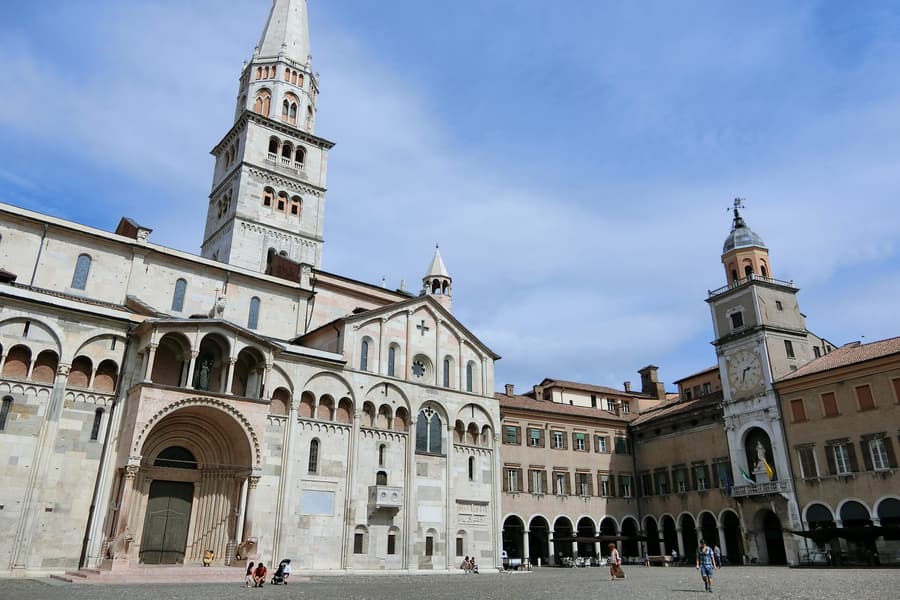 Modena 30 minutes by train — balsamic acetaie, a Romanesque UNESCO cathedral and the Ferrari museum at Maranello.
 -
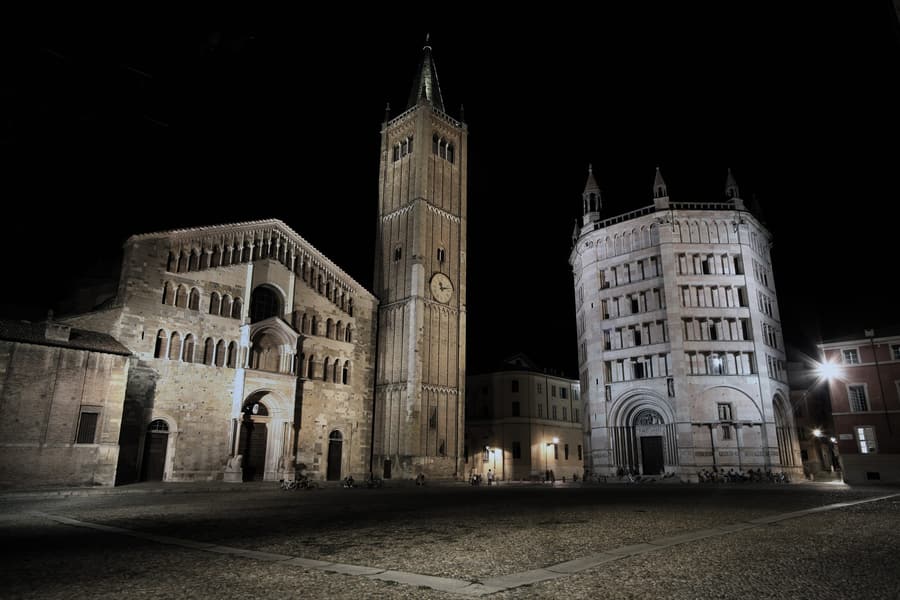 Parma An hour west, for prosciutto, Parmigiano and Correggio's dome.
 -
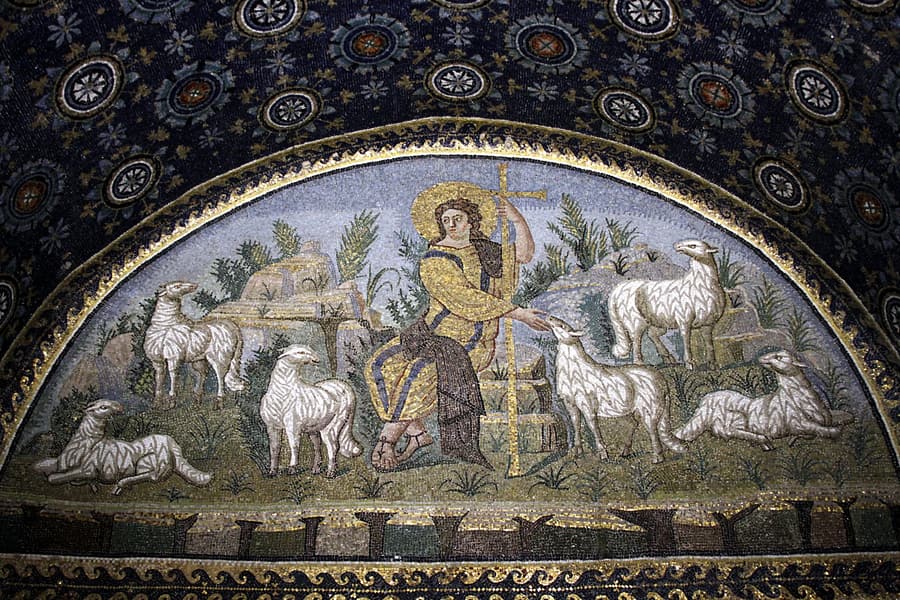 Ravenna's Byzantine Mosaics Byzantine mosaics 1h10 east — San Vitale and Galla Placidia are the two to see.
 -
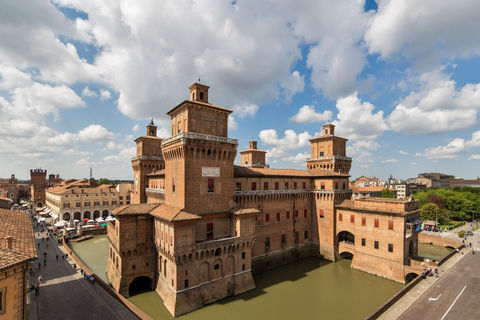 Ferrara A moated castle and Renaissance town planning, 30 minutes north.
 -
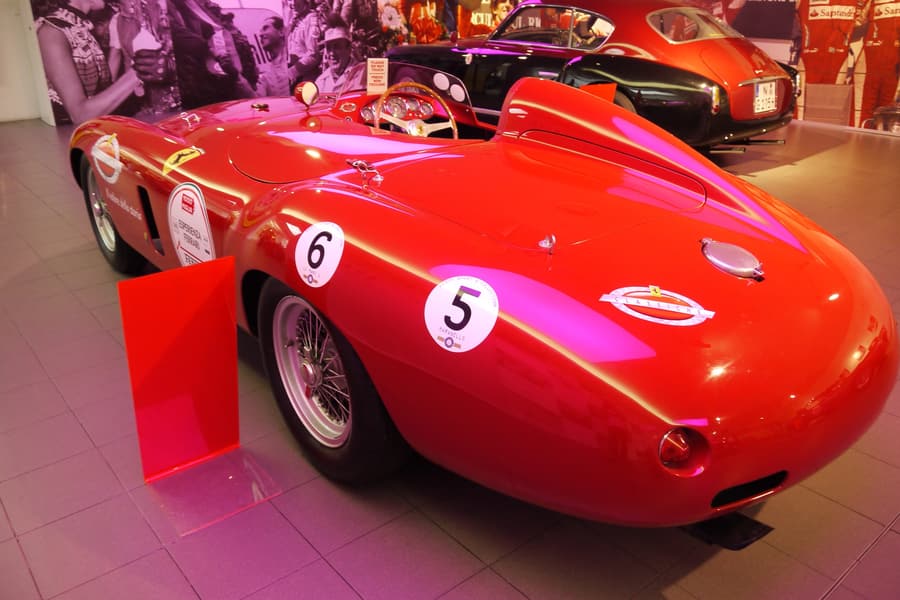 Museo Ferrari, Maranello The factory museum, 45 minutes by train and bus via Modena.
 -
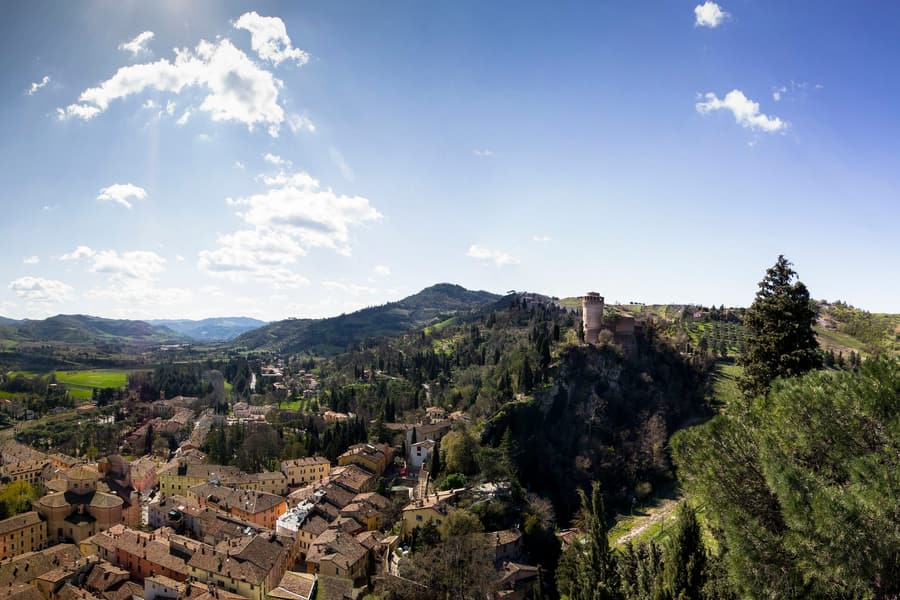 Brisighella A chalk-pinnacle village and a raised covered street, an hour south-east.
Practical
- Best time to go
- April–June and September–October. Winter fog is real and the city looks wonderful in it; summer is humid and August is dead. Term time (October–May) is when the city has its energy. Book around the big trade fairs — Cersaie in September and Marca in January fill every hotel.
- Getting there
- Bologna Marconi (BLQ) is 7 minutes from Bologna Centrale on the Marconi Express monorail. Centrale is the crossroads of the Italian high-speed network: Florence 37 min, Milan 1h, Venice 1h30, Rome 2h. There is no reason to hire a car unless you are driving into the food country.
- Getting around
- Walk — the centre is flat and covered. Buses fill in the rest; the T-days pedestrianisation closes the core to traffic most weekends. For the Santuario di San Luca, take the little train or walk the 3.8 km portico of 666 arches uphill, which is the local rite of passage.
- Eat & drink
- This is the point of Bologna. Tagliatelle al ragù (never spaghetti bolognese, which does not exist here), tortellini in capon broth, lasagne verdi, tortelloni with butter and sage, crescentine and tigelle with cured meats, mortadella at every counter. The Quadrilatero behind Piazza Maggiore is the old market grid — Simoni, Tamburini, the fishmongers on Via Drapperie. Mercato delle Erbe and Mercato Ritrovato are where locals actually shop. Book dinner: the good trattorie are small and full.
- Know before you go
- Restaurants on Piazza Maggiore itself are priced for the view. The Asinelli tower climb is booked and capped, and the Garisenda is currently closed and shored up for structural work — check before planning around it. Many kitchens close between 14:30 and 19:30 with nothing in between.
More of Emilia-Romagna
- Ferrara A moated castle, Renaissance town planning and bicycles everywhere
- Parma Prosciutto, Parmigiano, Correggio's frescoes and Verdi's country
- Modena Balsamic vinegar, a Romanesque cathedral and Ferrari next door
-
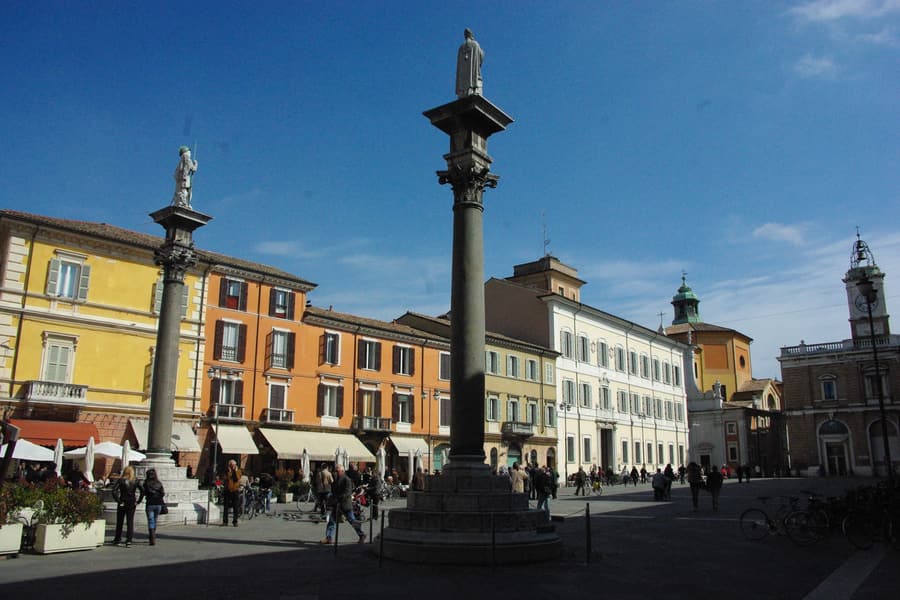 Ravenna The best Byzantine mosaics outside Istanbul
 -
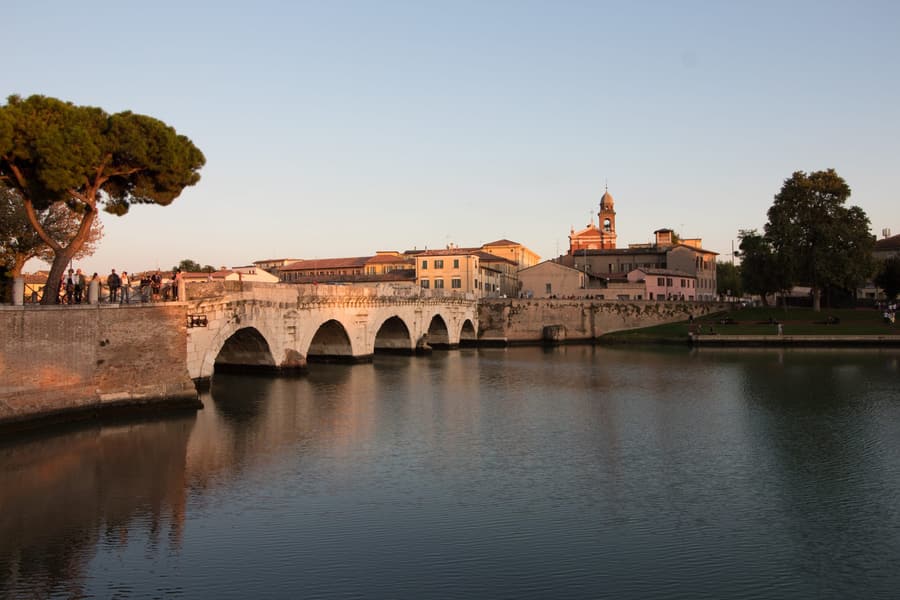 Rimini Fifteen kilometres of Adriatic beach — and Fellini's home town