Palermo has been Phoenician, Greek, Roman, Arab, Norman, Swabian, Angevin, Aragonese and Bourbon, and all of it is still visible — often in the same building. The Arab-Norman churches, with Byzantine gold mosaics under Islamic wooden ceilings, are unique in Europe and UNESCO-listed as a group with Cefalù and Monreale. The city is scruffy, loud and half-restored, with baroque palaces next to war damage never rebuilt, and it has the best street food in Italy. It is not a polished city break; it is a much better one than that.
For the Cappella Palatina and Monreale, which are worth the flight on their own. For the markets — Ballarò, Capo, Vucciria — which are North African in feel and where most of the eating happens. And as the base for western Sicily: Cefalù, Segesta, the Zingaro reserve and the Egadi islands are all day trips.
Things to do
- The Cappella Palatina — Inside the Palazzo dei Normanni: Byzantine mosaics, an Islamic muqarnas ceiling and a Norman king's chapel, all at once. The single best thing in the city.
- Monreale Cathedral — 6,500 m² of gold mosaic and a Norman-Arab cloister of 228 paired columns, 8 km uphill. Allow a half day.
- Ballarò and Capo markets — Go hungry, before noon. Panelle, arancine, sfincione and a glass of wine from a plastic cup.
- Palazzo Abatellis — Antonello da Messina's Virgin Annunciate and a huge fifteenth-century Triumph of Death fresco, in a Catalan-Gothic palace.
- Teatro Massimo — The largest opera house in Italy and the third largest in Europe — daily tours, and the Godfather III staircase.
- The Capuchin Catacombs — Eight thousand mummified bodies in habits, arranged by trade and sex. Genuinely unsettling; not for everyone.
- Mondello and Monte Pellegrino — Bus 806 to the beach, or up to the Santuario di Santa Rosalia on the mountain above it for the view over both bays.
Where to base yourself
The Palermo neighbourhoods worth knowing before you book.
- Coming soon Kalsa The old Arab quarter towards the sea — Palazzo Abatellis, the roofless Santa Maria dello Spasimo, and the city's most interesting restoration. The best area to sleep.
- Coming soon Vucciria & La Loggia Around the old market: derelict by day, packed with drinking crowds at night. Central, cheap, not quiet.
- Coming soon Albergheria & Ballarò The oldest market quarter, still working, still North African in feel, right beside the Palazzo dei Normanni.
- Coming soon Capo & Politeama The Capo market and, north of it, the nineteenth-century city around the two opera houses — grander, calmer, good mid-range hotels.
- Coming soon Libertà The Liberty-style boulevard quarter: shops, smart restaurants, no sights, and the safest-feeling streets in the city.
- Coming soon Mondello The city's beach, 11 km north under Monte Pellegrino — Art Nouveau bathing pier and turquoise water, packed in July and August.
3 days in Palermo
- Day 1 Arab-Norman Palermo
Palazzo dei Normanni and the Cappella Palatina at opening. Ballarò market for lunch on your feet. Afternoon: the Cathedral, San Giovanni degli Eremiti's red domes, and the Quattro Canti. Aperitivo in the Kalsa, dinner nearby.
- Day 2 Monreale and the markets
Morning bus up to Monreale — cathedral and cloister. Back for a late lunch at the Capo market. Afternoon at Palazzo Abatellis, then the Teatro Massimo tour. Evening drinking in the Vucciria.
- Day 3 Coast or Greek temple
Either the train east to Cefalù for the Norman cathedral and the beach, or a car west to Segesta's unfinished temple and the Zingaro reserve. Back for a last cannolo.
Day trips
Worth the train or the drive from Palermo.
-
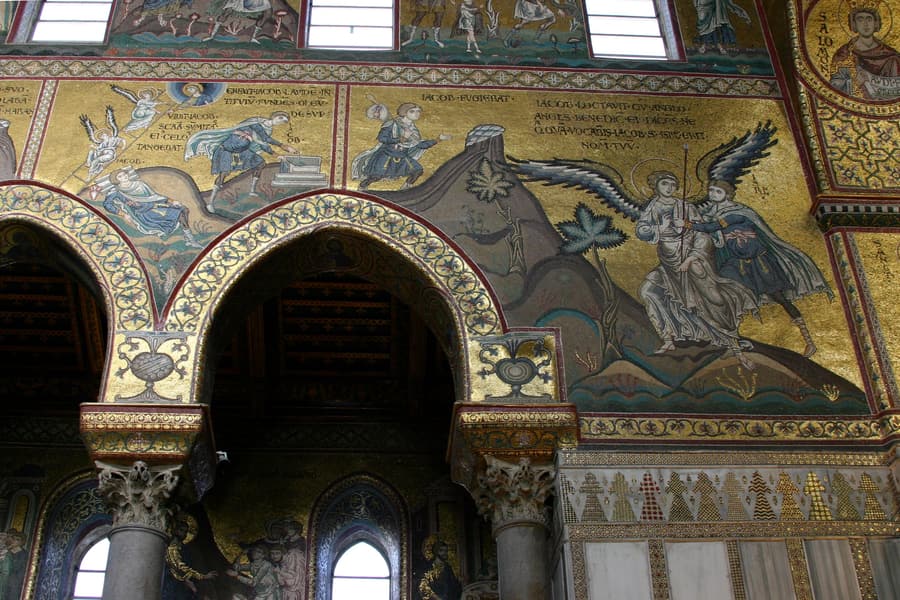 Monreale Cathedral 30 minutes uphill by bus — the greatest mosaic cycle in Italy.
 -
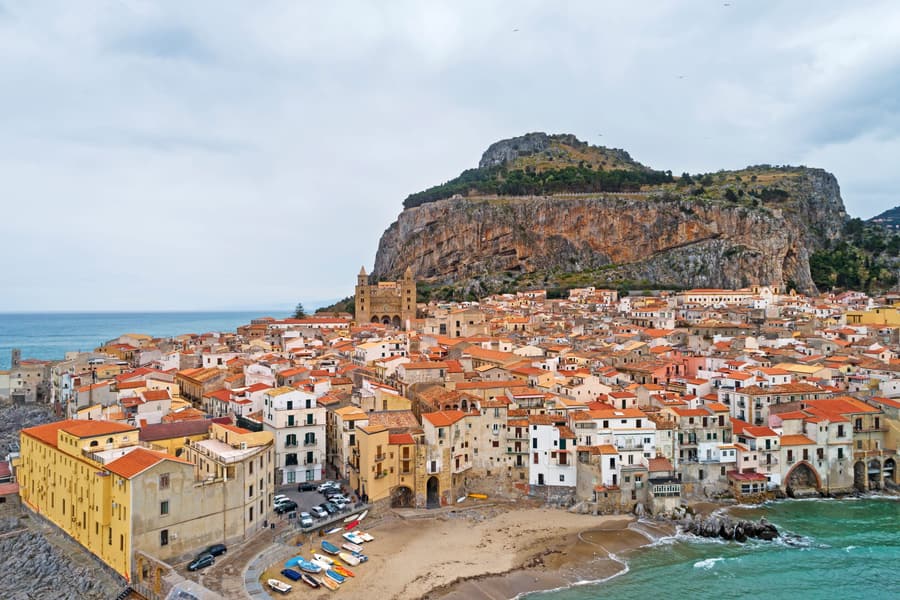 Cefalù An hour east by train: cathedral, crag and a proper beach.
 -
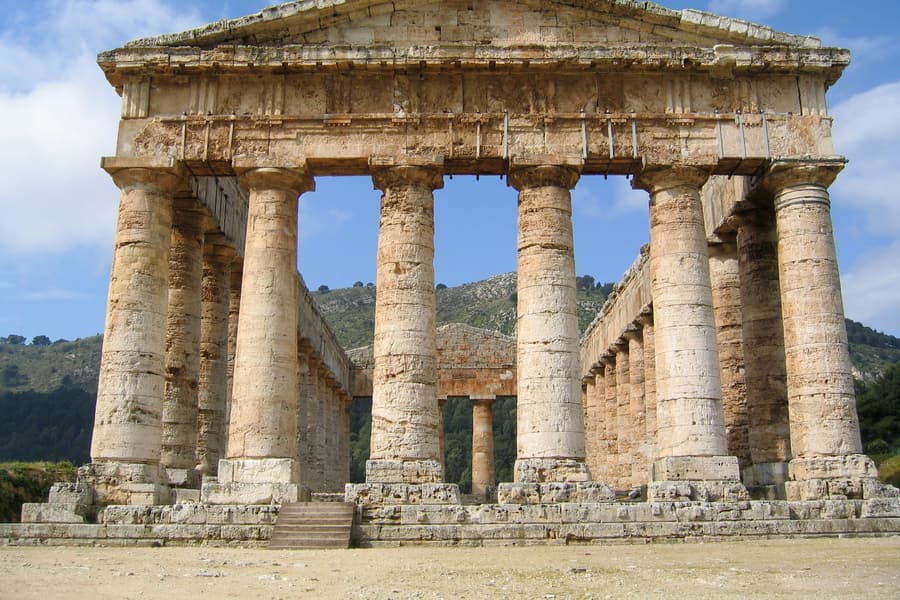 Segesta An unfinished Doric temple alone on a hill, 80 minutes west by car.
 -
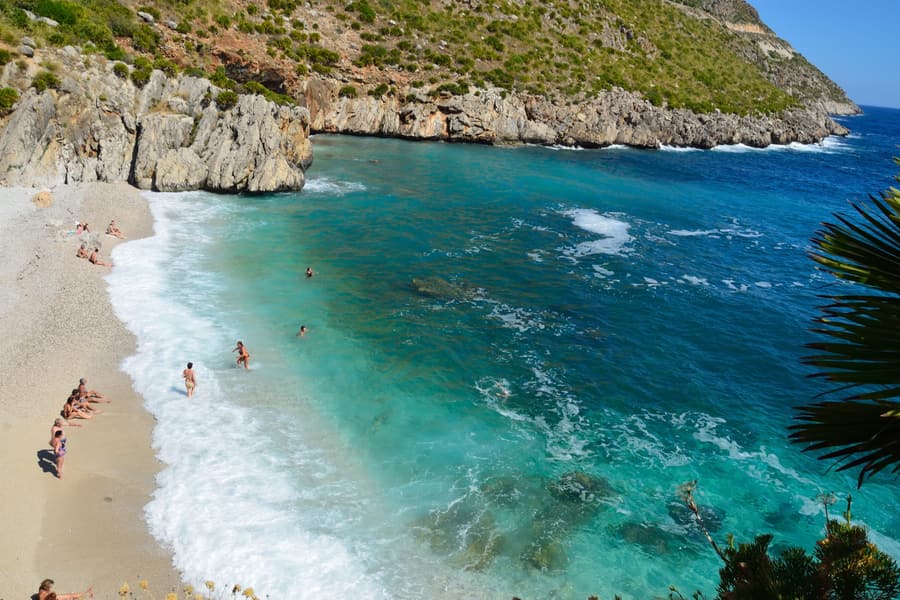 Riserva dello Zingaro Seven kilometres of road-free coast path with coves along it.
 -
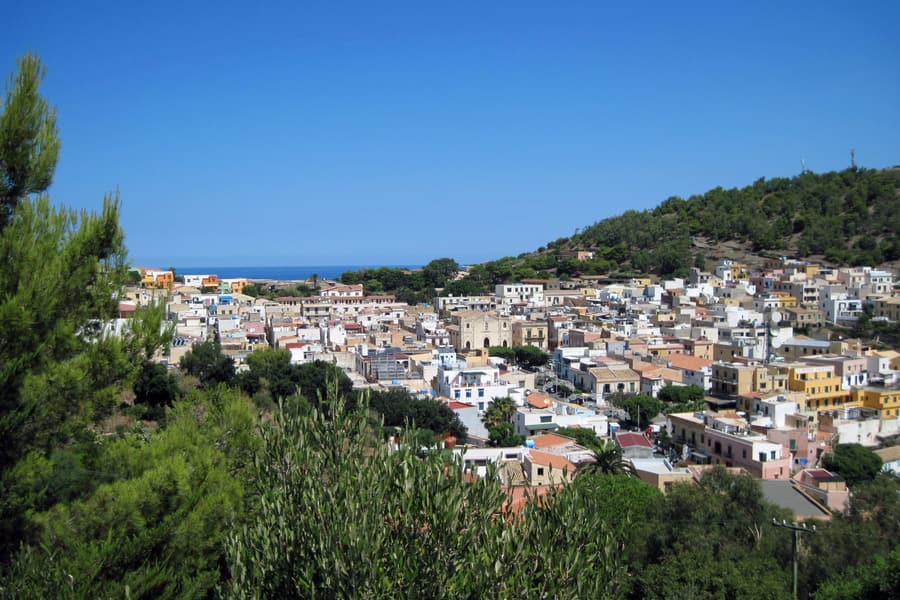 Ustica Italy's first marine reserve, 1h20 by hydrofoil — the best diving in Sicily.
 -
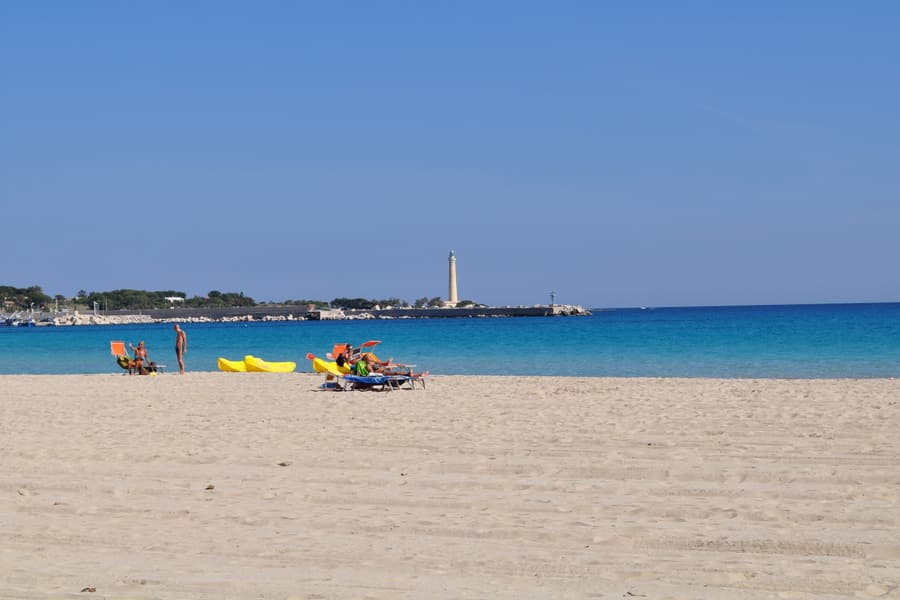 San Vito lo Capo The best beach in western Sicily, about two hours by road.
Practical
- Best time to go
- April–June and September–October. July–August is 35°C+ and many Palermitani leave for the coast; the city still works but the middle of the day does not. Winter is mild (15°C in January) and the citrus is in season — genuinely one of the best winter city breaks in Europe. Holy Week and the Festino di Santa Rosalia in mid-July are the two big set pieces.
- Getting there
- Palermo Falcone-Borsellino (PMO) is 45 minutes from the centre by the Trinacria Express train or the Prestia e Comandè bus. Overnight ferries from Naples (about 11 hours), Genoa and Civitavecchia dock at the port a short walk from the centre. Trains along the coast to Cefalù take an hour; the interior is slow — hire a car for the rest of Sicily.
- Getting around
- The historic centre is walkable and best walked. Buses are erratic; the tram serves the outskirts only. Taxis should use the meter — agree the fare first if they won't. Do not drive in the centre: the streets are narrow, the parking is informal, and 'parcheggiatori abusivi' will expect a euro or two either way.
- Eat & drink
- Street food first: pane e panelle (chickpea fritters in a roll), arancine (round in Palermo, and feminine — the argument with Catania is real), sfincione, and for the brave, pani ca' meusa — spleen sandwich. Then pasta con le sarde, caponata, and swordfish. Sweets are a discipline of their own: cannoli filled to order, cassata, and granita with brioche for breakfast in summer. Marsala and Etna wines on the list; Nero d'Avola everywhere.
- Know before you go
- Cross roads decisively — the traffic is Neapolitan in temperament. Keep bags closed and to the front in the markets, and don't leave anything in a parked car anywhere. Many churches close 13:00–16:00 and some of the Arab-Norman sites keep short or shifting hours; check the day's opening before setting out. Monreale is a 30-minute bus ride uphill — go in the morning, when the mosaics are lit.
More of Sicily
-
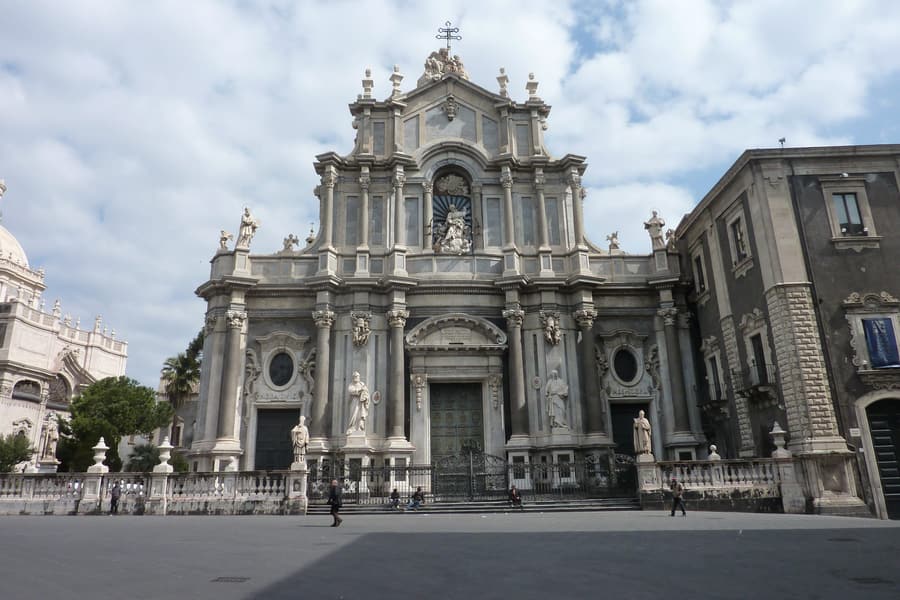 Catania Black lava baroque under Etna, and Sicily's best fish market
 -
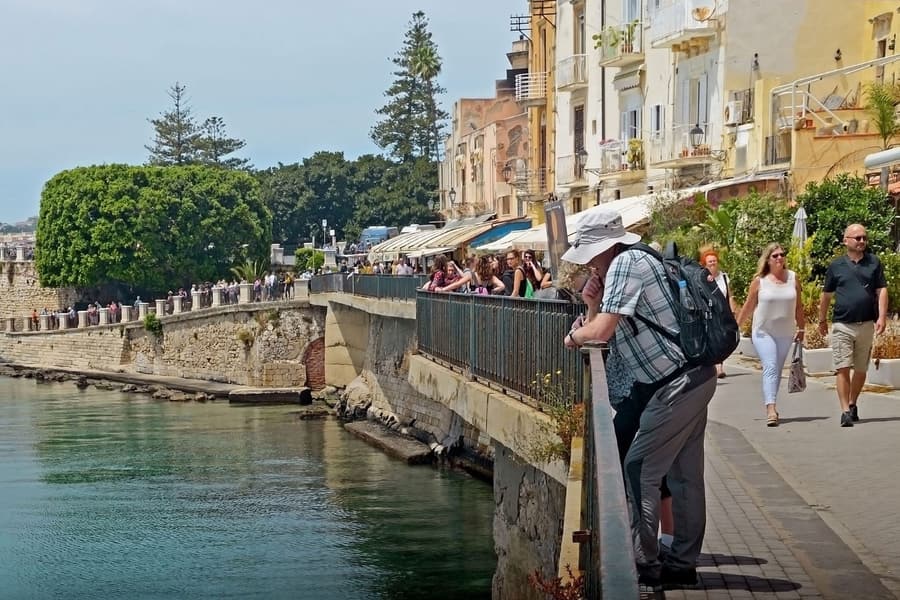 Syracuse Ortigia's island old town and the greatest Greek theatre in Sicily
 -
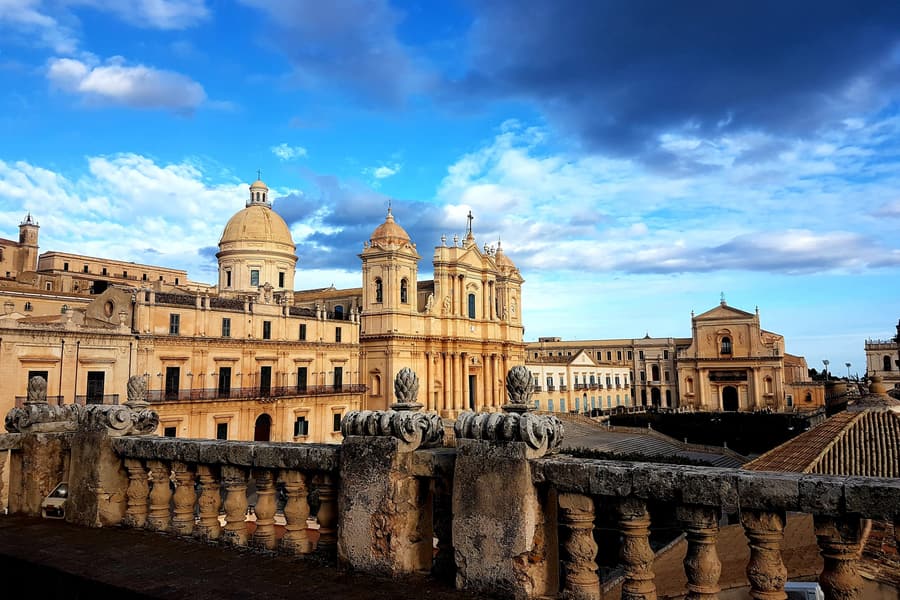 Noto The set-piece of Sicilian late baroque, rebuilt after the 1693 quake
 -
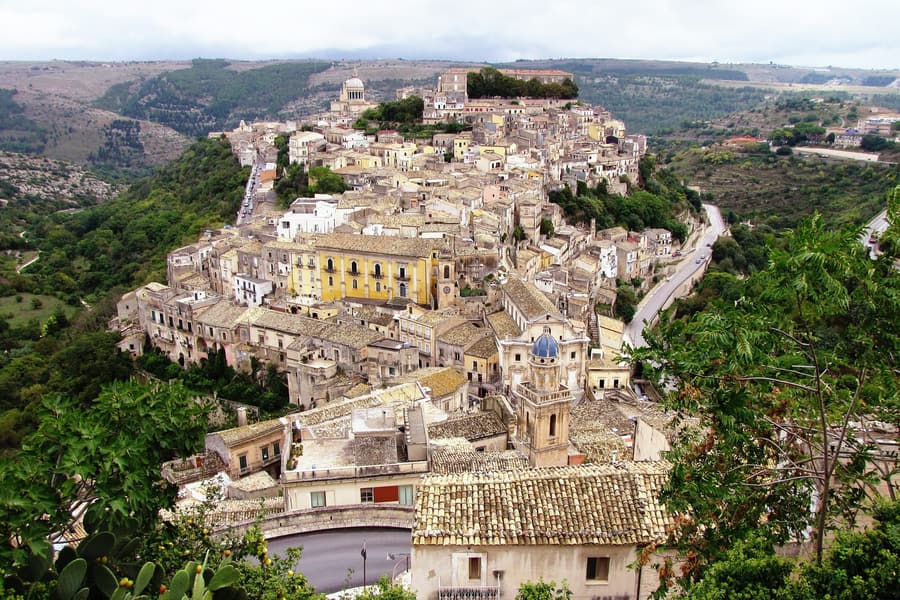 Ragusa Two towns on two hills — Ibla is the beautiful one
 -
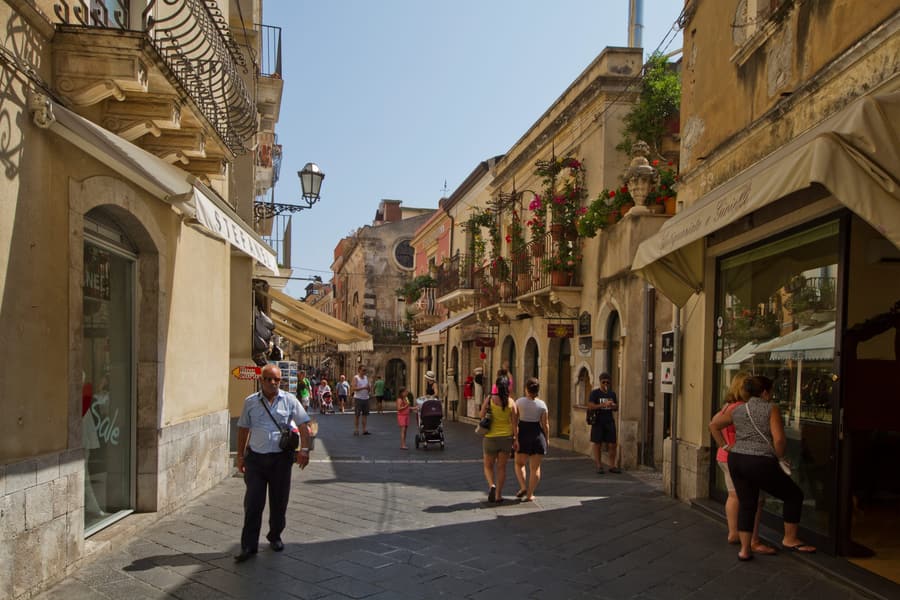 Taormina A cliff-top Greek theatre looking straight at Etna
 -
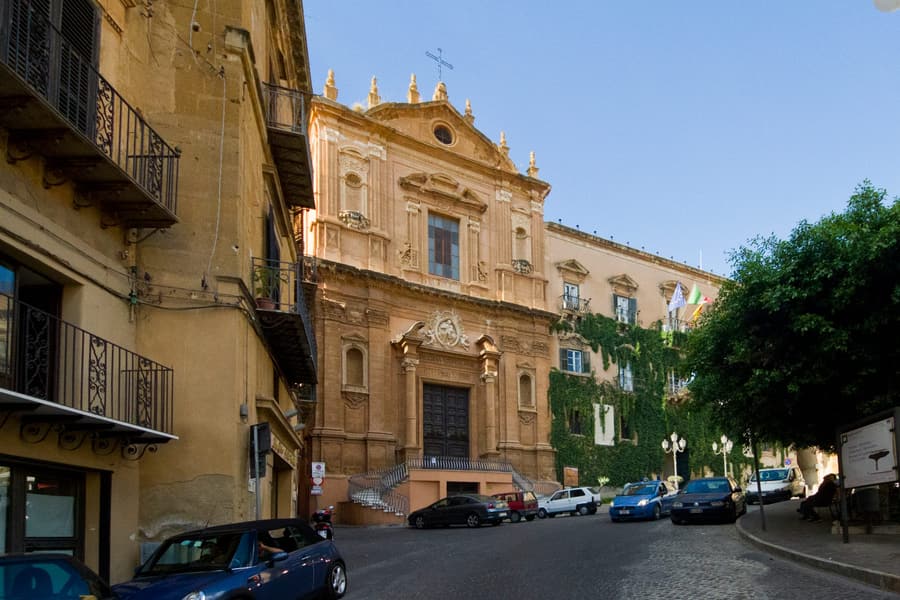 Agrigento The base for the Valley of the Temples — Italian Capital of Culture 2025