Syracuse was, for a couple of centuries, the largest and richest city in the Greek world — Cicero called it the most beautiful of them all — and Archimedes was killed here when Rome finally took it in 212 BC. Two things survive from that: the Neapolis archaeological park, with the largest Greek theatre in Sicily cut straight out of the rock, and Ortigia, the small island that was the original city and is now the old town, rebuilt in baroque after 1693. The cathedral on Ortigia is a fifth-century BC Doric temple with walls filled in between its columns — you can still see them.
For Ortigia, which is one of the most enjoyable places to stay in Sicily — an island of honey-coloured baroque you can walk end to end in twenty minutes, ringed by sea. And for the Greek theatre, which still stages classical drama every May and June.
Things to do
- The Duomo of Ortigia — A Greek temple to Athena, converted into a church in the seventh century. The Doric columns are still standing inside the walls.
- Parco Archeologico della Neapolis — The Greek theatre cut from the rock, the Roman amphitheatre, the vast altar of Hieron and the Ear of Dionysius quarry cave.
- Greek drama at the theatre — Aeschylus and Euripides staged in the original theatre each May and June, by the INDA foundation. Book early.
- Museo Paolo Orsi — One of the great archaeological museums of the Mediterranean — Sicily's Greek and prehistoric material, properly presented.
- The Ortigia market — Every morning except Sunday on Via Trento: urchins, tuna, capers, cheese, and a couple of counters that will make you a sandwich.
- Fonte Aretusa — A freshwater spring on the seafront, full of papyrus — one of only two places papyrus grows wild in Europe.
- Caravaggio's Burial of St Lucy — Painted here in 1608 while he was on the run, and hanging in the Santa Lucia alla Badia church on the Duomo square.
Where to base yourself
The Syracuse neighbourhoods worth knowing before you book.
- Coming soon Ortigia The island old town: the Duomo, the Fonte Aretusa, the market and the sea on all sides. Stay here, and nowhere else.
- Coming soon Giudecca Ortigia's old Jewish quarter, with a ritual bath rediscovered beneath a hotel — the narrowest and quietest lanes.
- Coming soon Neapolis & Tyche The mainland archaeological quarter around the Greek theatre and the Paolo Orsi museum. Cheaper hotels, less charm.
- Coming soon Santa Lucia North of the bridges, where the city is ordinary and the Caravaggio Burial of St Lucy hangs in the Badia.
- Coming soon Fontane Bianche & Arenella The city's beaches, 15–20 minutes south — sand, lidos and warm shallow water.
- Coming soon Plemmirio The marine reserve on the headland opposite Ortigia: limestone coast, snorkelling and no sand.
3 days in Syracuse
- Day 1 Ortigia
Market first thing, breakfast at a counter in it. Duomo and the Temple of Athena columns. Late morning at the Caravaggio and the Fonte Aretusa. Lunch of raw fish. Afternoon walking the island's sea walls to Castello Maniace. Aperitivo on the Lungomare, dinner in the Giudecca.
- Day 2 The Greek city
Neapolis park at opening — theatre, Ear of Dionysius, amphitheatre. Museo Paolo Orsi after it. Late lunch. Afternoon swim at Plemmirio or Fontane Bianche. Back for a last evening in Ortigia.
- Day 3 The Val di Noto
Noto's Corso Vittorio Emanuele in the morning light, then Modica for chocolate and Ragusa Ibla for the evening. A car day.
Day trips
Worth the train or the drive from Syracuse.
-
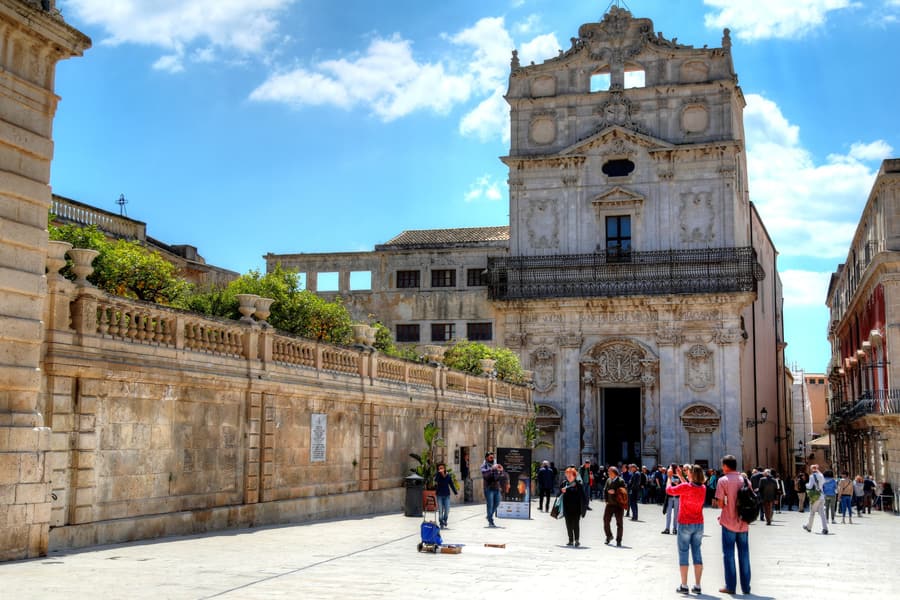 Ortigia & the Neapolis of Syracuse The island old town and the Neapolis park — the two halves of ancient Syracuse.
 -
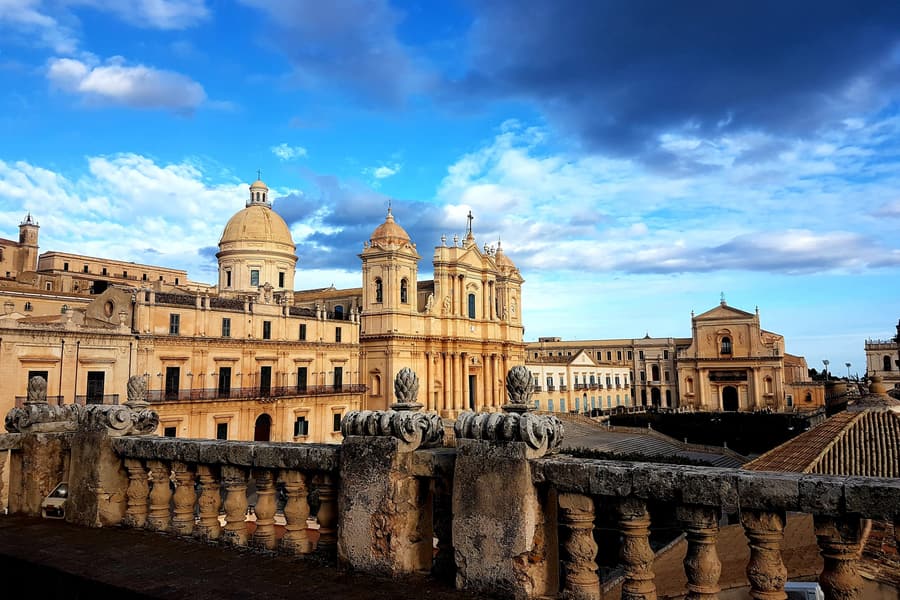 Noto 40 minutes south, and the finest baroque street in Sicily.
 -
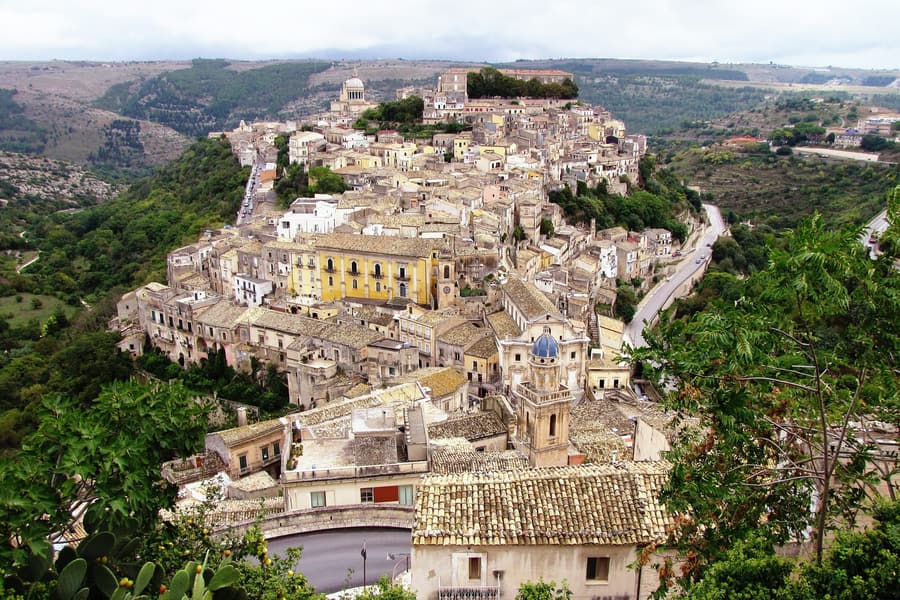 Ragusa Ibla's alleys and its Duomo, about 1h30 west.
 -
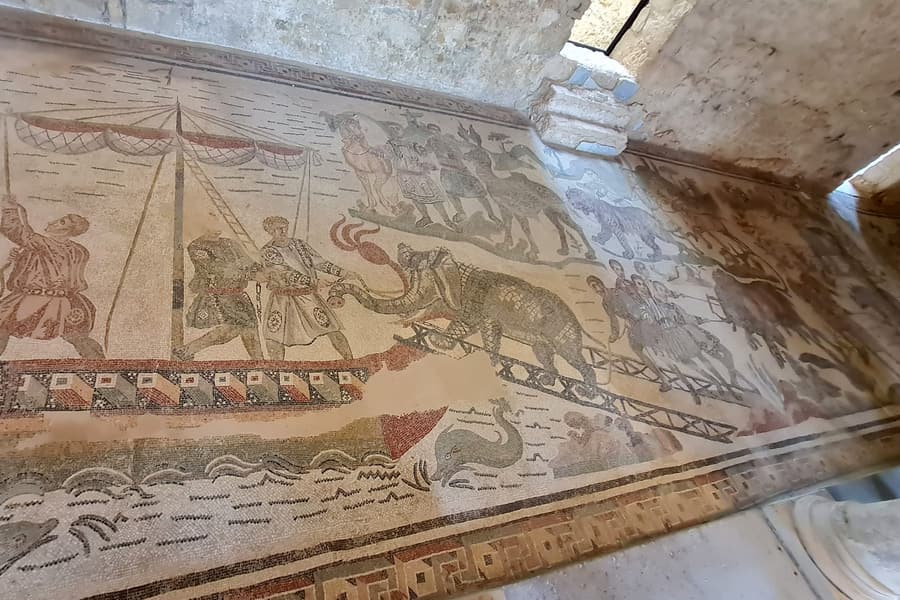 Villa Romana del Casale 3,500 m² of Roman mosaic at Piazza Armerina, about 2h north-west.
 -
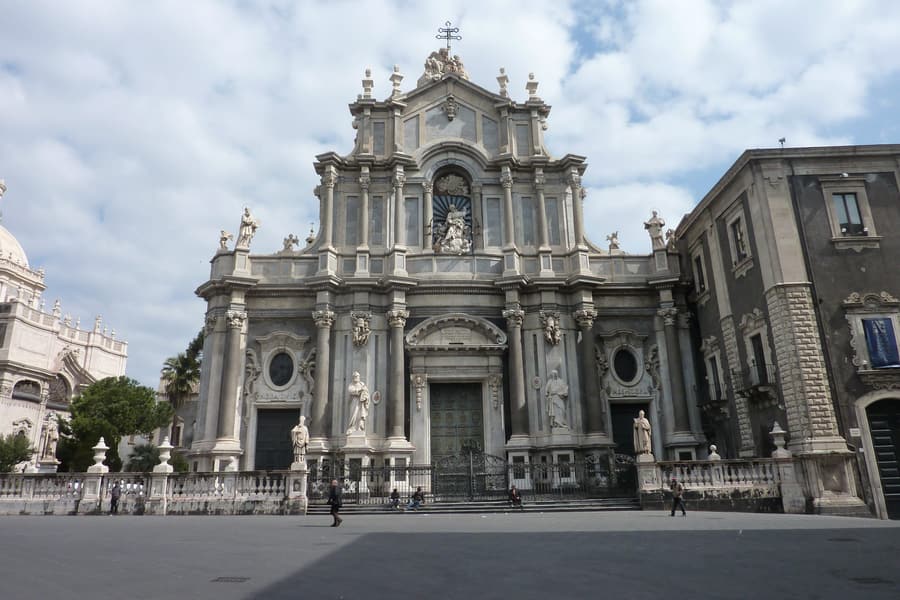 Catania The fish market and the black baroque city, an hour north.
 -
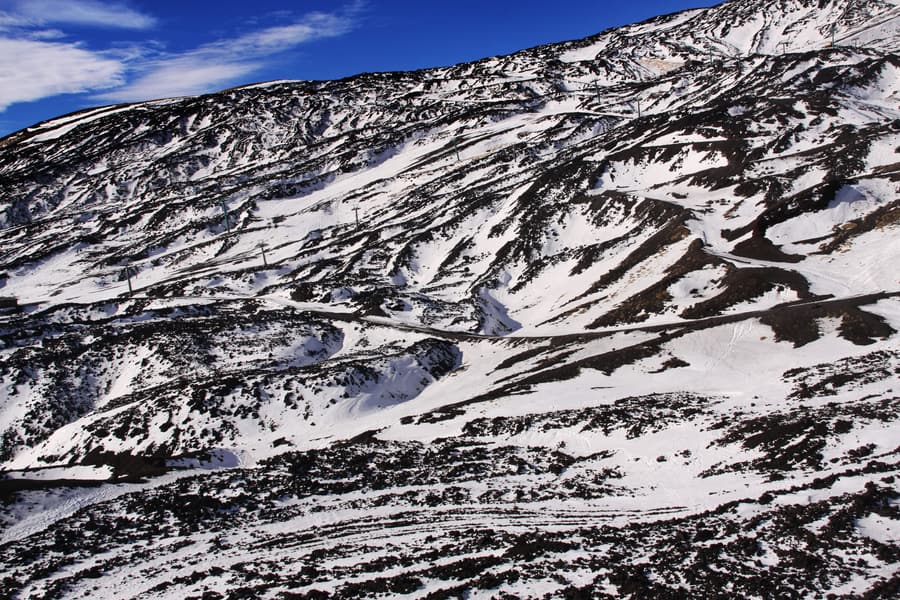 Mount Etna Two hours to the Rifugio Sapienza — long, but doable in a day with an early start.
Practical
- Best time to go
- April–June and September–October. The Greek drama season runs mid-May to early July in the ancient theatre. July and August are very hot and Ortigia fills. Winter is mild, quiet, and the light on the limestone is at its best.
- Getting there
- Catania Fontanarossa (CTA) is the airport, an hour away by direct bus. Trains from Catania take about 1h20; the bus is faster. Ortigia is joined to the mainland by two short bridges and is closed to non-resident traffic — park on the mainland side or at the Talete garage.
- Getting around
- Ortigia is walkable and mostly pedestrian. The Neapolis park is 2 km north-west of the bridges — a 25-minute walk, a short bus or a taxi. A car is only useful for Noto, Ragusa and the coast south.
- Eat & drink
- Sea urchins and raw prawns from the Ortigia market, which runs every morning except Sunday. Then pasta with sardines and wild fennel, tuna in its season, and the local sweets — cassata, cannoli, and the almond granita. Nero d'Avola comes from just south of here at Avola and Pachino, and the cherry tomatoes are the ones with the name.
- Know before you go
- The Neapolis park has almost no shade — go at opening or late. Ortigia's restaurants immediately on the Duomo square charge for the view; two streets back is better and cheaper. The Ear of Dionysius cave is included in the park ticket but the Latomia dei Cappuccini quarry is separate. Sunday closes the market.
More of Sicily
-
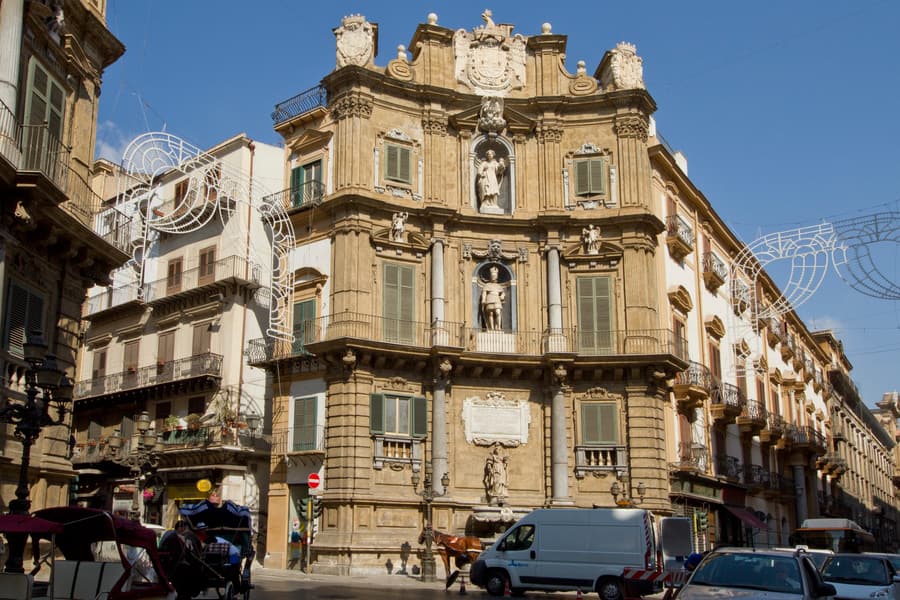 Palermo Arab-Norman palaces, street food and Sicily's rowdy capital
 - Catania Black lava baroque under Etna, and Sicily's best fish market
- Noto The set-piece of Sicilian late baroque, rebuilt after the 1693 quake
- Ragusa Two towns on two hills — Ibla is the beautiful one
-
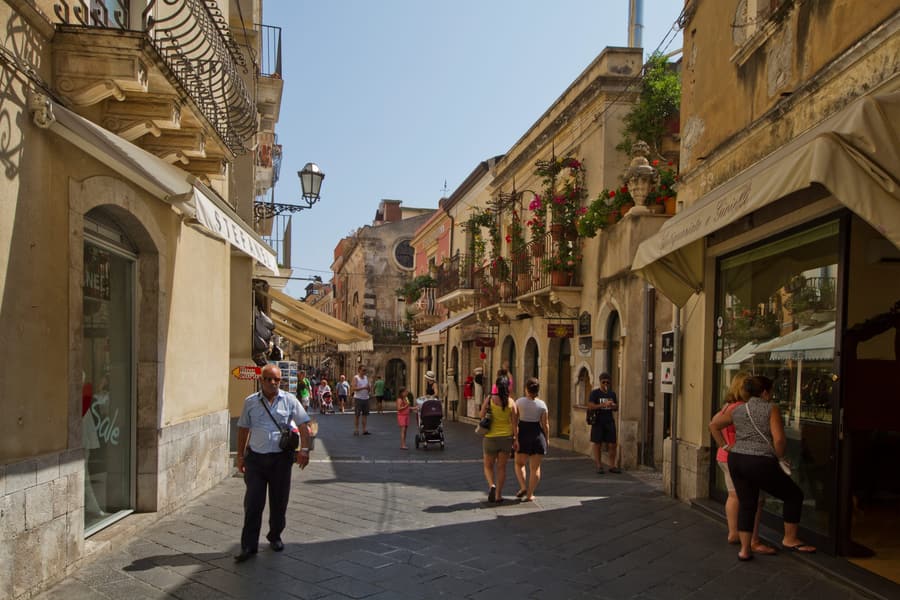 Taormina A cliff-top Greek theatre looking straight at Etna
 -
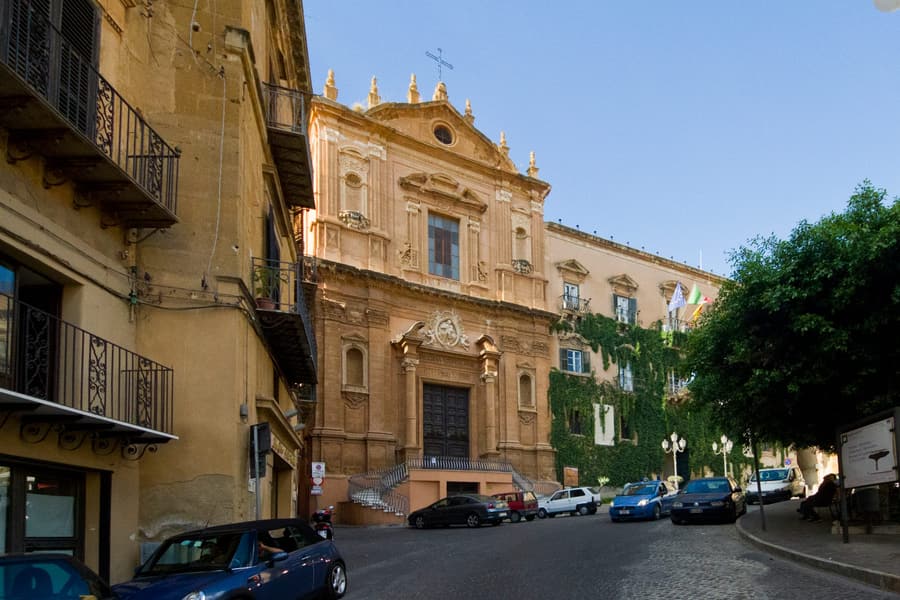 Agrigento The base for the Valley of the Temples — Italian Capital of Culture 2025