Ischia is six times the size of Capri, has 60,000 residents, grows its own wine and is built on a volcano that last erupted in 1302 — which is why it is Italy's thermal island. Hot springs surface all over it, and the big thermal parks at Negombo, Poseidon and Castiglione are terraced gardens of pools at different temperatures running down to the sea. It is far less glossy than Capri, considerably cheaper, and mostly visited by Italians and Germans rather than day-trippers.
For the thermal water, which is the real reason people come and stay a week rather than a day. For the Castello Aragonese, a fortress on its own islet reached by a causeway. And because it is a proper island with farms, forests and a 789 m mountain, not a resort with a hinterland.
What to do
- Castello Aragonese — A fortress on a volcanic islet joined to Ischia Ponte by a causeway — 2,500 years of building, a nuns' cemetery, and views back over the whole island.
- Negombo or Poseidon thermal gardens — Terraced pools from 28°C to 40°C in botanical gardens running down to a beach. Negombo is the designed one, Poseidon the biggest.
- Sant'Angelo — A car-free fishing village on the south coast, tied to a rocky islet by a sand isthmus. The prettiest corner of the island.
- Monte Epomeo — 789 m of green tuff at the centre — a 90-minute walk up from Fontana for the whole Bay of Naples.
- Sorgeto Bay — A cove where volcanic springs boil into the sea. Free, open all year, and best at night in winter.
- La Mortella gardens — William Walton's subtropical garden above Forio, laid out by Russell Page — one of the best private gardens in Italy.
Beaches & swims
- Spiaggia dei Maronti — The island's longest beach — three kilometres of dark sand with fumaroles at the western end.
- Baia di Sorgeto — A cove where volcanic hot springs run into the sea — 234 steps down from Panza.
3 days on Ischia
- Day 1 Ponte and the castle
Castello Aragonese in the morning — allow two hours and the lift. Lunch at Ischia Ponte. Afternoon at a thermal park, ideally Castiglione or Negombo. Dinner at Ischia Porto.
- Day 2 The west and the south
Bus to Forio for La Mortella, then Citara for the Poseidon gardens or the beach. Late afternoon to Sant'Angelo; dinner on the harbour, and Sorgeto after dark if the sea is calm.
- Day 3 Up the mountain
Early walk from Fontana to the summit of Monte Epomeo (about 45 minutes up), then down to Maronti beach for the afternoon. Rabbit for dinner, inland at Buonopane or Barano.
Getting there
- Access
- Ferries from Naples (1h) and Pozzuoli (40 min); cars allowed with a permit
- Best time to go
- May–June and September–October: warm sea, open resorts, thermal parks in comfortable weather. July–August is busy with Italian families and expensive. Uniquely for the Bay of Naples islands, Ischia has a real winter season — the thermal spas stay open and Easter to October is the main run, with several hotels operating year-round.
- Getting around
- Buses circle the island in both directions (CS and CD lines) and are cheap and frequent. Unlike Capri, you can bring a car with a permit — but in summer it is usually more trouble than it is worth. Micro-taxis (open three-wheelers) are an Ischia institution. Water taxis reach the beaches with no road access.
- Eat & drink
- Coniglio all'ischitana — rabbit stewed in its own juices with tomato and herbs, cooked in a terracotta pot — is the island dish, and predates the tourism entirely. Then seafood, and the DOC wines from the volcanic terraces: Biancolella and Forastera whites, Piedirosso red. Sant'Angelo and Forio have the best restaurants; the Ischia Porto strip has the most.
- Know before you go
- The thermal parks charge full-day and half-day rates and most close for winter — check dates. Sorgeto is a free hot-spring cove reached by 234 steps down; wear shoes you can get wet and be careful, the water reaches 90°C where it surfaces. The 2017 earthquake damage in Casamicciola is still visible in places.
Other islands in the region
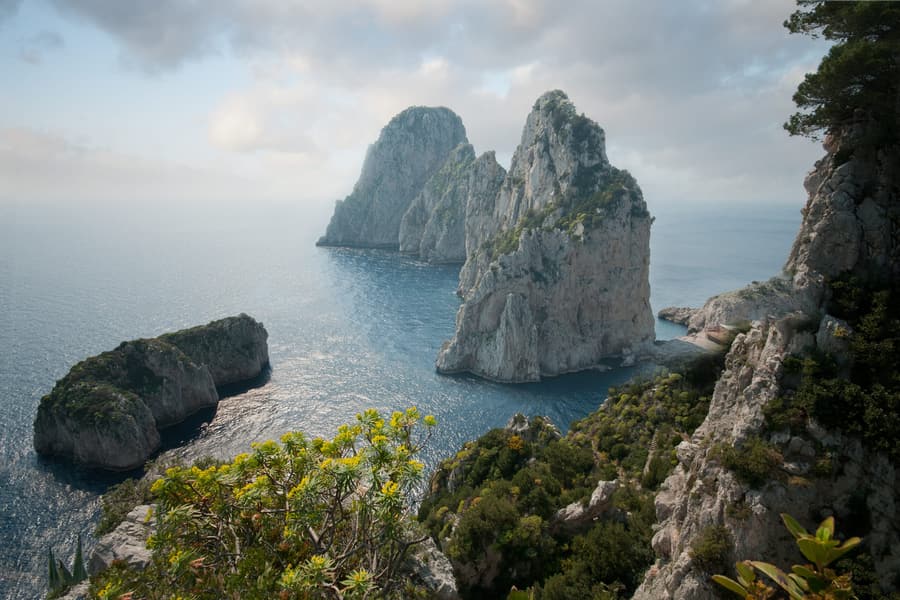
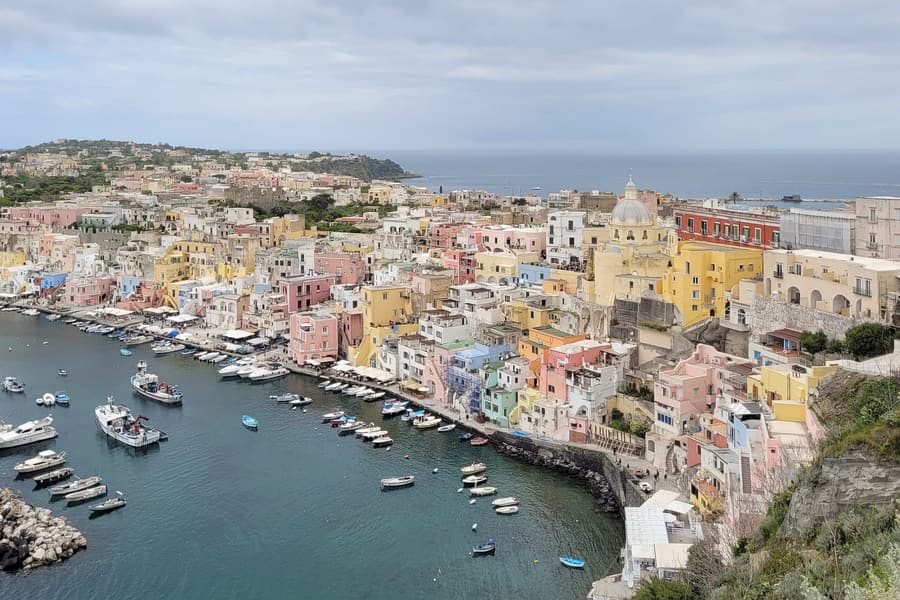
On the mainland
Where to base yourself either side of the crossing.
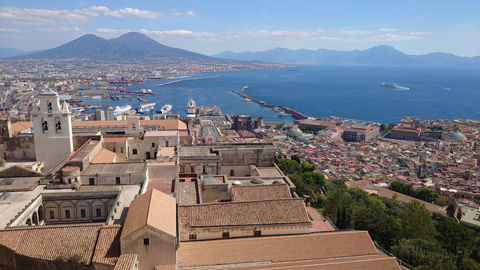
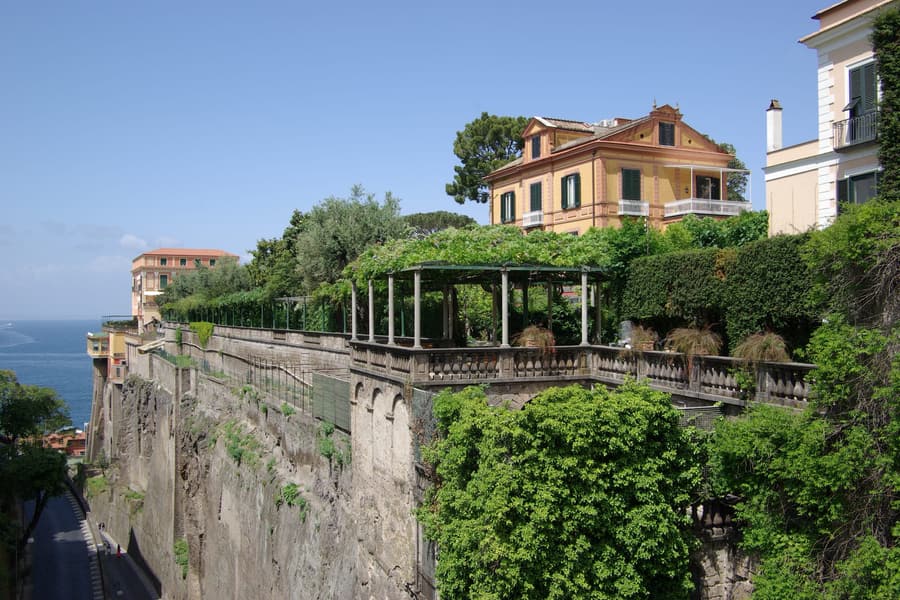
Nearby highlights
-
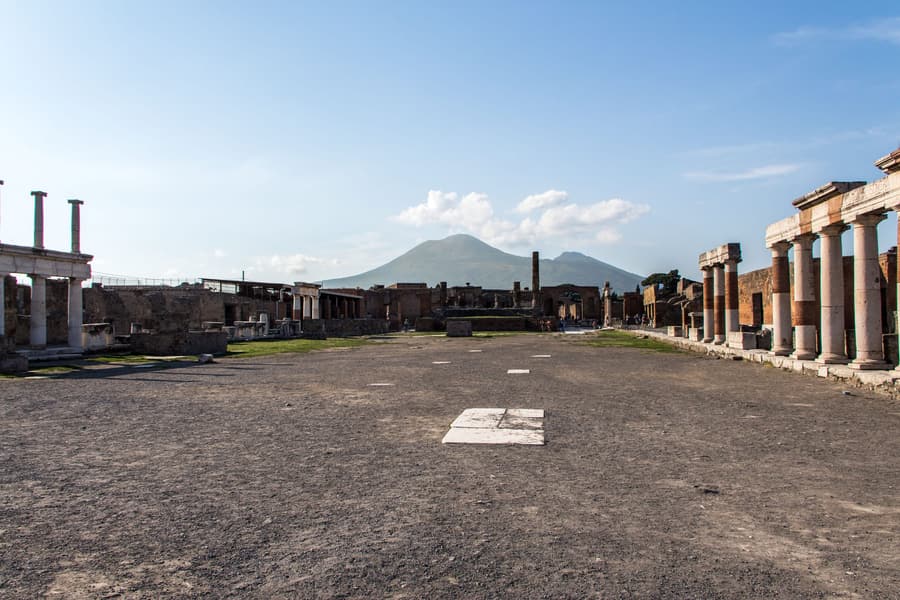 Pompeii A Roman town stopped mid-morning on 24 October AD 79
 -
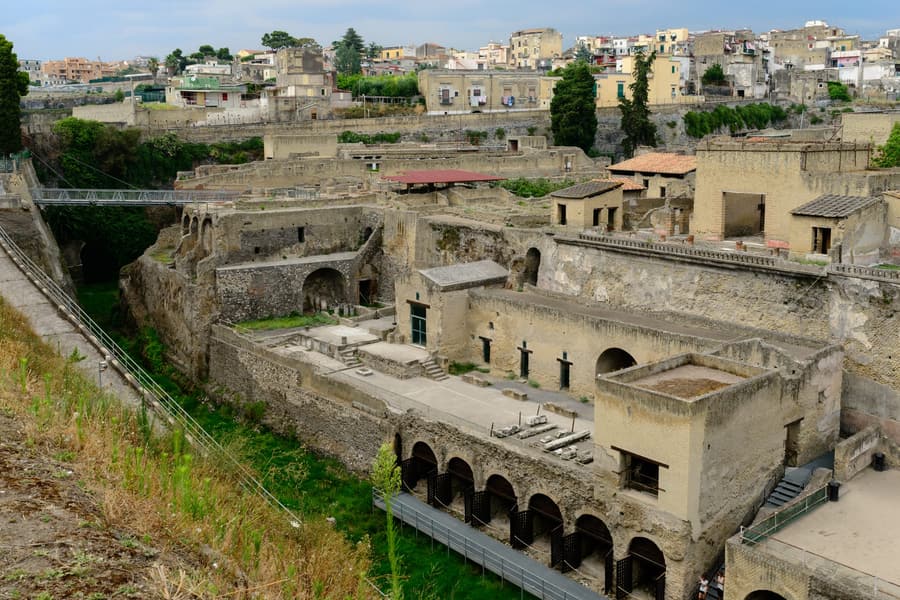 Herculaneum Smaller than Pompeii, buried deeper — and with the upper floors still standing
 -
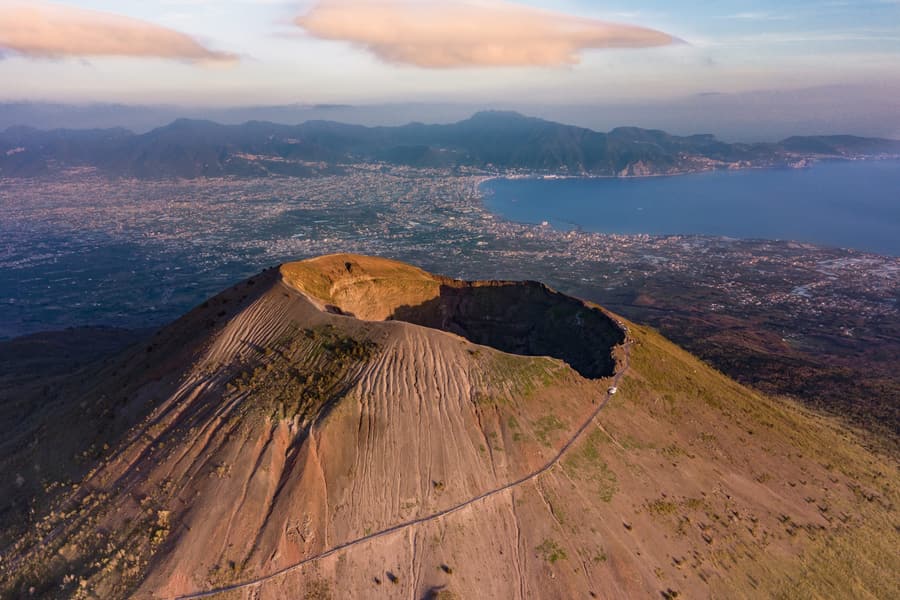 Mount Vesuvius The only active volcano on mainland Europe, with a walkable crater rim
 - Naples National Archaeological Museum Everything portable that came out of Pompeii and Herculaneum
-
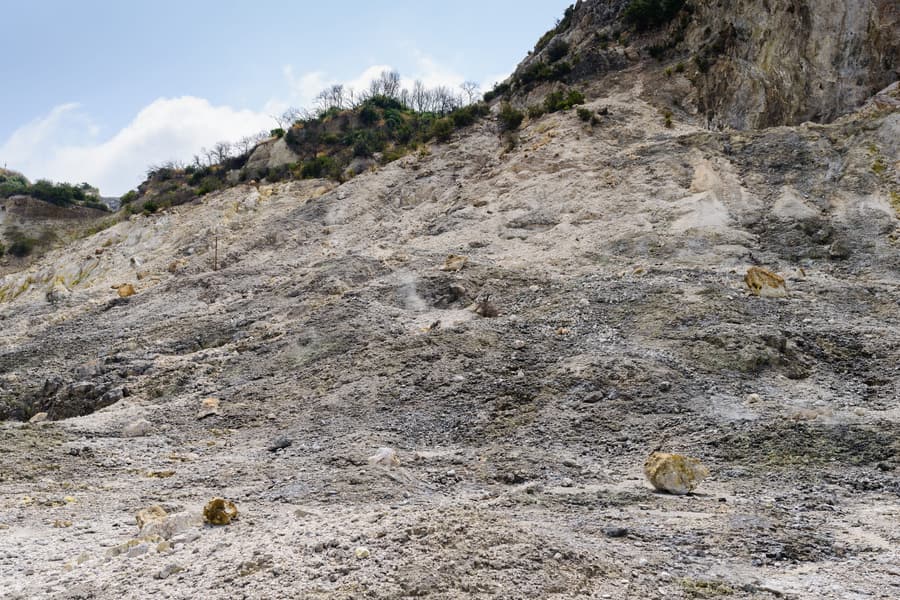 Campi Flegrei A collapsed supervolcano west of Naples, with Roman ruins in its craters
 -
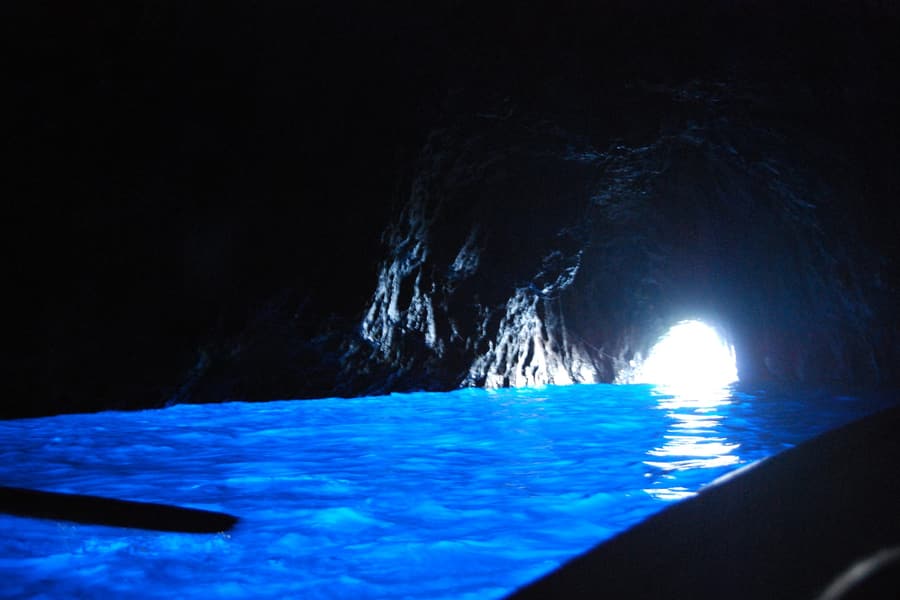 Blue Grotto, Capri A sea cave lit from below to an impossible blue — enter lying flat in a rowing boat
 -
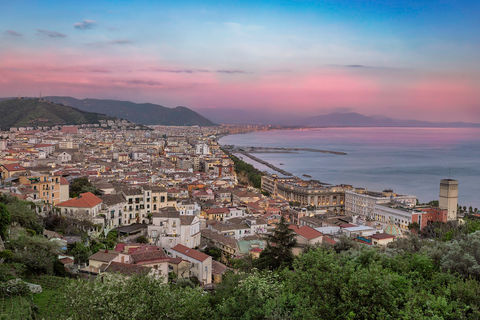 Amalfi Coast Fifty kilometres of terraced cliff, lemon groves and hairpin corniche
 -
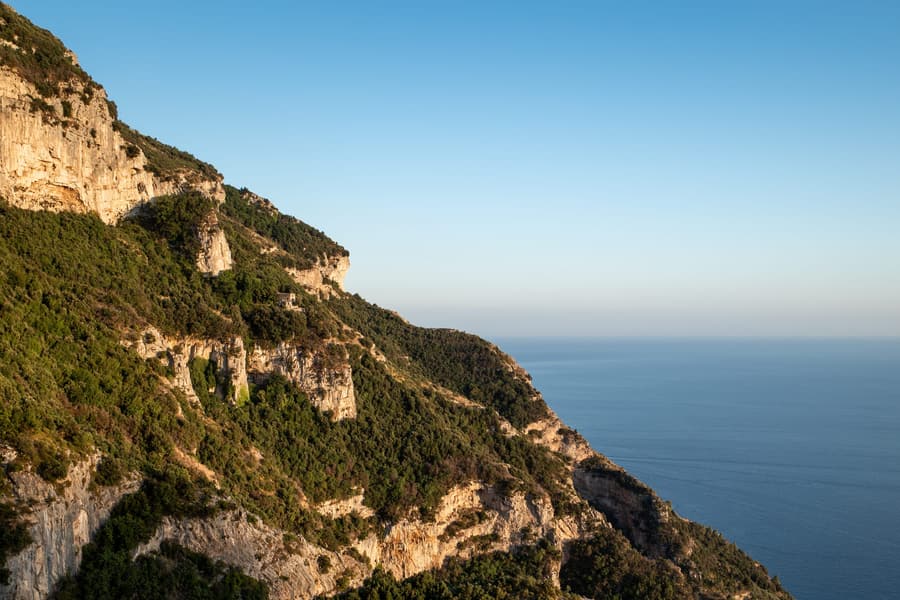 Path of the Gods The Sentiero degli Dei — a cliff path 600 m above Positano