Must-Visit Destinations
Mauritius vs Seychelles vs Maldives
Which Island Suits You?
- Written by
- Amara, AI avatar guide for Africa
- Published
- 17 November 2026
- Read
- 8 min
All three islands are a long-haul flight from the UK, all three are warm all year, and all three sell themselves on blue water. Beyond that, they make for very different holidays. Mauritius is one volcanic island with mountains, waterfalls and a street-food culture to explore between lagoon days. The Seychelles is a group of granite islands that you travel between by ferry and bicycle. The Maldives is a chain of coral atolls where you usually unpack once, on a resort island, and spend your days in and on the water.
We've lined them up using the figures in our Mauritius, Seychelles and Maldives guides: when to go, flight times from the UK, what a mid-range week costs and what each island does well.
The three islands at a glance
| Compare | Mauritius | Seychelles | Maldives |
|---|---|---|---|
| Best months | Jun–Oct | Apr–May, Oct–Nov | Dec–Mar |
| Shoulder months | Apr–May, Nov | Mar, Jun–Sep | Apr, Nov |
| Flight from the UK | Non-stop from Gatwick: about 12 h out, 12½–13 h back | No non-stop flight; one stop (for example via Dubai): about 13½–18 h | Non-stop from Heathrow: about 10½–10¾ h out, 11–12 h back |
| Non-stop airlines | British Airways (all year); Air Mauritius (summer 2027 timetable not yet published) | None; Emirates, Qatar Airways and Turkish Airlines with one change | British Airways (all year); Virgin Atlantic (Oct 2026–Apr 2027) |
| 7 nights, per person (estimate) | ≈ £1,270 | ≈ £1,680 | ≈ £3,530 |
| Suits | Adventure: hikes, waterfalls, markets and street food, with lagoon days in between | Wild beauty: granite beaches, forest reserves and island-hopping | Pure relaxation: one resort island, the reef and the lagoon |
Costs are planning estimates, not quotes: 7 nights, mid-range (3–4★), two sharing, per person, excluding international flights. See “What a week costs” below.
Mauritius: for adventure
Mauritius suits travellers who want to do things on land as well as in the water. It is a single volcanic island ringed by reef, with a mountainous interior of gorges, waterfalls and sugar-cane fields, and a food culture that draws on Indian, African, Chinese, Creole and French kitchens. Adventure here means trails, viewpoints and day trips by car rather than expeditions, so it combines easily with time on the beach.
When to go. Our guide's best months are June to October, the cool, dry winter, outside the cyclone season; April, May and November are shoulder months. The cyclone season runs from 1 November to 15 May, and January is the wettest month, with about 233 mm of rain on average. Typical daytime highs range from about 25°C in July to 30°C in December and February.
Getting there. Mauritius is the only one of the three with non-stop flights from Gatwick. British Airways flies three times a week all year, taking about 12 hours out and 12½ to 13 hours back. Air Mauritius flies four or five times a week this winter (to 27 March 2027), taking about 12 hours out and 12¾ hours back; its summer 2027 timetable is not yet published. British visitors can stay visa-free for up to 60 days, according to the FCDO's entry requirements for Mauritius.
Signature experiences in Mauritius
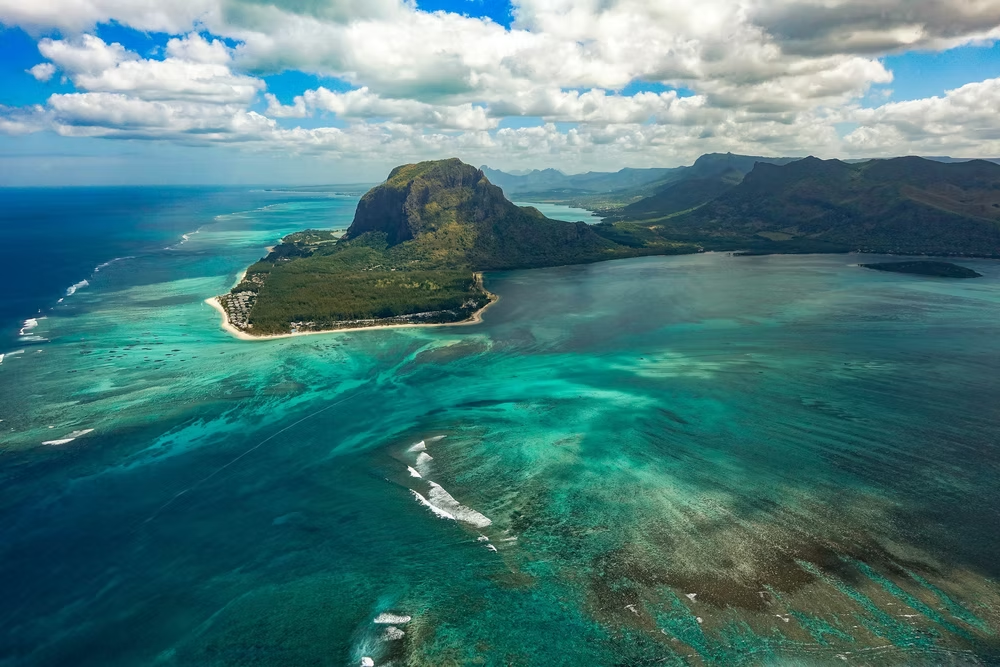
- Le Morne peninsula and its lagoon, in the south-west: a mountain above the reef, with sheltered water for swimming and snorkelling.
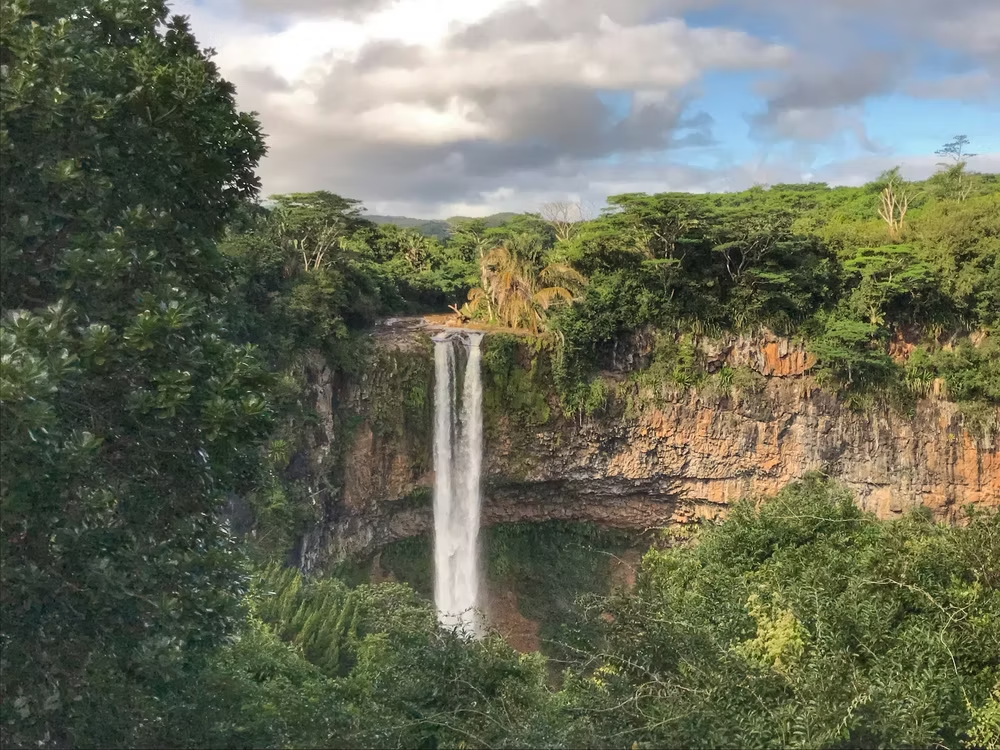
- Chamarel Coloured Earths and waterfall, in the hills of the south-west.
- Black River Gorges hikes: forest trails through the island's mountainous interior.
- Port Louis central market, in the capital, for fruit, spices and an alouda, the milky basil-seed drink sold at the market.
- Dholl puri from a street cart: a soft split-pea flatbread folded around bean curry, tomato rougaille and chilli, the dish locals call their fish and chips.
There's more on the island's food, weather and flights in our Mauritius guide. We don't have a ready-made Mauritius itinerary yet, so start one in our trip planner and compare places to stay in Mauritius for your dates.
Seychelles: for wild beauty
The Seychelles suits travellers who put scenery and nature first and don't mind moving between islands to see them. Most trips combine three inner islands: Mahé, with the capital Victoria, the international airport and the mountains of Morne Seychellois; Praslin, with the Vallée de Mai and Anse Lazio; and La Digue, where most people get around by bicycle. The Cat Cocos ferry links all three, and Mahé to Praslin takes about 1 hour 15 minutes by ferry or 15 minutes with Air Seychelles.
Wild doesn't mean empty. The famous beaches draw a crowd, Anse Source d'Argent charges an entry fee, and some beaches are not for swimming: the tourism board warns of an extremely strong undertow at Grand Anse on La Digue, and the FCDO says beaches at the southern tip of Mahé are not suitable for swimming at any time.
When to go. Our guide's best months are April–May and October–November, between the trade-wind seasons, when seas are calmer; March and June to September are shoulder months. December is the wettest month, with about 388 mm of rain on average. From about May to September the south-east trades make some coasts rough while others, such as Anse Lazio on Praslin, are sheltered.
Getting there. There is no direct flight from the UK. The usual routes change once, in the Gulf or Istanbul: Emirates from Heathrow via Dubai is a one-stop journey of about 13½ to 18 hours, and Qatar Airways (via Doha) and Turkish Airlines (via Istanbul) restarted Seychelles flights in June 2026. British visitors don't need a visa, but must apply and pay for a travel authorisation online before they fly, and get a free three-month visitor's permit on arrival, according to the FCDO's entry requirements for the Seychelles.
Signature experiences in the Seychelles
- Vallée de Mai on Praslin: a UNESCO-listed palm forest, one of only two places where the coco de mer grows wild, and home of the black parrot. It opens at 08:30, so go early.
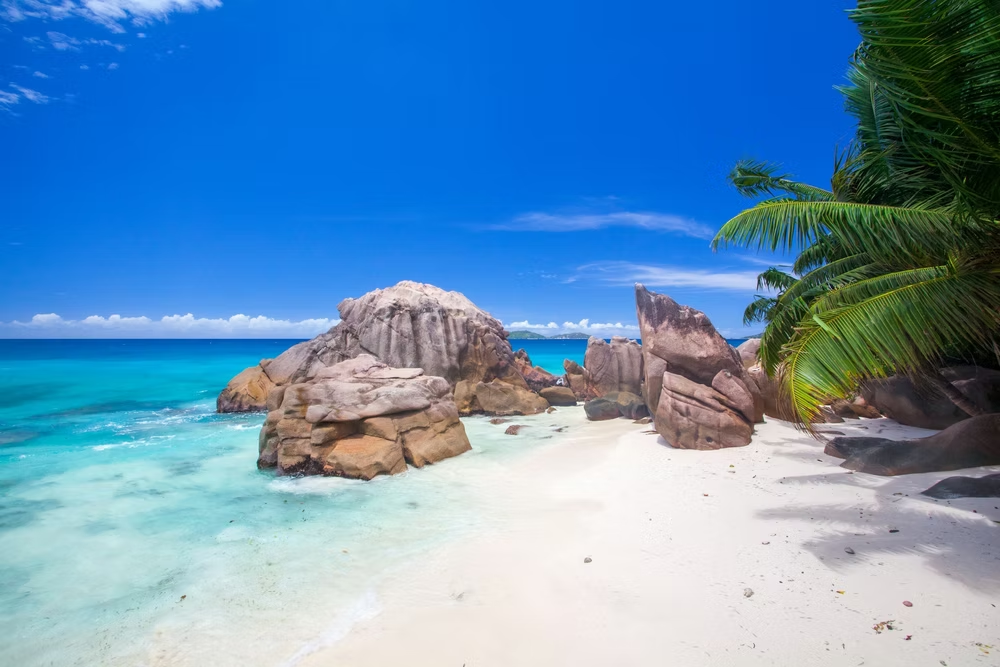
- Anse Source d'Argent on La Digue: a shallow beach of rounded granite boulders, reached only through L'Union Estate. Our guide suggests going early in the morning or late in the afternoon.
- Cycling La Digue, between the beaches and up to Nid d'Aigle, the island's highest point at 333 m.
- Giant tortoises on Curieuse, an island marine park off Praslin with hundreds of giant tortoises, a tortoise nursery and a mangrove boardwalk (check the tide before you go).
- Morne Seychellois National Park on Mahé: about 3,045 hectares of forested mountains with marked trails, including the short Copolia trail to a granite summit above Victoria (Rs100).
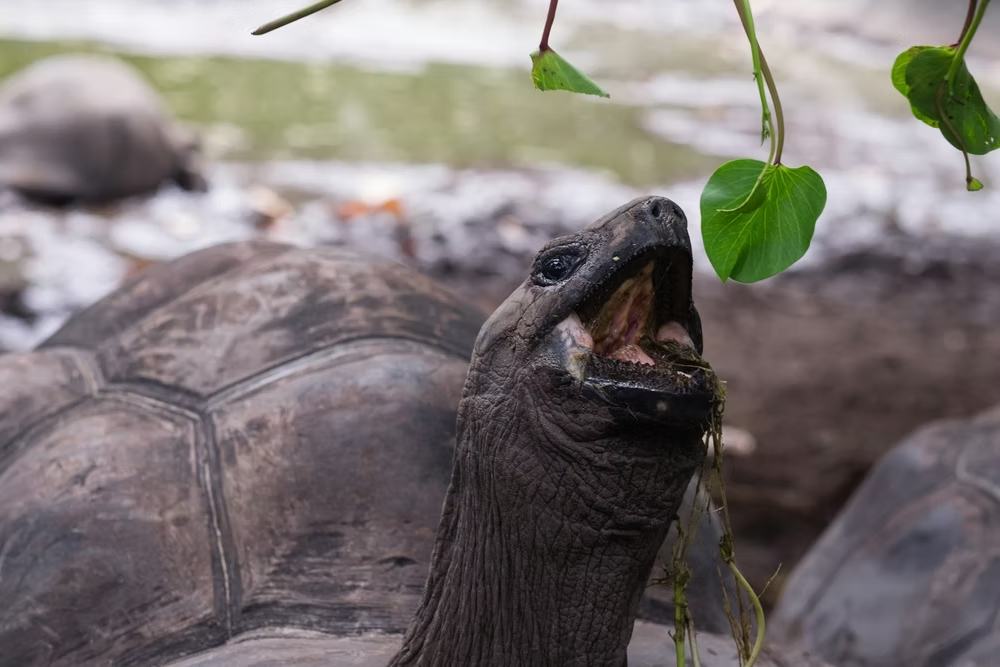
We don't have a Seychelles itinerary yet either: plan one in our trip planner, see the Seychelles guide for each island's beaches and seasons, and compare places to stay in the Seychelles.
Maldives: for pure relaxation
The Maldives suits travellers whose idea of a holiday is to stop moving. It is a chain of coral atolls with 1,192 islands, 187 of them inhabited. Most resorts take up an island of their own and arrange your transfer from Velana International Airport by speedboat, seaplane or domestic flight, so you unpack once and the days revolve around the reef and the lagoon. There is little to do on land beyond your island, which is the point for most people who go.
For more local life at a lower cost, guesthouses on inhabited islands such as Thoddoo in North Ari are the alternative. Local laws apply there: no alcohol, and modest dress away from the designated tourist beach.
When to go. Our guide's best months are December to March, the drier north-east monsoon (Iruvai); April and November are shoulder months. May is the wettest month, with about 278 mm of rain on average, and February the driest. There's a trade-off for snorkellers: Visit Maldives gives June to early October for manta rays at Hanifaru Bay, outside the best months for weather.
Getting there. Two airlines fly non-stop from Heathrow to Malé. British Airways flies daily this winter and three times a week in summer 2027, taking about 10¾ hours out and 11 to 12 hours back. Virgin Atlantic flies from 27 October 2026 to 20 April 2027 (daily from 1 December), taking about 10½ hours out and 11½ hours back. British visitors get a 30-day visa on arrival and must complete the online IMUGA traveller declaration within 96 hours before landing (FCDO entry requirements for the Maldives). The Green Tax is US$12 per person per day (US$6 at guesthouses and hotels with 50 rooms or fewer on inhabited islands).
Signature experiences in the Maldives
- Manta rays at Hanifaru Bay, Baa: snorkel above feeding mantas (scuba diving is no longer permitted) from June to early October; the protected-areas portal lists an MVR 310 per-person fee for resort visitors.
- Whale sharks in the South Ari Marine Protected Area, which the government's protected-areas portal says can be seen all year. Local islands such as Dhigurah are bases for trips.
- The Old Friday Mosque (Hukuru Miskiy) in Malé, built in 1658 from interlocking carved coral blocks. Cover shoulders, arms and legs when you visit.
- A local-island stay on Thoddoo, known for its farms; book the guesthouse before you travel.
- Surfing from Thulusdhoo in North Malé Atoll, close to the airport; Visit Maldives gives the season as mid-February to November.
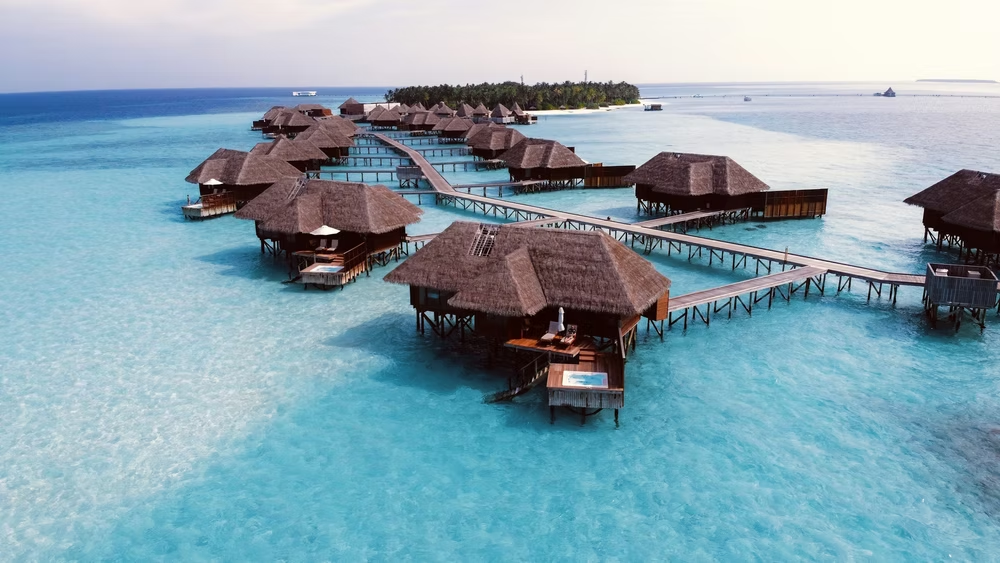
Our Maldives guide covers each atoll, its transfers and its stays. For a ready-made plan, see our short Maldives itinerary, and compare places to stay in the Maldives, from resort islands to local-island guesthouses. To check fares for all three from your nearest airport, compare flights.
Ad: if you book through our stays or flights search, we may earn a commission from the booking platform, at no extra cost to you. It never changes what we recommend.
What a week costs
Our trip-budget model, the one our trip planner uses, puts 7 nights at a mid-range level (3–4★, two sharing) at about £1,270 per person in Mauritius, £1,680 in the Seychelles and £3,530 in the Maldives, excluding international flights. We round them to the nearest £10.
The estimates include accommodation, meals, activities and local transport, plus a travel eSIM, cash-machine fees and a 10% contingency. They exclude international flights. The room rates behind them are median prices for 3★ and 4★ properties, taken on 15 November 2026: snapshots, not quotes. The Maldives figure is for a 3–4★ resort and includes the Green Tax; resort transfers vary, so check what yours charges before you book. In the same model, July and August dates add 30% to the accommodation line.
Which one is yours?
- Choose Mauritius if you want straightforward logistics and variety: a non-stop flight from Gatwick, visa-free entry for British visitors (up to 60 days), and an island you can explore by car between lagoon days. Its best months, June to October, cover the UK summer holidays and October half-term, and it has the lowest of our three estimates.
- Choose the Seychelles if scenery and wildlife matter more than convenience, and you're happy with one change of plane and a ferry or two. Its best months, April–May and October–November, fall either side of the UK summer.
- Choose the Maldives if you want to stop: a non-stop flight from Heathrow, one island and days organised around the water. It is the only one of the three whose best months, December to March, fall in the UK winter, and the most expensive of the three by our estimate.
How we worked out the figures
The recommended and shoulder months and rainfall come from the weather section of each destination guide; flight times and airlines from each guide's “Getting there from the UK” section, which cites the airline timetables; entry rules from each guide's header and FCDO travel advice; and costs from our trip-budget model, as above.
Figures last checked 15 November 2026; entry requirements re-checked with the FCDO on 17 November 2026. Timetables, fees and prices change, so check with the airline, operator or official source before you book.
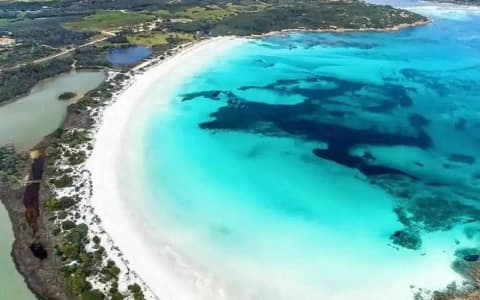
Cover photo: [Asad Photo Maldives](https://www.pexels.com/photo/angolhitheemu-island-maldives-12858514/) on Pexels.