Bosnia and Herzegovina — hero

Europe

Bosnia and Herzegovina

Mosques beside monasteries, Ottoman bazaars and untamed rivers: Bosnia and Herzegovina is a quieter, lower-cost Balkan alternative to the Dalmatian coast.

Currency
Bosnia And Herzegovina Convertible Mark (BAM)
Language
Bosnian, Croatian, Serbian
Best time
May, September and October. Mostar is usually hotter than the national figures in July and August, so go early and late.
Visa
UK citizens can stay up to 90 days in any 6 months without a visa (FCDO, updated 13 August 2026). Passport issued under 10 years ago and valid 90 days after departure; register with the police within 72 hours (hotels usually do). Not in Schengen, so EES and ETIAS do not apply here.

The FCDO has no advisory against travel to Bosnia and Herzegovina.

Still current at: 13 November 2026 Updated: 13 August 2026

Source: UK Foreign, Commonwealth & Development Office — the definitive source. Check it close to your travel dates.

Flight cancelled or delayed because of this? Your rights under UK261 / EU261 →

Why visit

Why Bosnia and Herzegovina

Mosques beside monasteries, Ottoman bazaars and untamed rivers: Bosnia and Herzegovina is a quieter, lower-cost Balkan alternative to the Dalmatian coast.

  • Mostar's Old Bridge
  • Sarajevo's Baščaršija and museums
  • Una National Park waterfalls
  • Sutjeska and the Perućica forest
  • Blagaj and the Buna spring
  • Kravice waterfalls
  • Coffee, ćevapi and Herzegovinian wine
  • Quieter, lower-cost Balkan city break
Read more

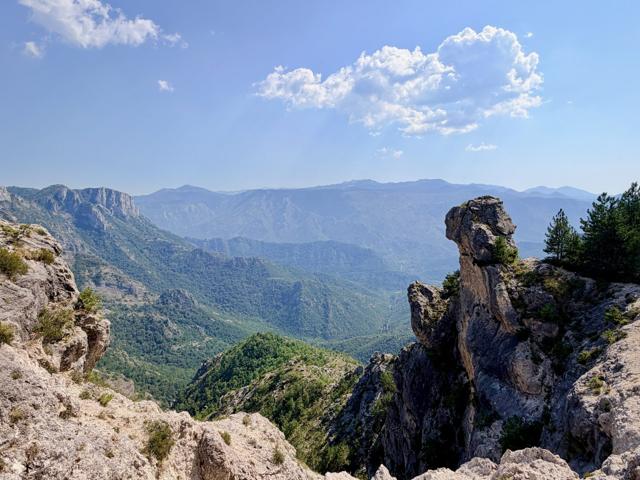
Bosnia and Herzegovina layers Ottoman, Habsburg and Yugoslav history in a landscape of rivers, waterfalls and big mountains, and it is far less visited than neighbouring Croatia. We see it as a quieter, lower-cost alternative to the Dubrovnik end of the Adriatic, with the trade-off that it asks for more planning: public transport is limited, some rural land is not yet cleared of mines and the recent war is still a living part of the story.

Plan it: start with our Mostar guide, then look at events, stays and flights for your dates.

Where to go

The regions of Bosnia and Herzegovina

Regions and cities

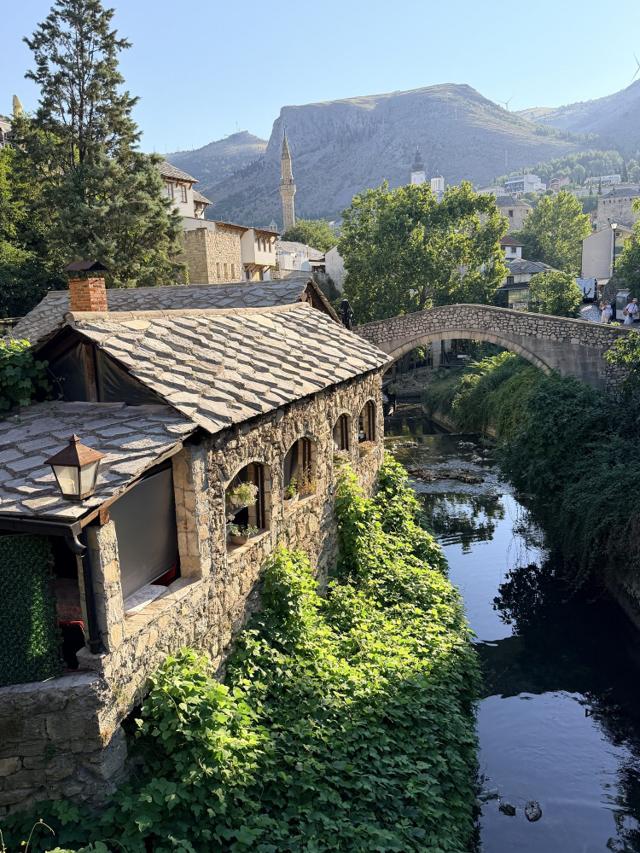
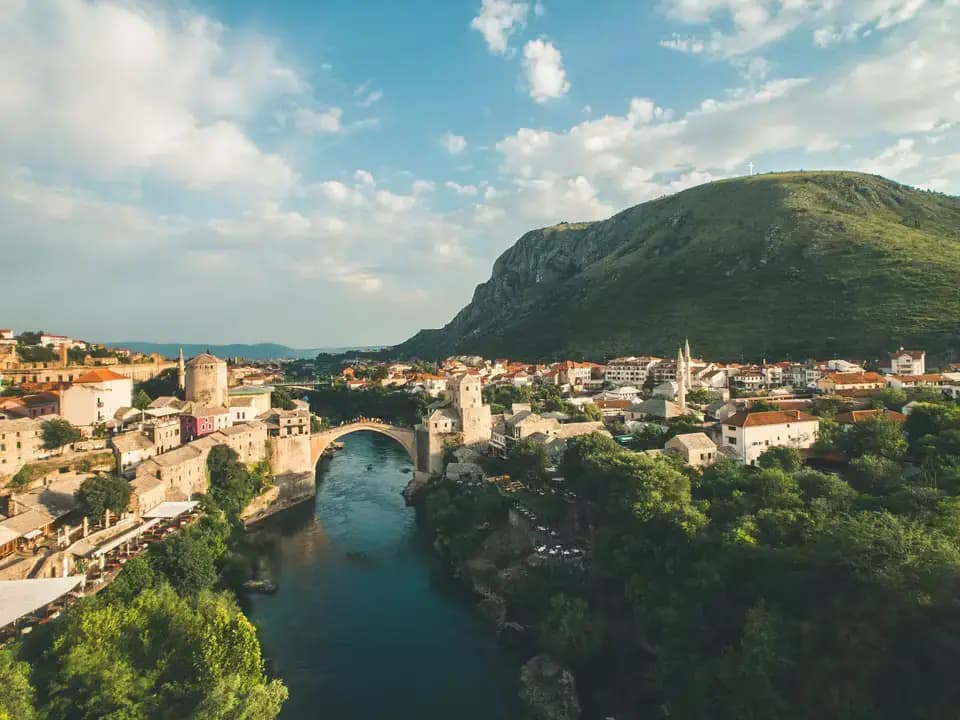
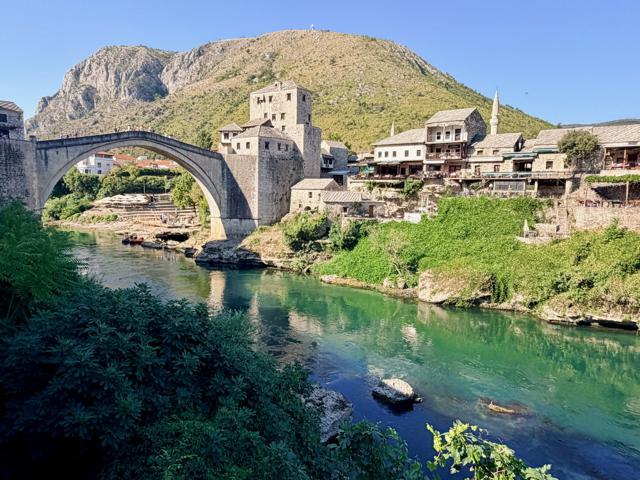
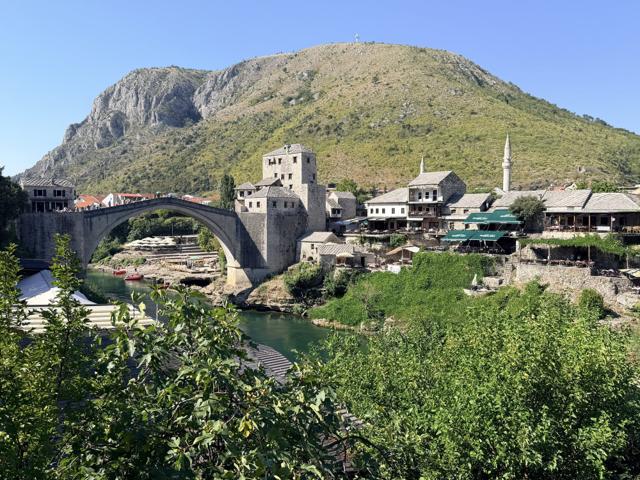
Sarajevo, the capital, is the cultural heart, with its Baščaršija bazaar, Ottoman mosques, Habsburg-era streets and museums. Mostar, in Herzegovina to the south, is known for its rebuilt Old Bridge over the Neretva, and nearby are the Blagaj tekke at the source of the Buna and waterfalls such as Kravice. In the north-west, Una National Park spreads over about 19,800 hectares around Bihać, with waterfalls and river valleys. In the south-east, Sutjeska National Park covers more than 17,000 hectares, including the Perućica primeval forest, the Maglić, Volujak and Zelengora mountains and eight glacial lakes.

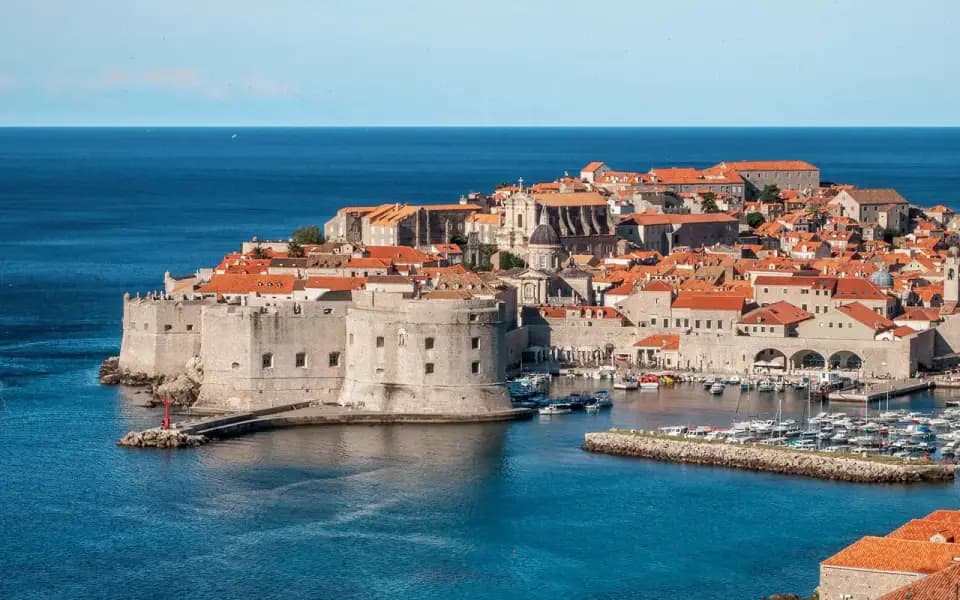
Swap it: Dubrovnik's walls for Mostar's Old Bridge and Sarajevo's bazaar. You get Ottoman streets, a coffee culture and a lower bill than we would expect on Croatia's best-known stretch, with far fewer crowds outside the day-trip hours. You give up the Adriatic coast, easy flights and ferries and the polish of a tourism machine, and you will plan longer drives. Mostar draws day-trippers, so we would stay a night.
A pillar, not a footnote

Eat your way through Bosnia and Herzegovina

The single reason many travellers come back — the food culture worth reshaping a trip around, and the dishes to seek out region by region.

Bosnia and Herzegovina

The Ottoman table at its most generous — grilled meat, flaky pastry and coffee brewed like a ceremony.

Follow the smoke through the old Ottoman bazaar of Sarajevo and you'll end up where everyone else does: at a grill house, in front of a plate of ćevapi — little hand-rolled beef sausages, ten to a portion, tucked steaming into a puff of somun bread with raw onion and a spoon of cream-soft kajmak. It's the most Bosnian thing you can eat, and half the country will tell you their town does it best.

The rest is the Ottoman kitchen at its most comforting: burek, a coiled rope of paper-thin pastry packed with meat and baked until bronzed; sarma, cabbage leaves rolled around rice and mince; bosanski lonac, a pot of meat and vegetables layered and cooked down for hours. End it the only proper way — a tiny copper džezva of thick Bosnian coffee, a cube of rahat lokum and no reason at all to hurry.

Dishes to seek out
  • ćevapi (grilled minced-meat fingers) in somun with kajmak
  • burek/sirnica (meat or cheese filo pastry)
  • bosanski lonac (slow-cooked meat & veg pot)
  • sarma (stuffed cabbage rolls)
Things to do

Nature, culture and the outdoors

Plan your trip

Curated Bosnia and Herzegovina itineraries

Browse all Bosnia and Herzegovina trips →
Guides

All our Bosnia and Herzegovina guides

Plan

Getting there, getting around and where to stay

Getting there from the UK

Sarajevo and Mostar both have international airports. Direct services from the UK are seasonal and change from year to year, so check each airline's own schedule; Mostar airport's own site is inviting bids for its international summer 2027 service. Many people fly to Dubrovnik, Split or Zagreb and travel on by road or bus, which adds a border check. The FCDO notes that EU border waits can be longer because of EES, and that the Gradiška crossing has moved to a new facility, so plan ahead and check local advice before crossing by car.

Getting around

A hire car gives most freedom, but the FCDO says your UK licence covers only your own vehicle or a car hired outside the country; hiring a car inside Bosnia and Herzegovina needs a 1968 international driving permit obtained before you travel. Third-party insurance is required. From November to April tyres must carry the M+S and snowflake marks and you must carry snow chains. Buses link the main cities, and the FCDO advises agreeing taxi fares in advance, since drivers at Sarajevo airport may quote fixed fares.

Where to stay

By area

  • Sarajevo, Baščaršija and the centre: best for first-time visitors who want to walk everywhere.
  • Mostar old town: atmospheric, but busiest at midday.
  • Blagaj and the Neretva valley: quieter, with a car.
  • Bihać or Kulen Vakuf: for Una National Park.
  • Foča and Tjentište: for Sutjeska and the Perućica forest.
When to go

Weather & timing in Bosnia and Herzegovina Right now RIGHT NOW 16°C rain

Best May, Sep–Oct · Shoulder April–May, September–October

Units

Next 7 days

Forecast · Met Office · Powered by Met Office data

Typical · climate data

Best time to visit

May, September and October. Mostar is usually hotter than the national figures in July and August, so go early and late.

Best for
  • Culture
  • Cuisine
  • Landscape
  • History
At a glance
Sunshine 8.9 hr/day
Rainfall 87 mm/mo
Wettest November · 151.4mm
Driest October · 59.2mm
Part of Central & Eastern Europe →
By season

Units

Spring (Mar–May)

What to expect — Daytime highs average about 16°C with overnight lows near 5°C, with plenty of rain.

What's best — Cool & crisp, then Shoulder season, then Warm. May is among the best months here (warm, sun and cloud).

Summer (Jun–Aug)

What to expect — Daytime highs average about 27°C with overnight lows near 15°C, with plenty of rain.

What's best — Warm. Jun, Jul and Aug are among the best months here (warm, sun and cloud).

Autumn (Sep–Nov)

What to expect — Daytime highs average about 18°C with overnight lows near 8°C, with plenty of rain.

What's best — Warm, then Mild, then Cool & crisp. Sep and Oct are among the best months here (warm, sun and cloud).

Winter (Dec–Feb)

What to expect — Daytime highs average about 8°C with overnight lows near -1°C — the wettest stretch of the year.

What's best — Cold.

Live forecast map · Windy.com · temperature with wind, °C and km/h

Heat, rain and the best months, region by region

Our national climate data shows July at about 28 °C and August at about 28 °C, but the low valleys of Herzegovina around Mostar are usually hotter than that average, so we would treat Mostar in July and August as hot and sightsee early and late. May (about 20 °C) is our first choice, followed by September (about 23 °C) and October (about 19 °C), when walking is comfortable and the crowds thin. November is the wettest month in our data. Winters are cold and snowy in the mountains, with highs of about 6 °C in January, and the FCDO notes that Sarajevo airport is prone to fog delays in winter.

Average daily high (°C) by month. Measured 2020–2024.
AreaJFMAMJJASOND
Sarajevo 6101115202528282319129

Colours as on the month tiles above. Bold: hot, 32°C or more (go early or late in the day). Outlined: very hot, 35°C or more. Wet: 150 mm of rain or more.

A little context

A little history

To read what you're looking at — the empires and eras that shaped Bosnia and Herzegovina's food, art and streets.

An Ottoman heartland gave Sarajevo and Mostar their bazaars, mosques and čevapi-and-coffee culture
Mostar's 1566 stone bridge, rebuilt after the war, is the country's emblem of East meeting West
the 1914 Sarajevo assassination lit the fuse of the First World War
the 1990s war and the Dayton line still shape a country shared by three peoples
Culture

Culture and etiquette

The country is home to Bosniak, Serb and Croat communities, and the war ended in 1995: listen more than you comment. Dress modestly in mosques, churches and monasteries, and take your shoes off where asked. Same-sex activity is legal but the FCDO reports discrimination and violence against LGBT+ people, and public displays of affection may attract unwelcome attention.

Food and drink

Bosnian food is hearty: ćevapi in flatbread, burek and other pies, stuffed vegetables and slow-cooked stews, with Turkish-style coffee served in a small copper pot and a sweet such as baklava or tufahija to follow. In Herzegovina you will also find wine from the Žilavka and Blatina grapes.

Practical

Entry, money and health

Entry and visas (British passport holders)

Entry: the FCDO says UK citizens on a full British passport can stay up to 90 days in any six-month period without a visa. Your passport must be issued less than 10 years before arrival and valid for at least 90 days after you plan to leave. Get it stamped on entry and exit, or the border police may fine you when you leave. You must register with the police within 72 hours; hotels and some hostels usually do it for you. Children travelling without both parents need a notarised letter of permission. Bosnia and Herzegovina is not in the Schengen area, so EES and ETIAS do not apply to arrivals here.

Money

Money: the currency is the convertible mark (KM), issued by the Central Bank of Bosnia and Herzegovina under a currency board arrangement; its website showed 1.95583 KM to the euro on 28 October 2026. We would expect meals, taxis and guesthouses to cost clearly less than on Croatia's coast, but we have not benchmarked them against an official price index.

Health

Health: neither the GHIC nor the EHIC covers Bosnia and Herzegovina, so you need travel insurance that covers local treatment, adventure activities and medical evacuation. The FCDO says medical facilities are limited outside Sarajevo and major towns and that pharmacies may not recognise UK prescriptions. Emergency numbers are 112 in general, 124 for an ambulance, 123 for the fire service and 122 for police.

UK government travel advice

At the time of writing, FCDO advice (updated 13 August 2026) does not advise against travel to Bosnia and Herzegovina. It does warn that landmines and other unexploded weapons remain from the 1992 to 1995 war: highly populated areas and major routes are largely clear, but rural areas are riskier, and it says not to step off roads and paved areas without an experienced guide. It adds that protests are normally peaceful but can disrupt traffic, that some locally controversial issues linked to the 1990s conflict carry a risk of violent incidents, and that anti-UK rhetoric from some Republika Srpska politicians could lead to wider anti-UK sentiment. Diving from the Mostar bridge is dangerous and has caused serious injuries and deaths. Check the latest advice before you book and again before you travel.

Sources · last checked 28 October 2026

We write this guide from official sources only: GOV.UK, national immigration portals, tourism boards, airports and operators, central banks and met services. Rules change, so check the linked pages before you book.

  • gov.uk: FCDO advice last updated (checked 2026-10-28)
  • cbbh.ba: Convertible mark under a currency board; 1.95583 KM per euro (checked 2026-10-28)
  • nationalpark-una.ba: Una NP about 19,800 ha, around Bihać; Una and Unac valleys; Plješevica, Grmeč, O (checked 2026-10-28)
  • npsutjeska.com: Sutjeska NP: more than 17,000 ha; Perućica primeval forest; Maglić, Volujak, Zel (checked 2026-10-28)
  • mostar-airport.ba: Mostar airport: call for bids for international summer 2027 service (checked 2026-10-28)
  • sarajevo-airport.ba: Sarajevo airport and Mostar airport exist (checked 2026-10-28)
  • fhmzbih.gov.ba: Monthly highs (Jul ~28, Aug ~28, May ~20, Sep ~23, Oct ~19, Jan ~6 °C; Nov wette (checked 2026-10-28)
Before you book

Know before you go

The practical back-matter — safety, drones and the essentials, in one place.

Safety

No FCDO advisory against travel FCDO advice →

Official UK Foreign, Commonwealth & Development Office guidance is the definitive source — check it close to your travel dates.

Drone rules (sub-250g)

  • Bosnia and Herzegovina
    Register any camera drone of 249 g or more with the BHDCA before flying (there is no sub-250g exemption, and the Certificate of Records can take up to 30 days), then fly in daylight within sight. Rural flying is fine once registered; keep clear of airports and borders. ⚠ The Sarajevo, Mostar and Banja Luka airport zones, plus military and border areas, are marked on the official BHDCA drone map; stay 300 m from borders and out of crowds. Rules checked: Jul 2026

National parks, protected sites and religious/heritage venues often have their own rules and permits — always check the specific site before you fly.

The essentials

Plug & voltage Type C/F · 230V
Daily budget Budget-friendly
Region Southern Europe