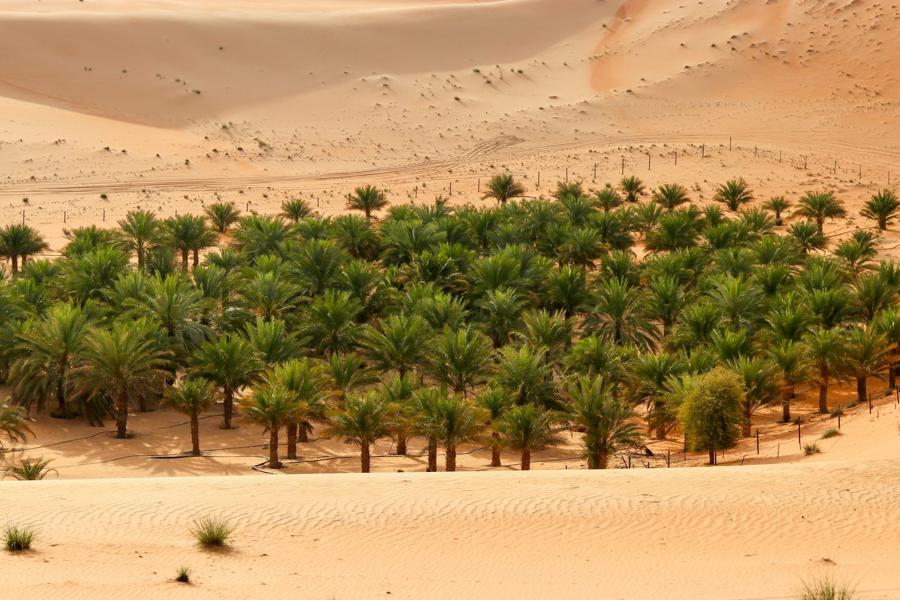
A grove of date palms in a hollow between tall golden sand dunes in the Liwa desert, Abu Dhabi

Asia

United Arab Emirates

Seven emirates, one easy winter-sun hop: Dubai's skyline and creek, Abu Dhabi's museums and mosque, and mountains and wadis to the east.

Currency
United Arab Emirates Dirham (AED)
Language
Arabic
Best time
November – March
Visa
Visa on arrival: up to 90 days in any 180 (passport valid 6 months)

The FCDO has no advisory against travel to United Arab Emirates.

Still current at: 13 November 2026 Updated: 27 October 2026

Source: UK Foreign, Commonwealth & Development Office — the definitive source. Check it close to your travel dates.

Flight cancelled or delayed because of this? Your rights under UK261 / EU261 →

Why visit

Why United Arab Emirates

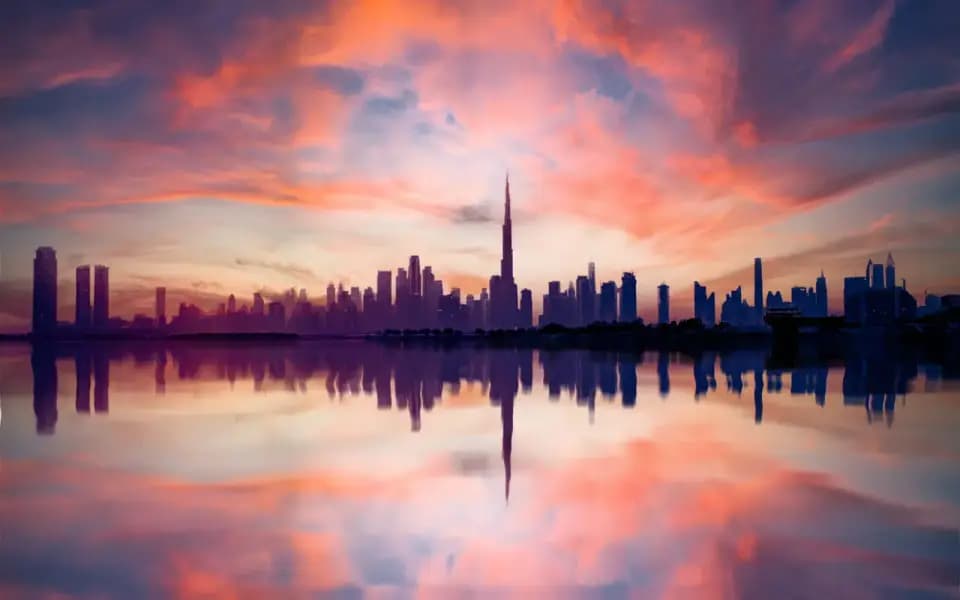
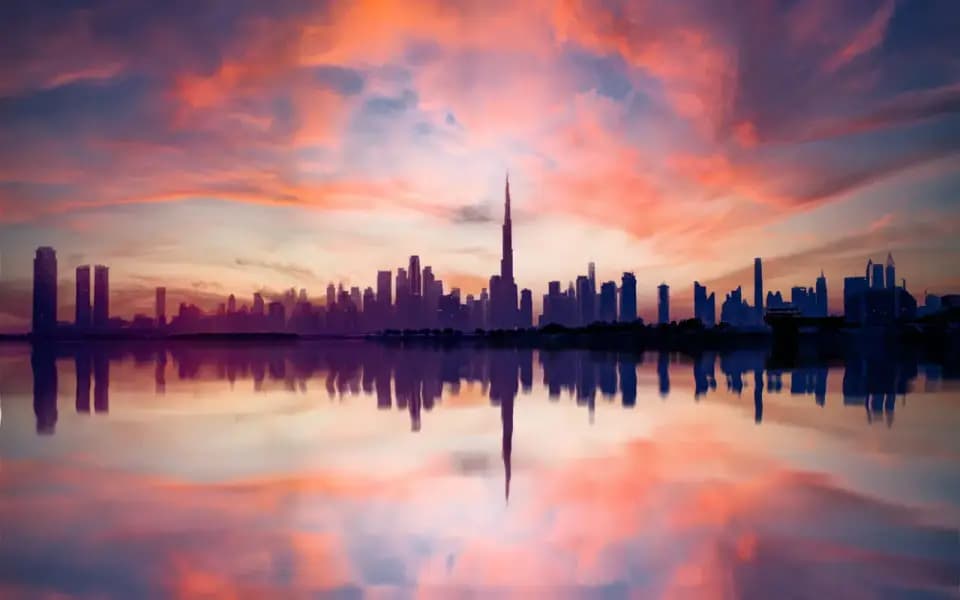
Start on Dubai Creek, where the wooden abras still cross from Bur Dubai to the Deira Old Souq for one dirham, cash. A short Metro ride later you're under the Burj Khalifa, all 828 metres of it. That swing, from wind-tower lanes to glass, is the UAE in a sentence.

  • Burj Khalifa summit
  • Desert dune safari
  • Dubai Aquarium
  • Sheikh Zayed Grand Mosque
Read more

An hour down the coast by the new Etihad Rail line, Abu Dhabi is calmer and more cultural: the white domes of Sheikh Zayed Grand Mosque, and the Louvre's latticed dome on Saadiyat Island. Inland, the oasis of Al Ain is a UNESCO site. On the east coast, Fujairah has the country's oldest mosque, and in Ras Al Khaimah, Jebel Jais is its highest peak.

Where to go

The regions of United Arab Emirates

Dubai

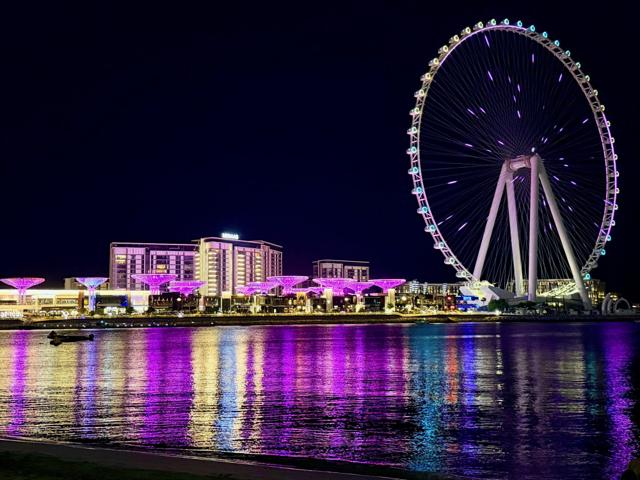
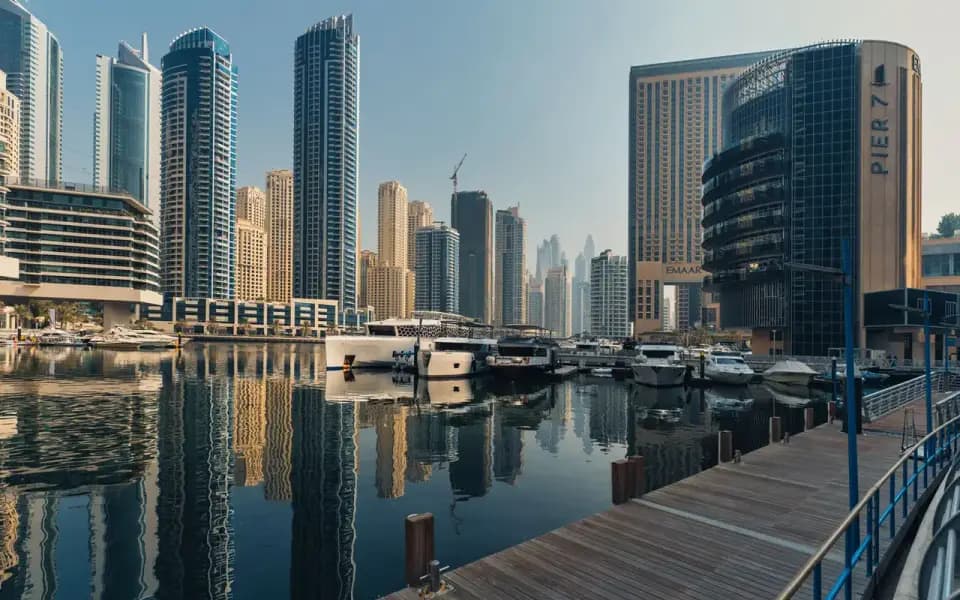
The easiest first visit: a metro, a tram and creek boats tie together the old quarter of Al Fahidi, the souks of Deira, the Burj Khalifa and the beaches at Dubai Marina and JBR. Hatta, Dubai's mountain enclave about 90 minutes away, adds kayaking on the dam and hiking trails.

Abu Dhabi

The capital and by far the largest emirate. Come for Sheikh Zayed Grand Mosque, the museums of the Saadiyat Cultural District and the theme parks of Yas Island, and stay for a slower pace than Dubai. The Corniche has a lifeguarded Blue Flag beach in the city centre.

Al Ain

A 90-minute drive inland from Abu Dhabi, Al Ain is the UAE's first UNESCO World Heritage Site: palm oases watered by ancient falaj channels, Bronze Age tombs at Hili and Jebel Hafit, and restored forts such as Qasr Al Muwaiji. A good day trip, better overnight.

Sharjah

Dubai's neighbour is the UAE's museum emirate, with the Sharjah Museum of Islamic Civilization in the old Souq Al Majarrah in the Heart of Sharjah. It is dry: drinking or possessing alcohol is illegal here. Inland, the Faya Palaeolandscape became the UAE's second UNESCO site in 2025.

Ras Al Khaimah

The northern emirate for mountains. Jebel Jais, at 1,934 metres the UAE's highest peak, has a cooler climate, hiking trails and the Jais Flight zipline, billed as the world's longest. Down on the coast, Jazirat Al Hamra is a ghost town of abandoned stone houses.

Fujairah

The only emirate wholly on the east coast, facing the Gulf of Oman with the Hajar Mountains behind. Al Bidya Mosque is the UAE's oldest, and there are forts at Fujairah and Bithnah. Etihad Rail passenger trains now link Fujairah with Dubai in about 70 minutes.

A pillar, not a footnote

Eat your way through United Arab Emirates

The single reason many travellers come back — the food culture worth reshaping a trip around, and the dishes to seek out region by region.

United Arab Emirates

Bedouin cooking from the desert and the dhow — spiced rice, dates and slow-cooked meat — under a world-feeding skyline.

The welcome comes before the meal: a handful of dates and a thin, cardamom-scented coffee called gahwa, poured from a long-spouted pot the moment you sit down. Emirati cooking was born of the desert and the pearl-diving dhow, built to travel and to share — and it still eats best from one big platter set on the floor, everyone reaching in with their right hand.

At its heart is machboos, spiced rice cooked with meat or fish and darkened with dried loomi limes, saffron and cardamom; alongside comes harees, wheat and lamb beaten to a silky porridge, and luqaimat, warm dumplings dripping with date syrup. Beyond the Emirati table the city sets every other one too — Iranian grills, Keralan fish curry, Lebanese mezze, Pakistani biryani, carried in by the people who built the place. Come hungry, eat with your hands, and finish where you started, on dates and coffee.

Dishes to seek out
  • machboos (spiced meat & rice)
  • harees (wheat & lamb porridge)
  • luqaimat (date-syrup dumplings)
  • balaleet (sweet saffron vermicelli)
  • shawarma
  • dates & gahwa (Arabic coffee)
Plan your trip

Curated United Arab Emirates itineraries

Browse all United Arab Emirates trips →
Guides

All our United Arab Emirates guides

Where to stay

Hand-checked places in United Arab Emirates

Browse all United Arab Emirates stays →
Plan

Getting there, getting around and where to stay

Getting there from the UK

Non-stop flights take about seven hours from the UK. Emirates flies to Dubai from more UK airports than anyone, and Etihad flies to Abu Dhabi. Regional conflict has disrupted Gulf flights in 2026: Virgin Atlantic has suspended Dubai for winter 2026, and British Airways has cut back, with its Abu Dhabi route due back in January 2027. Check your airline's own updates before booking. Dubai International (DXB) sits on the Red Line of the Metro, at Terminals 1 and 3. Zayed International (AUH) runs a 24-hour AUH Express coach to Ibn Battuta in Dubai.

  • Flight time: about 7 hours non-stop from London or Manchester
  • Non-stop to Dubai: Emirates from London Heathrow, Gatwick and Stansted, Manchester, Birmingham, Newcastle, Glasgow and Edinburgh; British Airways from London Heathrow (reduced schedule in 2026). Virgin Atlantic's Heathrow–Dubai service is suspended for winter 2026.
  • Non-stop to Abu Dhabi: Etihad from London Heathrow and Manchester; British Airways from Heathrow planned to restart on 10 January 2027
  • Main airports: Dubai International (DXB), Zayed International, Abu Dhabi (AUH); Dubai World Central – Al Maktoum International (DWC) handles a smaller number of flights

Flights to Dubai (DXB) →Flights to Abu Dhabi (AUH) →

Getting around

In Dubai, the Metro does most of the work: the Red Line runs from the airport down Sheikh Zayed Road past the Burj Khalifa to Expo 2020, and the Green Line loops through old Dubai and Deira. A tram serves Dubai Marina and JBR, and abras cross the creek. Pay with a nol card, which also works on buses, the tram and RTA boats. Abu Dhabi runs on buses (with a Hafilat card), taxis and the Abu Dhabi Taxi, Careem and Uber apps. Between the emirates, the new Etihad Rail passenger trains link Abu Dhabi, Dubai and Fujairah: Abu Dhabi to Dubai takes about an hour. Intercity bus E101 runs from Ibn Battuta to Abu Dhabi. To reach the mountains you'll need to hire a car or book a tour.

Where to stay

Downtown Dubai

The Burj Khalifa, the Dubai Mall and the free fountain shows on the lake, with Burj Khalifa/Dubai Mall Metro station on the Red Line. Big hotels, little character, and very convenient.

Good for: first visits, the Burj Khalifa and the fountains

Bur Dubai and Al Fahidi

The old town beside the creek: wind-tower houses in Al Fahidi, Al Seef's waterfront, abras to Deira. Hotels are older and cheaper, and the Green Line stops at Al Ghubaiba and Sharaf DG.

Good for: heritage, souks and lower prices

Dubai Marina and JBR

High-rise towers around a marina, with the public beach at JBR. The tram links to the Red Line at DMCC and Sobha Realty stations, and water taxis cross the marina.

Good for: beach holidays and evenings out

Saadiyat Island, Abu Dhabi

Beach resorts a short drive from the Louvre Abu Dhabi and the other museums of the Saadiyat Cultural District.

Good for: culture with a beach

Yas Island, Abu Dhabi

Hotels next to Ferrari World, Warner Bros. World, Yas Waterworld and SeaWorld, joined by the free Yas Express shuttle.

Good for: families and theme parks

When to go

Weather & timing in United Arab Emirates Right now RIGHT NOW 28°C partly cloudy

Best Dec–Feb · Shoulder Mar–Apr, Nov

Units

Next 7 days

Forecast · Met Office · Powered by Met Office data

Typical · climate data

Best time to visit

November – March

Best for
  • Culture
  • Cuisine
  • Landscape
  • History
At a glance
Sunshine 10.8 hr/day
Rainfall 7 mm/mo
Wettest January · 25.9mm
Driest June · 0mm
Part of Gulf →
By season

Units

Spring (Mar–May)

What to expect — Daytime highs average about 32°C with overnight lows near 24°C, and it stays largely dry.

What's best — Warm & dry, then Shoulder season, then Peak heat. Mar is among the best months here (warm & dry, sunny).

Summer (Jun–Aug)

What to expect — Daytime highs average about 40°C with overnight lows near 31°C, and it stays largely dry.

What's best — Peak heat.

Autumn (Sep–Nov)

What to expect — Daytime highs average about 35°C with overnight lows near 27°C, and it stays largely dry.

What's best — Peak heat, then Shoulder season, then Warm & dry. Nov is among the best months here (warm & dry, sunny).

Winter (Dec–Feb)

What to expect — Daytime highs average about 25°C with overnight lows near 19°C, and it stays largely dry.

What's best — Warm & dry, then Warm. Dec, Jan and Feb are among the best months here (warm & dry, sunny).

Live forecast map · Windy.com · temperature with wind, °C and km/h

Heat, rain and the best months, region by region

Go November to March.

This is winter sun at its best: warm days, cooler evenings and what little rain falls comes between November and March. Visit Abu Dhabi calls winter a great time to visit for its moderate temperatures, and it's when the outdoor events and desert trips run. Our rule is simple: skip May to September, when the average daily high reaches 41°C and summer humidity can hit 80–90%. April and October are shoulder months. In summer, life moves indoors.

Average daily high (°C) by month. Measured 2020–2024.
AreaJFMAMJJASOND
Abu Dhabi 242529323639404139353126

Colours as on the month tiles above. Bold: hot, 32°C or more (go early or late in the day). Outlined: very hot, 35°C or more. Wet: 150 mm of rain or more.

Heat: Skip May–Sep: average 41°C

A little context

A little history

To read what you're looking at — the empires and eras that shaped United Arab Emirates's food, art and streets.

Bedouin herders and Gulf pearl divers of the old Trucial Coast are the culture beneath the glass towers
six emirates agreed to form one country in 1971, and Ras Al Khaimah joined soon after
oil found only decades ago funded Dubai and Abu Dhabi's rise from desert to skyline within a single lifetime
a trading crossroads now mostly expatriate, so the food is Emirati, Levantine, Indian and Persian at once
Culture

Culture and etiquette

Dress

In malls and other public places, dress modestly: the FCDO advises women to cover shoulders and knees. Swimwear is for the beach and the pool only. Mosques set stricter rules. At Sheikh Zayed Grand Mosque women need loose, ankle-length clothes, long sleeves and a headscarf, and men should ideally cover their legs.

Ramadan

Ramadan moves about 11 days earlier each year, so check the dates for your trip. Non-Muslims don't fast, but in daylight hours you shouldn't eat, drink, smoke or chew gum in public, play loud music or dance. Some restaurants close or change their hours during the day. After sunset, the iftar meal makes for lively evenings.

Alcohol

You must be 21 to drink in Abu Dhabi, Dubai and most of the Northern Emirates, and you can drink in licensed hotels, bars and restaurants. In Sharjah drinking or possessing alcohol is illegal. Anywhere in the UAE, it's illegal to drink in public or be drunk in a public place, so plan your ride home.

Behaviour in public

Public displays of affection are frowned upon, and you can be arrested for kissing in public. Swearing and rude gestures are illegal, online too. Ask before you photograph people, and don't photograph government buildings or military sites. The UAE has zero tolerance for drugs, including cannabis.

The weekend

Since 1 January 2022 the federal government has worked a four-and-a-half-day week, with Saturday and Sunday off and a half day on Friday. Most emirates did the same. In Sharjah the official weekend is Friday to Sunday. Friday midday prayers still shape the day: at Sheikh Zayed Grand Mosque the prayer hall is closed to visitors from 12pm to 3pm.

Food and drink

Accept the coffee. Gahwa and dates are still how Emiratis welcome a guest, and in Abu Dhabi you can learn the ritual at Bait Al Gahwa, beside Qasr Al Hosn. In Dubai, the Sheikh Mohammed Centre for Cultural Understanding serves Emirati breakfasts on floor cushions in a courtyard in Al Fahidi, and its hosts are happy to take questions. Alcohol is served in licensed hotel restaurants and bars in Dubai and Abu Dhabi, but not in Sharjah. During Ramadan, the iftar meal at sunset is when restaurants come to life.

Formula 1

Grand Prix weekend in United Arab Emirates

Formula 1 season calendar: every race →

Local events

What's on in United Arab Emirates

See all United Arab Emirates events →
Practical

Entry, money and health

Entry and visas (British passport holders)

Visas for UK passport holders

British citizens get a free visit visa on arrival, valid for up to 90 days in any 180-day period. Your passport must be valid for at least six months from the day you arrive. Overstays are fined for every day over. You can extend through GDRFA in Dubai or the ICP elsewhere.

The GCC tourist visa

A single tourist visa covering all six Gulf states has been agreed, but it isn't open to applicants yet. The GCC Secretariat's latest statement says only that work continues towards a launch "in the near future", with no date. For now, UK visitors simply get the UAE's own visa on arrival.

Money

Money

The currency is the UAE dirham (AED). The Central Bank of the UAE sets it at 3.6725 dirhams to the US dollar, so its value against the pound moves with the dollar. Cards are widely accepted. Keep some cash for the creek abras, which are cash only.

Health

Heat

From May to September the average high is 41°C, with humid air on the coast. Plan outdoor sightseeing for early morning and evening, and carry water. For desert trips, the FCDO says use a properly equipped 4x4, travel with other vehicles, carry water and a phone, and tell someone your plans.

Medicines

Some UK prescription and over-the-counter medicines are controlled in the UAE. You must get approval from the UAE Ministry of Health before you travel, and the authorities say applications take about five working days. As a visitor you can bring up to three months' supply. Read the FCDO entry page, which links to the online form.

Beaches

Rip currents can occur on any beach. The FCDO advises swimming only at approved beaches with lifeguards and safety flags, such as the Blue Flag Corniche Beach in Abu Dhabi.

UK government travel advice

Before you go

The FCDO updated its UAE advice on 27 October 2026. It says the Middle East is unpredictable and the risk of sudden escalation is high. It does not advise against travel to the UAE, but expect possible flight cancellations and airspace closures at short notice. Check the FCDO page and your airline before you travel, sign up for FCDO alerts, and make sure your insurance covers disruption.

Sources · last checked 28 October 2026

We write this guide from official sources only: GOV.UK, national immigration portals, tourism boards, airports and operators, central banks and met services. Rules change, so check the linked pages before you book.

Before you book

Know before you go

The practical back-matter — safety, drones and the essentials, in one place.

Safety

No FCDO advisory against travel FCDO advice →

Official UK Foreign, Commonwealth & Development Office guidance is the definitive source — check it close to your travel dates.

Drone rules (sub-250g)

  • United Arab Emirates
    Hard for tourists to fly legally. The UAE treats every drone as an aircraft with no sub-250g exemption, so even a DJI Mini must be registered with the GCAA before flying; current guidance ties registration to residents' Emirates IDs, Dubai's recreational drone use is suspended until further notice, and flying is confined to designated 'green zones' in daylight. Penalties run into tens of thousands of dirhams. ⚠ No-fly zones cover roughly 5km around every airport plus military sites, government buildings, royal palaces and heritage areas — which is most of urban Dubai and Abu Dhabi; importing a drone over 250g can trigger a customs conformity check and confiscation. Rules checked: Jul 2026

National parks, protected sites and religious/heritage venues often have their own rules and permits — always check the specific site before you fly.

The essentials

Plug & voltage Type G · 230V
Daily budget Expensive
Region Western Asia