Founded by Greeks from Phocaea around 600 BC, which makes Marseille the oldest city in France by about five centuries. It has never much resembled the rest of the country: a working port with 111 quartiers, a population drawn from across the Mediterranean and North Africa, and a civic self-image built on not being Paris. The Calanques National Park — twenty kilometres of white limestone inlets — starts inside the city limits.
It is the most interesting city in France to walk around, and the least polished. The Vieux-Port still lands fish every morning, Le Panier is a genuine hillside old town rather than a preserved one, and the MuCEM gave the waterfront a piece of architecture worth crossing the country for. Then the Calanques, which are a national park you reach by bus.
Things to do
- The Calanques — Sormiou and Morgiou by road, En-Vau and Port-Pin on foot from Cassis. Or a boat from the Vieux-Port if the walking looks hot.
- MuCEM — A concrete lattice cube linked to Fort Saint-Jean by a footbridge, holding the civilisations of the Mediterranean.
- Notre-Dame de la Garde — 'La Bonne Mère' on the highest point, gold on top, with the whole city and the islands below.
- Le Panier on foot — The Vieille Charité almshouse at the top, then downhill through washing lines and street art to the port.
- Château d'If — Twenty minutes offshore — the island prison of The Count of Monte Cristo, and the Frioul islands beyond.
- The Corniche and Vallon des Auffes — Walk the seafront south at dusk and eat in the fishing cove under the viaduct.
Where to base yourself
The Marseille neighbourhoods worth knowing before you book.
- Coming soon Vieux-Port & Le Panier (2nd) The old harbour and the hill behind it — the oldest quarter in the city, now full of small studios and a lot of stairs.
- Coming soon La Joliette & Euroméditerranée (2nd) The rebuilt docks: MuCEM, the Villa Méditerranée, and Zaha Hadid's tower. Where the modern city happened.
- Coming soon Notre-Dame-du-Mont & Cours Julien (6th) Street art, record shops, bars and the best young restaurants. Loud until late.
- Coming soon Le Roucas Blanc & the Corniche (7th) The long seafront road south, the Vallon des Auffes fishing cove under a bridge, and the quiet expensive end.
- Coming soon Noailles (1st) The market quarter — Maghrebi, Comorian, Vietnamese, and the loudest, cheapest, best food in the city.
3 days in Marseille
- Day 1 Port, panier, port
Fish market on the Vieux-Port at 8am, then up into Le Panier for the Vieille Charité. Afternoon at MuCEM and Fort Saint-Jean. Sunset from Notre-Dame de la Garde, dinner at the Vallon des Auffes.
- Day 2 The Calanques
Bus 21 to Luminy and walk in to Sugiton and Morgiou, or take the boat from the port if it is over 30 °C. Swim. Back for a late dinner on Cours Julien.
- Day 3 Provence proper
Aix-en-Provence in 35 minutes, or Cassis for the harbour and the calanques from the other end, or Arles for the Roman arena and the Camargue behind it.
Day trips
Worth the train or the drive from Marseille.
-
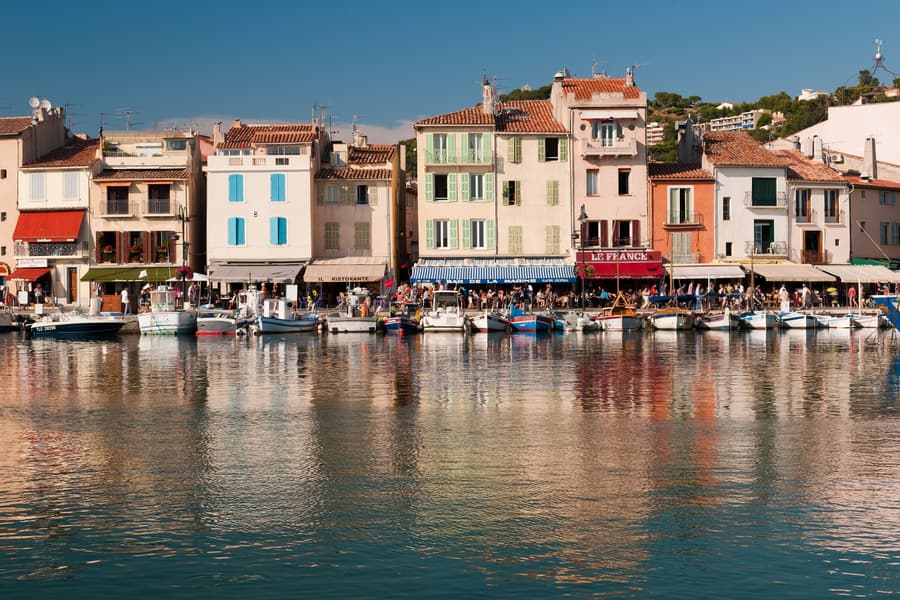 Cassis 40 min. A fishing port at the eastern end of the Calanques.
 -
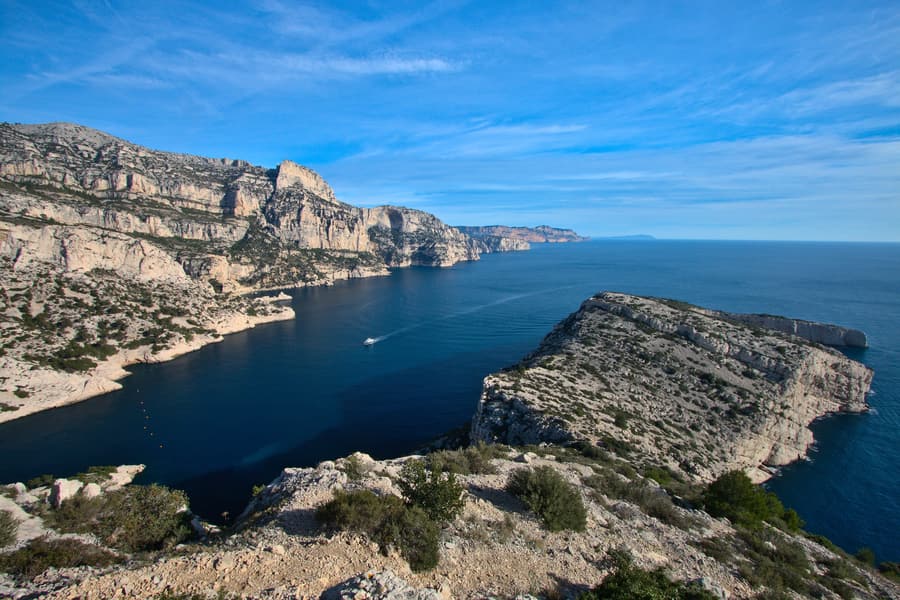 The Calanques The park itself — bus 21 to Luminy, or a boat from the Vieux-Port.
 -
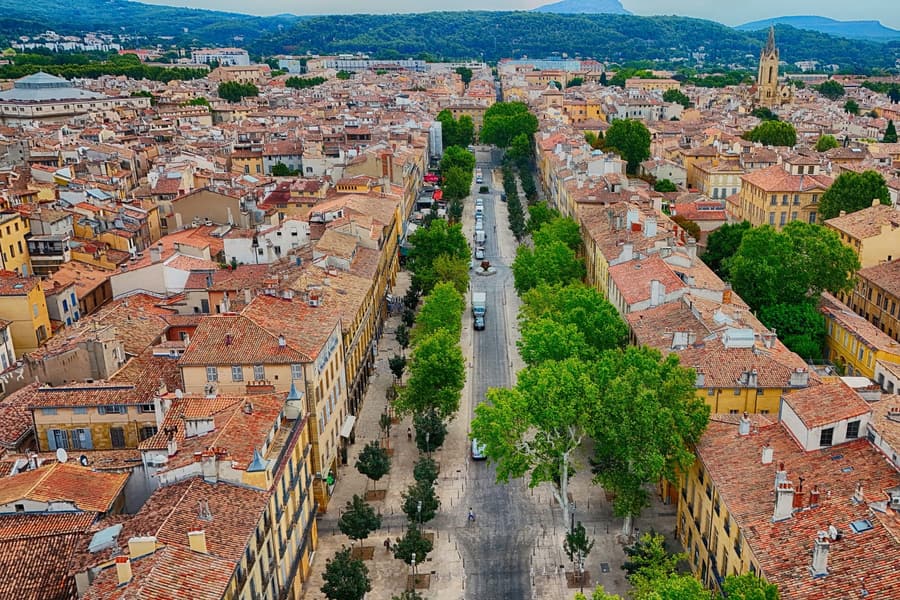 Aix-en-Provence 35 min. Plane trees, fountains, markets and Cézanne's mountain.
 -
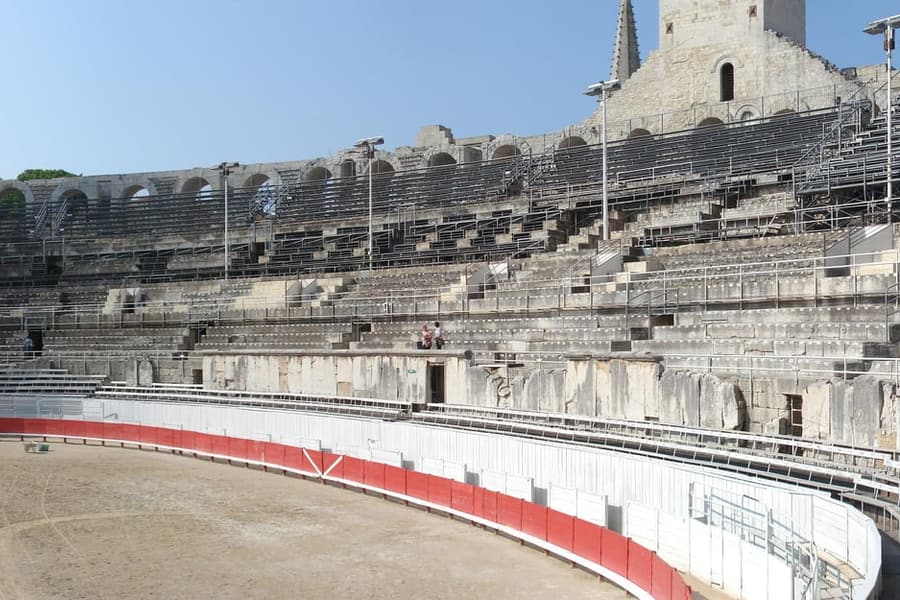 Arles An hour. The Roman arena, Van Gogh's light and the top of the Camargue.
 -
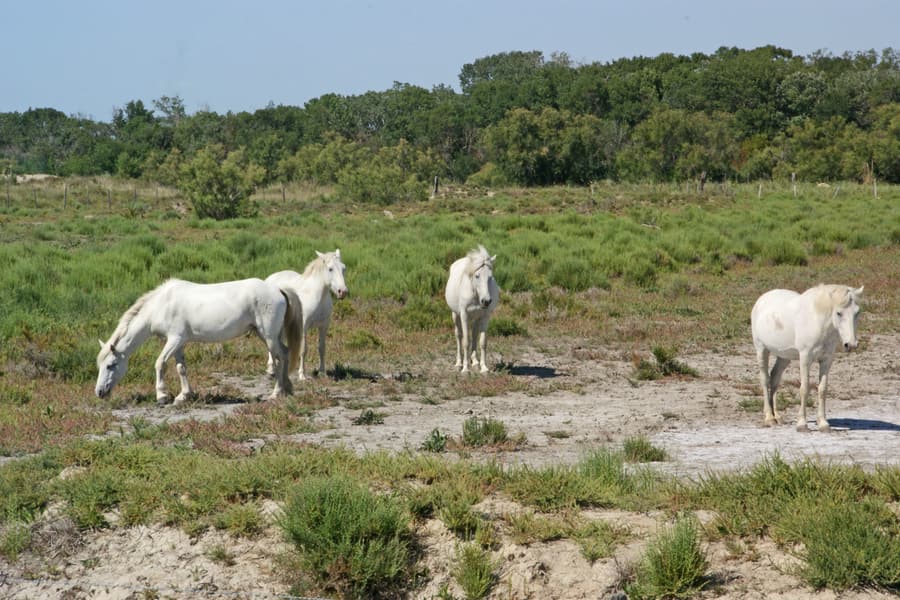 The Camargue White horses, black bulls and flamingos on the Rhône delta.
 -
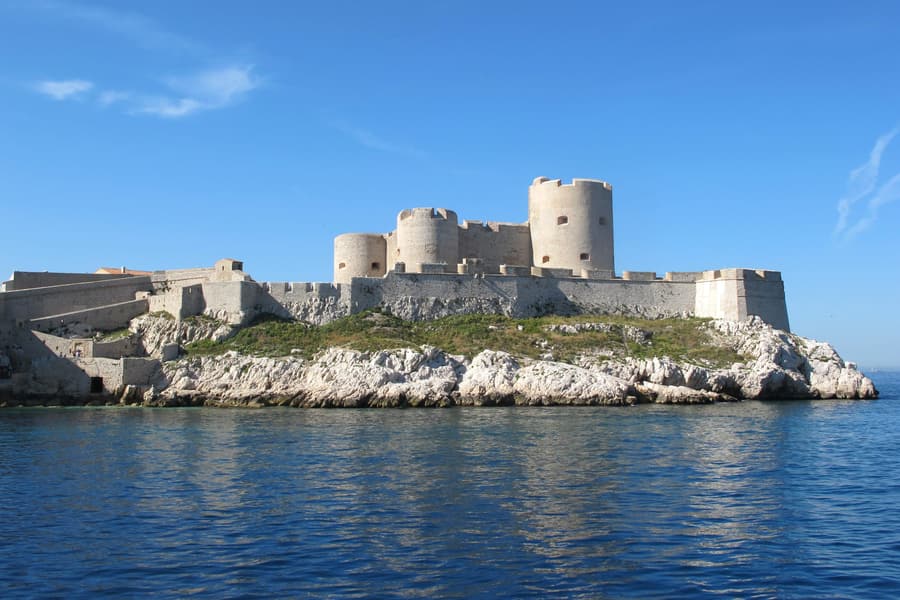 Château d'If Twenty minutes offshore, and the reason Monte Cristo is a household name.
 -
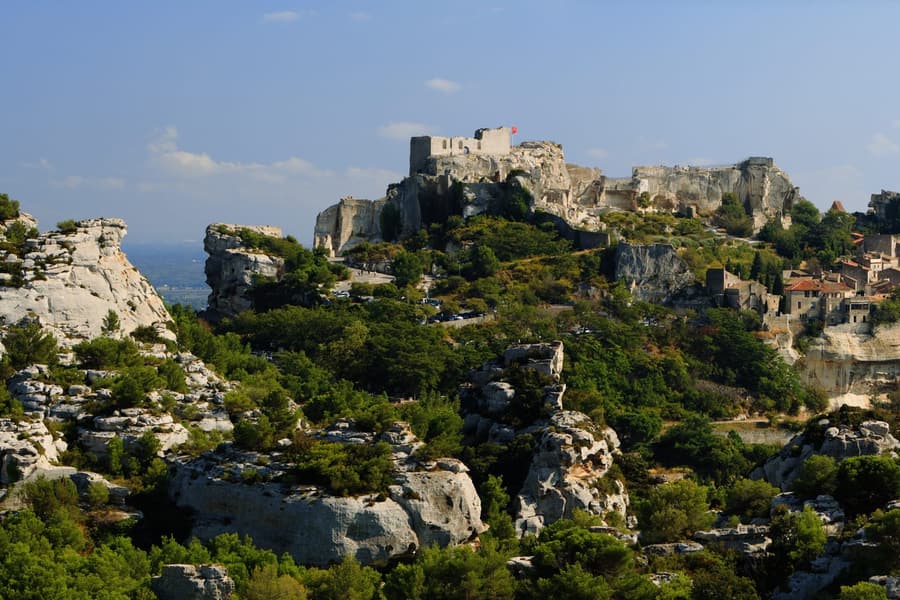 Les Baux-de-Provence A ruined fortress on a spur, over a quarry turned into a light show.
Practical
- Best time to go
- May–June and September–October: warm sea, open everything, and the Calanques still accessible. In high summer the park closes on high fire-risk days — check the daily map before you set out. The mistral can blow hard and cold in winter and spring.
- Getting there
- TGV Paris–Marseille Saint-Charles in 3h10, arriving on a monumental staircase above the city. Marseille Provence airport is 25 min by shuttle. Ferries to Corsica, Algeria and Tunisia leave from the Joliette terminal.
- Getting around
- Two metro lines, three trams and a lot of hills. The centre is walkable; the Calanques need bus 21 to Luminy or a boat from the Vieux-Port. The ferry boat across the old port costs almost nothing and has run since 1880.
- Eat & drink
- Bouillabaisse properly made is a two-service ritual and costs accordingly — the charter restaurants are the ones to trust. Otherwise: panisse, pieds paquets, sea urchins in winter, and the North African food around Noailles market, which is the best-value eating in the city.
- Know before you go
- Marseille's reputation is worse than the reality but not baseless: keep normal city awareness around Saint-Charles station and the northern quartiers at night. Bouillabaisse under €40 is not bouillabaisse. The Calanques have almost no shade and no water — carry both.
In the area
The tourism areas this town sits inside.
More of Provence-Alpes-Côte d'Azur
-
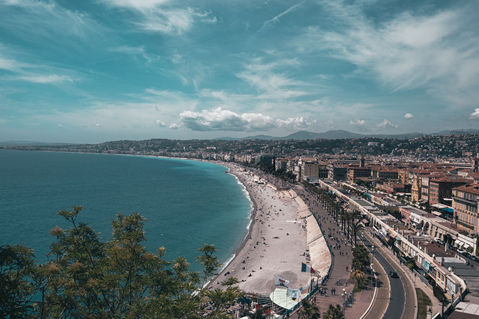 Nice The Baie des Anges, an Italian old town and the Promenade des Anglais
 -
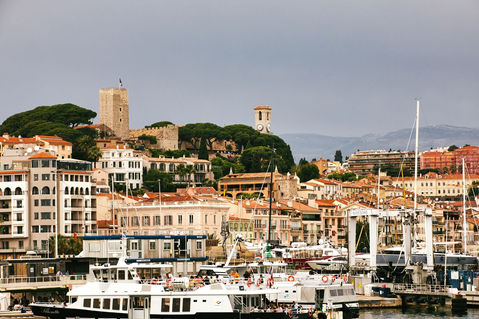 Cannes The Croisette, the festival, and two islands ten minutes offshore
 - Aix-en-Provence Plane trees, fountains, markets and Cézanne's mountain
-
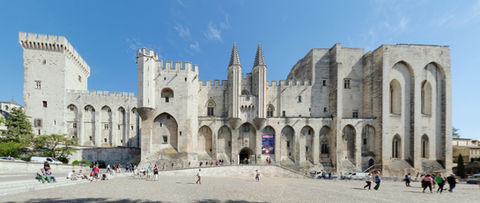 Avignon The largest Gothic palace in the world, and a bridge that stops halfway
 - Arles A Roman arena, Van Gogh's light, and the top of the Camargue
-
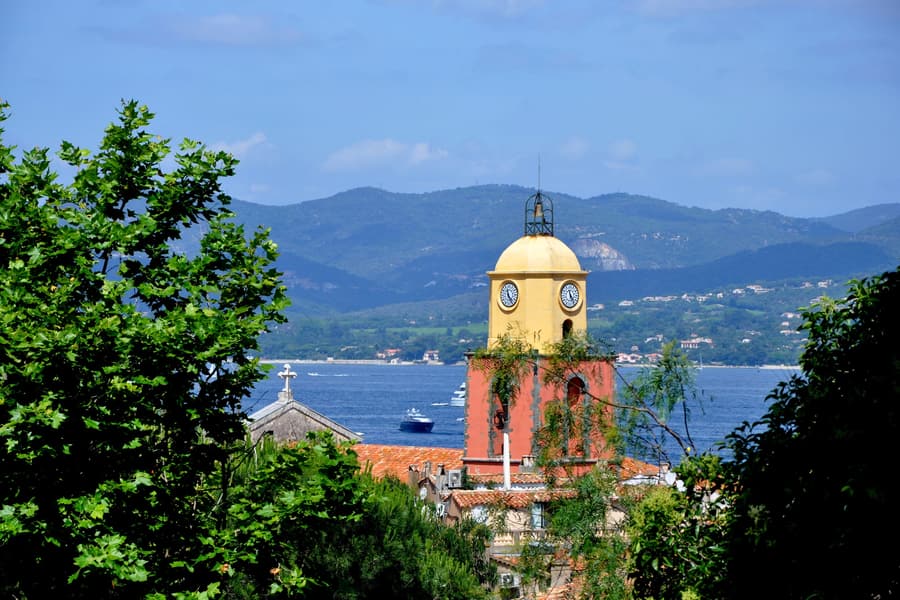 Saint-Tropez Still a fishing port under the yachts, with Pampelonne round the point
 -
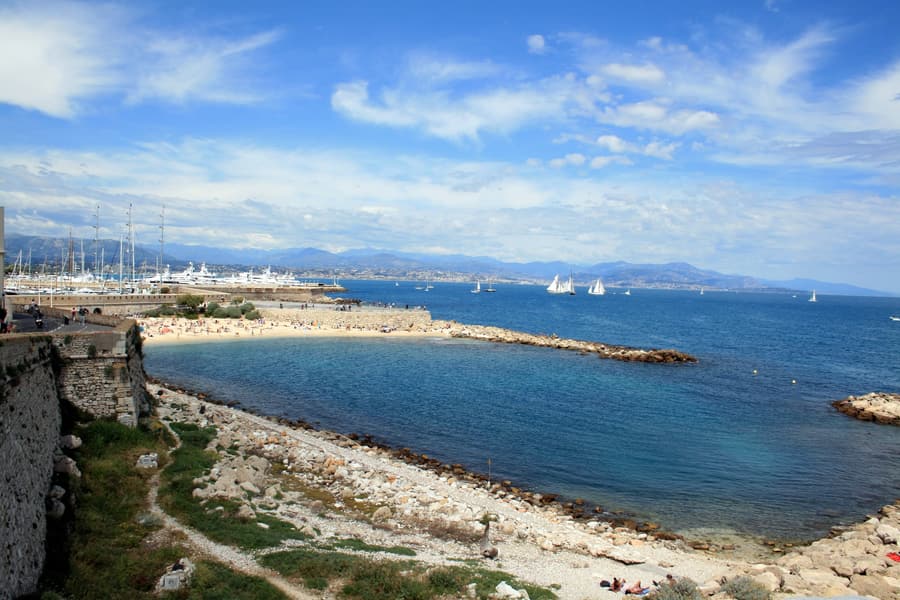 Antibes Ramparts, the biggest marina on the Med, and Picasso's castle studio
 -
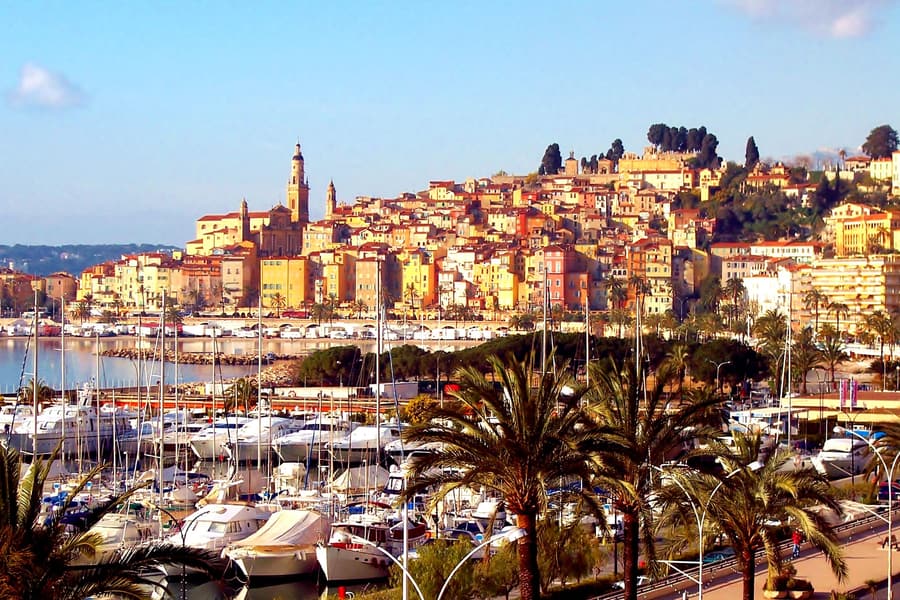 Menton A lemon microclimate on the Italian border, and Cocteau's museum
 -
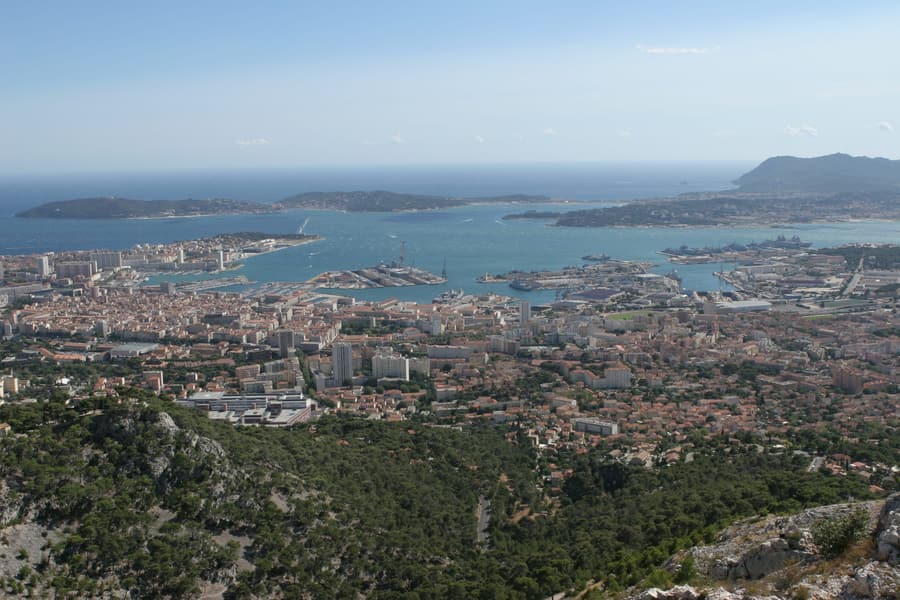 Toulon A naval harbour under Mont Faron, and the ferry to Porquerolles
 - Cassis A fishing port at the eastern end of the Calanques
-
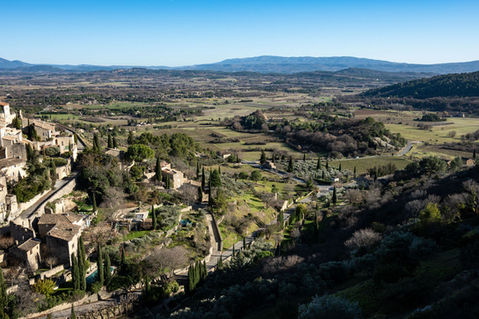
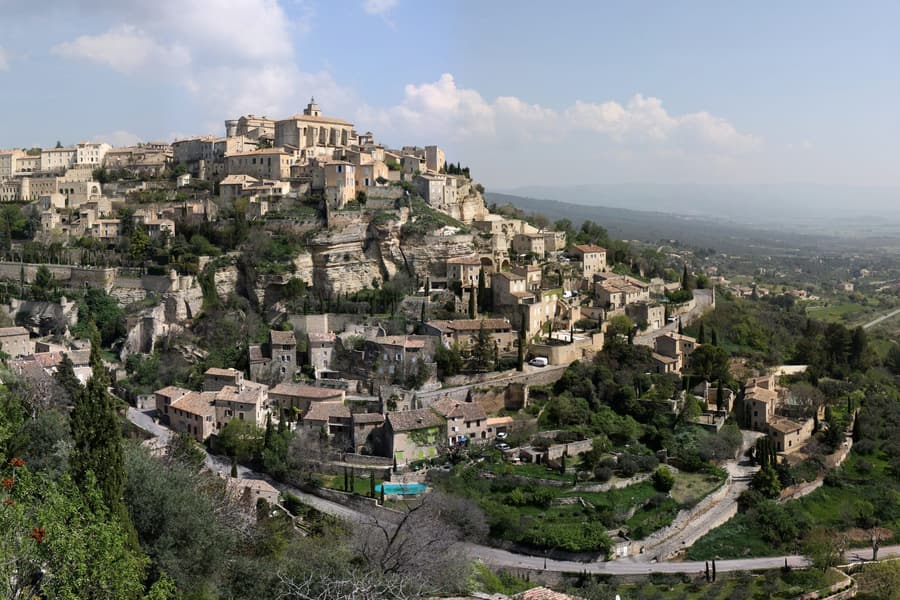 Gordes Dry stone stacked up a Luberon hillside, with Sénanque abbey below
 - Les Baux-de-Provence A ruined fortress on a limestone spur, over a quarry turned light show
-
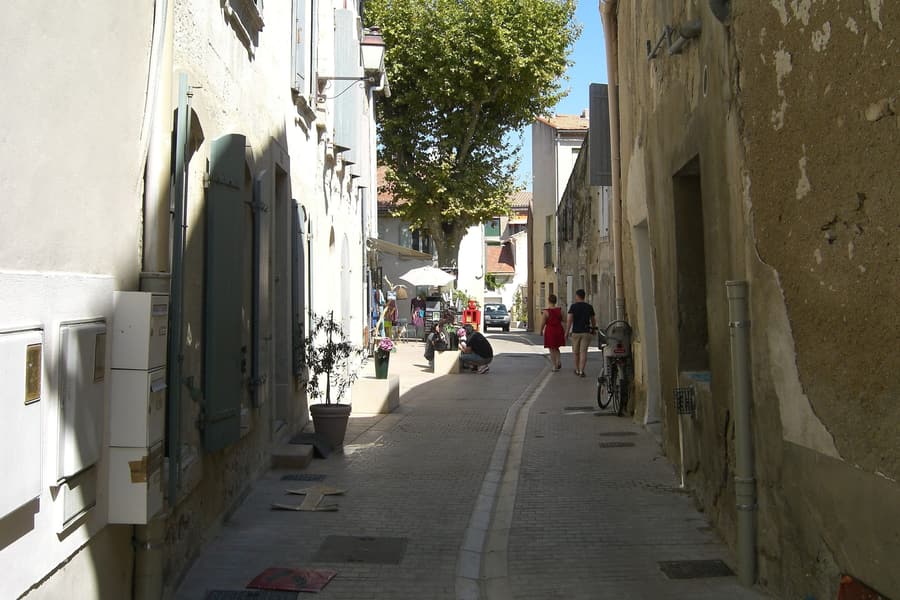 Saint-Rémy-de-Provence Van Gogh's asylum year, a Roman town, and the Alpilles behind
 -
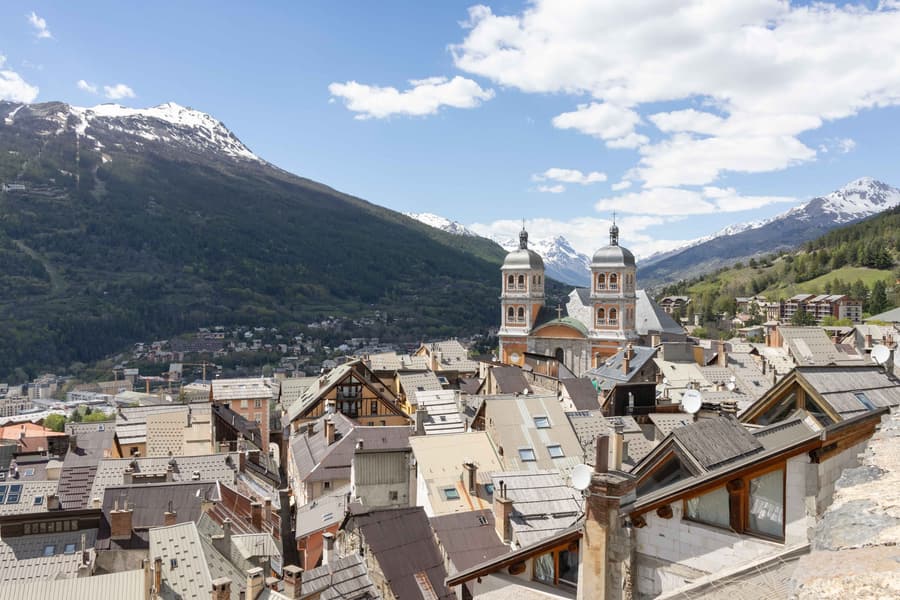 Briançon The highest town in France, walled by Vauban at 1,326 m