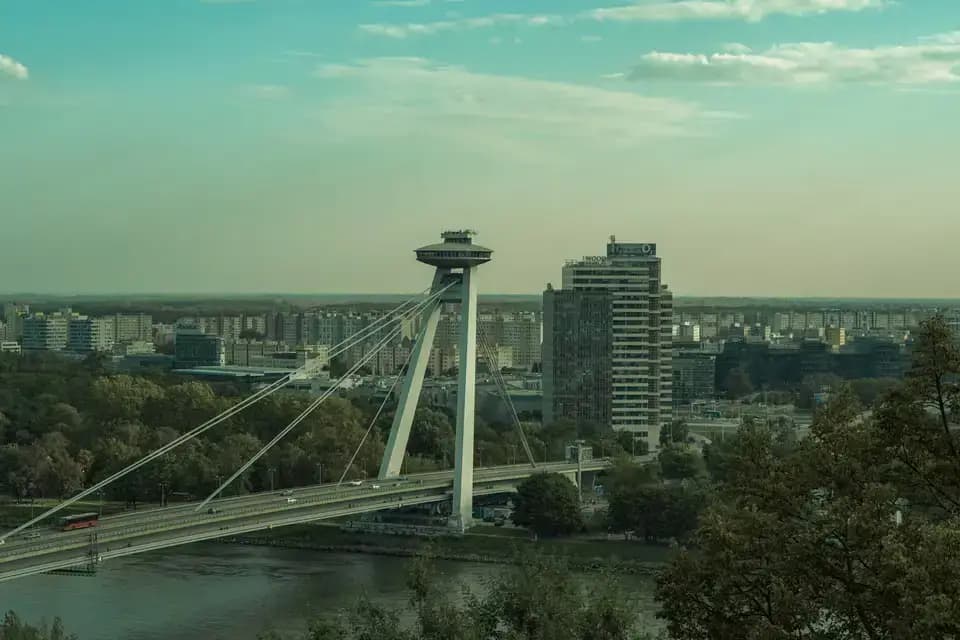
Slovakia — hero

Europe

Slovakia

Central Europe's alpine dark horse: the High Tatras, thermal spa towns and a walkable castle-crowned Bratislava, all a short hop from London.

Currency
Euro (EUR)
Language
Slovak
Best time
May to June and September for walking and city breaks; December to March for skiing in the Tatras
Visa
UK passport holders can visit without a visa for up to 90 days in any 180 (Schengen rules); passport issued under 10 years before arrival and valid 3 months after leaving. EES is fully operational (since 10 April 2026); ETIAS is not yet in operation and is scheduled by the EU for the last quarter of 2026.

The FCDO has no advisory against travel to Slovakia.

Still current at: 13 November 2026 Updated: 28 August 2026

Source: UK Foreign, Commonwealth & Development Office — the definitive source. Check it close to your travel dates.

Flight cancelled or delayed because of this? Your rights under UK261 / EU261 →

Why visit

Why Slovakia

Central Europe's alpine dark horse: the High Tatras, thermal spa towns and a walkable castle-crowned Bratislava, all a short hop from London.

  • High Tatras hiking and skiing
  • Bratislava Old Town and castle
  • Spiš Castle and Levoča
  • Slovak Karst show caves
  • UNESCO wooden churches
  • Košice's Gothic centre
  • Thermal spa towns
  • Banská Štiavnica
Read more

Slovakia is a small, green country of mountains, castles and thermal spas, tucked between Austria, Hungary, Poland and Czechia. It gets a fraction of the visitors that Austria, Italy or Prague receive, and it costs noticeably less. It suits walkers, families, spa lovers and anyone who likes a city break with a mountain week attached.

Plan it. See what is on in events, compare stays and look up flights. Start with our Bratislava guide, then add Banská Štiavnica.

Where to go

The regions of Slovakia

Regions and cities

The west is the capital, Bratislava, a compact Danube city with a hilltop castle, close enough to Vienna that the two make an easy pair. Central Slovakia holds the mining town of Banská Štiavnica, a UNESCO site, and the Low Tatras. The north is the High Tatras, the highest range in the Carpathians, with resorts around Štrbské Pleso and Tatranská Lomnica. The east is the Spiš region, home to Spiš Castle and Levoča (UNESCO), and Košice, the second city, with a lively Gothic centre. The Slovak Karst in the south has show caves that UNESCO lists, and the northeast has timber churches on its list too.

Swap it: the High Tatras for the Dolomites. You get granite peaks, lake-side trails, mountain huts and cable cars at calmer prices; you give up the scale of the Alps and the polished Italian resort infrastructure.

A pillar, not a footnote

Eat your way through Slovakia

The single reason many travellers come back — the food culture worth reshaping a trip around, and the dishes to seek out region by region.

Slovakia

Sheep-cheese dumplings from the shepherds' highlands, roast goose in the west, and a shot of Kofola to finish.

Order bryndzové halušky in a mountain salaš and you get the whole country in a bowl: soft potato dumplings buried under sharp, spreadable sheep's cheese with a scatter of smoky bacon, the taste of centuries of highland shepherding. This is upland peasant cooking that never apologises — potatoes, cabbage, pork and sheep dairy, hearty enough for a Tatras winter and proud of it.

Cross the country and the accent shifts. The west roasts goose with feather-light lokše potato flatbreads around Slovenský Grob each autumn; the central highlands stir bryndza into everything; Christmas Eve means a pot of sour, smoky kapustnica cabbage soup. An Austro-Hungarian thread runs through the schnitzels and bread dumplings, and a real wine country hides in the Small Carpathians. Pour a herby Kofola or a plum slivovica, and settle in for the long lunch.

Dishes to seek out
  • Bryndzové halušky (sheep-cheese potato dumplings)
  • Kapustnica (smoky sauerkraut soup)
  • Lokše (potato flatbreads)
  • Pečená hus (roast goose)
  • Sviečková (creamy braised beef)
  • Langoš (fried garlic flatbread)
  • Slivovica (plum brandy)
Things to do

Nature, culture and the outdoors

Plan your own trip to Slovakia
Guides

All our Slovakia guides

Plan

Getting there, getting around and where to stay

Getting there from the UK

Slovakia has airports at Bratislava and Košice, and Vienna is the wide-choice gateway for the west. We could not confirm direct routes on an airport page, so check the airlines' current schedules before you plan around a nonstop flight. Vienna and Bratislava are a short rail or bus hop apart, so flying to one and returning from the other works. Rail and bus operators cover the rest of the country; check timetables on the operators' own sites.

Getting around

Slovak Railways (ZSSK) connects the main cities, and local rail links serve the Tatras resorts. Buses reach places the trains do not. A car helps in the east and for the caves and castles, but the FCDO notes that many main roads have one lane each way, overtaking is risky, and motorways need a vignette sticker on the windscreen, sold at major border crossings and larger petrol stations. A UK photocard licence is valid for up to six months.

Where to stay

By area

In Bratislava, pick the Old Town for walking or the riverside for modern hotels. In the Tatras, Starý Smokovec, Štrbské Pleso and Tatranská Lomnica put you on the trails and lifts; Poprad is the cheaper town base. Levoča is the best base for Spiš Castle, and Košice suits the east. For spa stays, look at the thermal towns such as Piešťany or Bešeňová. Chalets and guesthouses in the mountains suit families and walkers; book early for July, August and the Christmas and ski weeks.

When to go

Weather & timing in Slovakia Right now RIGHT NOW 6°C rain

Best May, Jul, Sep · Shoulder April and October, with cooler days and some high trails still closed

Units

Next 7 days

Forecast · Met Office · Powered by Met Office data

Typical · climate data

Best time to visit

May to June and September for walking and city breaks; December to March for skiing in the Tatras

Best for
  • Culture
  • Cuisine
  • Landscape
  • History
At a glance
Sunshine 8.6 hr/day
Rainfall 54 mm/mo
Wettest September · 86mm
Driest March · 27.1mm
Part of Central & Eastern Europe →
By season

Units

Spring (Mar–May)

What to expect — Daytime highs average about 16°C with overnight lows near 6°C.

What's best — Cool & crisp, then Shoulder season, then Warm. May is among the best months here (warm, sun and cloud).

Summer (Jun–Aug)

What to expect — Daytime highs average about 27°C with overnight lows near 17°C.

What's best — Warm, then Warm & dry. Jun, Jul and Aug are among the best months here (warm, sun and cloud).

Autumn (Sep–Nov)

What to expect — Daytime highs average about 16°C with overnight lows near 8°C.

What's best — Warm, then Shoulder season, then Cold. Sep is among the best months here (warm, sun and cloud).

Winter (Dec–Feb)

What to expect — Daytime highs average about 6°C with overnight lows near 0°C.

What's best — Cold.

Live forecast map · Windy.com · temperature with wind, °C and km/h

Heat, rain and the best months, region by region

We would go in May, June or September. Highs run from about 20 °C in May to about 25 °C in June and 22 °C in September on our climate data, with long days, and the crowds stay thin. July is the warmest month at about 28 °C and August is close behind, so no month reaches our 32 °C heat flag, but afternoons in the cities can feel warm and storms roll through the mountains. Hikers should note that the national park authority for the Tatras closes many higher trails each year from 1 November to 31 May, so the high-mountain season is roughly June to October. Winter suits skiers and spa-goers: January highs average about 5 °C, and the Tatras resorts run lifts, with snow depth varying.

Average daily high (°C) by month. Measured 2020–2024.
AreaJFMAMJJASOND
Bratislava 59121520262827221795

Colours as on the month tiles above. Bold: hot, 32°C or more (go early or late in the day). Outlined: very hot, 35°C or more. Wet: 150 mm of rain or more.

A little context

A little history

To read what you're looking at — the empires and eras that shaped Slovakia's food, art and streets.

9th-century Great Moravia and the mission of Cyril and Methodius seeded Slavonic literacy and the founding myth of statehood
a thousand years inside the Kingdom of Hungary and the Habsburg Empire left the wine culture, town squares and goulash-and-schnitzel table
union with the Czechs as Czechoslovakia in 1918
the 1993 'Velvet Divorce' created the first fully sovereign Slovak state, followed by EU, Schengen and euro membership
Culture

Culture and etiquette

Slovaks are reserved at first and warm once you talk. Greet staff with dobrý deň and you will usually get a warmer reply. Villages keep strong folk and Catholic traditions, and Easter, Christmas markets and village festivals are good times to see them. The FCDO notes that same-sex civil partnerships are not recognised and that public displays of affection may attract attention.

Food and drink

Slovak food is hearty and affordable. Try bryndzové halušky, potato dumplings with sheep's cheese and bacon, kapustnica cabbage soup, lokše potato pancakes, roast goose in autumn, and fried langoš at markets. Wash it down with local lager, Tokaj and other Slovak wines, slivovica plum brandy or Kofola, the national cola. Mountain salaš huts serve sheep-cheese dishes. Vegetarian choice is improving in the cities but is thin in rural places, so ask before you order.

Practical

Entry, money and health

Entry and visas (British passport holders)

Entry. Slovakia is in the Schengen area. UK passport holders can stay up to 90 days in any 180 without a visa. The FCDO says your passport must have been issued less than 10 years before you arrive and be valid for at least three months after you leave. The EU Entry/Exit System is now in use: the EU says it became fully operational on 10 April 2026, so expect fingerprints and a photo at your first crossing, with no charge. ETIAS is not yet in operation; the EU says it is scheduled to start in the last quarter of 2026 and will announce the exact date later. Visitors must register with the Foreigners Police within three working days if not staying in a hotel, which does it for you.

Money

Money. Slovakia uses the euro. Cards are widely accepted, though small huts and rural places may want cash. A meal costs far less than in Vienna or London; we give no figures we could not check.

Health

Health. A GHIC covers necessary state healthcare, but it is not a substitute for travel insurance. Ticks are active from April to October. The ambulance number is 155 and 112 works across the EU. Brown bears live in the Tatras and Low Tatras: stay on marked trails and make noise.

UK government travel advice

The UK government's travel advice for Slovakia, last updated on 28 August 2026, does not advise against travel. It highlights petty crime, especially in Bratislava, drink spiking and overcharging around the Old Town, and the need to carry your passport as ID. It says the Mountain Rescue Service can charge up to 1,000 euros, so insure for rescue, and that terrorist attacks cannot be ruled out. Check the live page before you travel.

Sources · last checked 28 October 2026

We write this guide from official sources only: GOV.UK, national immigration portals, tourism boards, airports and operators, central banks and met services. Rules change, so check the linked pages before you book.

  • gov.uk: FCDO advice date, no advisory against travel (checked 2026-10-28)
  • home-affairs.ec.europa.eu: EES fully operational 10 April 2026 (checked 2026-10-28)
  • ecb.europa.eu: Euro since 1 Jan 2009 (checked 2026-10-28)
  • whc.unesco.org: UNESCO: Levoča/Spišský Hrad (1993, extended 2009), wooden churches (2008), Caves (checked 2026-10-28)
  • tanap.sk: Tatras higher trails closed 1 Nov to 31 May (items 1-40 on the park list) (checked 2026-10-28)
  • slovakia.travel: Skalnate pleso highest ski resort (2190 m), Strbske Pleso beginner-friendly (checked 2026-10-28)
  • snm.sk: Spiš Castle hours (checked 2026-10-28)
  • snm.sk: Bratislava Castle hours, fee, closure (checked 2026-10-28)
  • ssj.sk: Domica Cave (checked 2026-10-28)
  • shmu.sk: Slovak Hydrometeorological Institute exists and issues warnings (checked 2026-10-28)
Before you book

Know before you go

The practical back-matter — safety, drones and the essentials, in one place.

Safety

No FCDO advisory against travel FCDO advice →

Official UK Foreign, Commonwealth & Development Office guidance is the definitive source — check it close to your travel dates.

Drone rules (sub-250g)

  • Slovakia
    A sub-250g camera drone is legal, but because it carries a camera you must first register as a UAS operator in an EU/EASA state (a UK registration is not valid post-Brexit), then fly Open-category below 120m in sight. ⚠ The High Tatras and other national parks, Bratislava city centre, military sites and airport zones are geo-restricted — check the official geo-zone map (letectvo.nsat.sk) before flying near any scenic spot. Rules checked: Jul 2026

National parks, protected sites and religious/heritage venues often have their own rules and permits — always check the specific site before you fly.

The essentials

Plug & voltage Type C/E · 230V
Daily budget Budget-friendly
Region Eastern Europe