Australia — hero

Oceania

Australia

Reef, rainforest, outback and big coastal cities on a continent-sized map, which we plan state by state, with First Nations culture throughout.

Currency
Australian Dollar (AUD)
Language
English
Best time
September – November and March – May for the south and east; May – September for the tropical north and the Red Centre
Visa
Visa needed. British citizens can usually get a free eVisitor (subclass 651) online, or an ETA (subclass 601) through the official Australian ETA app (service fee). Apply only via immi.homeaffairs.gov.au or the official app.

The FCDO has no advisory against travel to Australia.

Still current at: 13 November 2026 Updated: 19 March 2026

Source: UK Foreign, Commonwealth & Development Office — the definitive source. Check it close to your travel dates.

Flight cancelled or delayed because of this? Your rights under UK261 / EU261 →

Why visit

Why Australia

Reef, rainforest, outback and big coastal cities on a continent-sized map, which we plan state by state, with First Nations culture throughout.

  • Sydney Harbour & the Blue Mountains
  • Great Ocean Road
  • Great Barrier Reef from Cairns or the Whitsundays
  • Uluṟu & the Red Centre in the cool months
  • Kakadu & the Top End in the dry season
  • Tasmania's walking country
  • Barossa & Margaret River wine
  • Aboriginal-guided tours
Read more

Australia has six states, two mainland territories and a scatter of island territories, with long distances between them. That shapes every trip. A first visit works best when we pick two or three parts of the country and give each one time, rather than trying to see it all. The map above lets us browse it by state, by type of place and by experience; this guide covers how to fit the pieces together.

Where to go

The regions of Australia

Choosing your states

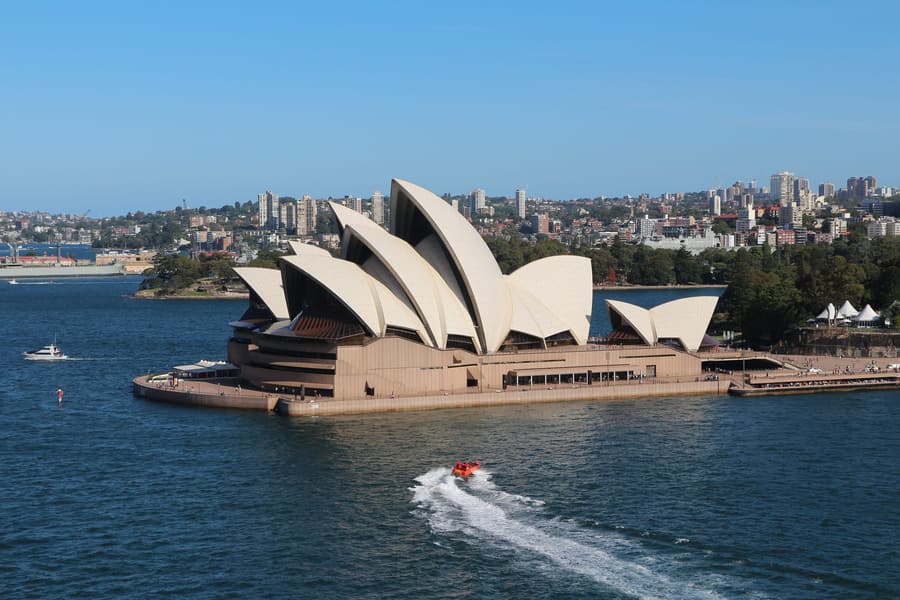
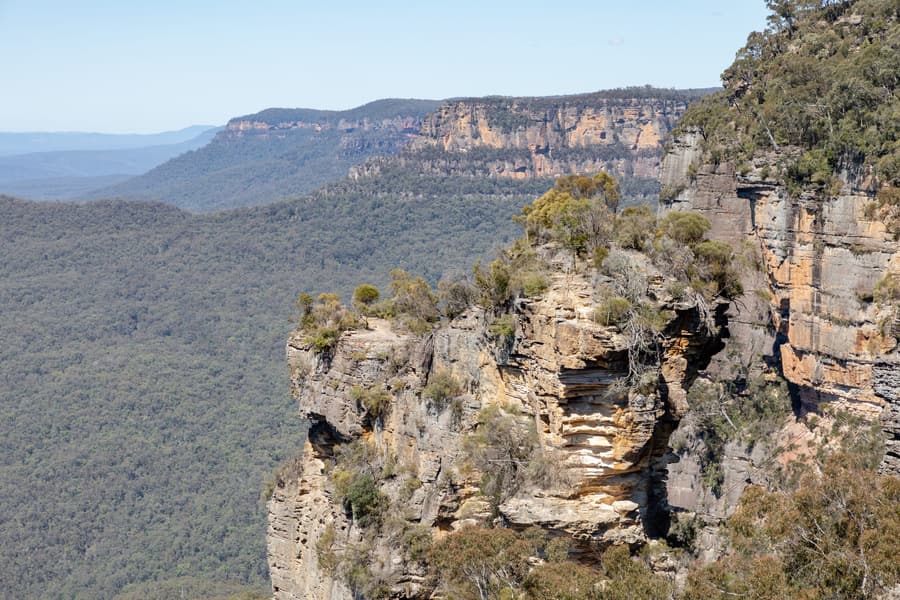
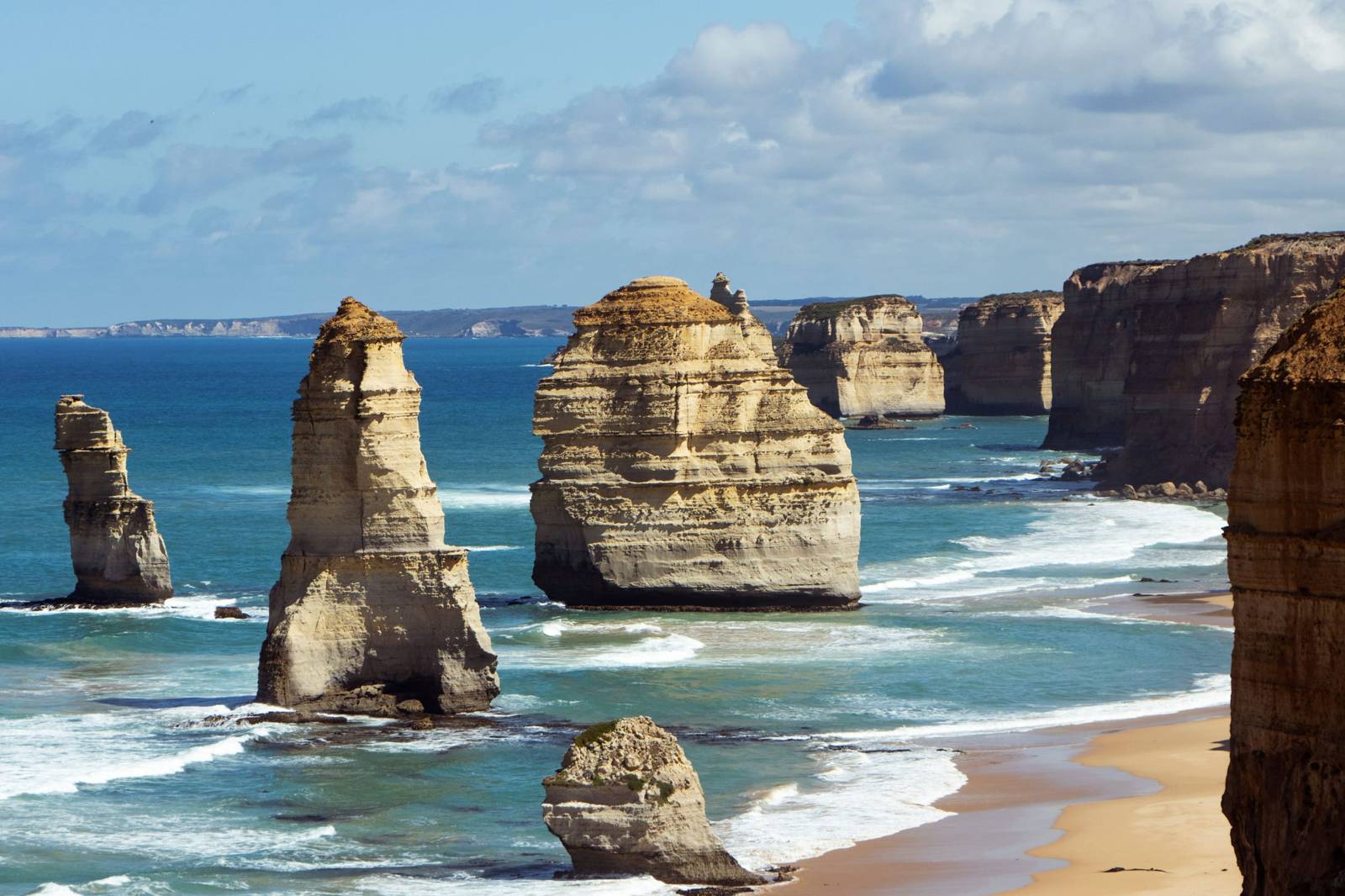
Most first trips combine a city with something wild nearby. New South Wales pairs Sydney with a day trip to the Blue Mountains. Victoria pairs Melbourne with the Great Ocean Road and the Yarra Valley. In Queensland the reef is reached from Cairns or the Whitsundays, with Brisbane and the Gold Coast further south.

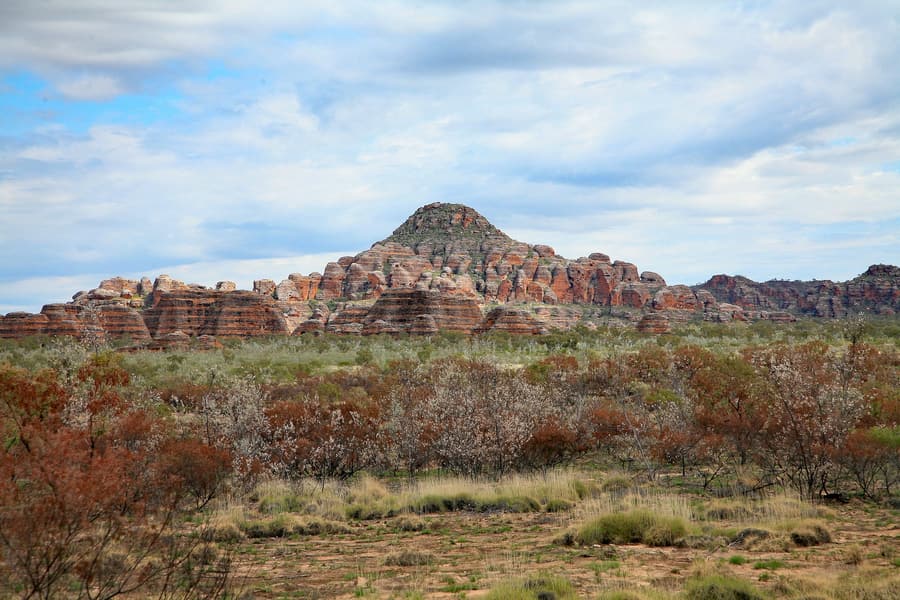
The Northern Territory holds the Red Centre around Alice Springs and Uluṟu, and the tropical Top End around Darwin and Kakadu. Western Australia runs from Perth and Margaret River up to Broome and the Kimberley. South Australia is wine country around Adelaide, Tasmania is walking country beyond Hobart, and Canberra in the ACT has the national museums. The external territories (Christmas Island, Cocos (Keeling) and Norfolk Island) are trips of their own.
A pillar, not a footnote

Eat your way through Australia

The single reason many travellers come back — the food culture worth reshaping a trip around, and the dishes to seek out region by region.

Australia

A coffee-obsessed, sea-fed nation of immigrants — with kangaroo on the barbecue and smashed avo at brunch.

Order a flat white in Melbourne and you’ll grasp quickly that Australia takes its coffee more seriously than almost anywhere, and its brunch nearly as much — smashed avocado on toast is less a dish here than a national habit. This is a country built by immigrants, and the tables show it: a Vietnamese roll for lunch, yum cha on Sunday, a Greek bakery and a Lebanese grill on the same street, most of it eaten outdoors in a climate made for it.

The land sets the rest of the menu. Sear kangaroo over the barbecue and it eats like lean, gamey beef; further north, crocodile turns up in burgers and emu in pies. Native ingredients — macadamias, tart bush berries, peppery native seasonings — have crept out of Aboriginal kitchens and into fine dining, where ‘Mod Oz’ cooking marries Asian flavours to Western technique. And with all that coastline, the surest bet is the seafood, barely off the boat and cooked with the sun on your back.

Dishes to seek out
  • smashed avo toast
  • kangaroo (barbecued native game)
  • Modern Australian (Mod Oz) fusion
  • crocodile & emu (novelty bush meats)
  • macadamias & bush tucker
  • flat white coffee
  • Barossa & Margaret River wines
Explore

Explore Australia by state

Browse Australia three ways — by state and territory, by the kind of place (reef, parks and Outback, islands and beaches, wine country, culture, cities) or by experience. Pick a state to frame the map and filter the pins.

Browse by state & territory

Tap a state to frame the map, shade it and filter the pins — tap again or “All of Australia” to reset.

Browse by type

Filter the map pins by kind of place.

© OpenFreeMap · OSM · terrain Mapterhorn

States & territories

Australia.com's own top-level structure — every state and territory, plus the external territories.

Ways to travel

The australia.com experience themes — curated cuts across the whole map.

Photography

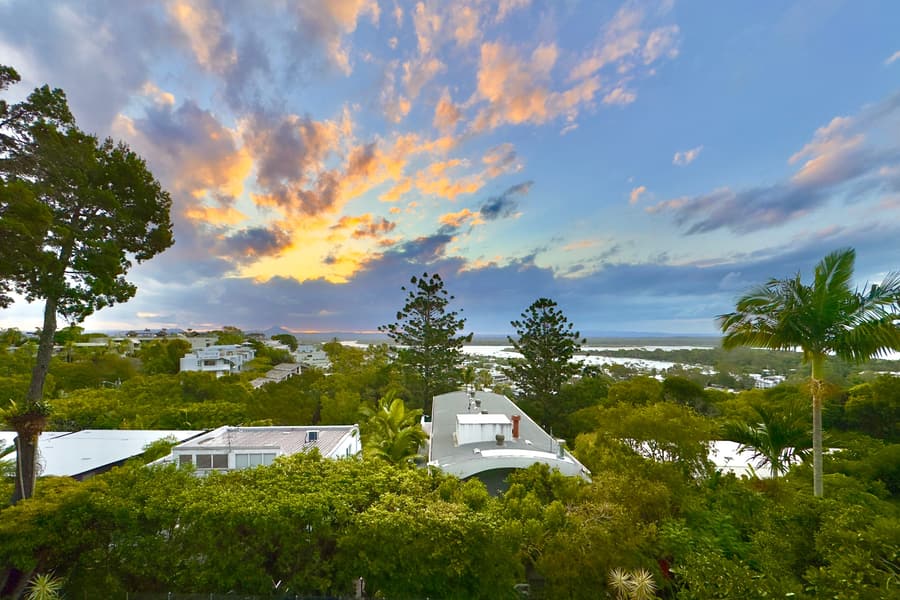
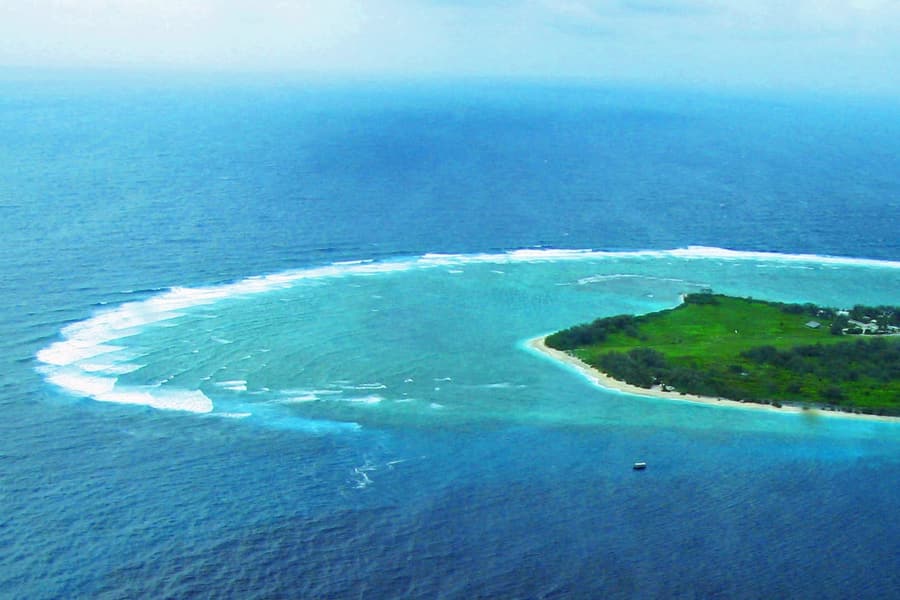
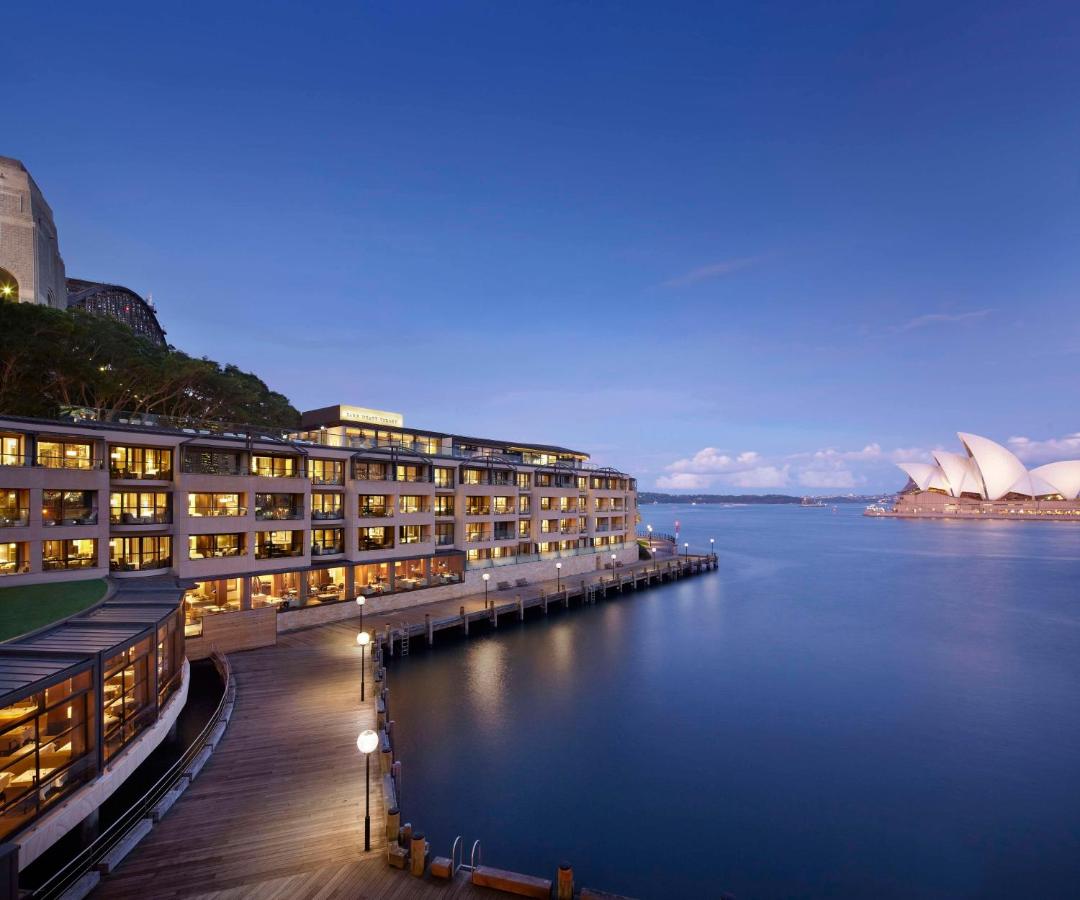
Images on this page are sourced from Wikimedia Commons under free licences (CC0, CC BY or CC BY-SA) and are photographs of the places named. Author, licence and source for each:

  • Great Barrier Reef — Ank Kumar / Wikimedia Commons (CC BY-SA 4.0) · source
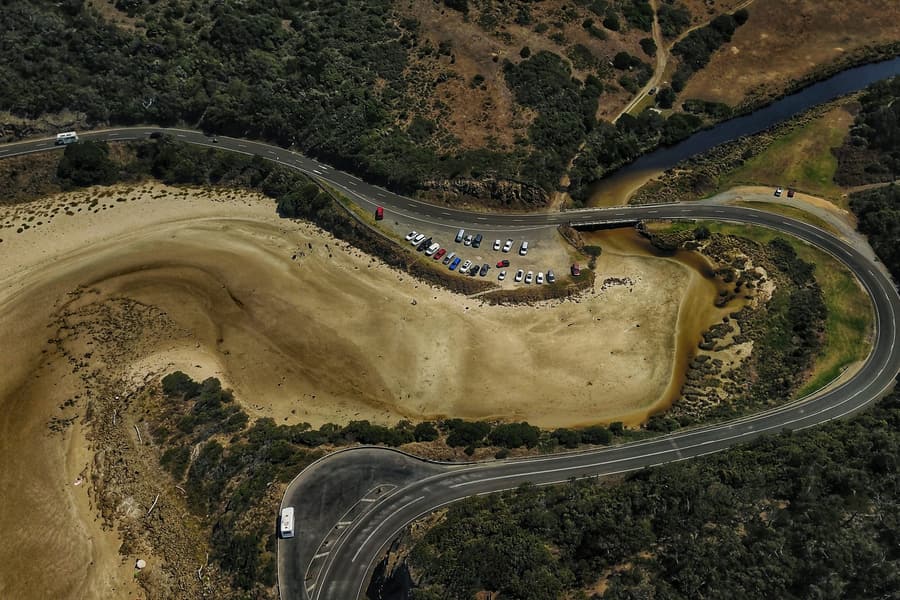
  • Great Ocean Road — Bob Tan / Wikimedia Commons (CC BY-SA 4.0) · source
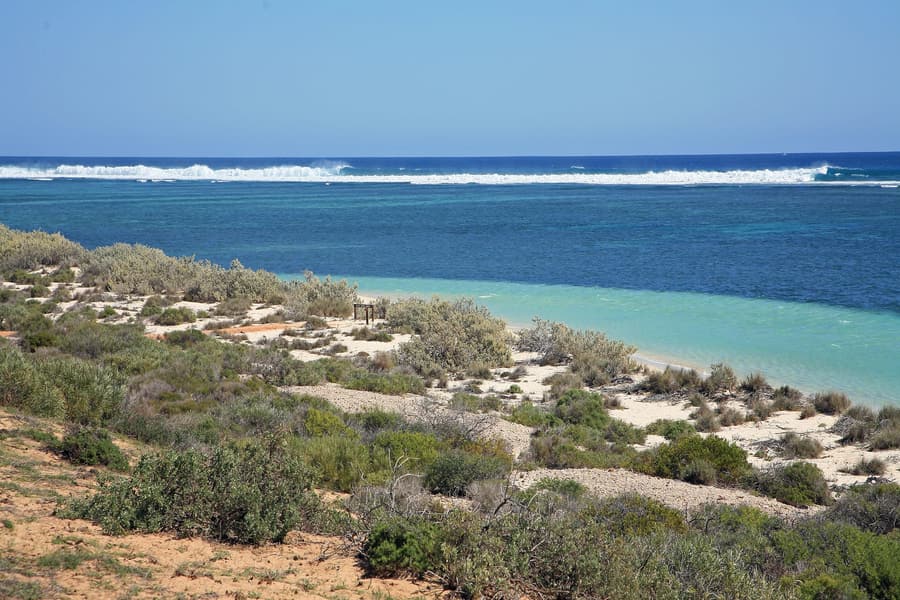
  • Ningaloo Reef — W. Bulach / Wikimedia Commons (CC BY-SA 4.0) · source
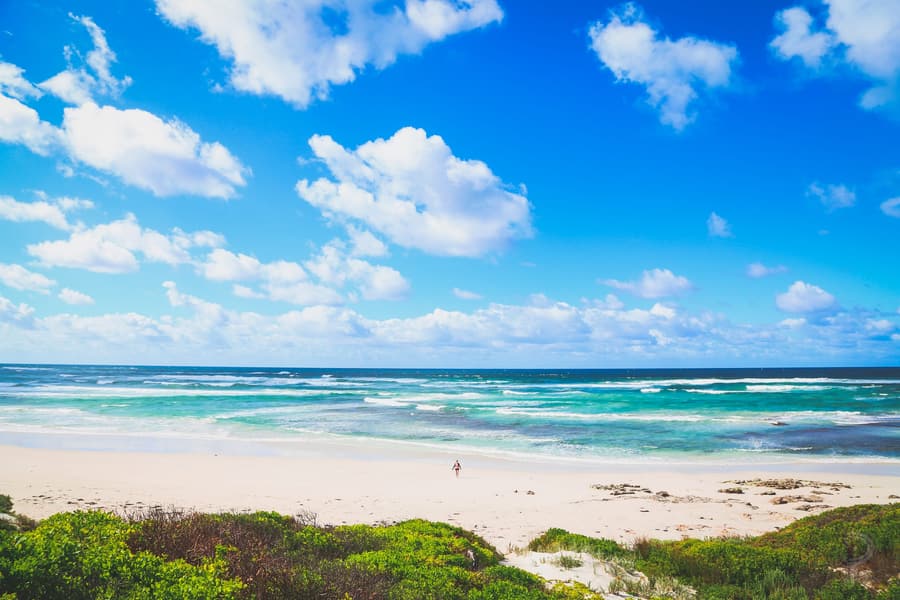
  • Kangaroo Island — Dualiti Photos from Brisbane, Australia / Wikimedia Commons (CC BY 2.0) · source
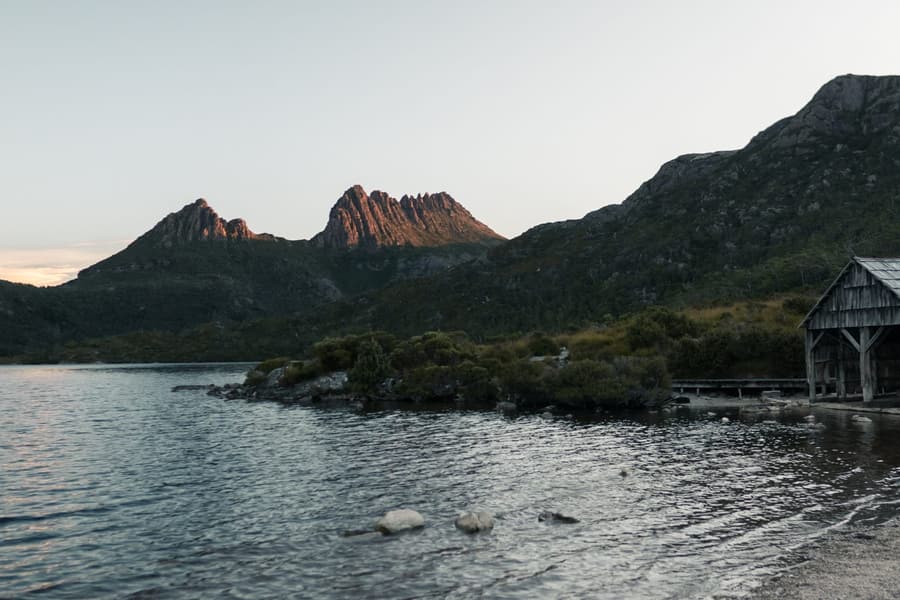
  • Cradle Mountain–Lake St Clair — Ryan Wilkes / Wikimedia Commons (CC BY-SA 4.0) · source
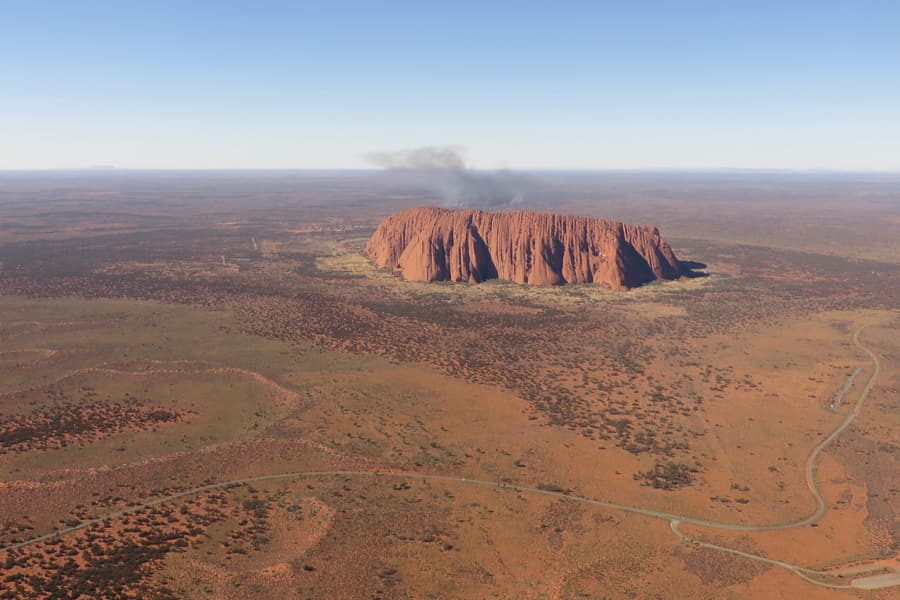
  • Uluṟu-Kata Tjuṯa — Emily Cox / Wikimedia Commons (CC BY-SA 4.0) · source
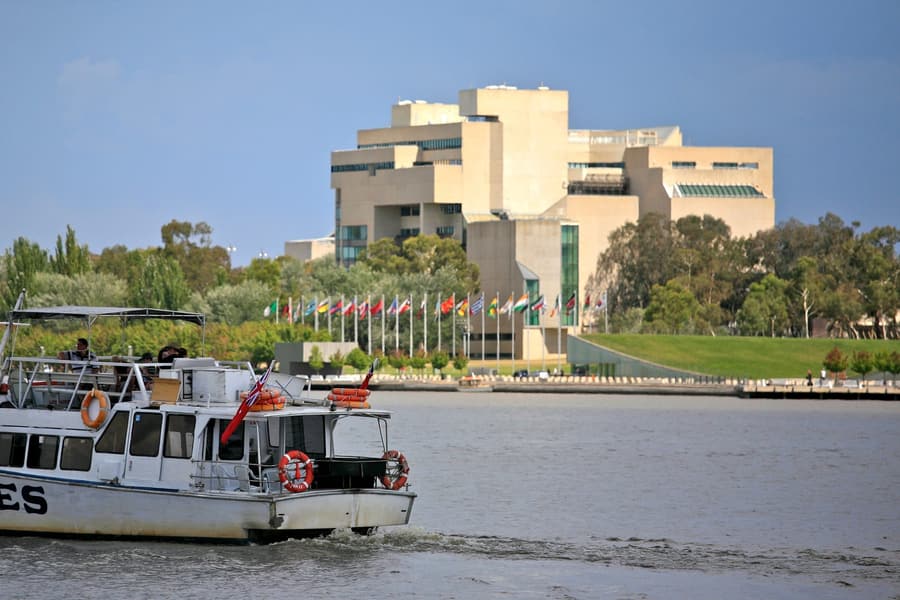
  • Lake Burley Griffin — Alex Proimos from Sydney, Australia / Wikimedia Commons (CC BY 2.0) · source
  • Christmas Island — ChrisBrayPhotography / Wikimedia Commons (CC BY-SA 4.0) · source
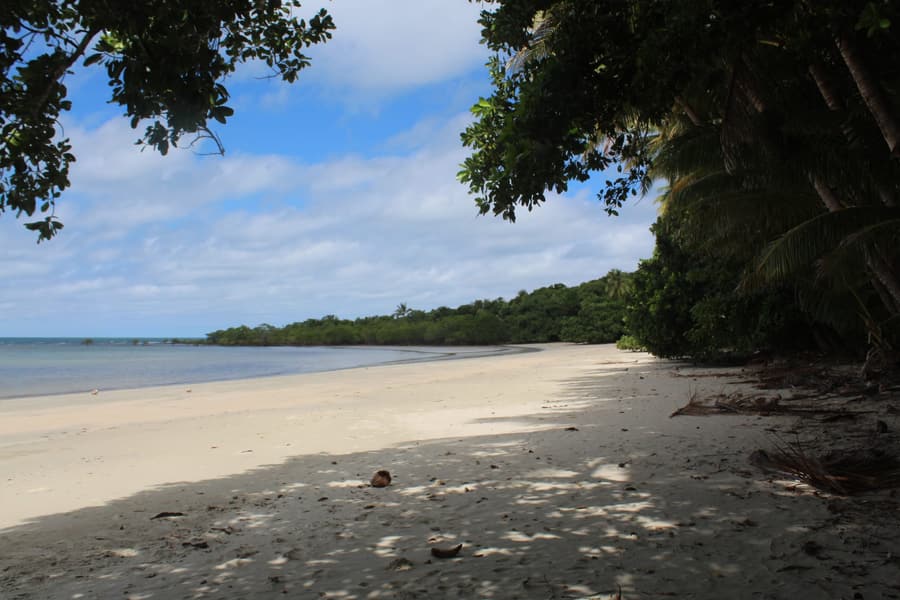
  • Daintree Rainforest — Mwarnes / Wikimedia Commons (CC BY-SA 4.0) · source
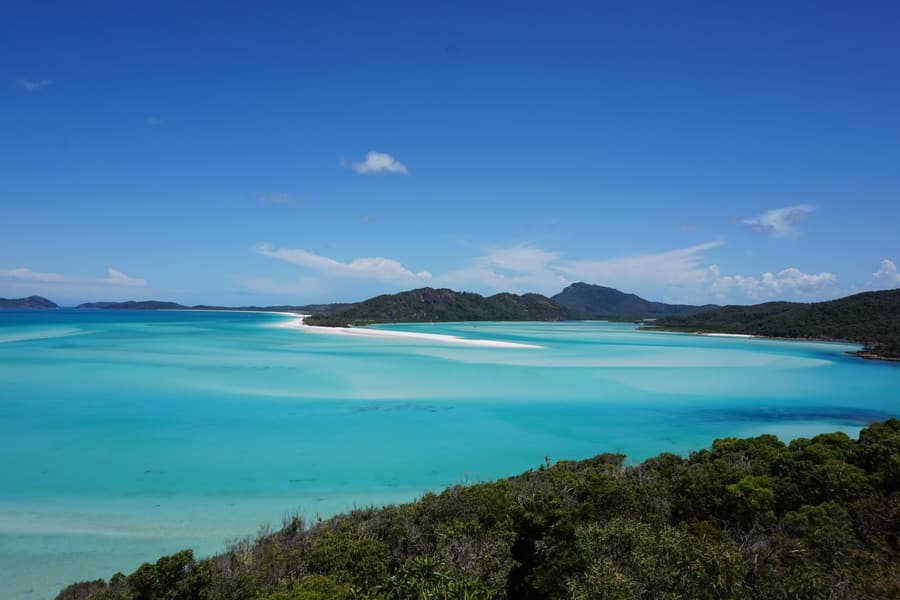
  • The Whitsundays — Isderion / Wikimedia Commons (CC BY-SA 3.0 de) · source
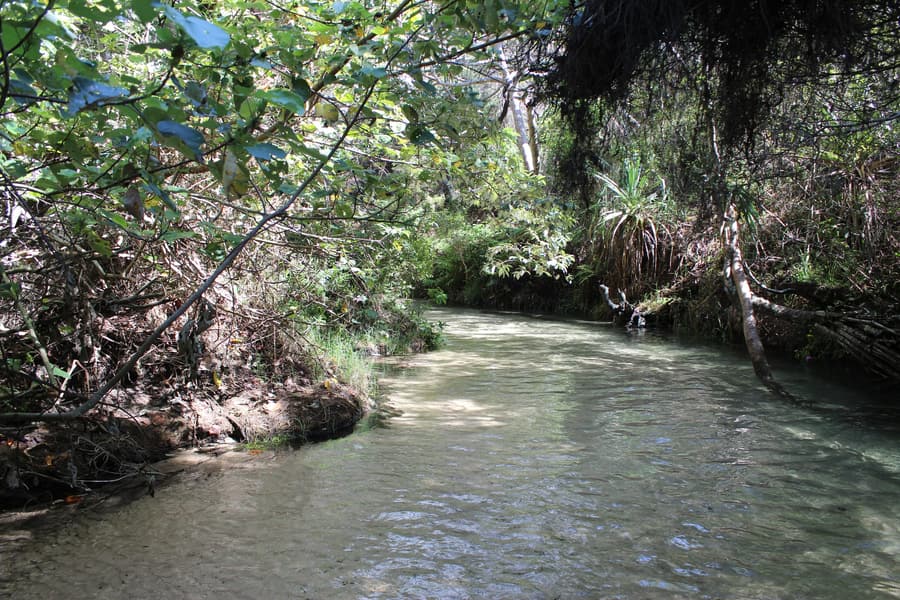
  • K'gari (Fraser Island) — UrbanDruid / Wikimedia Commons (CC BY-SA 4.0) · source
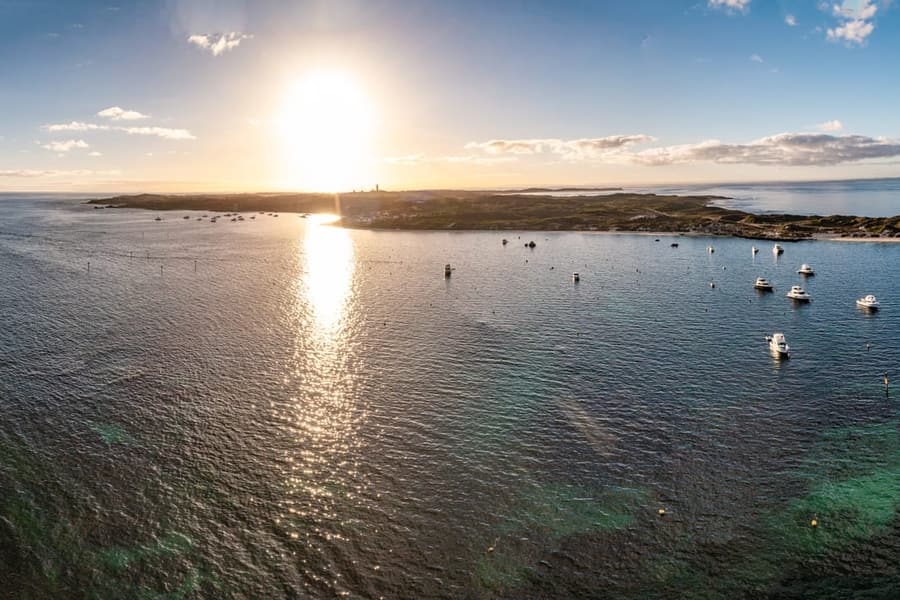
  • Rottnest Island (Wadjemup) — RaucusG / Wikimedia Commons (CC BY-SA 4.0) · source
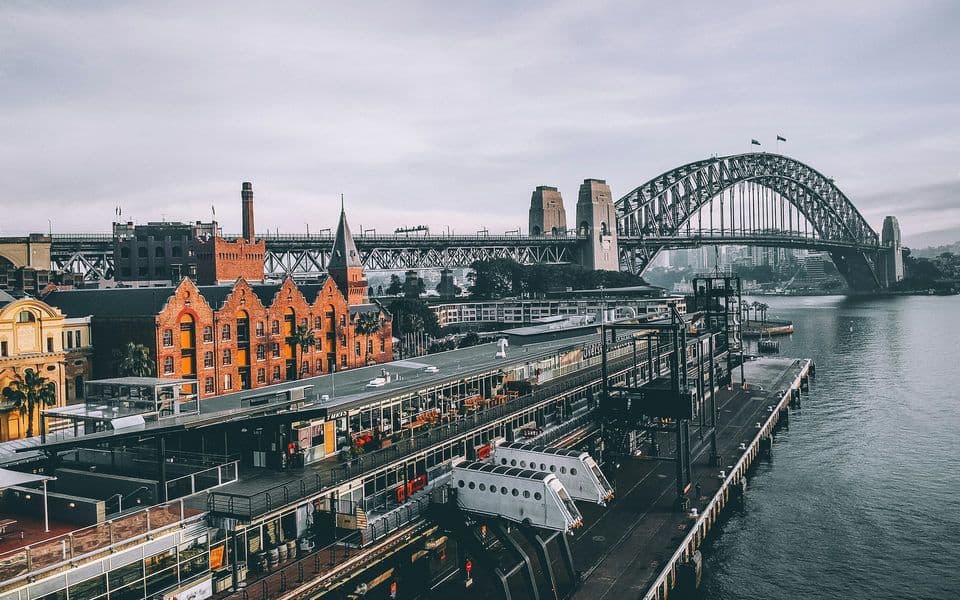
  • Sydney Harbour — Bernard Gagnon / Wikimedia Commons (CC BY-SA 3.0) · source
  • The Kimberley — W. Bulach / Wikimedia Commons (CC BY-SA 4.0) · source
  • Blue Mountains — Dietmar Rabich / Wikimedia Commons (CC BY-SA 4.0) · source
  • Margaret River — BigMacka / Wikimedia Commons (CC BY-SA 4.0) · source
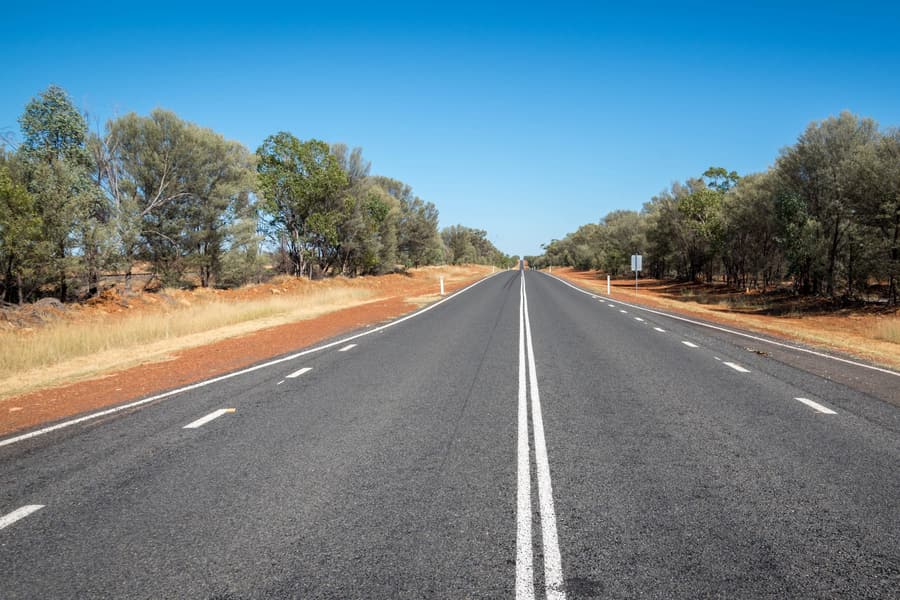
  • Outback Queensland — Josselin Berger / Wikimedia Commons (CC BY 2.0) · source
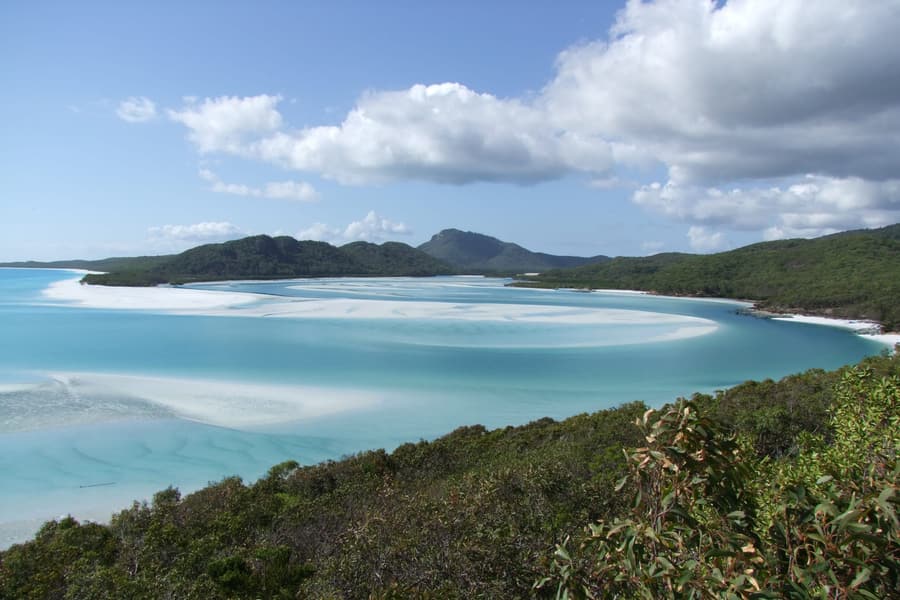
  • Whitehaven Beach — Hush Neo / Wikimedia Commons (CC BY-SA 4.0) · source
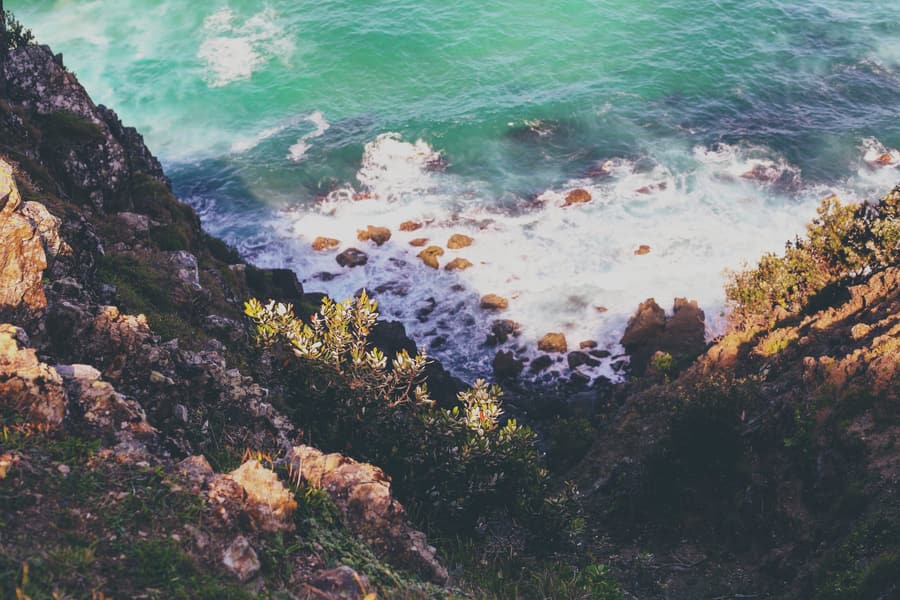
  • Byron Bay — Amy Mackay amykatesc / Wikimedia Commons (CC0) · source
  • Noosa — Chris Olszewski / Wikimedia Commons (CC BY-SA 4.0) · source
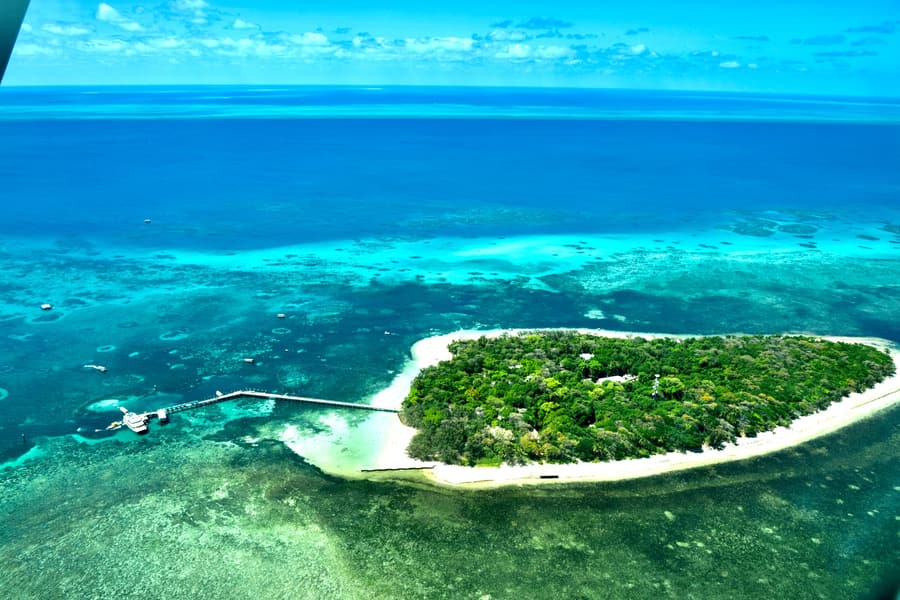
  • Lady Elliot Island — Greg Schechter from San Francisco, USA / Wikimedia Commons (CC BY 2.0) · source
Things to do

Nature, culture and the outdoors

  • Whitehaven Beach

    Seven kilometres of white silica sand swirl into turquoise shallows, reached only by boat or seaplane.

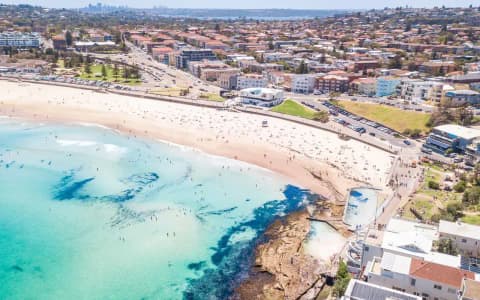
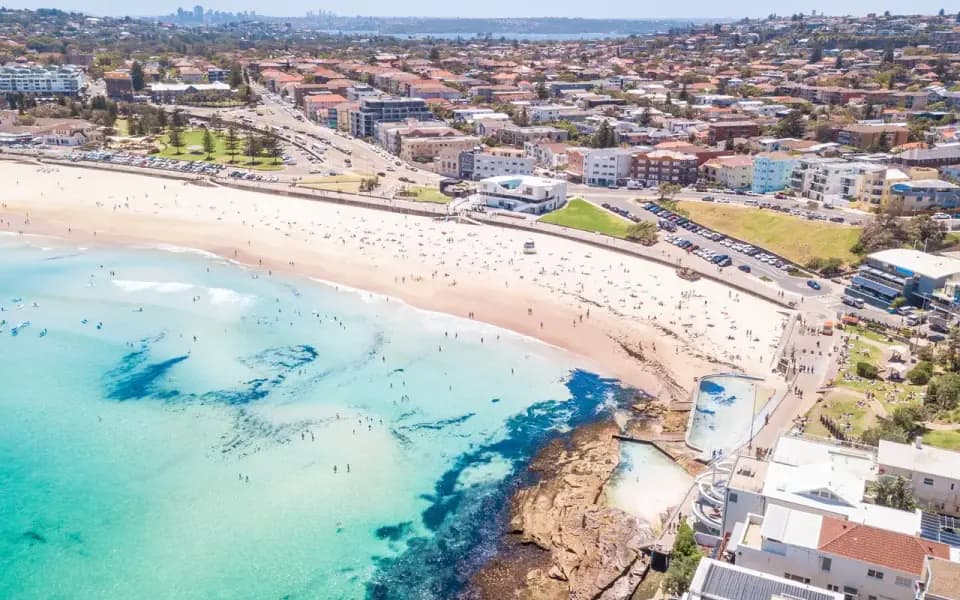
  • Bondi Beach

    Sydney's showpiece crescent packs surfers, swimmers and a clifftop coast walk into one buzzing city beach.

  • Wineglass Bay

    A flawless crescent of pale sand and clear water, earned by a steep walk over the pink Hazards saddle.

  • Turquoise Bay

    Wade straight off the sand onto Ningaloo's coral and let the drift current carry you over the fish.

  • Cable Beach

    Twenty-two kilometres of sand backed by red dunes, where camels stroll against the Indian Ocean sunset.

  • Byron Bay Main Beach

    A patrolled town beach with mellow learner waves and the Cape Byron lighthouse walk at the sand's edge.

  • Bells Beach

    Sandstone cliffs frame the powerful right-hander that hosts the world's longest-running surf contest.

Plan your own trip to Australia
Where to stay

Hand-checked places in Australia

Browse all Australia stays →
Plan

Getting there, getting around and where to stay

Getting there from the UK

Qantas runs the only direct flight from Heathrow to Australia, daily to Perth, and the same flight continues to Melbourne. Qantas currently routes the return from Perth to London via Singapore. Qantas also flies Heathrow to Sydney via Singapore, and lists a non-stop London–Sydney service from October 2027. Otherwise, most people fly with one stop at a hub in the Middle East or Asia.

Getting around

Distances are big, so we fly between regions. Qantas, Virgin Australia and Jetstar serve every state capital and many regional cities. The long-distance trains are holidays in themselves, sold by Journey Beyond Rail. The Ghan takes three to four days between Adelaide and Darwin through the Red Centre, and the Indian Pacific crosses from Sydney to Perth in four days. The Spirit of Tasmania car ferry sails overnight from Geelong to Devonport. Driving is on the left, speeds are in km/h (usually 50 in towns and 100 on most other roads), the drink-drive limit is 0.05, and using a hand-held phone is illegal even at the lights. A UK photocard licence is fine for visitors. In the outback, we carry extra fuel and water, avoid driving at night because of kangaroos, and check whether the hire car's insurance covers unsealed roads.

Where to stay

When to go

Weather & timing in Australia Right now RIGHT NOW 23°C drizzle

Best Sep–Nov, Mar–May · Shoulder Dec–Feb (tropical north: May–Sep)

Units

Monthly figures are for East coast (Sydney); other regions of Australia vary. See every region, month by month →

Next 7 days · East coast

Forecast · Met Office · Powered by Met Office data

Typical · climate data

Best time to visit

September – November and March – May for the south and east; May – September for the tropical north and the Red Centre

Best for
  • Great Barrier Reef
  • Outback
  • Beaches
  • Wildlife
At a glance
Sunshine 9.6 hr/day
Rainfall 99 mm/mo
Wettest March · 179.7mm
Driest September · 50.9mm
Part of Australia & NZ →
By season

Units

Spring (Sep–Nov)

What to expect — Daytime highs average about 22°C with overnight lows near 13°C, with plenty of rain.

What's best — Warm. Sep, Oct and Nov are among the best months here (warm, sunny).

Summer (Dec–Feb)

What to expect — Daytime highs average about 26°C with overnight lows near 18°C, with plenty of rain.

What's best — Warm, then Shoulder season. Dec and Jan are among the best months here (warm, sun and cloud).

Autumn (Mar–May)

What to expect — Daytime highs average about 22°C with overnight lows near 14°C — the wettest stretch of the year.

What's best — Shoulder season, then Warm, then Mild. Apr and May are among the best months here (warm, sun and cloud).

Winter (Jun–Aug)

What to expect — Daytime highs average about 17°C with overnight lows near 8°C.

What's best — Mild, then Shoulder season. Jun and Aug are among the best months here (mild, sunny).

Live forecast map · Windy.com · temperature with wind, °C and km/h

When to go, region by region

Australia has 4 climate regions

Each month our cards and map show the region with the best weather that month: Jan–Feb West coast · Mar South / Tasmania · Apr West coast · May–Aug North / Tropics · Sep East coast · Oct–Dec West coast.

Region JFMAMJJASOND
East coastSydney · best Apr–Jun, Aug–Jan January: great February: good March: good April: great May: great June: great July: good August: great September: great, shown on the cards October: great November: great December: great
West coastPerth · best Aug–May January: great, shown on the cards February: great, shown on the cards March: great April: great, shown on the cards May: great June: good July: good August: great September: great October: great, shown on the cards November: great, shown on the cards December: great, shown on the cards
North / TropicsDarwin · best May–Oct January: not ideal February: not ideal March: good April: good May: great, shown on the cards June: great, shown on the cards July: great, shown on the cards August: great, shown on the cards September: great October: great November: good December: not ideal
South / TasmaniaHobart · best Nov–Apr January: great February: great March: great, shown on the cards April: great May: not ideal June: not ideal July: not ideal August: not ideal September: good October: good November: great December: great

Great Good Not ideal Shown on our cards that month

Heat, rain and the best months, region by region

Seasons are the reverse of the UK's, and the country runs on two calendars. The south has four seasons. The tropical north has a wet season from November to April and a dry season from May to October, as Tourism Australia describes it. The Bureau of Meteorology puts the wet season in the far north of the Northern Territory at about October to April.

  • Sydney and the east coast: average highs of about 26°C in January and 17°C in June and July. Spring (September to November) and autumn (March to May) are the most comfortable. February and March are the wettest months.
  • Perth and the south-west: dry, sunny summers with highs of about 30–31°C in January and February. Most of the rain falls from May to August.
  • Darwin and the Top End: highs of about 29–32°C all year. From December to February, rainfall averages over 350 mm a month, so the dry months from May to September are the time to go.
  • Hobart and Tasmania: highs of about 20–22°C from December to February, and a cold 12°C in June and July.

None of our four climate stations averages 32°C or more in any month. Inland is different: Tourism Australia warns that outback daytime temperatures "soar" in summer, so for Uluṟu and the Red Centre we plan on the cooler months. Summer is also stinger season on the Great Barrier Reef, when snorkellers wear full-body suits. The FCDO notes bushfire risk is highest from November to February and the cyclone season normally runs from November to April in Queensland, the Northern Territory and Western Australia.

Average daily high (°C) by month. Measured 2020–2024.
AreaJFMAMJJASOND
East coast (Sydney) 262625221917171921222325
West coast (Perth) 303129252218181820222529
North / Tropics (Darwin) 303030313130293131323231
South / Tasmania (Hobart) 232220171512121315161921

Colours as on the month tiles above. Bold: hot, 32°C or more (go early or late in the day). Outlined: very hot, 35°C or more. Wet: 150 mm of rain or more.

A little context

A little history

To read what you're looking at — the empires and eras that shaped Australia's food, art and streets.

Aboriginal peoples have lived here for at least 65,000 years — among the world's oldest continuous cultures
British settlement from the 1788 First Fleet began as a penal colony and pushed out from Sydney
waves of post-war immigration built the multicultural, coffee-and-brunch food scene of the cities
the six colonies federated into one nation in 1901, still shaped by the land and the coast
Culture

Culture and etiquette

First Nations Australia

Aboriginal and Torres Strait Islander peoples have cared for this land for more than 65,000 years. Every place we visit is someone's Country: Sydney Harbour, for example, is Gadigal Country. The most direct way to learn about it is with a Traditional Custodian. Tourism Australia's Discover Aboriginal Experiences collective lists more than 200 tours led by Aboriginal guides, from city walks to remote art centres.

Events worth planning around

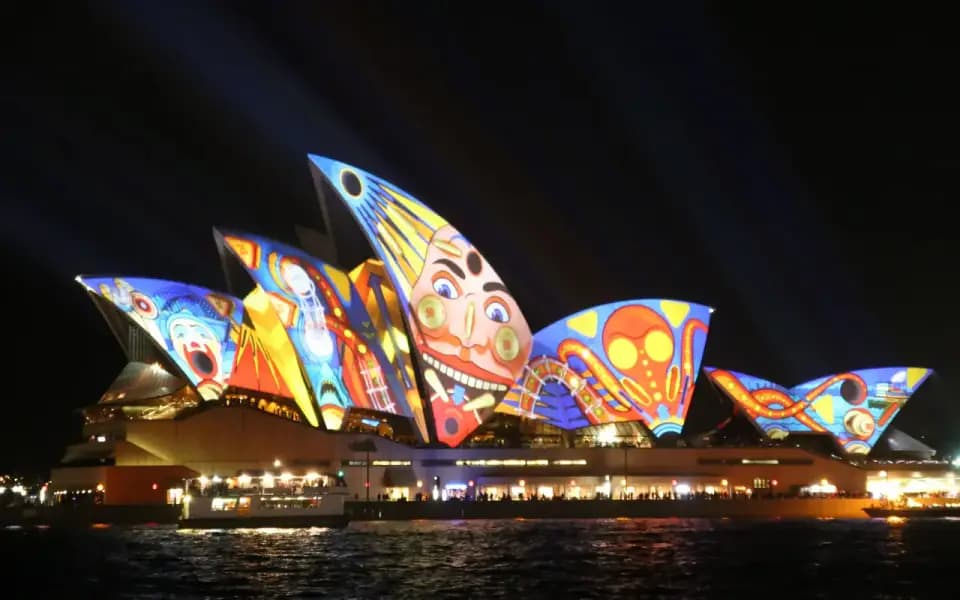
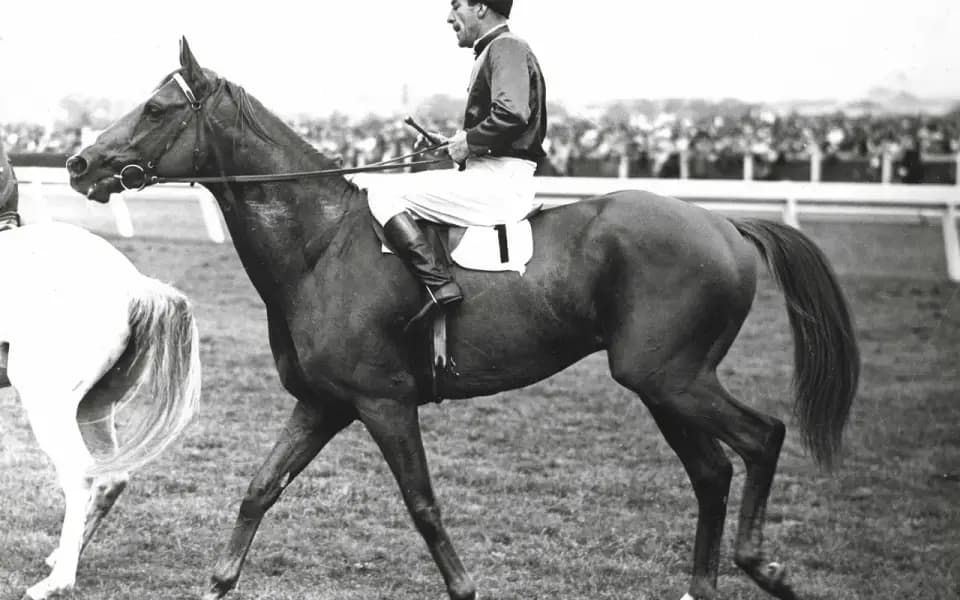
The Melbourne Cup runs on the first Tuesday in November (3 November in 2026). The Sydney New Year's Eve fireworks are over the harbour on 31 December. The Sydney Gay and Lesbian Mardi Gras festival runs from 12 February to 7 March 2027. Vivid Sydney, the winter festival of light, runs from 28 May to 19 June 2027.

Formula 1

Grand Prix weekend in Australia

Formula 1 season calendar: every race →

Local events

What's on in Australia

See all Australia events →
Practical

Entry, money and health

Entry and visas (British passport holders)

British citizens need a visa, even for a holiday. The usual one is the free eVisitor (subclass 651), applied for online. The other option is the ETA (subclass 601), applied for through the official Australian ETA app, where a service fee applies. Both are for tourism and business visits, not work. The eVisitor allows stays of up to three months at a time over 12 months. Apply only through the Department of Home Affairs (immi.homeaffairs.gov.au) or the official app. The FCDO says a passport must be valid for the whole stay, and Home Affairs recommends at least six months. UK citizens aged 18 to 35 can also apply for a Working Holiday visa (subclass 417).

On arrival, we declare all food, plant and animal products on the Incoming Passenger Card, or bin them at the airport. Biosecurity fines are heavy. The currency is the Australian dollar, issued by the Reserve Bank of Australia in polymer notes of $5, $10, $20, $50 and $100. The FCDO does not advise against travel to any part of Australia. It warns that terrorist attacks are likely, and that rip currents are the main danger at the beach. Read the FCDO travel advice for Australia before you go.

UK government travel advice

Read the FCDO's travel advice for Australia travel guide before booking and again before you go; it changes, and it is the official word on safety and entry.

Festivals worth planning around

Sources · last checked 28 October 2026

We write this guide from official sources only: GOV.UK, national immigration portals, tourism boards, airports and operators, central banks and met services. Rules change, so check the linked pages before you book.

Before you book

Know before you go

The practical back-matter — safety, drones and the essentials, in one place.

Safety

No FCDO advisory against travel FCDO advice →

Official UK Foreign, Commonwealth & Development Office guidance is the definitive source — check it close to your travel dates.

Drone rules (sub-250g)

  • Australia
    About as easy as it gets: CASA has paused recreational registration indefinitely, so a tourist flying a sub-250g drone for fun needs no registration and no licence. Just fly by the standard rules — under 120m, in sight, in daylight, 30m from people, never over crowds, and 5.5km from a controlled airport. ⚠ State national parks are the exception: NSW bans drones in all its national parks outright (no permit available, fines to AUD$3,300), Victoria requires a permit, and wildlife reserves like Phillip Island are strict — check the state park authority before flying in any park. Rules checked: Jul 2026

National parks, protected sites and religious/heritage venues often have their own rules and permits — always check the specific site before you fly.

The essentials

Plug & voltage Type I · 230V
Daily budget Expensive
Region Australia and New Zealand